Impetigo: Rapid Evidence Review

Diana T. Trang, DO
Emily C. Buck, MD
Daniel T. Schoenherr, MD

American Family Physician. 2026;113(2):175-180.

Author disclosure: No relevant financial relationships.

This clinical content conforms to AAFP criteria for CME.

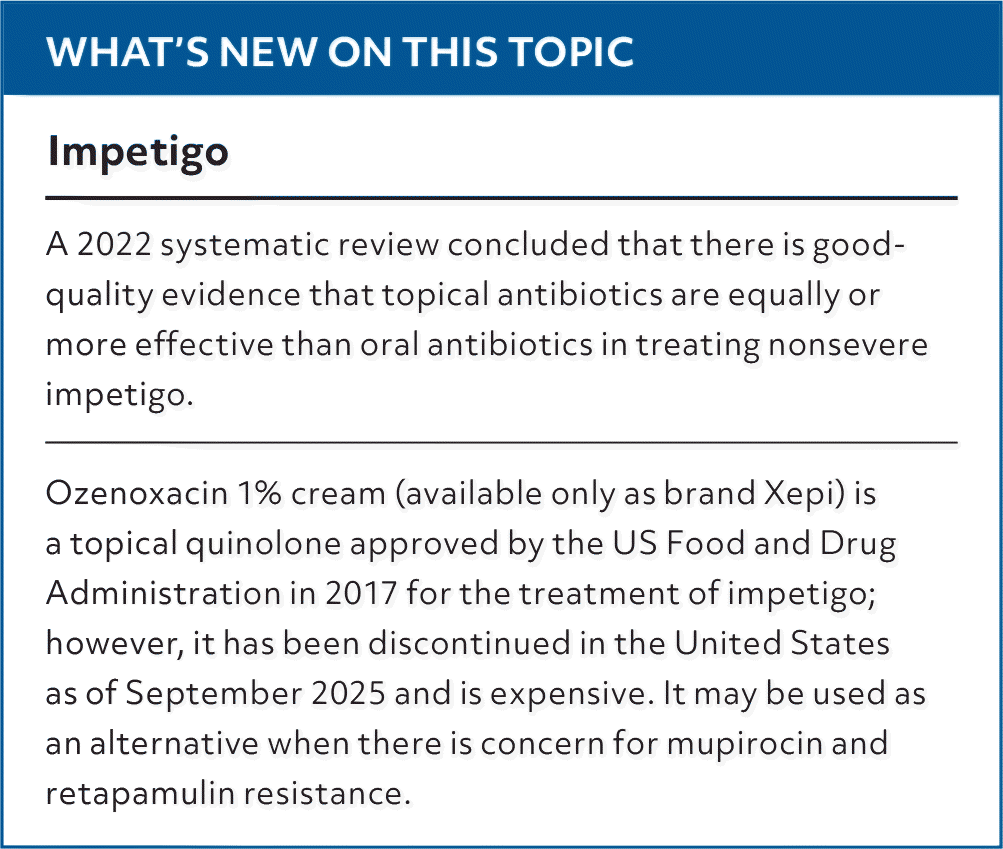
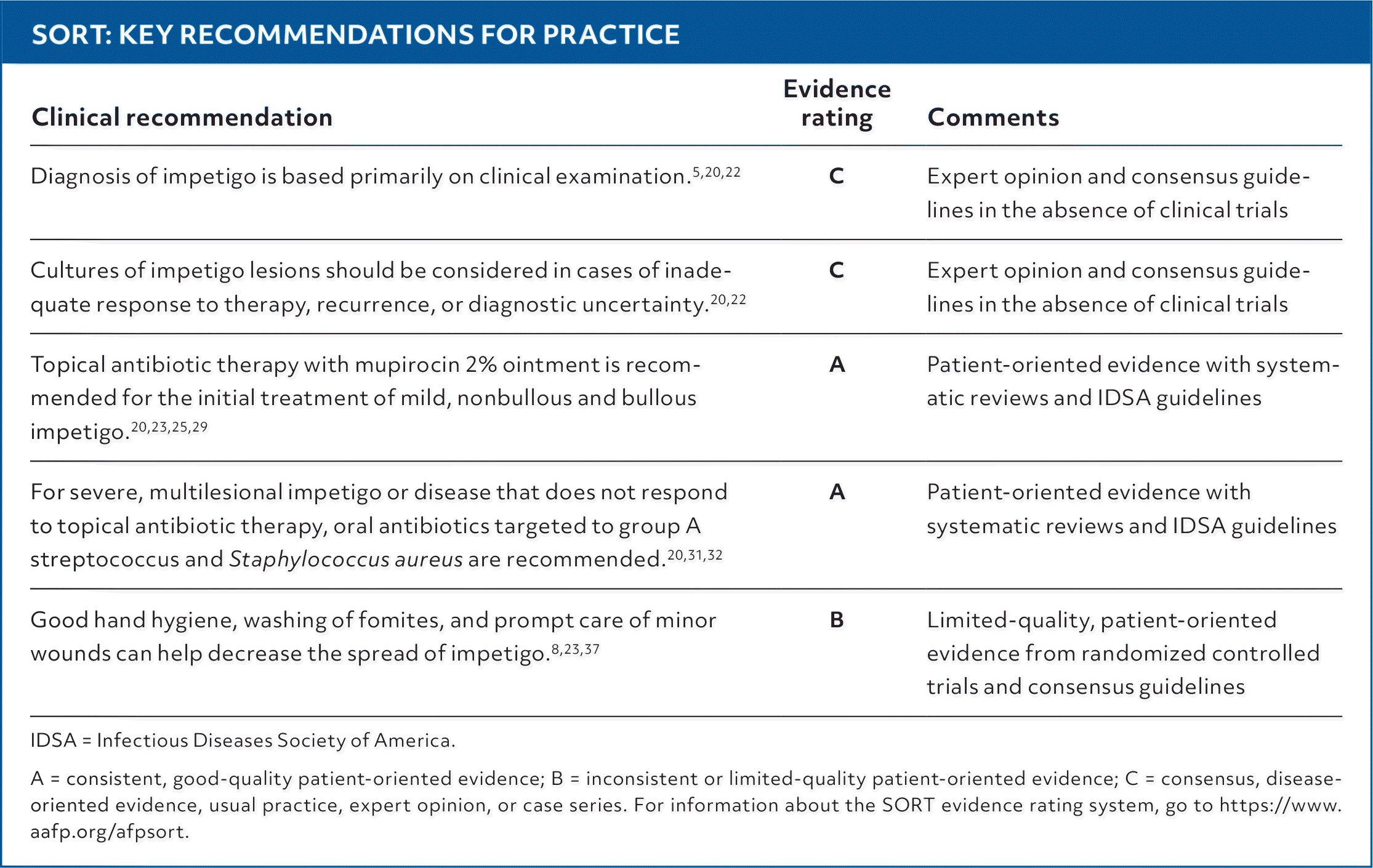
Impetigo is a superficial skin infection that most commonly affects children 2 to 5 years of age. In the United States, more than 3 million cases of impetigo occur annually. Impetigo can be nonbullous (70%) or bullous (30%) and is most commonly caused by group A streptococcus and Staphylococcus aureus. Diagnosis of impetigo is based primarily on clinical examination and should be suspected in individuals with erythematous papules that progress to ruptured vesicles or bullae over 4 to 6 days, forming honey-colored crusts. Risk factors for impetigo include disruptions to the skin barrier, poor hygiene, crowded living environments, living in hot and humid climates, malnutrition, and diabetes. Topical mupirocin 2% ointment or retapamulin 1% ointment are the recommended initial treatments for mild, nonbullous and bullous impetigo. Oral antibiotics, such as dicloxacillin or cephalexin, should be targeted to group A streptococci and S. aureus and are recommended for outbreaks to decrease infection transmission or for severe, multilesional disease that does not respond to topical therapy within 3 to 5 days. Reducing the spread and recurrence of impetigo includes good hand hygiene, thoroughly washing objects used by people with impetigo, and refraining from returning to work or school until 12 to 24 hours after initiating antibiotic treatment or clinical improvement occurs.

DIANA T. TRANG, DO, FAAFP, is core faculty in the Travis Family Medicine Residency Program at David Grant Medical Center, Travis AFB, California; an assistant professor in the Department of Family Medicine at the Uniformed Services University of the Health Sciences, Bethesda, Maryland; and an assistant professor in the Department of Family Medicine at the University of California-Davis, Davis.

EMILY C. BUCK, MD, FAAFP, is a senior clinical instructor in the Department of Family Medicine at the University of Colorado Anschutz School of Medicine, Aurora.

DANIEL T. SCHOENHERR, MD, is core faculty in the Travis Family Medicine Residency Program at David Grant Medical Center, Travis AFB; an assistant professor in the Department of Family Medicine at the Uniformed Services University of the Health Sciences, Bethesda; and an assistant professor in the Department of Family Medicine at the University of California-Davis, Davis.

Address correspondence to Diana T. Trang, DO, FAAFP, at trang.diana.5@gmail.com.

Author disclosure: No relevant financial relationships.

  1. 1.Breyre A, Frazee BW. Skin and soft tissue infections in the emergency department. Emerg Med Clin North Am. 2018;36(4):723-750.
  2. 2.Fan J, Toth I, Stephenson RJ. Recent scientific advancements towards a vaccine against group A Streptococcus. Vaccines (Basel). 2024;12(3):272.
  3. 3.State of Hawaii Department of Health. Impetigo. June 2024. Accessed January 9, 2025. https://health.hawaii.gov/docd/disease_listing/impetigo/
  4. 4.Bowen AC, Mahé A, Hay RJ, et al. The global epidemiology of impetigo: a systematic review of the population prevalence of impetigo and pyoderma. PLoS One. 2015;10(8):e0136789.
  5. 5.Hartman-Adams H, Banvard C, Juckett G. Impetigo: diagnosis and treatment. Am Fam Physician. 2014;90(4):229-235.
  6. 6.Bowen AC, Harris T, Holt DC, et al. Whole genome sequencing reveals extensive community-level transmission of group A Streptococcus in remote communities. Epidemiol Infect. 2016;144(9):1991-1998.
  7. 7.Hu H, Mei J, Lin M, et al. The causal relationship between obesity and skin and soft tissue infections: a two-sample Mendelian randomization study. Front Endocrinol (Lausanne). 2022;13:996863.
  8. 8.Centers for Disease Control and Prevention. Clinical guidance for group A Streptococcal impetigo. August 5, 2025. Accessed November 13, 2025. https://www.cdc.gov/group-a-strep/hcp/clinical-guidance/impetigo.html
  9. 9.Lacey JA, Marcato AJ, Chisholm RH, et al. Evaluating the role of asymptomatic throat carriage of Streptococcus pyogenes in impetigo transmission in remote Aboriginal communities in Northern Territory, Australia: a retrospective genomic analysis. Lancet Microbe. 2023;4(7):e524-e533.
  10. 10.Bowen AC, Tong SYC, Chatfield MD, et al. The microbiology of impetigo in indigenous children: associations between Streptococcus pyogenes, Staphylococcus aureus, scabies, and nasal carriage. BMC Infect Dis. 2014;14:727.
  11. 11.Armitage EP, de Crombrugghe G, Keeley AJ, et al.; MRCG StrepA Study Group. Streptococcus pyogenes carriage and infection within households in the Gambia: a longitudinal cohort study. Lancet Microbe. 2024;5(7):679-688.
  12. 12.Cordery R, Purba AK, Begum L, et al. Frequency of transmission, asymptomatic shedding, and airborne spread of Streptococcus pyogenes in schoolchildren exposed to scarlet fever: a prospective, longitudinal, multicohort, molecular epidemiological, contact-tracing study in England, UK. Lancet Microbe. 2022;3(5):e366-e375.
  13. 13.Knox J, Uhlemann AC, Lowy FD. Staphylococcus aureus infections: transmission within households and the community. Trends Microbiol. 2015;23(7):437-444.
  14. 14.Arinder P, Johannesson P, Karlsson I, et al. Transfer and decontamination of S. aureus in transmission routes regarding hands and contact surfaces. PLoS One. 2016;11(6):e0156390.
  15. 15.Boutin S, Arnold B, Alabi AS, et al. Genomic epidemiology of Streptococcus pyogenes from pharyngeal and skin swabs in Gabon. Microbiol Spectr. 2024;12(7):e0426523.
  16. 16.Hanakawa Y, Schechter NM, Lin C, et al. Molecular mechanisms of blister formation in bullous impetigo and staphylococcal scalded skin syndrome. J Clin Invest. 2002;110(1):53-60.
  17. 17.Bergsten H, Nizet V. The intricate pathogenicity of group A Streptococcus: a comprehensive update. Virulence. 2024;15(1):2412745.
  18. 18.Walker MJ, Barnett TC, McArthur JD, et al. Disease manifestations and pathogenic mechanisms of group A Streptococcus. Clin Microbiol Rev. 2014;27(2):264-301.
  19. 19.Abrha S, Tesfaye W, Thomas J. Intolerable burden of impetigo in endemic settings: a review of the current state of play and future directions for alternative treatments. Antibiotics (Basel). 2020;9(12):909.
  20. 20.Stevens DL, Bisno AL, Chambers HF, et al. Practice guidelines for the diagnosis and management of skin and soft tissue infections: 2014 update by the Infectious Diseases Society of America. Clin Infect Dis. 2014;59(2):147-159.
  21. 21.Galli L, Venturini E, Bassi A, et al.; Italian Pediatric Infectious Diseases Society; Italian Pediatric Dermatology Society. Common community-acquired bacterial skin and soft-tissue infections in children: an intersociety consensus on impetigo, abscess, and cellulitis treatment. Clin Ther. 2019;41(3):532-551.e17.
  22. 22.Galli L, Novelli A, Ruggiero G, et al. Pediatric impetigo: an expert panel opinion about its main controversies. J Chemother. 2022;34(5):279-285.
  23. 23.Hall LM, Gorges HJ, van Driel M, et al. International comparison of guidelines for management of impetigo: a systematic review. Fam Pract. 2022;39(1):150-158.
  24. 24.Nardi NM, Schaefer TJ. Impetigo. StatPearls. July 31, 2023. Accessed November 15, 2024. https://www.ncbi.nlm.nih.gov/books/NBK430974/
  25. 25.Argenziano G, Ardigò M, Micali G, et al. Review—expert opinion on antibiotics and antibiotic resistance in dermatology. Dermatol Pract Concept. 2024;14(4):e2024282.
  26. 26.Dallo M, Patel K, Hebert AA. Topical antibiotic treatment in dermatology. Antibiotics (Basel). 2023;12(2):188.
  27. 27.Eudaley S. Ozenoxacin (Xepi) for the treatment of impetigo [STEPS: New Drug Review]. Am Fam Physician. 2020;101(12):760-761.
  28. 28.Schachner LA, Andriessen A, Gonzalez ME, et al. A consensus on Staphylococcus aureus exacerbated atopic dermatitis and the need for a novel treatment. J Drugs Dermatol. 2024;23(10):825-832.
  29. 29.Koning S, van der Sande R, Verhagen AP, et al. Interventions for impetigo. Cochrane Database Syst Rev. 2012(1):CD003261.
  30. 30.Tuesta BL, Arones-Santayana CA, Sáenz GAV, et al. Ozenoxacin 1% in pediatric and adult patients with impetigo: a meta-analysis of randomized trials. J Clin Med. 2025;14(7):2157.
  31. 31.Primhak S, Gataua A, Purvis D, et al. Treatment of Impetigo with Antiseptics-Replacing Antibiotics (TIARA) trial: a single blind randomised controlled trial in school health clinics within socioeconomically disadvantaged communities in New Zealand. Trials. 2022;23(1):108.
  32. 32.Silverberg B. A structured approach to skin and soft tissue infections (SSTIs) in an ambulatory setting. Clin Pract. 2021;11(1):65-74.
  33. 33.Hoffmann TC, Peiris R, Glasziou P, et al. Natural history of non-bullous impetigo: a systematic review of time to resolution or improvement without antibiotic treatment. Br J Gen Pract. 2021;71(704):e237-e242.
  34. 34.Rush J, Dinulos JG. Childhood skin and soft tissue infections: new discoveries and guidelines regarding the management of bacterial soft tissue infections, molluscum contagiosum, and warts. Curr Opin Pediatr. 2016;28(2):250-257.
  35. 35.Maness DL, Martin M, Mitchell G. Poststreptococcal illness: recognition and management. Am Fam Physician. 2018;97(8):517-522.
  36. 36.National Institute for Health and Care Excellence. Impetigo: antimicrobial prescribing. NG153. February 26, 2020. Accessed December 5, 2024. https://www.nice.org.uk/guidance/ng153
  37. 37.Luby S, Agboatwalla M, Schnell BM, et al. The effect of antibacterial soap on impetigo incidence, Karachi, Pakistan. Am J Trop Med Hyg. 2002;67(4):430-435.
  38. 38.Cole C, Gazewood J. Diagnosis and treatment of impetigo. Am Fam Physician. 2007;75(6):859-864.

Copyright © 2026 by the American Academy of Family Physicians.

This content is owned by the AAFP. A person viewing it online may make one printout of the material and may use that printout only for his or her personal, non-commercial reference. This material may not otherwise be downloaded, copied, printed, stored, transmitted or reproduced in any medium, whether now known or later invented, except as authorized in writing by the AAFP. See permissions for copyright questions and/or permission requests.