

DETAILS FOR THIS REVIEW
Study Population: Adults and adolescents with opioid dependence from multiple settings (clinical, residential, outpatient, prison or parole, voluntary or mandated treatment); one study included adolescents and adults 15 to 21 years of age; all other studies included adults 18 years or older
Efficacy End Points: Illicit opioid use (nonprescription use), treatment retention (median retention assessment at 6 months), treatment acceptability (number of patients initiating treatment)
Harm End Points: Severe adverse events (death, overdose, study treatment discontinued because of adverse event)
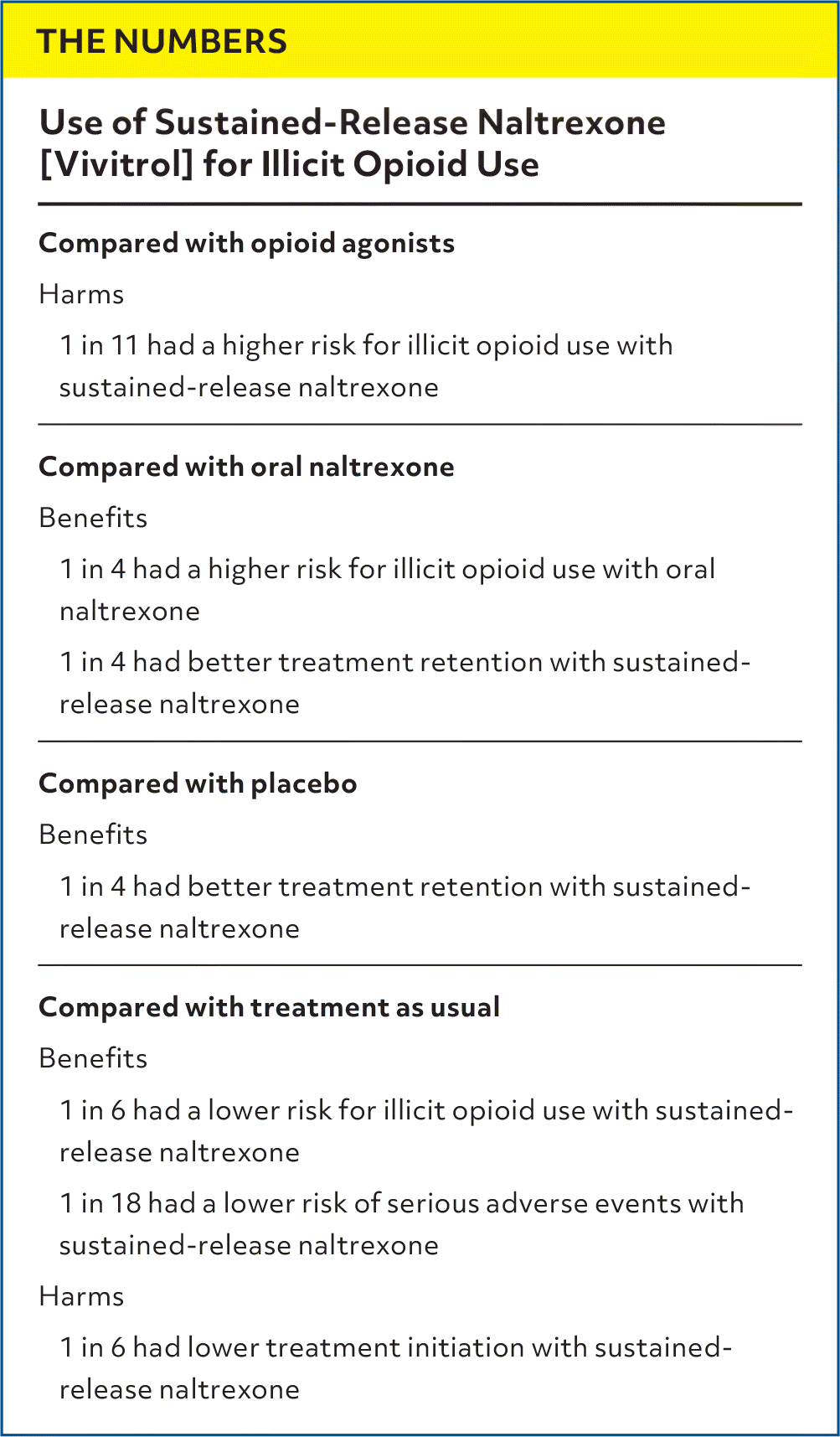
| Compared with opioid agonists |
| Harms |
| 1 in 11 had a higher risk for illicit opioid use with sustained-release naltrexone |
| Compared with oral naltrexone |
| Benefits |
| 1 in 4 had a higher risk for illicit opioid use with oral naltrexone |
| 1 in 4 had better treatment retention with sustained-release naltrexone |
| Compared with placebo |
| Benefits |
| 1 in 4 had better treatment retention with sustained-release naltrexone |
| Compared with treatment as usual |
| Benefits |
| 1 in 6 had a lower risk for illicit opioid use with sustained-release naltrexone |
| 1 in 18 had a lower risk of serious adverse events with sustained-release naltrexone |
| Harms |
| 1 in 6 had lower treatment initiation with sustained-release naltrexone |
Narrative: Opioid use disorder is a public health crisis that can lead to dependence, overdose, and death. Despite efforts to curb prescription opioid misuse (eg, state-sponsored prescription drug-monitoring programs), availability of illicit heroin and fentanyl has rapidly increased. People who use heroin and fentanyl are more likely to experience poverty, homelessness, blood-borne diseases, and death from overdose.1,2
The standard treatment for opioid use disorder is long-acting noninjectable opioids or opioid agonists such as methadone or buprenorphine. These treatments have been shown to reduce illicit opioid use but do not address dependence.
Naltrexone, an opioid antagonist, is a nonopioid alternative that binds to opioid receptors, blocking euphoric effects and potentially preventing relapse. Although naltrexone supports abstinence, daily oral dosing remains a barrier to its implementation as a standard treatment. Sustained-release naltrexone (Vivitrol) delivered via implant or injection, with redosing between 2 weeks and 9 months depending on formulation, was developed to overcome adherence barriers while maintaining the opioid receptor blockade. Currently, the only sustained-release naltrexone formulation approved by the US Food and Drug Administration is an intramuscular injection given every 4 weeks.
This 2025 Cochrane review evaluated the effectiveness and safety of sustained-release naltrexone compared with existing treatments.3 A total of 3,416 participants in 22 randomized controlled trials were evaluated. Sustained-release naltrexone was compared with opioid agonists (three studies), oral naltrexone (five studies), placebo (six studies), treatment as usual (nine studies), and psychosocial intervention (one study).
Moderate-certainty evidence demonstrated that sustained-release naltrexone may have slightly increased in-treatment illicit opioid use compared with opioid agonists (risk ratio [RR] = 1.15; 95% CI, 1.01–1.31; absolute risk difference [ARD] = 8.5%; number needed to harm = 11; one study; n = 570). Low- or very low-certainty evidence showed that there may be little to no difference in retention, acceptability, or serious adverse events between sustained-release naltrexone and opioid agonists.
Read the full article
Get immediate access, anytime, anywhere.
Choose a single article, issue, or full-access subscription.
Earn up to 14 CME credits per issue.
