

Systemic sclerosis is a rare autoimmune connective tissue disease characterized by progressive fibrosis of the skin and internal organs, vasculopathy, and the presence of specific autoantibodies. Despite its low prevalence, systemic sclerosis is associated with high morbidity. Early features often include Raynaud phenomenon, hand edema, and fatigue. Diagnosis requires a comprehensive approach, including clinical assessment, laboratory evaluation, imaging, and pulmonary function testing. The American College of Rheumatology and European Alliance of Associations for Rheumatology (formerly the European League Against Rheumatism) provide classification criteria and updated treatment recommendations. Management focuses on addressing eight disease domains: Raynaud phenomenon, digital ulcers, pulmonary artery hypertension, interstitial lung disease, renal crisis, gastrointestinal involvement, skin fibrosis, and musculoskeletal involvement. Vasodilator therapy is first-line treatment for Raynaud phenomenon, whereas phosphodiesterase-5 inhibitors and intravenous iloprost are used to treat digital ulcers. Combination therapy with phosphodiesterase-5 inhibitors and endothelin receptor antagonists is first-line treatment for pulmonary artery hypertension. Mycophenolate mofetil is the preferred treatment for interstitial lung disease.
Systemic sclerosis (SSc), also known as scleroderma, is an autoimmune connective tissue disease characterized by immune dysregulation, widespread microvascular dysfunction, and progressive fibrosis of the skin and internal organs. The cause is unknown, but it is believed that abnormal immune system activity stimulates fibroblasts to overproduce collagen, leading to tissue fibrosis. The term SSc is preferred because scleroderma denotes primarily cutaneous features, while prognosis is largely driven by visceral involvement.
SSc has the highest mortality rate of rheumatologic diseases, mainly due to pulmonary complications.1 Diagnosis of SSc is difficult due to the wide spectrum of symptoms, especially in early stages.2 Approximately 10% to 20% of patients with the disease develop an overlap syndrome, in which features of two or more connective tissue diseases (eg, Sjögren syndrome, dermatomyositis) occur.3
SORT: KEY RECOMMENDATIONS FOR PRACTICE
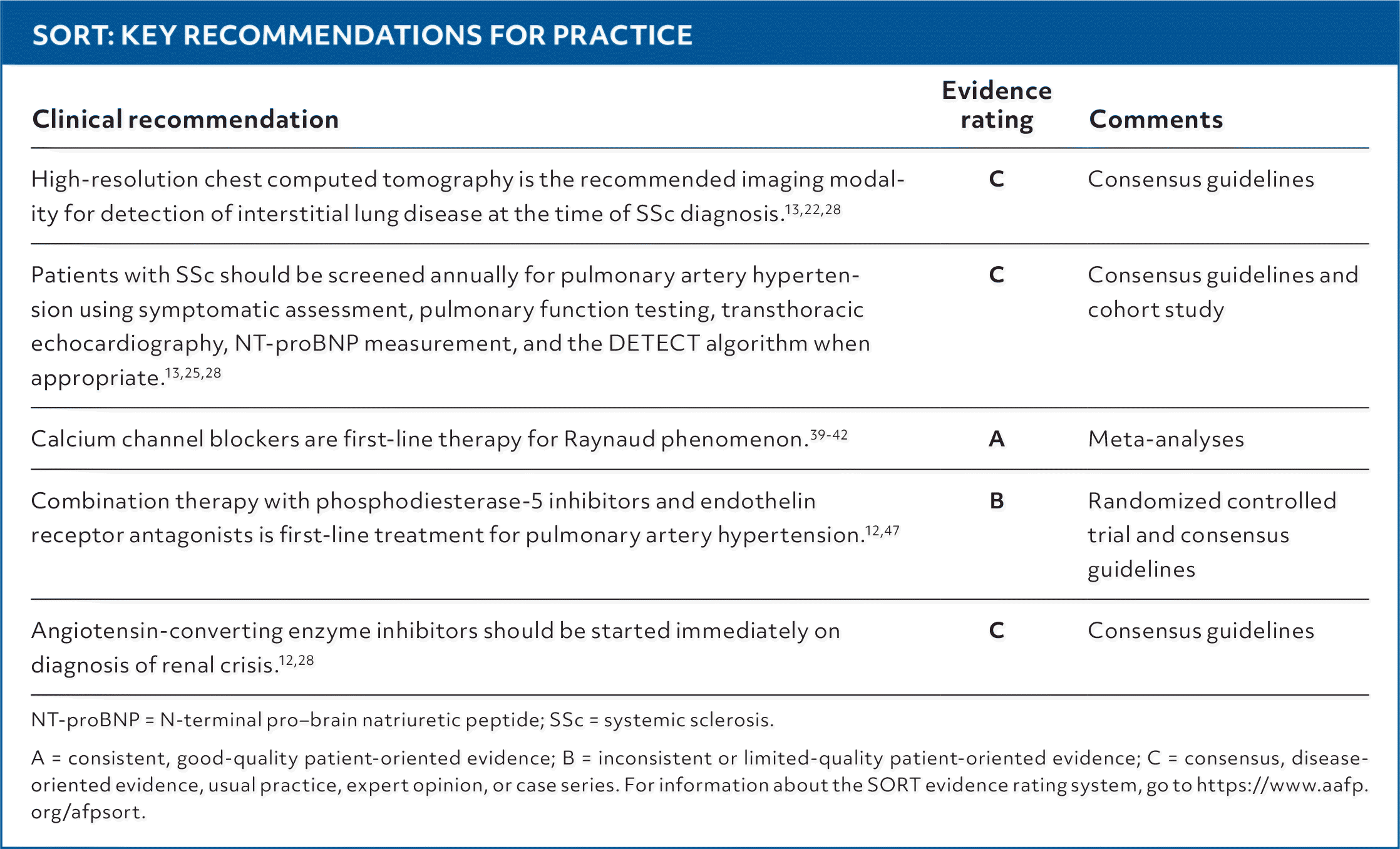
| Clinical recommendation | Evidence rating | Comments |
|---|---|---|
| High-resolution chest computed tomography is the recommended imaging modality for detection of interstitial lung disease at the time of SSc diagnosis.13,22,28 | C | Consensus guidelines |
| Patients with SSc should be screened annually for pulmonary artery hypertension using symptomatic assessment, pulmonary function testing, transthoracic echocardiography, NT-proBNP measurement, and the DETECT algorithm when appropriate.13,25,28 | C | Consensus guidelines and cohort study |
| Calcium channel blockers are first-line therapy for Raynaud phenomenon.39–42 | A | Meta-analyses |
| Combination therapy with phosphodiesterase-5 inhibitors and endothelin receptor antagonists is first-line treatment for pulmonary artery hypertension.12,47 | B | Randomized controlled trial and consensus guidelines |
| Angiotensin-converting enzyme inhibitors should be started immediately on diagnosis of renal crisis.12,28 | C | Consensus guidelines |
NT-proBNP = N-terminal pro–brain natriuretic peptide; SSc = systemic sclerosis.
A = consistent, good-quality patient-oriented evidence; B = inconsistent or limited-quality patient-oriented evidence; C = consensus, disease-oriented evidence, usual practice, expert opinion, or case series. For information about the SORT evidence rating system, go to https://www.aafp.org/afpsort.
EPIDEMIOLOGY
SSc predominantly affects women, with a female to male ratio of approximately 5:1, peaking between ages 40 and 50 years.4,5 The annual incidence is approximately 1 to 2 cases per 100,000 person-years.4 Diagnosis is commonly delayed because of the relatively low incidence and nonspecific signs and symptoms that are often present early in the disease course (eg, fatigue, Raynaud phenomenon).6
Read the full article
Get immediate access, anytime, anywhere.
Choose a single article, issue, or full-access subscription.
Earn up to 14 CME credits per issue.
