

A celebration of American Family Physician's (AFP's) 75th anniversary featured special articles in nearly every issue in 2025. Editors past and present explored the evolution of the journal and key topics over the years and acknowledged the dedication of our readers, authors, and editorial team.1 And now, we have already embarked on AFP's 77th year. This annual editorial provides updates on new editorial team members, reflects on top viewed content from 2025, and shares circulation and website statistics and other milestones such as the 10th anniversary of AFP's award-winning podcast.2–4
MEDICAL EDITING FELLOW AND RESIDENT AND STUDENT REPRESENTATIVES
Dr. Michael Harding served as the 8th Jay Siwek Medical Editing Fellow, completing his fellowship in May 2026. He participated in many journal projects, including the 75th anniversary series; reviewing and editing articles; writing an editorial, Diary, and blog entry; and developing AFP's artificial intelligence (AI) guidelines.5,6 This year's fellow, Dr. Omici Uwagbai Colquitt, has certifications in geriatrics and menopause and practices family medicine at Oak St. Health in Fayetteville, N.C. She graduated from the National Capital Consortium Family Medicine Residency in Fort Belvoir, Va., and has held faculty and staff physician roles in various military health centers. Before this AFP fellowship, she completed a science and medical writing postbaccalaureate program. You can read more about Dr. Harding's and Dr. Colquitt's backgrounds and interests in the AFP Community Blog.7,8
In addition to fellows, AFP also has resident and student representatives who assist with various projects throughout the year. In January 2026, Dr. Komal Gangar, a third-year resident at the University of Arkansas for Medical Sciences Little Rock Family Medicine Residency, joined the team as our resident representative, and Sunitha E. Konatham, a fourth-year medical student at Texas A&M College of Medicine in Bryan, joined as our student representative. They will continue in their roles through December 2026. Applications for the 2027 representative roles are open until September 1, 2026. More information about applying for these positions is available at https://www.aafp.org/afp/residentrep and https://www.aafp.org/afp/studentrep.
The AFP Photo Contest is an ongoing project created by the resident and student representatives. Residents and students are encouraged to submit photographs, sharing stories about how they use AFP. The 2026 winners are featured in this issue of AFP and will receive awards at FUTURE 2026: The National Conference for the Future of Family Medicine in Kansas City, Mo., later this month.
AFP'S TOP 20 ARTICLES OF 2025
Do not miss the top 20 AFP articles that were most viewed by readers online last year.9 Popular article topics included migraine, acid-base interpretation, bronchitis, jaundice, hyperthyroidism, dysuria, lower extremity abnormalities in children, tinea infections, and gastroesophageal reflux in children. The 2025 AFP Article of the Year Award will be chosen from this list, announced in an upcoming issue of AFP, and presented at FMX in Nashville, Tenn., in October 2026. The 2024 award went to the authors of “Diagnosing Common Benign Skin Tumors.”10
The AFP Community Blog is posted weekly and covers current clinical, public health, and health policy topics in family medicine. The top 10 posts of 2025 included the PREVENT risk calculator for cardiovascular disease, the use of body mass index, iron deficiency anemia, pulsatile tinnitus, urine polymerase chain reaction testing, elevated liver function tests, osteoporosis, migraines, rhinosinusitis, and laceration repair.11
One of AFP's most popular article series, the top research studies for primary care physicians, continues in an upcoming issue of AFP and is available online ahead of print. A collection of articles in this series is available at https://www.aafp.org/afp/collections/top-poems.
CIRCULATION, WEBSITE STATISTICS, DIGITAL CHANNELS
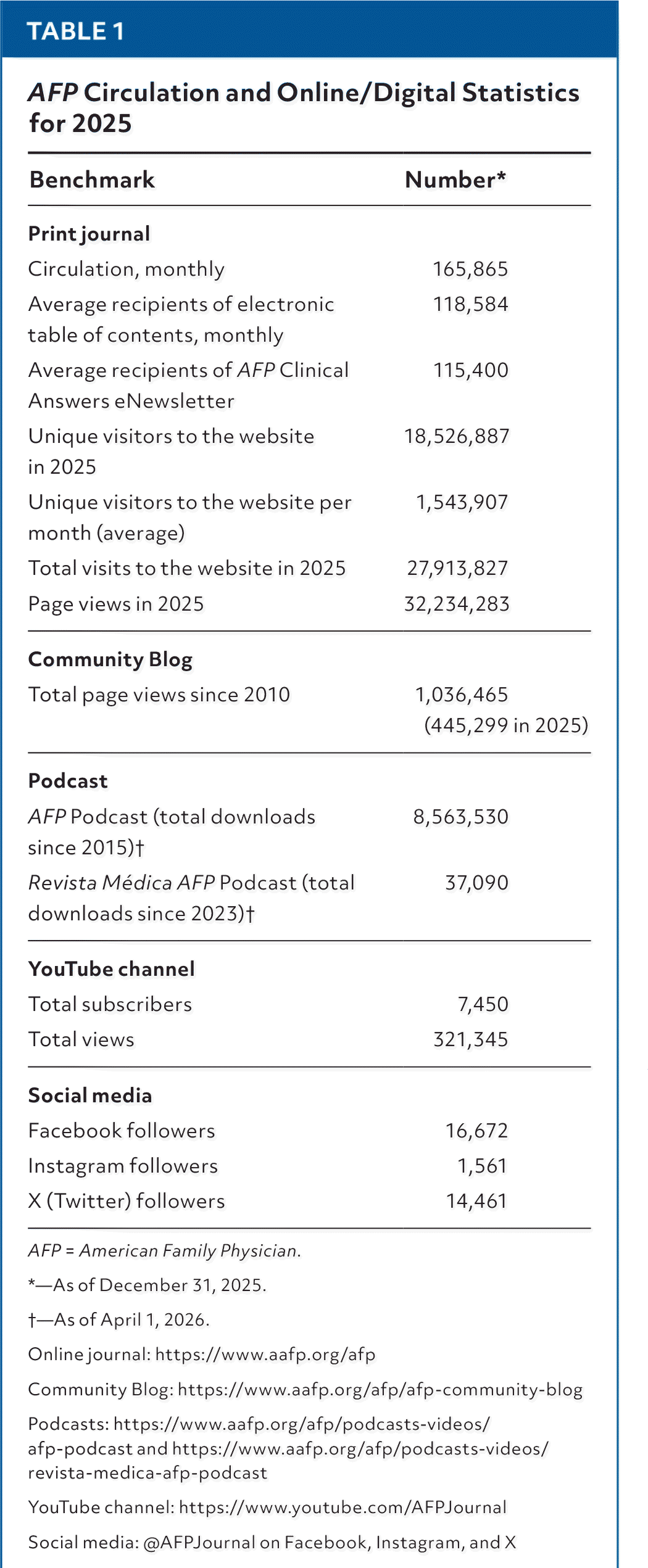
TABLE 1. AFP’s Circulation and Online/Digital Statistics for 2025
| Benchmark | Number* |
|---|---|
| Print journal | |
| Circulation, monthly | 165,865 |
| Average recipients of electronic table of contents, monthly | 118,584 |
| Average recipients of AFP Clinical | 115,400 |
| Answers eNewsletter | |
| Unique visitors to the website in 2025 | 18,526,887 |
| Unique visitors to the website per month (average) | 1,543,907 |
| Total visits to the website in 2025 | 27,913,827 |
| Page views in 2025 | 32,234,283 |
| Community Blog | |
| Total page views since 2010 | 1,036,465 (445,299 in 2025) |
| Podcast | |
| AFP Podcast (total downloads since 2015)† | 8,563,530 |
| Revista Médica AFP Podcast (total downloads since 2023)† | 37,090 |
| YouTube channel | |
| Total subscribers | 7,450 |
| Total views | 321,345 |
| Social media | |
| Facebook followers | 16,672 |
| Instagram followers | 1,561 |
| X (Twitter) followers | 14,461 |
AFP = American Family Physician.
*—As of December 31, 2025.
†—As of April 1, 2026.
Online journal: https://www.aafp.org/afp
Community Blog: https://www.aafp.org/afp/afp-community-blog
Podcasts: https://www.aafp.org/afp/podcasts-videos/afp-podcast and https://www.aafp.org/afp/podcasts-videos/revista-medica-afp-podcast
YouTube channel: https://www.youtube.com/AFPJournal
Social media: @AFPJournal on Facebook, Instagram, and X
The AFP website received an average of 1.5 million unique visitors per month in 2025, making it one of the most popular online medical publications. In addition to visits by members of the American Academy of Family Physicians (AAFP), the website is viewed by millions of other health care professionals and individuals who presumably are seeking information about various clinical conditions. Approximately 2.6 million CME credits were claimed in 2025. This year, the website migrated to a new technology platform enabling a more user-friendly experience and reducing the need for a separate app to read and engage with AFP.
Beyond print and website readership, many engage with our clinical content through the AFP Podcast, Revista Médica AFP Podcast, and social media channels (Facebook, Instagram, and X). In November 2025, the AFP Podcast celebrated its 10-year anniversary with more than 8.5 million downloads. Over the years, 60 enthusiastic family medicine residents have worked alongside the podcast faculty to host episodes that are both educational and relatable.
We continue to build our video collection and invite submissions for posting on the AFP YouTube channel. Clinical videos are peer-reviewed and provide an opportunity for residents and students to submit to the journal. Instructions for submitting a video are available at https://www.aafp.org/afp/multimedia/afp-videos.
PUBLICATION TIMELINES, ACCEPTANCE RATES, AUTHOR DEMOGRAPHICS
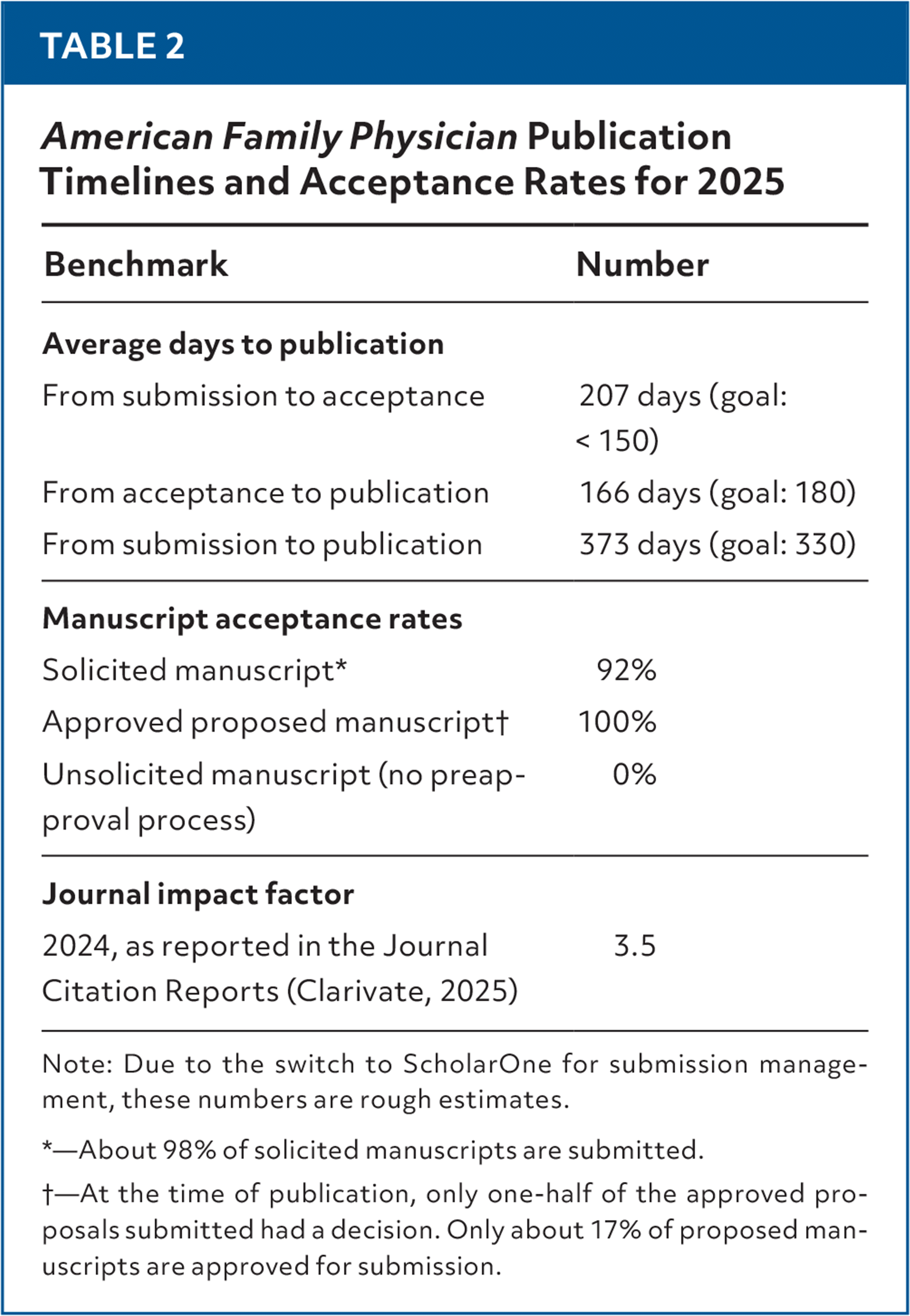
On average, review articles are accepted about 7 months after they are submitted, which allows time for peer review, author revisions, and medical editing (Table 2). Articles are typically published 5 to 6 months after acceptance with the goal of providing readers with a mix of article topics scheduled in each issue.
TABLE 2. Publication Timelines and Acceptance Rates for 2025
| Benchmark | Number |
|---|---|
| Average days to publication | |
| From submission to acceptance | 207 days (goal: < 150) |
| From acceptance to publication | 166 days (goal: 180) |
| From submission to publication | 373 days (goal: 330) |
| Manuscript acceptance rates | |
| Solicited manuscript* | 92% |
| Approved proposed manuscript† | 100% |
| Unsolicited manuscript (no preapproval process) | 0% |
| Journal impact factor | |
| 2024, as reported in the Journal | 3.5 |
| Citation Reports (Clarivate, 2025) |
Note: Due to the switch to ScholarOne for submission management, these numbers are rough estimates.
*—About 98% of solicited manuscripts are submitted.
†—At the time of publication, only one-half of the approved proposals submitted had a decision. Only about 17% of proposed manuscripts are approved for submission.
To ensure comprehensive coverage of a curriculum of topics, we solicit most articles that are published. We circulate a “call for authors” through multiple family medicine communication platforms and post it on social media and online. We also consider and accept some articles resulting from proposals we receive from authors who email us directly (roughly 17%). Authors are strongly encouraged to read the AFP Authors' Guide before contacting us. Our preference is for the first author to be an experienced clinician and writer because our readership largely consists of busy physicians who rely on AFP for practical, evidence-based content and CME. However, congruent with AFP's mission to promote scholarship in family medicine, we strive to increase diverse authorship by encouraging experienced authors to mentor coauthors, especially authors from groups that are underrepresented in medicine.13 To measure our progress in mentorship, we have been collecting anonymous demographic data since 2021 from authors who volunteer to share information about their gender, race, and ethnicity. This information is collected after publication and is not used to inform decisions about submitted manuscripts and future publication.
LOOKING AHEAD
As AI becomes ubiquitous in clinical and scholarly aspects of family medicine, AFP continues to explore collaborations and update policies on the use of AI tools. Last year, journal editors in family medicine collectively wrote on the use of AI in family medicine publications emphasizing that authors must disclose use of AI, must remain accountable in ensuring the work is original and accurate, and should not list AI tools as an author.14AFP continues to expand on these principles, and we are creating guidelines for authors and reviewers that can be found in our Authors' Guide.
As it relates to the clinical application of AI, evidence-based content from AFP is surfaced at the point of care in OpenEvidence through a partnership between the AAFP and Open-Evidence that was announced last year. We are proud of the journal's rigorous review and editing process to produce unbiased evidence-based content that countless readers rely on to care for their patients. We hope as AI tools evolve so can the journal in its role in disseminating trustworthy content for primary care clinicians everywhere. As always, we welcome your feedback. Please send comments to afpjournal@aafp.org.
