

KEY POINTS FOR PRACTICE
| • Diets composed of nutrient-dense, minimally processed foods (ie, protein, dairy, vegetables, fruits, healthy fats, and whole grains) are recommended. |
| • Intake of highly processed foods, refined carbohydrates, and added sugars should be limited. |
| • Protein should be prioritized at every meal, aiming for 1.2 to 1.6 g per kg of body weight daily. |
| • Intake of added sugars should not exceed 10 g per meal, and all added sugars should be avoided in children younger than 11 years. |
| From the AFP Editors |
Dietary guidance is increasingly important because more than 70% of US adults are overweight or obese. The standard US diet often includes highly processed foods and beverages and is low in vegetables, fruits, and whole grains. The US Department of Agriculture (USDA) and US Department of Health and Human Services (HHS) have released updated dietary guidelines, emphasizing nutrient-dense foods (ie, protein, dairy, vegetables, fruits, healthy fats, and whole grains) and limiting highly processed foods, refined carbohydrates, and added sugars (Figure 1).
FIGURE 1. Food pyramid.
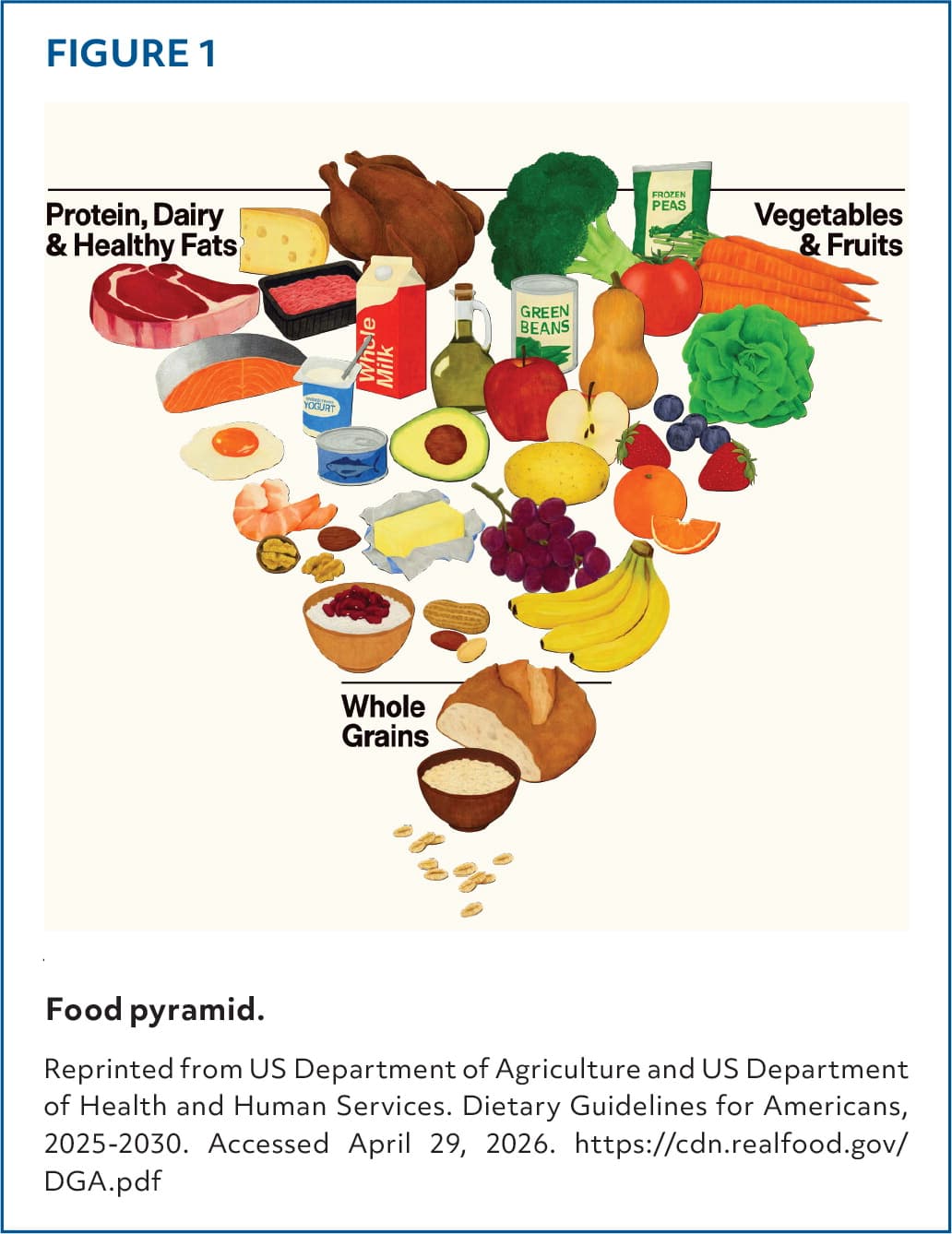
Reprinted from US Department of Agriculture and US Department of Health and Human Services. Dietary Guidelines for Americans, 2025–2030. Accessed April 29, 2026. https://cdn.realfood.gov/DGA.pdf
PROTEIN
High-protein foods should be prioritized at every meal by including a variety of animal sources (eg, eggs, poultry, seafood, red meat) and plant sources (eg, beans, peas, lentils, nuts, seeds, soy), aiming for 1.2 to 1.6 g of protein per kg of body weight daily.
DAIRY
Three daily servings of full-fat dairy products with no added sugars are recommended for people on a diet of 2,000 calories per day.
VEGETABLES AND FRUITS
A variety of colorful, nutrient-dense vegetables (three servings) and fruits (two servings) should be consumed daily. Frozen, dried, or canned vegetables or fruits with no or very limited added sugars are acceptable.
HEALTHY FATS
Healthy fats are found in meats, poultry, eggs, omega-3–rich seafood, full-fat dairy, nuts, seeds, olives, and avocados. Non-seed oils (eg, olive oil) are preferred when cooking or adding fats to meals. Butter and beef tallow are also options.
WHOLE GRAINS
Two to four daily servings of whole grains are recommended, with an emphasis on fiber-rich whole grains and minimizing highly processed, refined carbohydrates (eg, white bread, ready-to-eat or packaged breakfast options, flour tortillas, crackers).
FOODS TO LIMIT
Highly Processed Foods
Highly processed packaged, prepared, ready-to-eat, or other foods with added sugars and sodium (eg, cookies, candy, chips) should be replaced with nutrient-dense meals, both when prepared at home and when dining out. Foods and beverages containing artificial flavors, petroleum-based dyes, artificial preservatives, and low-calorie and nonnutritive sweeteners should be limited.
Saturated Fats
Saturated fats, which are often present in highly processed foods, should not comprise more than 10% of total daily calories.
Added Sugars
Added sugars and nonnutritive sweeteners should be avoided completely, including sugar-sweetened beverages (eg, sodas, fruit drinks, energy drinks). When consumed, intake should not exceed 10 g per meal. Table 1 lists common calorie-dense added sugars and nonnutritive sweeteners. Naturally occurring sugars in fruits and milk are not considered added sugars.
Read the full article
Get immediate access, anytime, anywhere.
Choose a single article, issue, or full-access subscription.
Earn up to 14 CME credits per issue.
