

Venous thromboembolism (VTE) presents as deep venous thrombosis (DVT) or pulmonary embolism (PE). VTE is the third most common fatal cardiovascular condition in the United States. Clinical prediction rules such as the Wells' Criteria for DVT, Wells' Criteria for PE, and Pulmonary Embolism Rule-Out Criteria should be used to determine the pretest probability of DVT or PE. The D-dimer assay is used in low-risk patients to rule out DVT and in moderate-risk patients to rule out PE. Compression ultrasonography is the preferred imaging modality to diagnose DVT. PE typically is diagnosed with computed tomographic pulmonary angiography or with ventilation-perfusion scintigraphy if the patient has contraindications to computed tomographic pulmonary angiography. Preferred outpatient therapy for VTE is a direct-acting oral anticoagulant rather than a vitamin K antagonist or low-molecular-weight heparin. Most patients with acute uncomplicated DVT can be treated as outpatients. The Simplified PE Severity Index can guide treatment decisions for patients with PE. Apixaban or rivaroxaban can be used for initial management without the need to bridge with parenteral therapy. Treatment is recommended for 3 to 6 months after initial VTE. Patients with chronic risk factors, a recurrent VTE after primary treatment, or a first unprovoked VTE should be considered for secondary prevention with a direct-acting oral anticoagulant or warfarin after a bleeding-risk assessment.
Venous thromboembolism (VTE) encompasses two major clinical conditions, deep venous thrombosis (DVT) and pulmonary embolism (PE). It is a common and potentially life-threatening condition with an estimated annual incidence of 1 to 2 cases per 1,000 persons.1–4 In the United States, it is the third most common fatal cardiovascular condition after myocardial infarction and cerebrovascular accident.1,5 According to the Centers for Disease Control and Prevention, VTE causes between 60,000 and 100,000 US deaths annually.6
SORT: KEY RECOMMENDATIONS FOR PRACTICE
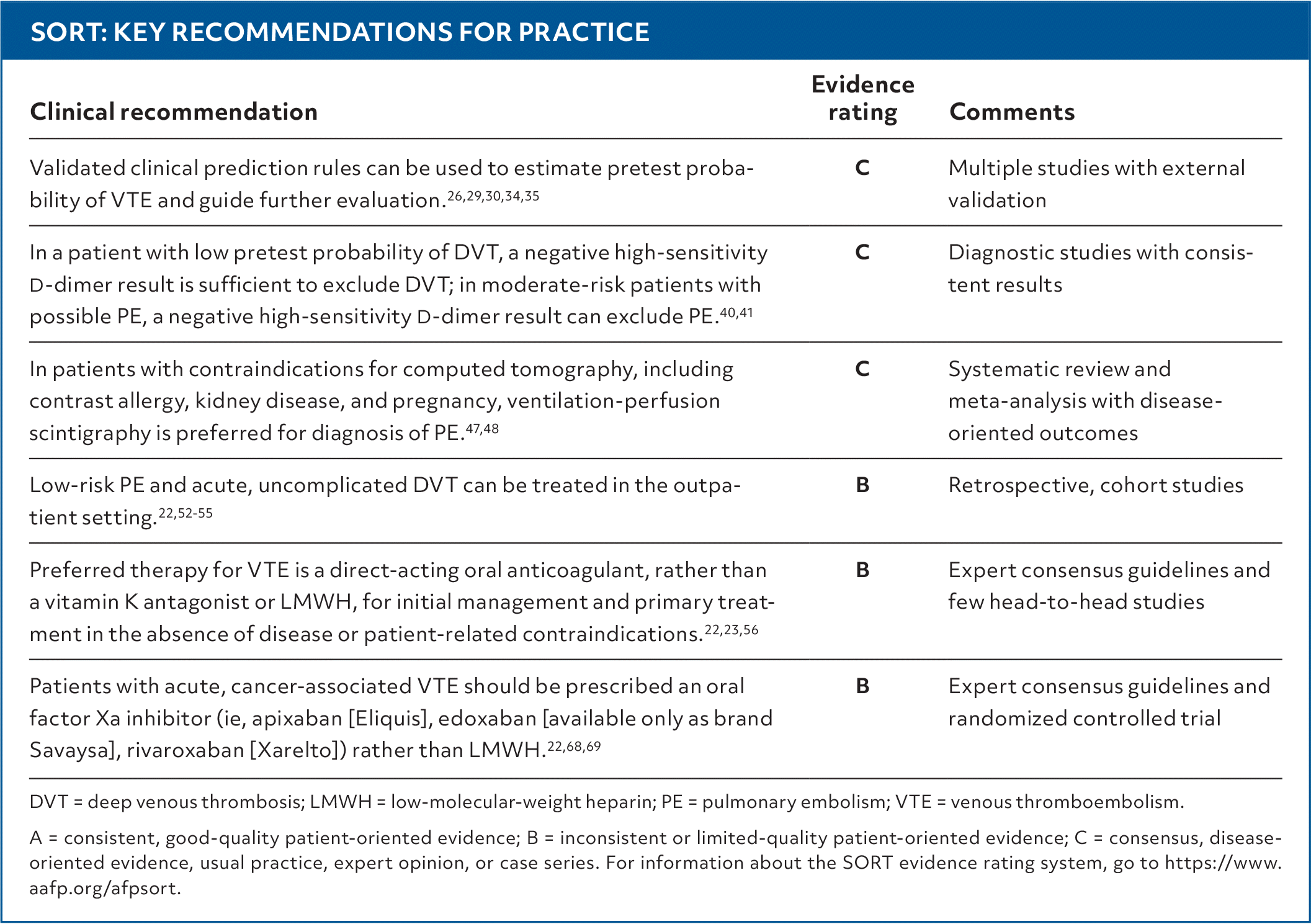
| Clinical recommendation | Evidence rating | Comments |
|---|---|---|
| Validated clinical prediction rules can be used to estimate pretest probability of VTE and guide further evaluation.26,29,30,34,35 | C | Multiple studies with external validation |
| In a patient with low pretest probability of DVT, a negative high-sensitivity d-dimer result is sufficient to exclude DVT; in moderate-risk patients with possible PE, a negative high-sensitivity D-dimer result can exclude PE.40,41 | C | Diagnostic studies with consistent results |
| In patients with contraindications for computed tomography, including contrast allergy, kidney disease, and pregnancy, ventilation-perfusion scintigraphy is preferred for diagnosis of PE.47,48 | C | Systematic review and meta-analysis with disease-oriented outcomes |
| Low-risk PE and acute, uncomplicated DVT can be treated in the outpatient setting.22,52–55 | B | Retrospective, cohort studies |
| Preferred therapy for VTE is a direct-acting oral anticoagulant, rather than a vitamin K antagonist or LMWH, for initial management and primary treatment in the absence of disease or patient-related contraindications.22,23,56 | B | Expert consensus guidelines and few head-to-head studies |
| Patients with acute, cancer-associated VTE should be prescribed an oral factor Xa inhibitor (ie, apixaban [Eliquis], edoxaban [available only as brand Savaysa], rivaroxaban [Xarelto]) rather than LMWH.22,68,69 | B | Expert consensus guidelines and randomized controlled trial |
DVT = deep venous thrombosis; LMWH = low-molecular-weight heparin; PE = pulmonary embolism; VTE = venous thromboembolism.
A = consistent, good-quality patient-oriented evidence; B = inconsistent or limited-quality patient-oriented evidence; C = consensus, disease-oriented evidence, usual practice, expert opinion, or case series. For information about the SORT evidence rating system, go to https://www.aafp.org/afpsort.
Read the full article
Get immediate access, anytime, anywhere.
Choose a single article, issue, or full-access subscription.
Earn up to 14 CME credits per issue.
