Heart Failure With Preserved Ejection Fraction

Amir Barzin, DO, MS
Kathleen K. Barnhouse, MD
Shawn F. Kane, MD

American Family Physician. 2025;112(4):435-440.

Author disclosure: No relevant financial relationships.

This clinical content conforms to AAFP criteria for CME.

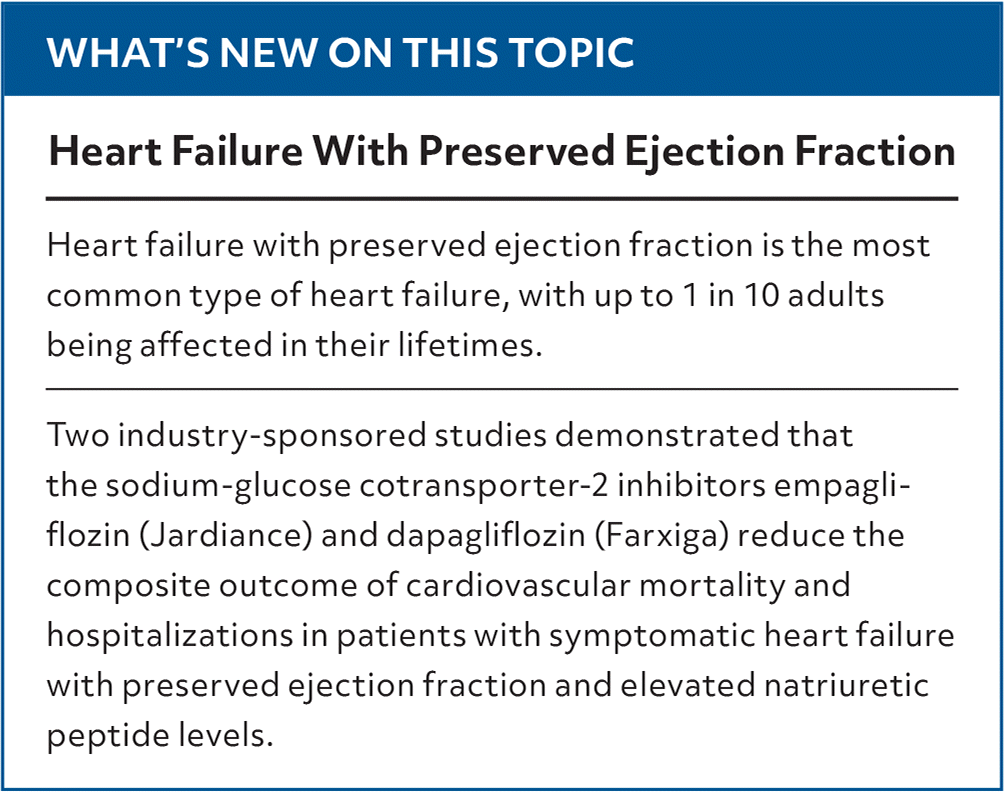
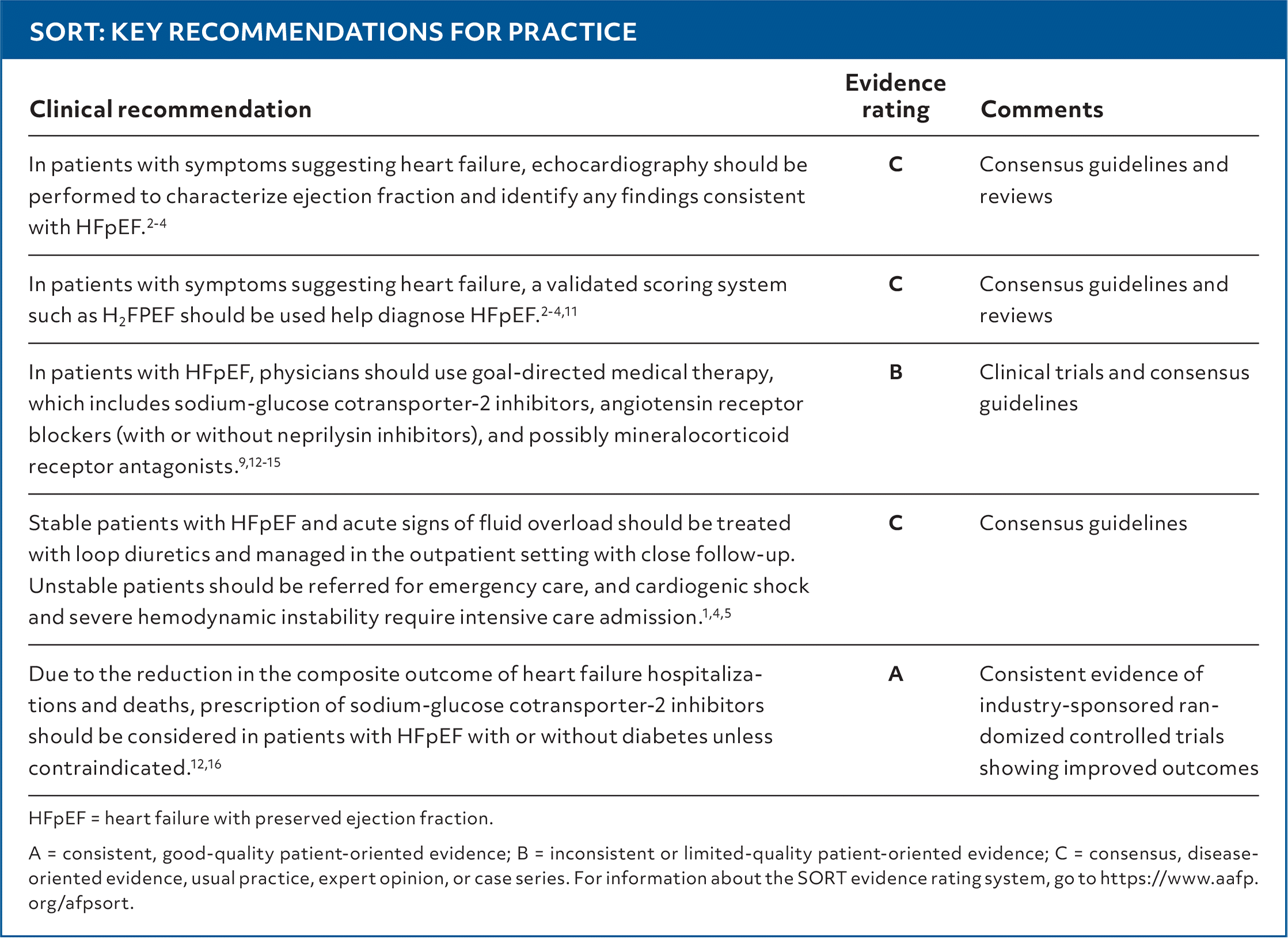
Heart failure is a complex clinical syndrome in which impaired ventricular filling and ejection of blood into circulation causes decreased stroke volume and cardiac output. Heart failure with preserved ejection fraction (50% or more) is the most common type of heart failure, and up to 1 in 10 adults will be affected in their lifetime. Clinical symptoms such as peripheral edema, dyspnea, and orthopnea, with clinical findings including jugular venous distention, third heart sound, and laterally displaced apical impulse should prompt consideration of heart failure. Laboratory values (eg, elevated N-terminal fragment of the prohormone brain natriuretic peptide) can also aid in diagnosis, which can then be confirmed with specific echocardiographic findings. Once heart failure with preserved ejection fraction is diagnosed, medications should be initiated to manage comorbid symptoms and conditions such as hypertension, obesity, and obstructive sleep apnea. Sodium-glucose cotransporter-2 inhibitors have been shown to reduce hospitalizations related to heart failure and cardiovascular-related mortality in patients with symptomatic heart failure, elevated natriuretic peptide levels, and an ejection fraction more than 40%; therefore, they should be considered in all patients with heart failure with preserved ejection fraction. Additionally, loop diuretics, mineralocorticoid receptor antagonists, and angiotensin receptor blocker/neprilysin inhibitors can be used. In patients with end-organ dysfunction or signs of refractory treatment, consultation with a heart failure specialist should be considered.

AMIR BARZIN, DO, MS, FAAFP, is an associate professor in the Department of Family Medicine at the University of North Carolina School of Medicine, Chapel Hill.

KATHLEEN K. BARNHOUSE, MD, is an associate professor in the Department of Family Medicine at the University of North Carolina School of Medicine.

SHAWN F. KANE, MD, FAAFP, FACSM, is a professor in the Department of Family Medicine at the University of North Carolina School of Medicine.

Address correspondence to Amir Barzin, DO, MS, at amir_barzin@med.unc.edu.

Author disclosure: No relevant financial relationships.

  1. 1.Heidenreich PA, et al. 2022 AHA/ACC/HFSA guideline for the management of heart failure: a report of the American College of Cardiology/American Heart Association Joint Committee on Clinical Practice Guidelines. Circulation. 2022;145(18):e895-e1032.
  2. 2.Kane SF. Heart failure: heart failure with preserved ejection fraction. FP Essent. 2021;506:11-19.
  3. 3.Gevaert AB, et al. Heart failure with preserved ejection fraction: recent concepts in diagnosis, mechanisms and management. Heart. 2022;108(17):1342-1350.
  4. 4.Kittleson MM, et al. 2023 ACC expert consensus decision pathway on management of heart failure with preserved ejection fraction: a report of the American College of Cardiology Solution Set Oversight Committee. J Am Coll Cardiol. 2023;81(18):1835-1878.
  5. 5.Ponikowski P, et al.; ESC Scientific Document Group. 2016 ESC guidelines for the diagnosis and treatment of acute and chronic heart failure. Eur Heart J. 2016;37(27):2129-2200.
  6. 6.Borlaug BA, et al. Heart failure with preserved ejection fraction: JACC scientific statement. J Am Coll Cardiol. 2023;81(18):1810-1834.
  7. 7.Bursi F, Weston SA, Redfield MM, et al. Systolic and diastolic heart failure in the community. JAMA. 2006;296(18):2209-2216.
  8. 8.Redfield MM, et al. Burden of systolic and diastolic ventricular dysfunction in the community: appreciating the scope of the heart failure epidemic. JAMA. 2003;289(2):194-202.
  9. 9.Shah KS, et al. Heart failure with preserved, borderline, and reduced ejection fraction: 5-year outcomes. J Am Coll Cardiol. 2017;70(20):2476-2486.
  10. 10.Kuwahara K. The natriuretic peptide system in heart failure: diagnostic and therapeutic implications. Pharmacol Ther. 2021;227:107863.
  11. 11.Reddy YNV, et al. A simple, evidence-based approach to help guide diagnosis of heart failure with preserved ejection fraction. Circulation. 2018;138(9):861-870.
  12. 12.Anker SD, et al.; EMPEROR-Preserved Trial Investigators. Empagliflozin in heart failure with a preserved ejection fraction. N Engl J Med. 2021;385(16):1451-1461.
  13. 13.Gronda E, et al. The PARAGON-HF trial: the sacubitril/valsartan in heart failure with preserved ejection fraction. Eur Heart J Suppl. 2020;22(suppl L):L77-L81.
  14. 14.Pitt B, et al.; TOPCAT Investigators. Spironolactone for heart failure with preserved ejection fraction. N Engl J Med. 2014;370(15):1383-1392.
  15. 15.Yusuf S, et al. Effects of candesartan in patients with chronic heart failure and preserved left-ventricular ejection fraction: the CHARM-Preserved Trial. Lancet. 2003;362(9386):777-781.
  16. 16.Solomon SD, et al.; DELIVER Trial Committees and Investigators. Dapagliflozin in heart failure with mildly reduced or preserved ejection fraction. N Engl J Med. 2022;387(12):1089-1098.
  17. 17.Vaduganathan M, et al. SGLT-2 inhibitors in patients with heart failure: a comprehensive meta-analysis of five randomised controlled trials. Lancet. 2022;400(10354):757-767.
  18. 18.McMurray JJV, et al.; DAPA-HF Trial Committees and Investigators. Dapagliflozin in patients with heart failure and reduced ejection fraction. N Engl J Med. 2019;381(21):1995-2008.
  19. 19.Cleland JG, et al. The perindopril in elderly people with chronic heart failure (PEP-CHF) study. Eur Heart J. 2006;27(19):2338-2345.
  20. 20.Solomon SD, et al.; PARAGON-HF Investigators and Committees. Angiotensin-neprilysin inhibition in heart failure with preserved ejection fraction. N Engl J Med. 2019;381(17):1609-1620.
  21. 21.Gazewood JD, et al. Heart failure with preserved ejection fraction: diagnosis and management. Am Fam Physician. 2017;96(9):582-588.
  22. 22.Kaddoura R, et al. Beta-blocker therapy in heart failure with preserved ejection fraction (B-HFpEF): a systematic review and meta-analysis. Curr Probl Cardiol. 2024;49(3):102376.
  23. 23.Arnold SV, et al. Beta-blocker use and heart failure outcomes in mildly reduced and preserved ejection fraction. JACC Heart Fail. 2023;11(8 pt 1):893-900.
  24. 24.Hernandez AF, et al. Clinical effectiveness of beta-blockers in heart failure: findings from the OPTIMIZE-HF (Organized Program to Initiate Lifesaving Treatment in Hospitalized Patients with Heart Failure) Registry. J Am Coll Cardiol. 2009;53(2):184-192.
  25. 25.Colin-Ramirez E, et al. Sodium restriction in patients with heart failure: a systematic review and meta-analysis of randomized clinical trials. Circ Heart Fail. 2023;16(1):e009879.
  26. 26.American Diabetes Association Professional Practice Committee. 10. Cardiovascular disease and risk management: standards of care in diabetes-2024. Diabetes Care. 2024;47(suppl 1):S179-S218.
  27. 27.Powell-Wiley TM, et al.; American Heart Association Council on Lifestyle and Cardiometabolic Health; Council on Cardiovascular and Stroke Nursing; Council on Clinical Cardiology; Council on Epidemiology and Prevention; and Stroke Council. Obesity and cardiovascular disease: a scientific statement from the American Heart Association. Circulation. 2021;143(21):e984-e1010.
  28. 28.Kosiborod MN, et al.; STEP-HFpEF Trial Committees and Investigators. Semaglutide in patients with heart failure with preserved ejection fraction and obesity. N Engl J Med. 2023;389(12):1069-1084.
  29. 29.Shimada YJ, et al. Bariatric surgery and emergency department visits and hospitalizations for heart failure exacerbation: population-based, self-controlled series. J Am Coll Cardiol. 2016;67(8):895-903.
  30. 30.Cistulli PA, et al.; medXcloud group. Positive airway pressure therapy adherence and health care resource use in patients with obstructive sleep apnea and heart failure with preserved ejection fraction. J Am Heart Assoc. 2023;12(14):e028733.
  31. 31.Reddy YNV, et al. Management of atrial fibrillation across the spectrum of heart failure with preserved and reduced ejection fraction. Circulation. 2022;146(4):339-357.
  32. 32.Zelniker TA, et al. Effect of dapagliflozin on atrial fibrillation in patients with type 2 diabetes mellitus: insights from the DECLARE-TIMI 58 Trial. Circulation. 2020;141(15):1227-1234.
  33. 33.Murphy SP, et al. Heart failure with reduced ejection fraction: a review. JAMA. 2020;324(5):488-504.
  34. 34.Satpathy C, et al. Diagnosis and management of diastolic dysfunction and heart failure. Am Fam Physician. 2006;73(5):841-846.
  35. 35.Gutierrez C, et al. Diastolic heart failure: challenges of diagnosis and treatment. Am Fam Physician. 2004;69(11):2609-2617.

Copyright © 2026 by the American Academy of Family Physicians.

This content is owned by the AAFP. A person viewing it online may make one printout of the material and may use that printout only for his or her personal, non-commercial reference. This material may not otherwise be downloaded, copied, printed, stored, transmitted or reproduced in any medium, whether now known or later invented, except as authorized in writing by the AAFP. See permissions for copyright questions and/or permission requests.