

Slipped capital femoral epiphysis occurs in childhood and adolescence and is associated with potentially serious lifelong complications and sequelae. The incidence of slipped capital femoral epiphysis appears to be increasing as rates of childhood obesity increase. Patients may have a noted limp and present with poorly localized pain in the hip, groin, thigh, buttock, low back, or knee. Pain increases with activities that require hip flexion, such as squatting, prolonged sitting, and riding a bicycle. Inspection may reveal an antalgic walking pattern with a Trendelenburg gait and external rotation of the leg. Passive flexion of the hip may induce an obligatory external rotation and abduction (Drehmann sign), and internal rotation of the hip may be limited. Slipped capital femoral epiphysis is typically diagnosed from anteroposterior pelvis and frog-leg radiographs. Initial management focuses on decreasing complications and long-term sequelae by halting further slippage. To limit progression, patients should be immediately placed into non–weight-bearing status and urgently referred to an orthopedic surgeon for surgical fixation. Return to activity or sport depends on a gradual increase in activity that normally lasts approximately 6 months after surgery.
Slipped capital femoral epiphysis (SCFE) is defined as inferior slippage of the femoral epiphysis from the femoral neck. It is caused by the failure of the physeal or growth plate and leads to displacement of the femoral head relative to the femoral neck (Figure 11). This failure most commonly involves posterior and inferior slippage of the femoral head on the femoral neck.2
SORT: KEY RECOMMENDATONS FOR PRACTICE
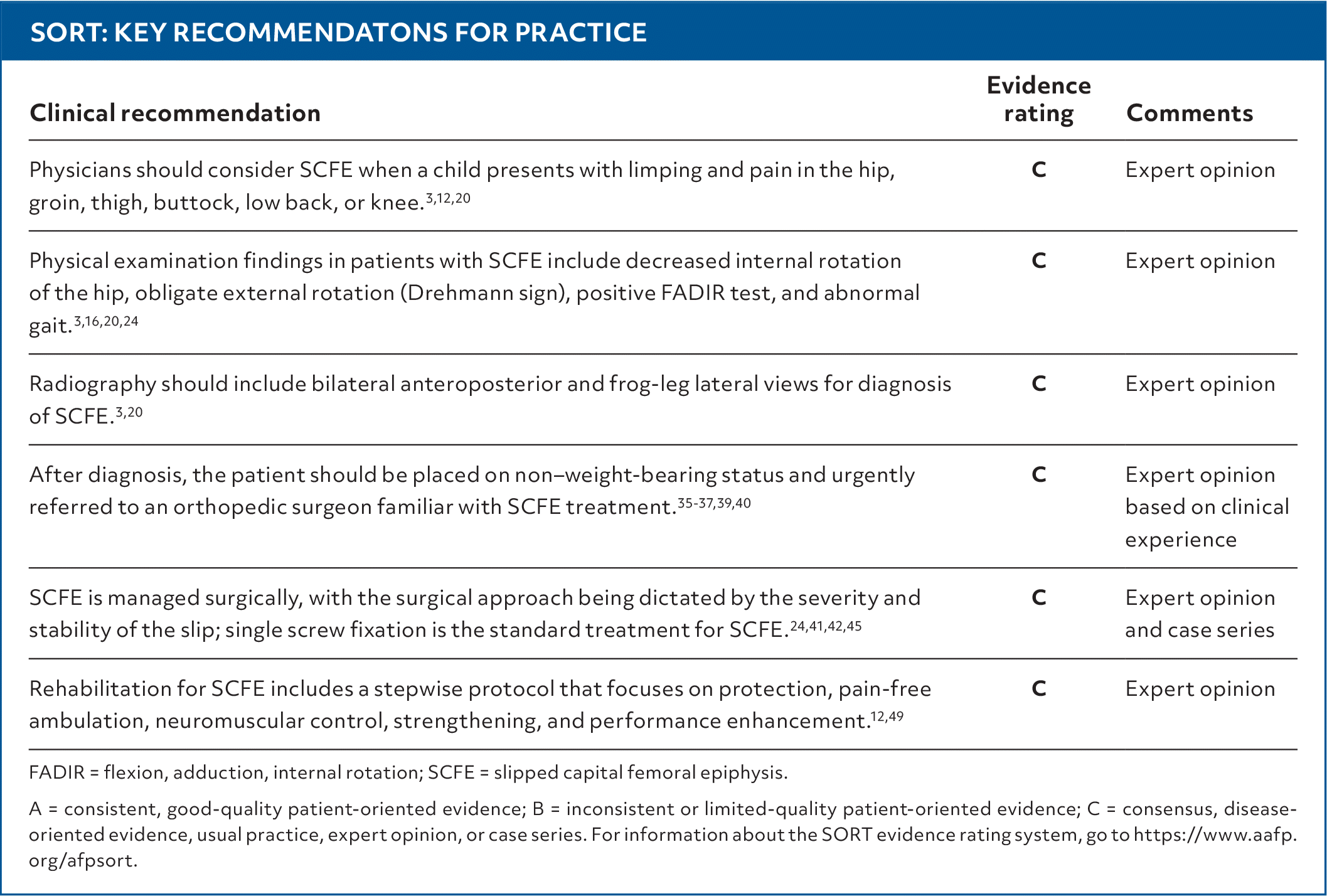
| Clinical recommendation | Evidence rating | Comments |
|---|---|---|
| Physicians should consider SCFE when a child presents with limping and pain in the hip, groin, thigh, buttock, low back, or knee.3,12,20 | C | Expert opinion |
| Physical examination findings in patients with SCFE include decreased internal rotation of the hip, obligate external rotation (Drehmann sign), positive FADIR test, and abnormal gait.3,16,20,24 | C | Expert opinion |
| Radiography should include bilateral anteroposterior and frog-leg lateral views for diagnosis of SCFE.3,20 | C | Expert opinion |
| After diagnosis, the patient should be placed on non–weight-bearing status and urgently referred to an orthopedic surgeon familiar with SCFE treatment.35–37,39,40 | C | Expert opinion based on clinical experience |
| SCFE is managed surgically, with the surgical approach being dictated by the severity and stability of the slip; single screw fixation is the standard treatment for SCFE.24,41,42,45 | C | Expert opinion and case series |
| Rehabilitation for SCFE includes a stepwise protocol that focuses on protection, pain-free ambulation, neuromuscular control, strengthening, and performance enhancement.12,49 | C | Expert opinion |
FADIR = flexion, adduction, internal rotation; SCFE = slipped capital femoral epiphysis.
A = consistent, good-quality patient-oriented evidence; B = inconsistent or limited-quality patient-oriented evidence; C = consensus, disease-oriented evidence, usual practice, expert opinion, or case series. For information about the SORT evidence rating system, go to https://www.aafp.org/afpsort.
Read the full article
Get immediate access, anytime, anywhere.
Choose a single article, issue, or full-access subscription.
Earn up to 14 CME credits per issue.
