
The power of a $10,000 grant: Expanding care for the unhoused and uninsured
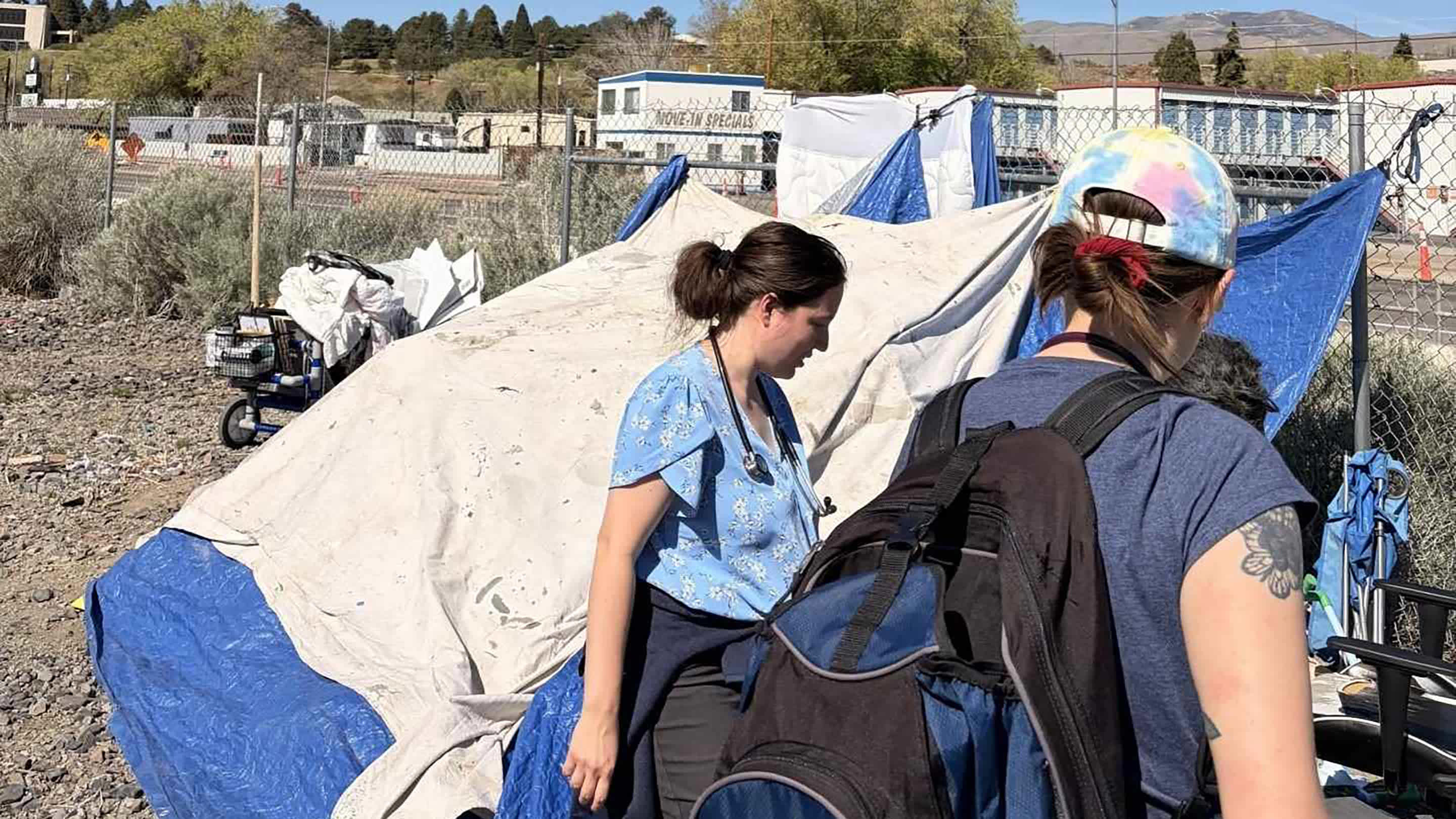
Students from the University of Nevada Reno School of Medicine help provide free care to unhoused people through the school’s Street Medicine Clinic.
By Daniel Spogen MD, FAAFP
The Student Outreach Clinic at the University of Nevada Reno School of Medicine has been providing free medical care to uninsured and underinsured individuals for 30 years. For nearly 20 years, I’ve been the clinic’s medical director.
I’ve seen it grow from a small, monthly effort to multiple clinics per month in Reno as well as outreach into our rural communities. A few years ago, we expanded to include a Street Medicine Clinic, which has grown from an occasional encampment walk to two outings each month.
In three decades, the outreach clinic has not billed for any services. It relies instead on generous support from our community and grant funding.
We received a $10,000 grant from the AAFP Foundation’s Family Medicine Cares USA program last fall. You might be surprised how big of a difference $10,000 can make with this patient population.
Delivering health care outside traditional settings
We do a lot of wound care in the Street Medicine program using a portable ultrasound and an iPad, both bought with the Foundation grant. These purchases are critical to caring for unhoused patients. We commonly use the ultrasound to judge the severity of wounds. That’s important because some patients in this population are resistant to seeking more advanced medical care unless we can offer evidence that they truly need a trip to the emergency room. Many people in this group distrust the medical system and tend to wait until they are in the late stages of an illness. In the street medicine program, we can make a difference by catching things earlier.
Specialists from cardiology and emergency medicine have joined us on these walks, and the ER docs are great at wound care. However, these patients have many more problems besides wounds, and students quickly learn that family physicians can diagnose and treat a wide variety of issues. For students, these outings are a great advertisement for our specialty.
How grants and gifts support patients, learners
We wouldn't be able to do any of this work without support. The Foundation’s grant enabled us to purchase durable equipment that has benefited patients in the Street Medicine program and in our clinic, including an exam table and stool, privacy screens, pulse oximeters, blood pressure cuffs and a defibrillator.
The impact of grants and gifts is huge for patients who are receiving free medical care, often in places they could not have been seen in the past. It’s important for learners, too. There is great interest in this generation of medical students, who are drawn to opportunities to help those in need. We teach them how to utilize available resources, so not only are they able to help deliver care, but to understand the whole process of caring for a person in these settings.
Your support improves and expands care
Since its launch in 2011, Family Medicine Cares USA has awarded a 145 grants totaling $2.2 million to free clinics in more than 40 states and territories.
Applications for Family Medicine Cares USA grants are open through July 15—up to $10,000 for existing free clinics and up to $25,000 for new clinics.
You can make a meaningful impact by supporting the Foundation with donations big or small. Here are some examples of how donations make an impact for clinics supported by Family Medicine Cares USA:
$50 buys three oximeters.
$100 will provide defibrillator supplies.
$150 provides a stethoscope.
$500 purchases an HbA1c machine for diabetes diagnostics.
$800 buys a small vaccine refrigerator.
$1,500 will provide an autoclave.
$2,000 provides an EKG machine.
I've long been impressed with the Foundation because it’s always working to help people who need it. I hope you’ll take this opportunity to help the Foundation continue to help others.
Daniel Spogen MD, FAAFP, a member of the Nevada AFP, is a professor of family and community medicine and the medical director of the Student Outreach Clinic at the University of Nevada Reno School of Medicine.
Disclaimer
The opinions and views expressed here are those of the authors and do not necessarily represent or reflect the opinions and views of the American Academy of Family Physicians. This blog is not intended to provide medical, financial, or legal advice.
Disclaimer
The opinions and views expressed here are those of the authors and do not necessarily represent or reflect the opinions and views of the American Academy of Family Physicians. This blog is not intended to provide medical, financial, or legal advice.