Reduce administrative burden: Chart review
Streamline workflows and reduce administrative burden with pre-visit planning and practice models.

Transformations to reduce chart review burden
Learn about organizational changes a practice can make to modify its workflow and operations. Transformations to improve chart burden range from pre-visit planning to adopting an entirely new practice model.
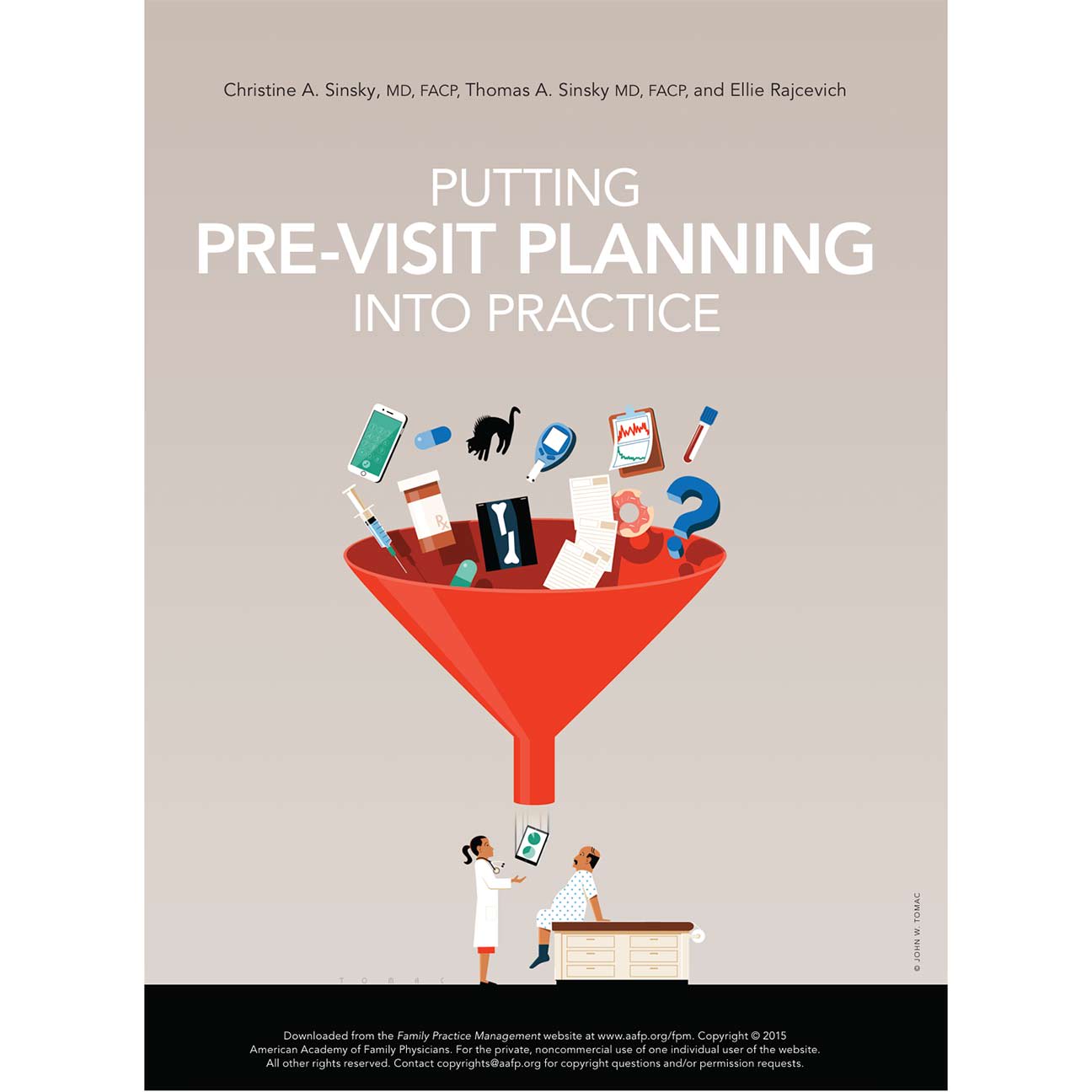
Transformation 1: Team-based pre-visit planning
Save time and increase satisfaction by letting your team help you prepare for each appointment ahead of time.
Dedicate a team member to complex patients
This person can identify high-risk patients and monitor their progress toward quality metrics, including:
Check that the quality metric data is accurately assigned.
Update any missing metrics that have been met.
Contact patients who need to be seen to achieve specific quality metrics.
Order protocol-based labs or studies that patients need to satisfy outcome metrics.
Review patient satisfaction surveys and provide feedback to team.
Transformation 2: Team-based care
The “team” in team-based care varies based on the organization, its patient population’s risk profile and its resources.
In general, it is considered an advanced care team with in-room support. At its simplest, it includes a clinician and two or three medical assistants or nurses who are sometimes designated as care team coordinators (CTCs). These CTCs require greater skills as more care responsibilities are shared.
Teams can be extended further with the addition of advanced practice health care professionals under the physician’s direction, with each having a designated MA or nurses in the team care coordinator role. Beyond that, health professionals, such as pharmacists, social workers or behaviorists might be shared across teams.
The goal is to allow the team members to practice at the top of their licenses. The physician can then focus more on the patient, listen deeply, make accurate diagnoses, create better treatment plans, react to the patient’s preferences and engage with the extended team of health professionals to ensure comprehensive care is delivered.
Evidence shows that team-based care can:
Increase patient access to care
Increase productivity by allowing practices to see more patients and provide comprehensive care
Increase efficiency
Improve quality
Increase revenue
Provide tangible cost savings
Dive Deeper
FPM: Putting pre-visit planning into practice