
Coding for remote patient monitoring and continuous glucose monitoring
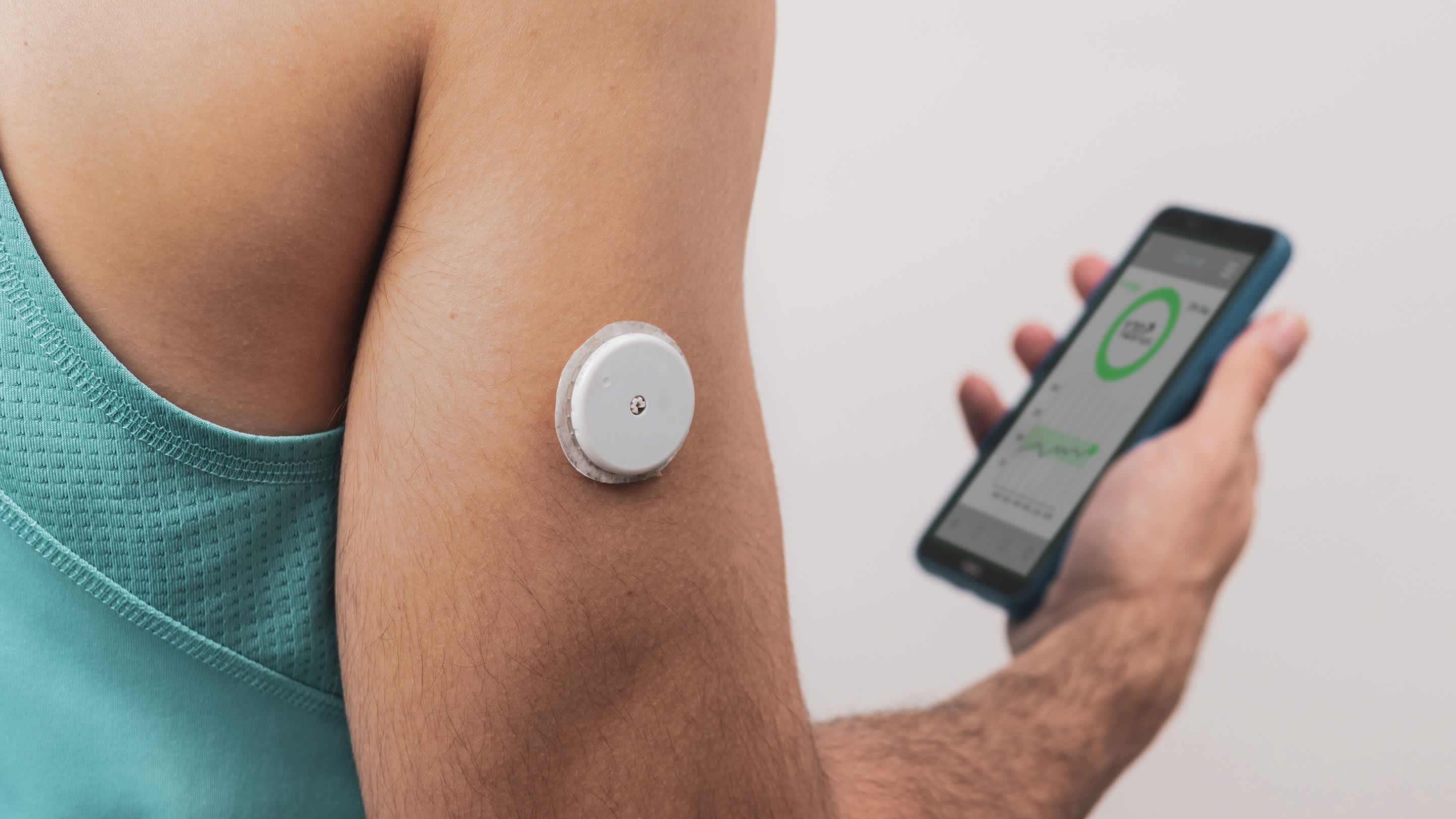
Stay up to date on RPM and CGM billing codes to ensure you get paid.
Remote patient monitoring (RPM) and continuous glucose monitoring (CGM) allow you to track and manage patient health data outside of in-person visits—often through digital tools and wearable technology. These services support timely interventions, chronic condition management and personalized care. As use of these technologies grows, so does the need to code accurately for them across payers to ensure proper payment.
Codes for RPM
The CPT codes for RPM are 99453-99454, 99457-99458 and 99091.
The Place of Service (POS) to use for many payers is the POS for typical services (e.g., POS 11 – Office).
Key RPM requirements and coverage considerations
Used to report remote patient monitoring during a 30-day period.
Require at least 16 days of data.
Can only be provided to established patients.
Coverage and payment rates for private payers will vary by payer and a patient’s benefit plan. Contact your Medicare administrative contractor or your local provider relations representative for local requirements. The same payer may have different commercial and Medicare Advantage policies around which POS to use.
Codes for CGM
The HCPCS codes for CGM are 95250, 95221 and 95249.
When billing many well-known payers (e.g., Aetna, Elevance, Cigna, Humana, UHC and Medicare), use a POS used for typical services (e.g., POS 11 – Office).
Key CGM requirements and coverage considerations
An evaluation and management (E/M) service can only be reported on the same date as CGM services if the E/M service is medically necessary and significant and separately identifiable from the CGM service. Append modifier 25 to the E/M code when reporting CPT codes 95250 or 95251 on the same date.
Do not report CPT codes 95250 or 95251 more than once per month.
Coverage and payment rates for private payers will vary by payer and a patient’s benefit plan. Check with your local provider relations representatives for their policies. Verify coverage for each patient.
Personal CGM
CPT 95249 covers “patient-provided equipment, sensor placement, hookup, calibration of monitor, patient training and printout of recording.” Its requirements include:
May only be reported once during the time the patient owns the receiver.
Patient must bring data receiver to the physician’s office with the entire initial data collection procedure conducted in the physician’s or other qualified health care professional’s office.
Professional CGM startup
CPT 95250 covers “ambulatory continuous glucose monitoring of interstitial tissue fluid via a subcutaneous sensor for a minimum of 72 hours; physician or other qualified health care professional (office) provided equipment, sensor placement, hook-up, calibration of monitor, patient training, removal of sensor and printout of recording.” Its requirements include:
May be performed by any qualified staff member under the direct supervision of a physician, physician assistant or nurse practitioner.
Must be reported with valid ICD-10-CM diagnosis code.
CGM interpretation
CPT 95251 covers “ambulatory continuous glucose monitoring of interstitial tissue fluid via a subcutaneous sensor for a minimum of 72 hours; analysis, interpretation and report.” Its requirements include:
May only be reported by a physician, nurse practitioner or physician assistant.