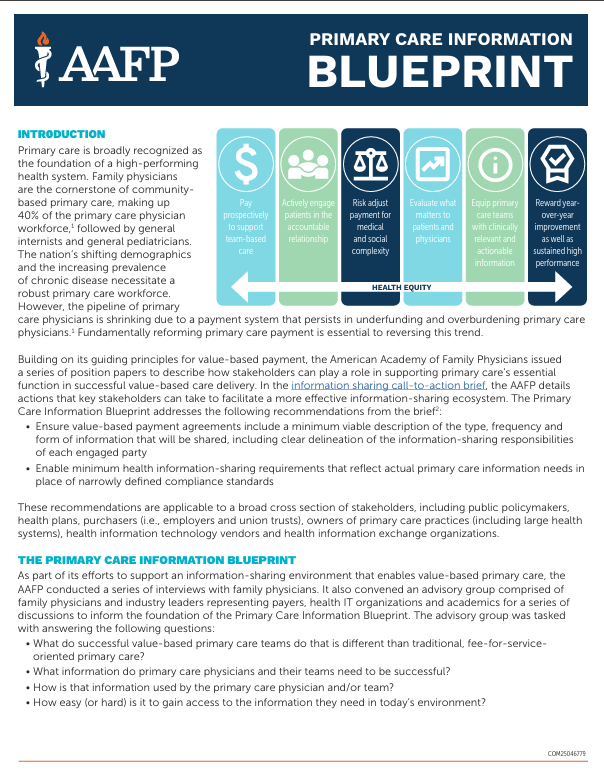
Independent practice resources for family physicians

Practice models are evolving as physicians seek the professional autonomy to influence care delivery in alignment with family medicine values.
Physicians and their patients deserve meaningful choices – whether those entail joining a health system, working in a large group, launching a DPC practice or participating in an independent physician network.
Evolving practice models can create new opportunities for family physicians, but they are not substitutes for addressing the underlying economics of delivering high-quality primary care. All physicians, including those who choose traditional independent practice, should have an economically viable path to thrive, which is why the Academy continues to advocate with public and private payers for better payment and fewer administrative barriers.
Choosing practice ownership over employment
Professional autonomy remains one of the primary motivations for pursuing independent practice. Family physicians who own or help govern their practices often cite several reasons related to autonomy for their preference for independent practice.
They include making clinical decisions without competing organizational pressures, maintaining their desired scope of practice, influencing staffing/scheduling decisions and shaping the overall patient experience.
Related practice owner stories
Hear from physician owners on their experiences in varying practice settings.
Related DPC perspectives
Learn from family physicians who have integrated the direct primary care model into their practices.
Managing and growing your practice
Independent practice today may look very different than it did a generation ago. Technological advancements, new payment arrangements, collaborative networks and evolving care models are creating opportunities that did not exist even a decade ago.
Explore practice ownership resources
Choosing the right model for your practice
Family physicians are building successful careers in independent and physician-owned practices, direct primary care (DPC) models, hybrid arrangements, value-based care organizations and other innovative structures that offer varying degrees of autonomy and flexibility.
These models do not always share a particular business design. Rather, they share the following common goals.
Allowing physicians autonomy over:
Patient care delivery
Practice operations
Care team design
Explore practice and payment models
Related value-based payment resources
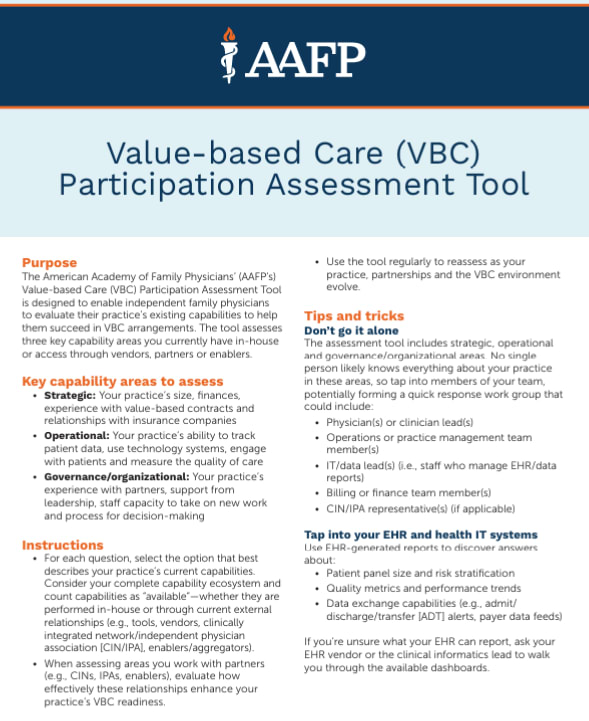
Value-based care participation assessment tool
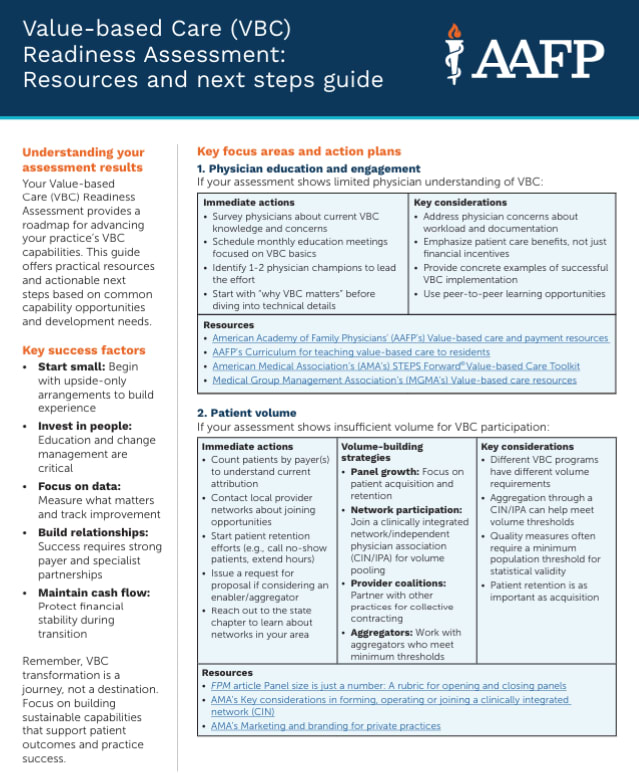
Value-based care readiness assessment resources and guide
Related direct primary care payment resources
Technology to support physician-owned practice
The AAFP has embarked on a series of initiatives to prepare family physicians for an evolving technological and payment landscape. The Primary Care Innovation Network (PCIN) is the Academy’s flagship initiative to support responsible, physician-led innovation in digital health and AI.
Related resources on evolving technology