DETAILS FOR THIS REVIEW
Study Population: Five trials with 984 pregnant participants, conducted in low- or middle-income countries of Bangladesh, Croatia, South Africa (two trials), and India; most of the patients were 18 to 35 years of age, although not all trials reported participant age; sample sizes ranged from 82 to 366 participants
Efficacy End Points: Primary maternal outcomes: anemia, vitamin B12 deficiency, spontaneous abortion or miscarriage (less than 20 weeks' gestational age); primary child outcomes: low birth weight (less than 2,500 g [5.5 lbs]), preterm birth (less than 37 weeks' gestation), neural tube defects, cognitive function
Harm End Points: Unknown
Narrative: Pregnant patients are one of the highest risk populations for vitamin B12 deficiency, which has been identified as a risk factor for several adverse outcomes of pregnancy, including preterm delivery and low-birth-weight infants.1,2
Oral vitamin B12 supplementation is a simple, inexpensive, and potentially safe intervention to help reduce adverse outcomes of pregnancy, and the effectiveness of oral supplementation for vitamin B12 deficiency outside the perinatal period is well established.3
THE NUMBERS
| Benefits |
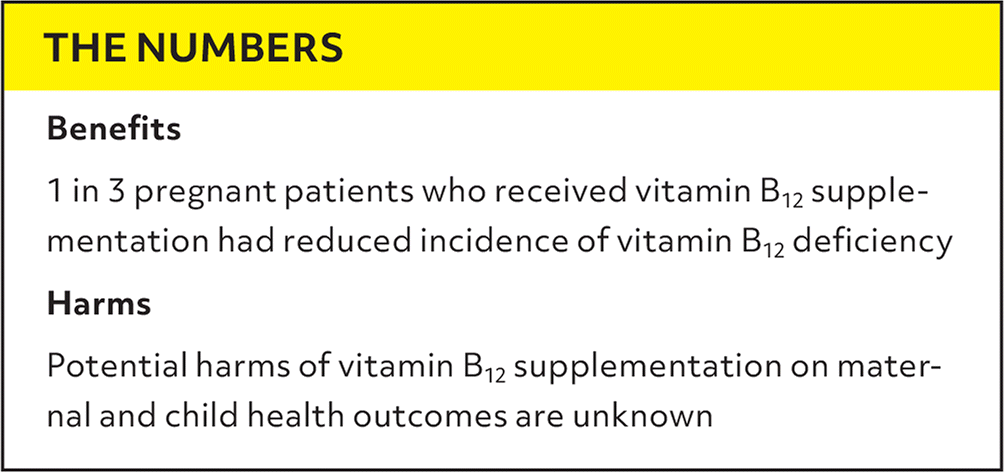
| 1 in 3 pregnant patients who received vitamin B12 supplementation had reduced incidence of vitamin B12 deficiency |
| Harms |
| Potential harms of vitamin B12 supplementation on maternal and child health outcomes are unknown |
Oral vitamin B12 dosing in the Cochrane review discussed here ranged from 5 to 250 mcg daily.4 Patients were enrolled and began supplementation in various stages of pregnancy and were followed through to delivery or up to a few months postpartum. Two of the trials compared oral vitamin B12 supplementation with placebo or no vitamin B12 supplementation, and three of the trials compared oral vitamin B12 supplementation in combination with iron and folic acid supplementation with solely iron and folic acid supplementation. All reviewed trials provided iron and folic acid supplementation at various doses as standard of care during pregnancy.
In the Cochrane review, very low-certainty evidence demonstrated that oral vitamin B12 supplementation may reduce the risk of maternal vitamin B12 deficiency compared with placebo or no supplementation (risk ratio = 0.38; 95% CI, 0.28–0.51; absolute risk difference = 42.1%; number needed to treat = 3; two randomized controlled trials; n = 272). Very low-certainty evidence demonstrated little to no difference between groups for maternal anemia. Low-certainty evidence demonstrated little to no difference between groups for the incidence of low-birth-weight infants and preterm birth. Although two randomized controlled trials (n = 448) with very low-certainty evidence reported on spontaneous abortion and miscarriage, the definition of spontaneous abortion was unclear; quantitative data were not provided for meta-analysis.
Low-certainty evidence demonstrated no difference between oral vitamin B12 supplementation and placebo or no supplementation for infant neurodevelopmental status (eg, language, cognitive, motor, adaptive domains) at 9 months of age or for neurophysiologic outcomes at 72 months of age (one randomized controlled trial; n = 178). However, some benefit to the expressive language domain was found at 30 months of age. There were insufficient data to assess the other child health outcomes, including intrauterine growth restriction and anemia.
Read the full article
Get immediate access, anytime, anywhere.
Choose a single article, issue, or full-access subscription.
Earn up to 14 CME credits per issue.