

In the United States, cancer diagnosis and treatment frequently result in high out-of-pocket costs and medical financial hardship (ie, financial toxicity) for patients and their families.1–6 The National Cancer Institute considers an individual a cancer survivor from the time of their diagnosis onward.7 Nearly 60% of working-age cancer survivors report at least one type of medical financial hardship in the past year, including inability to pay medical bills, distress about medical bills, or delayed or forgone care because of cost.8 Financial hardship can have lasting health consequences many years after diagnosis, including worsened quality of life and higher mortality risk.9–12
A cancer diagnosis can exacerbate financial hardship by impairing employment and diminishing household income. In 2024, a paper with a composite patient case with accompanying national data was published to illustrate how a cancer diagnosis can disrupt employment, reduce household income, and cause the loss of employer-based health insurance, which all lead to lasting financial hardship.8 Cancer diagnosis and treatment can be especially challenging for the nearly 34 million workers who lack paid leave and are unable to afford unpaid time away from work.13 Nearly 40% of working cancer survivors lack paid sick leave, and financial hardship is more common among survivors without rather than with paid leave (62% vs 54%).8,14
Lack of paid leave and loss of income also affect millions of workers who are informal caregivers (ie, spouses, parents, siblings, and children) who take time away from work to assist family members with cancer during treatment and recovery. Workers with paid leave may also face unpaid work absences because the time required for cancer treatments frequently exceeds their paid leave. Although the federal Family and Medical Leave Act offers some protections for eligible workers with larger employers (more than 50 employees), the provision allows only up to 12 weeks of unpaid job-protected leave.15
Nearly one-half of cancer survivors report employment changes postdiagnosis (eg, extended leave, switching to a less demanding job, early retirement)16; 26% of working-age cancer survivors report being unable to work because of their health, and an additional 12% are limited in the amount or type of work they are able to do.8 More than 25% of informal caregivers report making extended employment changes, which can further reduce household income.17 Individuals who are unable to work can lose access to employer-based health insurance coverage.
Privately insured patients can also incur significant outof-pocket costs for monthly premiums, annual deductibles, co-payments, and co-insurance. Alternative insurance options for individuals who lose employer-based coverage can be limited. The availability of federal coverage for disability requires a lengthy application process that can take months to years to complete, and individual purchase of private insurance may be unaffordable without subsidies, especially for families who reside in any of the 10 states without Medicaid expansion under the Affordable Care Act.
Most uninsured cancer survivors report financial hardship (90%).8 With increasing incidence of cancer in working-age adults and growing prevalence of cancer survivorship, it is the family physician's responsibility to manage surveillance for medical complications and consider the long-term financial implications of cancer.18–20
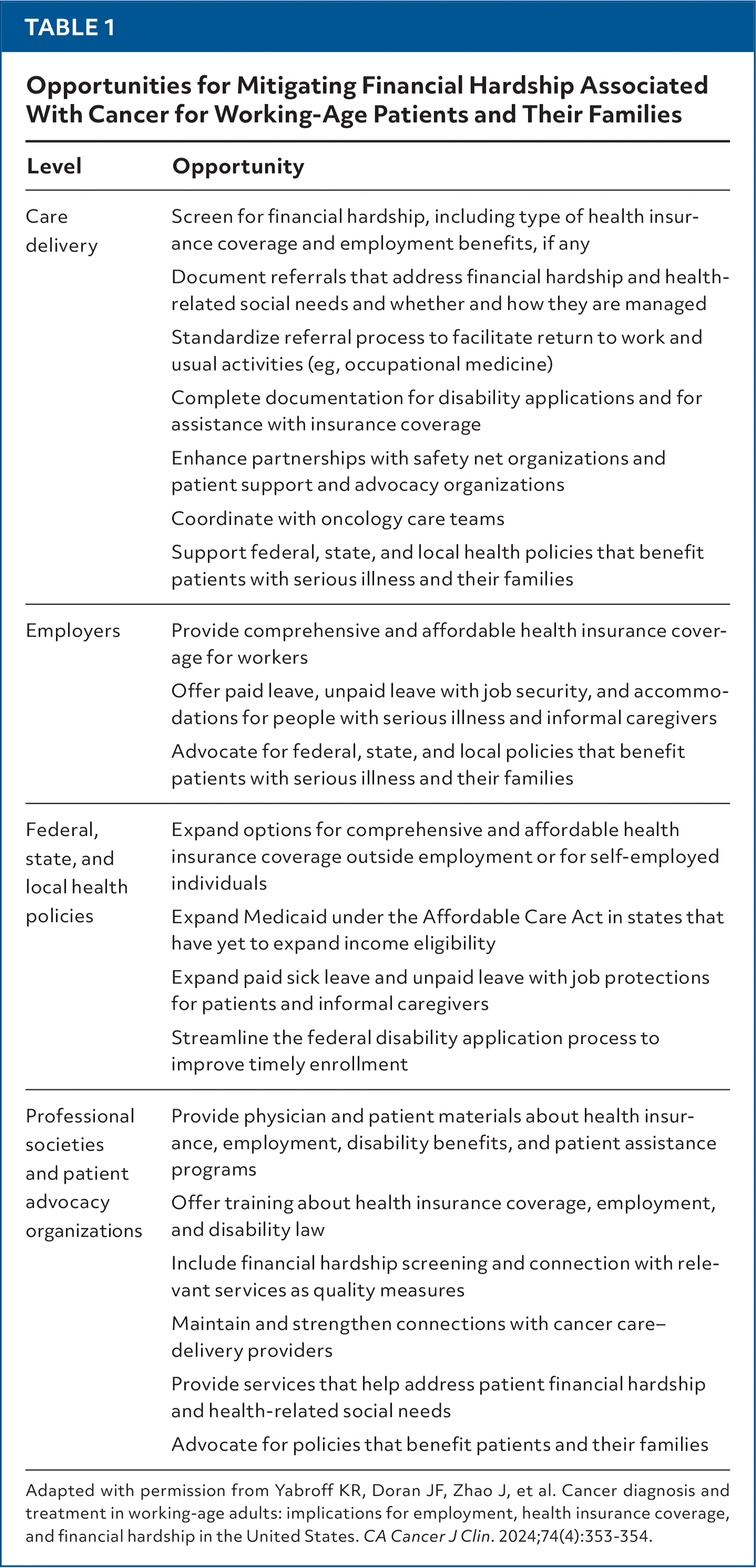
For patients and families facing cancer, it is critical for family physicians to discuss and document financial hardship, job type, mental and physical tasks, remote work and schedule flexibilities, paid and unpaid leave, and availability and terms of employer-based health insurance coverage, if applicable 21 (Table 18). Health-related social needs, such as food insecurity and housing instability, frequently co-occur with medical financial hardship and are independently associated with poor health outcomes.22,23
TABLE 1. Opportunities for Mitigating Financial Hardship Associated With Cancer for Working-Age Patients and Their Families
| Level | Opportunity |
|---|---|
| Care delivery | Screen for financial hardship, including type of health insurance coverage and employment benefits, if any Document referrals that address financial hardship and health-related social needs and whether and how they are managed Standardize referral process to facilitate return to work and usual activities (eg, occupational medicine) Complete documentation for disability applications and for assistance with insurance coverage Enhance partnerships with safety net organizations and patient support and advocacy organizations Coordinate with oncology care teams Support federal, state, and local health policies that benefit patients with serious illness and their families |
| Employers | Provide comprehensive and affordable health insurance coverage for workers Offer paid leave, unpaid leave with job security, and accommodations for people with serious illness and informal caregivers Advocate for federal, state, and local policies that benefit patients with serious illness and their families |
| Federal, state, and local health policies | Expand options for comprehensive and affordable health insurance coverage outside employment or for self-employed individuals Expand Medicaid under the Affordable Care Act in states that have yet to expand income eligibility Expand paid sick leave and unpaid leave with job protections for patients and informal caregivers Streamline the federal disability application process to improve timely enrollment |
| Professional societies and patient advocacy organizations | Provide physician and patient materials about health insurance, employment, disability benefits, and patient assistance programs Offer training about health insurance coverage, employment, and disability law Include financial hardship screening and connection with relevant services as quality measures Maintain and strengthen connections with cancer care–delivery providers Provide services that help address patient financial hardship and health-related social needs Advocate for policies that benefit patients and their families |
Adapted with permission from Yabroff KR, Doran JF, Zhao J, et al. Cancer diagnosis and treatment in working-age adults: implications for employment, health insurance coverage, and financial hardship in the United States. CA Cancer J Clin. 2024;74(4):353–354.
Family physicians can assist with addressing patient health-related social needs, employment, and insurance and should coordinate with the oncology team to facilitate referrals to social work, financial assistance, and community resources. Referrals for rehabilitation and occupational medicine can help workers maintain employment and obtain workplace accommodations throughout cancer care and survivorship. Because hardship risk can increase throughout cancer treatment and beyond, longitudinal assessment and evaluation of a family's needs and assistance remain relevant for the family's well-being.
In addition to efforts to mitigate financial hardship as part of care delivery, policy efforts at the employer, state, and federal levels that govern employment and health insurance are needed. For example, in the absence of a federal paid leave benefit, some states and cities have enacted paid leave mandates.24 Other states have enacted disability protections and wage replacement for individuals no longer able to work.25 States without these benefits and protections are often non–Medicaid expansion states that already have high rates of cancer mortality and uninsurance as well as large health inequities, making Medicaid expansion an opportunity to mitigate hardship and improve population health.18,26–28
Professional societies and patient advocacy organizations can support policies that benefit patients and families facing serious illness. As a common point of access to health care, family physicians are well-positioned to identify medical financial hardship and ensure patients with cancer and their families get the support they need.
