

KEY POINTS FOR PRACTICE
| • Avoid routine testing for vitamin D levels in healthy children and adults because there is no proven benefit, and no evidence-based target levels exist. |
| • Consider empiric vitamin D supplementation in children aged 1 to 18 years, pregnant adults, individuals with prediabetes, and adults 75 years and older for illness prevention without measuring or targeting vitamin D levels. |
| • Consider not recommending routine vitamin D supplementation for healthy adults aged 19 to 74 years because there are no proven health benefits. |
| From the AFP Editors |
Although low levels of vitamin D are related to many common disorders, including musculoskeletal, metabolic, cardiovascular, malignant, autoimmune, and infectious diseases, the evidence for supplementation is mixed. Since 2000, the number of people in the United States taking vitamin D supplements at a dose of 1,000 IU or more increased from less than 1% to 18%. However, uncertainty regarding the optimal range of vitamin D serum levels has led to inconsistencies in clinical practice. The Endocrine Society has updated its guidelines on the evidence for vitamin D supplementation and testing for disease prevention.
VITAMIN D TESTING
In many reviews, testing for vitamin D (25-hydroxyvitamin D [25(OH)D]) levels has shown no proven benefit, and no evidence-based target levels exist. The Endocrine Society found evidence only for empiric supplementation without monitoring or targeting specific vitamin D levels.
Testing may be appropriate for specific indications, including patients with hypocalcemia; malabsorption syndromes such as short gut syndrome, gastric bypass, or inflammatory bowel disease; increased kidney losses of vitamin D (eg, nephrotic syndrome); and increased vitamin D catabolism (eg, caused by certain medications).
VITAMIN D SUPPLEMENTATION
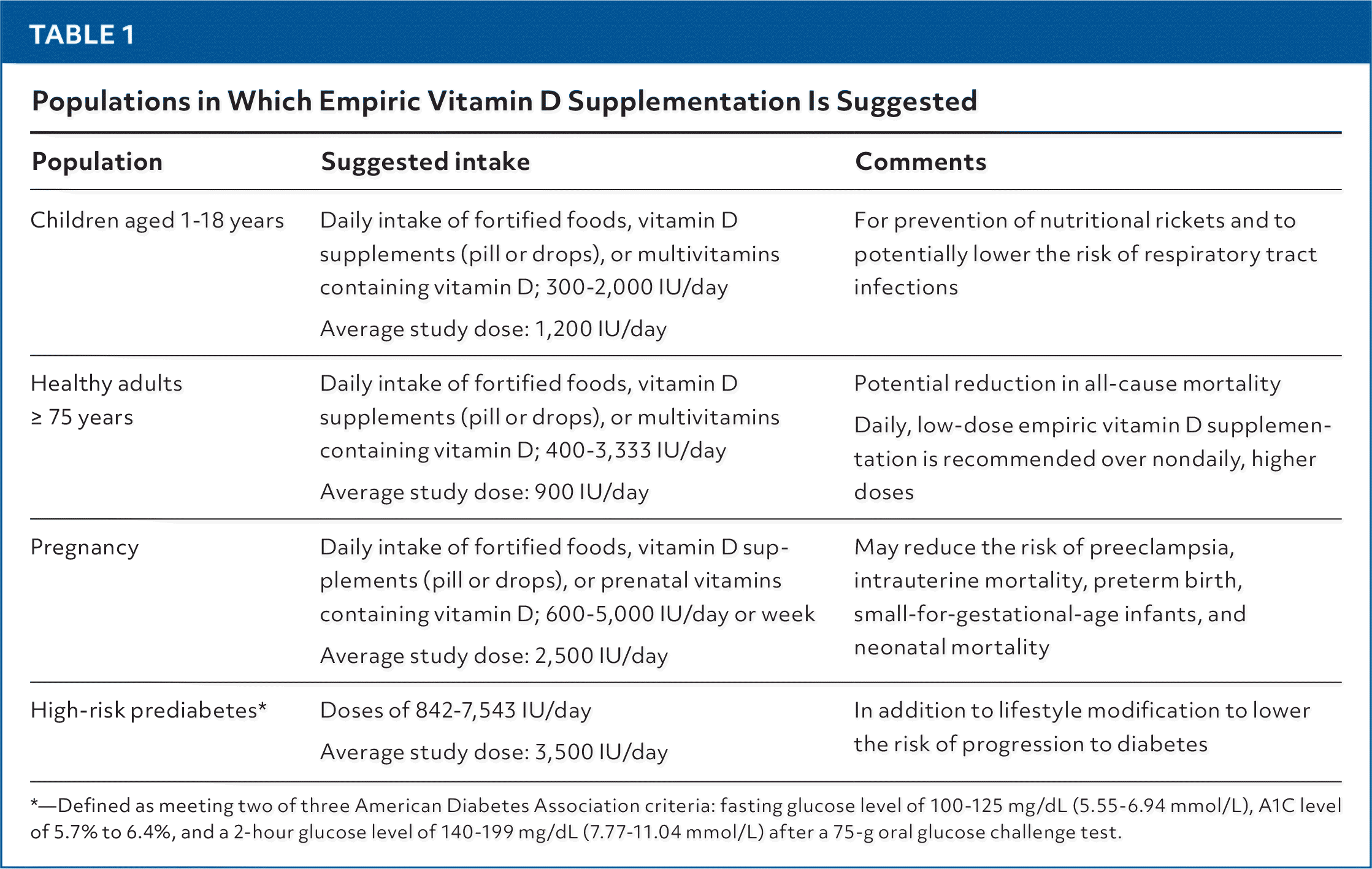
Table 1 summarizes the populations in which vitamin D supplementation is suggested, and Table 2 lists the populations in which it is not recommended.
TABLE 1. Populations in Which Empiric Vitamin D Supplementation Is Suggested
| Population | Suggested intake | Comments |
|---|---|---|
| Children aged 1–18 years | Daily intake of fortified foods, vitamin D supplements (pill or drops), or multivitamins containing vitamin D; 300–2,000 IU/day Average study dose: 1,200 IU/day | For prevention of nutritional rickets and to potentially lower the risk of respiratory tract infections |
| Healthy adults ≥ 75 years | Daily intake of fortified foods, vitamin D supplements (pill or drops), or multivitamins containing vitamin D; 400–3,333 IU/day Average study dose: 900 IU/day | Potential reduction in all-cause mortality Daily, low-dose empiric vitamin D supplementation is recommended over nondaily, higher doses |
| Pregnancy | Daily intake of fortified foods, vitamin D supplements (pill or drops), or prenatal vitamins containing vitamin D; 600–5,000 IU/day or week Average study dose: 2,500 IU/day | May reduce the risk of preeclampsia, intrauterine mortality, preterm birth, small-for-gestational-age infants, and neonatal mortality |
| High-risk prediabetes* | Doses of 842–7,543 IU/day Average study dose: 3,500 IU/day | In addition to lifestyle modification to lower the risk of progression to diabetes |
*—Defined as meeting two of three American Diabetes Association criteria: fasting glucose level of 100–125 mg/dL (5.55–6.94 mmol/L), A1C level of 5.7% to 6.4%, and a 2-hour glucose level of 140–199 mg/dL (7.77–11.04 mmol/L) after a 75-g oral glucose challenge test.
Read the full article
Get immediate access, anytime, anywhere.
Choose a single article, issue, or full-access subscription.
Earn up to 14 CME credits per issue.
