
"Vibe Check #4: Is Family Medicine Right For Me?"
Hear from physicians and see if family medicine is the right fit for your future.
Part of the “Vibe Check: Is Family Medicine Right for Me?” video series, presented by the AAFP in partnership with the Association of American Medical Colleges (AAMC), this session features inspiring family physicians who share their career journeys, the versatility of family medicine and insights into choosing the right medical specialty.
What you'll learn:
How mentorship, personal interests and career exploration can lead medical students to choose family medicine.
The wide scope of family medicine—from hospital care and obstetrics to outpatient practice, teaching and advocacy.
How family physicians can shape flexible careers that evolve over time and incorporate passions like lifestyle medicine and public health.
Practical advice for medical students navigating specialty decisions using the AAMC’s Careers in Medicine framework.
Who should watch?
Medical students exploring specialty options
Residents considering fellowships or subspecialties
Anyone passionate about holistic, patient-centered care
Watch the recording above or read the full transcript below to get inspired by the real-life stories of family physicians shaping the future of healthcare!
The panelists
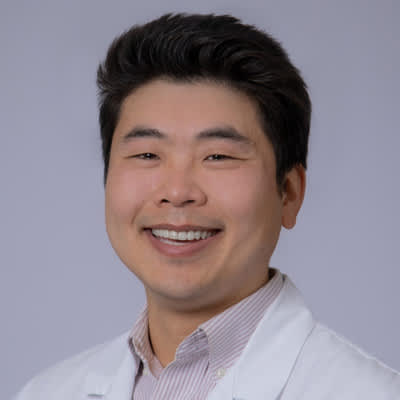
Bright Zhou, MD (Host)
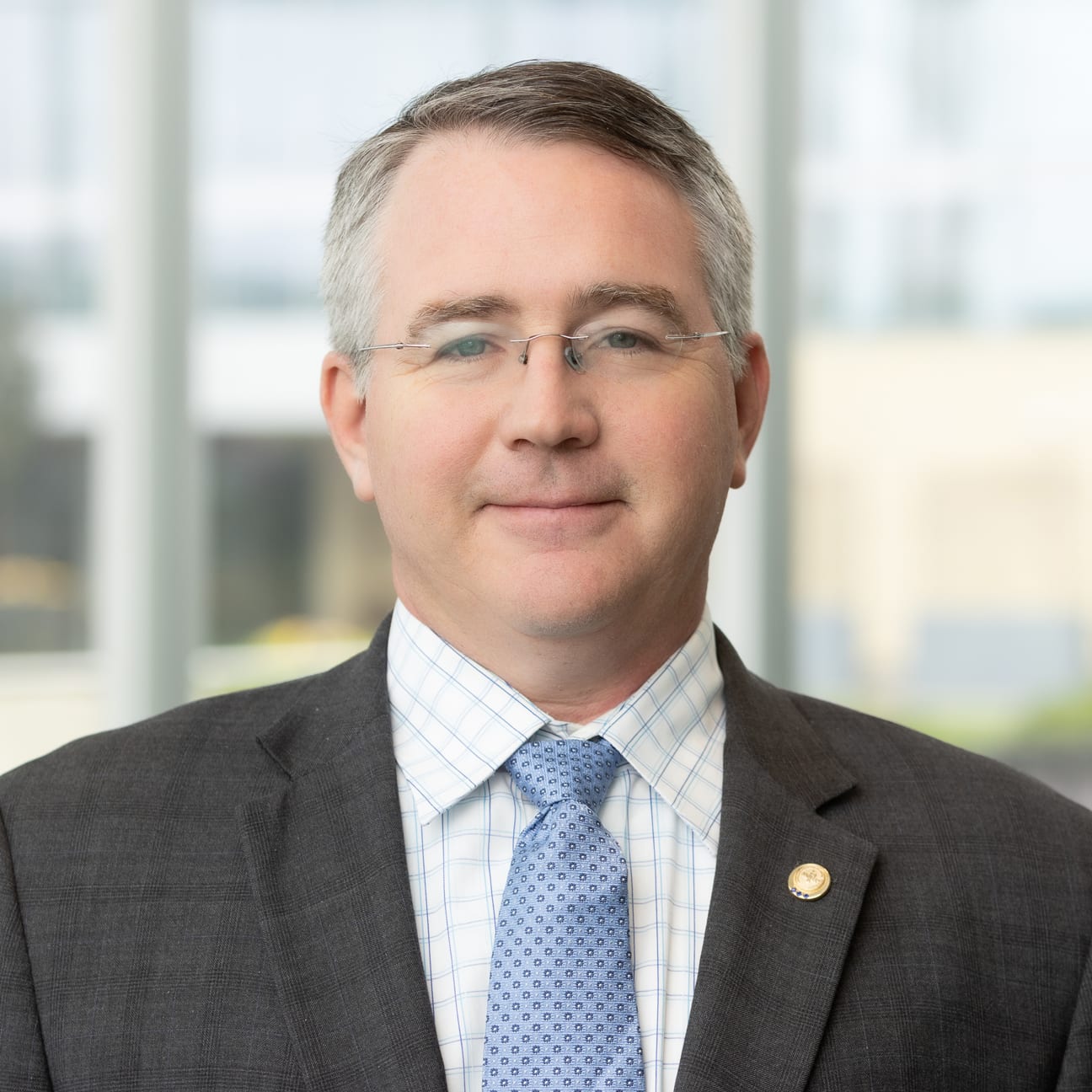
Russell W. Kohl, MD, FAAFP
Introduction: Choosing a medical specialty with AAMC Careers in Medicine
Bright Zhou, MD
Hi, everyone. My name is Dr. Bright Zhou, and welcome to "Vibe Check: Is Family Medicine Right for Me?" Brought to you by the American Academy of Family Physicians in partnership with the Association of American Medical Colleges. Choosing a medical specialty is one of the most significant decisions we all make in medical school, and it will change your wellness and your satisfaction throughout your entire career. That's why the AMC created Careers in Medicine, a comprehensive career planning guide that's designed to help students navigate this process with confidence. Careers in Medicine provides evidence-based assessments and structured guidelines to help you make informed career decisions that align with your own evolving skills, values and interests. There's four phases, and we're going to dive into them now.
Research shows that people are more likely to feel satisfied in their professional lives when their career aligns with who they are: things like their interests, their values, their personality and their skills. That's why phase one, Understanding Yourself, is where we begin when deciding on our specialties. In the field of medicine, these personal qualities often show up in the different kinds of practice settings you prefer, the kind of patients you work with, the kind of medical conditions you treat, even the kinds of colleagues you like working with, and the kinds of tasks that bring you joy. You can use the Careers in Medicine self assessment tools to create a strong foundation for identifying what you truly want in your medical career or not, and ultimately decide which specialty or specialties are the best fit for you.
Exploring medical specialties: Research, comparison and career fit
Bright Zhou, MD
Phase two guides you through how to research and evaluate all of the over 200 specialties that exist out there, and how to provide you with detailed profiles for what each specialty looks like. These profiles highlight all the essentials: what does the work look like; what is the training required; salary expectations; competitiveness and more. So you can start to understand what even exists out there in the world of medicine. You'll find guidance on networking, informational interviews, strategies for preparing yourself with these meaningful experiences when you're on rotations. These tools are designed for you to connect with what you're learning about yourself in phase one, with what you're learning about each specialty, so that you can explore your options more confidently and intentionally.
Moving forward to phase three: Choosing Your Specialty. You're going to shift from this broad exploration of everything out there to making a more informed decision about what's right for you. This phase gives you tools and strategies to evaluate your options more intentionally, including guidance on how to weigh what matters most to you, how to compare specialties and how to make that decision with confidence. These tools together will help you bring everything that you've learned about the specialties and about yourself into a clear, well-supported decision about your future path. That sounds good to me.
Now, phase four, once you've made that decision, is about, how do you actually prepare for residency? What are all the resources out there for your specialty or specialties of choice to help you confidently navigate the match process or the residency process. This phase walks you through how to research programs effectively and how to build out your application strategy.
Wherever you are in your journey, Careers in Medicine is your trusted guide to explore intentionally, to track your progress and to stay connected to your career goals. Careers in Medicine is free for U.S. MD and DO students. To get started, visit careersinmedicine.aamc.org.
Why choose family medicine? Insights from Dr. Russell Kohl
Bright Zhou, MD
Now that we've got the framework for how to choose the best specialty for y'all, let's dive into a little bit of why we're here and get the tea from these family medicine physicians. Today, we're joined by Dr. Russell Kohl, a family physician whose career spans clinical practice, leadership and health policy, to learn how family medicine opens doors to advocacy, system level leadership and meaningful patient care. Welcome and thank you so much for joining us, Dr. Kohl.
Russell Kohl, MD, FAAFP
Thanks, Bright. I'm really excited to be here today.
Bright Zhou, MD
One of the things that I'm so excited for our students to get to hear is your origin story. I feel like, growing up through our academy, I've seen you as one of the leaders and heroes within our academy, and I got a chance to hear your story earlier in our pre-call. Would love if you could share that with our students. What experiences nudged you towards family medicine, and what's kept you in it as your career expanded?
Career journey into family medicine: From EMT to physician
Russell Kohl, MD, FAAFP
Sure. So it turns out, I was not actually born in a suit. I do wear normal clothes sometimes. My journey to family medicine really started as a kid. My mother was a school teacher in a school district where she was the only white face in the school. My father was a firefighter, and they instilled in me, from the very beginning the idea that your job is to leave things better than you found them and to help other people. And so that was where I started out.
I was supposed to be an astronaut, but it turns out that my vision is not quite up to Air Force standards for that. So I settled to go into medicine instead. I actually was an Oklahoma City fireman. That's how I got started in medicine, actually, as an EMT on the rescue squad in downtown Oklahoma City, responded to the Oklahoma City bombing, spent a whole lot of time doing emergency medicine there. I jokingly say I decided that it would be really nice to have a job in the air conditioning. So I went from emergency medicine in the field to medicine in a clinic.
And as I was making that transition into medical school and going through medical school, everybody was convinced. They're like, "Oh, well, you're a fire department paramedic, obviously emergency medicine is where you want to be." And I probably started with that same sort of mindset of "you go with what you know." But what I found really quickly was that the thing that really called out to me, and was my passion, was knowing what happened to the patients. I loved in the ER, you never know what's walking through the door. You have to know a little bit about everything. You have to make decisions in the moment, which is the exact same as family medicine. But the difference is, I never knew what happened to them. They went up to the floor, or they went home, and we just moved on. But I got to have that different relationship with folks, and so that was really the eye opener for me, was that what I really valued, aside from the diversity, was that continuity.
Funnily enough, the other thing that I looked at was general surgery. Love procedures. Back in the old days, we did not have work hour restrictions, and it was not uncommon for a family medicine resident to work 90-100 hours a week. And it was not uncommon for our surgical colleagues to work even more than that. And as I looked, I had a wife and a small son that I wanted to spend time with and needed to figure out where my priorities really were. And so what I ended up being was a very broad spectrum family doc who does tons of procedures and scratched that little bit of surgical itch there. So that's how I ended up in family medicine. Essentially, I was one of those people who loved every rotation. Could see myself doing all of it, and then decided to just go that direction in practice and actually do all of it.
Bright Zhou, MD
I so appreciate you sharing that story. One of the things, Russell, that we've seen from so many of our speakers is that family medicine physicians are rooted in ethics, and your story is just one of many that emphasizes this. And that's something that drew me to the field. These are the fields of people who do things as you say, because it's the right thing to do. And also the continuity is so important, too, with us in family medicine, and so I appreciate you highlighting that as well for our students who might be interested in family medicine, thinking about that.
Leadership in family medicine: Congress of Delegates and advocacy
Bright Zhou, MD
Stay tuned, because Dr. Kohl will not be stuck in the air conditioning for the rest of his career. So stay tuned. There are other contexts for those listening. But I wanted to transition to the first time that I met you in the role, when you mentioned "I'm not always in a suit," because those of us who might not know Russell, Dr. Kohl, you're the speaker of our Congress of Delegates, which is the largest or is the primary legislative body for our Academy of Family Medicine. Do you mind giving us an introduction to what does the role of speaker involve, and why might organized medicine be relevant to someone who's just starting in their medical journey, or even someone who's a resident already in their medical journey.
Russell Kohl, MD, FAAFP
The American Academy of Family Physicians represents over 130,000 members. Getting 130,000 people to agree on anything is a bit of a challenge. The way that we do that at the AAFP is we have an annual Congress of Delegates. Each of our chapters sends two delegates. And then we have other constituencies that send two delegates: our national conference of constituency leaders, our students, our residents, our new physicians, uniformed services.
We're a very large tent in family medicine, and we bring all those folks together annually to talk about what is it that we as family physicians think, and what is it that we think that we should be doing to make a difference in the world? I ultimately say that the goal of the Congress of Delegates is to make the world a better place, and we do that by deep consideration. Bringing people from all different perspectives, from all different practice types, from all different backgrounds, all different geographies to come together to talk about the issues that are facing both us as family physicians, but more importantly, I think, facing our patients and what is it that we can actually do as family physicians? It can be really overwhelming sometimes, as you look at the world around you and say, "Well, what can I do? How can I make a difference?" Well, yeah, one one voice may seem outnumbered sometimes, but 130,000 voices is a pretty significant impact. And so what my job is as the speaker at the Congress of Delegates is to facilitate that discussion.
Bright Zhou, MD
We have folks develop what they call resolutions, which are ideas of how they want to see things change. They bring them forward. My job is to make sure that every one of them gets a fair hearing, gets a good discussion, and that ultimately we're able to decide what we, as family medicine, think the world ought to look like. Then, at the end of the Congress of Delegates, we write them up into a nice set of marching orders for our board of directors and for our academy, say, "We'll see you next year. We expect the world to be a better place, and we expect you to have done what we told you." So that's my job as the speaker—to facilitate those discussions.
And you know, we talked about, again, coming back to your strong ethical code, I think that's such a beautiful space for someone. I know a little bit about your past, and always being drawn to parliamentary procedures. And I just love it, because I think it's showing our students a way that ethics can be used effectively and efficiently to make decisions where maybe the minority is heard. And I think that can relate to a lot of our students around a myriad of issues that are drawing us to family medicine in the first place. So I appreciate you sharing that.
Russell Kohl, MD, FAAFP
Yeah, generally, if you want to put people to sleep, you talk about parliamentary procedure. But I appreciate your excitement, because to me, it's an exciting thing because it's a set of rules that make sure that we're able to have difficult discussions. If you don't have a safe space where you can talk about your perspectives and your discussions and have that, then we'll never get to the future that we actually want. So I appreciate your excitement.
Bright Zhou, MD
I think you were the first person to teach me my very first FUTURE national conference. You were the very first person to teach me about parliamentary procedure. I didn't have any of that background, and I was just one member of the audience that you were explaining it to. And it really is, I totally agree, it's a set of rules that helps everyone get heard in a very efficient way. And something that is available to students if you all come to FUTURE national conference, I encourage you all to check out our congress for students and our congress for residents to learn about what these resolutions are, to meet Russell (Dr. Kohl) in person and to ask your questions live as well.
Speaking of set of rules, one of the other things that I know you have expertise in and passion in, is quality improvement. I would love to hear about that, because that's something that we don't hear a lot about as early career physicians and students. We hear quality improvement thrown around, but what does that really mean to you, and how do you leverage it for your patients?
Quality improvement in healthcare: Impact beyond individual patients
Russell Kohl, MD, FAAFP
When I graduated residency, I actually went out into a small, two-person practice, and within six months, lost my partner. So six months after residency in rural Oklahoma, I became a solo provider for the next seven years in my own rural practice. So every time you see somebody as a medical student or as a resident, there's an immediate feedback of an attending going, "Oh, that was stupid. You should have done that." Or, "That was awesome. Yes, you did it exactly right." And when you get out into practice, you look around and there's no one to tell you if you're doing it right or not. And so that's where I really got my start in quality improvement, was, how do I measure and see if I'm doing a good job, and is there a way that I can do this better?
That has evolved over my career, ending up in academics, and then ending up working with Medicare to be able to actually take that same sort of discussion to the rest of healthcare. In my main job right now, I'm the chief medical officer for quality improvement for a medicare quality improvement organization. When I was a solo family doc in my rural practice, I had a patient panel of 2500 people that I took care of. When I went to the residency program and served on faculty there, we turned out 12 residents a year, so I had 36 residents. So that scope of people that I could touch in my daily life expanded pretty exponentially when I went to residency faculty.
When I moved into QIO Program, I'm personally responsible for 6.5 million Medicare beneficiaries across a six state region. So when you think about the ability to leave things better than you found them, that's a huge population to make a difference with.
The great irony, and we talked a little bit about this before, the great irony is it seems like it should be a really like cut-and-dried "this is good medicine/this is bad medicine." This is good/this is bad; all of those sorts of things. And what you'll find is quality improvement's really not like that. It is a population level sort of situation. But I sometimes joke that the greatest patient care that I have ever done, the greatest outcome I've ever had with a diabetic, was getting them to eat three Twinkies a day. And you start off and you're like, "that is not good care for a diabetic." Three Twinkies a day is just not going to cut it. But the problem is, he started at nine. So if three is where we can get to in this practice, that's a huge improvement. That's a 66% improvement in the quality of his day. And I try to bring that practical aspect into quality improvement: what's it like seeing a patient? What is it that our patients value? And realize that family medicine is not all about the numbers. The numbers are important. But in the grand scheme of things, we have to work with the patients to achieve their health goals. And sometimes their health goal is three Twinkies a day.
Bright Zhou, MD
This is just super amazing that we get to have someone with your experience and leadership area. Because I think thinking about myself in medical school, and certainly a lot of my students that I advise, I think the sexier option is always advocacy. When we talk about who is making the most impact. I think health policy/advocacy are both very obvious—global health, right? Very obvious and large impact groups. And I think similarly to parliamentary procedure, QI is also something that I only started learning about in medical school and residency. I'm really glad that we're able to include your insights here to maybe help our med students think a little bit earlier about getting involved with QI, getting involved with health policy, and, of course, all of the incredible advocacy work that you continue to do. I'm wondering, what advice you have for students who are interested in not only the direct patient encounter, but also maximizing that impact like you were describing.
Russell Kohl, MD, FAAFP
I would say that you have expertise that you don't even realize that you have. You have life experience. You have a perspective of the patients that you talk to. You hear stories that nobody else would ever take the time to listen to.
I had a legislator one time when I was back in private practice. I called a legislator's office, wanted to be involved in some advocacy. There was an issue at the state capitol that I felt very passionately about, and I called expecting, okay, I'll just leave a message and tell them that, "Hey, this is Dr. Kohl doing this." And as soon as I said, "This is Dr. Russell Kohl in Vanita," they said, "Please hold just a moment. We'll get the senator." And he got on the phone, and I'm like, "Wow, thank you for talking to me. Here's my story."
And he told me something at the time that has always stuck with me. He said, "How many patients do you see a day?" Back then, I saw about 28 patients a day, my normal schedule. And he goes, "Okay, so let's go with 30, because the math is easier, and I'm a politician. So over the course of a week, you're going to see 150 constituents." He goes, "How many of my constituents do you think I talk to every week? If you put on a button that says you hate me. They like you more than they like me to start off with, and you have just made my life very difficult. So if a physician calls my office, I want to hear exactly what you have to say, because you have your thumb closer to the pulse of the community." I thought that was hilarious, because I had to explain to him to never check a pulse with a thumb, but he was a lawyer.
So that's what I would tell folks: just take the step. You don't realize how much insight you actually have that folks are really hungry for, and they just don't know to ask.
Bright Zhou, MD
That just gave me chills, and thinking about in family medicine particularly, the stories that we have access to, is everything right? That's something I tell students all the time: If you're interested in advocacy, fam med is it, right? Smoking cessation, helmets, vaccinations—all of these things are firmly within the realm of family medicine. And thinking about maximizing our constituencies and being able to hold that influence, but also hold that strength and belief in our own expertise. I appreciate that reminder.
Street medicine and serving underserved communities
Bright Zhou, MD
Well, one of the things that we had hinted at earlier was your escape from the AC room, and so I wanted to give you a chance to talk about what are you up to now? What are your passions now? Do you mind introducing some of the work that you're doing with Care Beyond the Boulevard, which is direct medical care that you're providing to those living in homeless encampments throughout the Kansas City metro area? Do you mind talking a little bit about street medicine? How you got into it? What are the barriers of health that others don't often see in the traditional settings?
Russell Kohl, MD, FAAFP
I actually got into street medicine partially by way of the military. I spent 25 years in the military, including two years doing two combat tours in Iraq and one in Afghanistan, doing field medicine there. And over the last four or five years, as my practice has kind of changed and I needed some more flexibility, one of the things that I became aware of was the street medicine movement. It's the ability to actually go out and provide people who have limited to no resources with direct health care, where they live, where they need it and to meet their needs. It is a blessing that is challenging, is probably the best way to describe it.
One of the things that I've got to say, going back to the glory of family medicine, is family medicine docs are ideal for street medicine, because you have no idea what you are going to walk into and what you are going to see. That comfort in the field and that broad differential, and the fact that you're going to see three different people in three different systems — three different pathophysiology systems — of challenges, and you just have to know what to do with it and how to move on with it, is huge. My nurse laughs that — she said, "Only you make thumb spica splints out of water bottles because that's what the person needs." They had De Quervain's tenosynovitis. They need thumb spica splint. They can't afford a thumb spica splint. I don't have one. I have a backpack of donated meds and wound care supplies and those sorts of things. But what we did have was a set of trauma shears and a water bottle. When I saw them a week later, they're like, "Oh my God, that actually works!" Yeah, I am actually a doctor. It may be a cut up water bottle, but it is appropriate medical care.
The other thing that I saw that I've got to share with you, just because it's one of those things that you study about in medical school and then never think about again, and sometimes weird memories pop back in for you. I saw a patient who said, "Hey, my ankle got cut, but I don't know how." "What do you mean you don't know how?" He's like, "I don't know. I've just got this cut on my ankle, and I need you to look at it." And so I look at the ankle, and I mean, he's right. It's a beautiful, clean incision, which is not what my patients normally have. And I noticed that there's some scar tissue at the top and the bottom of it. And I'm like, "Did you have surgery here or something like that in the past?" He goes, "Oh, not since I was a kid, but yeah, when I was a teenager, I broke my ankle, and they had to put hardware in. And so that's where it was. But no, I haven't had anything recent at all." I'm like, "Well, that's really weird. I don't know." So I did the appropriate wound care, irrigated it out, got him started on antibiotics.
And I went home that evening, and something triggered in my mind and went, "Hey, that was a previous surgical wound that had reabsorbed the fibrin and had opened." All of my patients had bad dentitions, so that's not particularly helpful diagnosis. But what's that diagnosis? That's scurvy. So we were able to actually start him on prenatal vitamins, and within a week, had the most impressive wound resolution that you have ever seen in your life. And it's one of those things that I cannot believe that I have actually seen scurvy in clinical practice and that it popped back into my mind. Because it's one of those things that has not been on your differential since you were on an internal medicine rotation, and just having to name off possible diagnoses, but it popped back in, and in that guy's life, it made a huge difference.
That's the sort of folks that you work with — all sorts of interesting situations. Street medicine I could talk about forever. Care Beyond the Boulevard was started by a nurse practitioner who saw a need in the community and said, "I want to help these folks and do what I can." And we have grown from a bus, literally, an old school bus that was painted fluorescent green so that everybody would know what it was, turned into a clinic and went to the evening places where folks would have meals for the homeless. We now have three street outreach teams. I lead the street outreach team. The other team that we have is able to do medication assisted treatment. So we're doing MAT with folks to help them deal with the challenges that they have around substances. We have two fixed facility clinics that are entirely donation and grant funded. Never ask for $1 from anybody for the care, see whoever comes with whatever they need to have, and then actually have received a grant from the city of Kansas City to open a medical respite in what was formerly a condemned hotel, to renovate the hotel and turn it into a medical respite. Because one of the challenges that we see is folks who get hospitalized, and then at the end of their hospitalization, they have ongoing needs, particularly amputations or those sorts of things. They have ongoing wound care needs, and yet the hospital says, "Well, I can't really just discharge them to the street, but I can't keep them here." So they discharged them to the street, and I was caring for them on the street, and ultimately we were able to make a good argument that if we could renovate one of these old hotels into something that would give folks a transitional period, it would make a huge difference, and it really has. So I can't say enough great things about KK, who started Care Beyond the Boulevard, about the program, or about just how awesome street medicine is.
If you are a medical student who says, "What I really want to do is make a difference in the world, and I don't want to worry about the business aspect, and I want to take care of people who really need me." Please, please, please, look at the street medicine programs. It is very humbling as a doctor, because you will learn very quickly that treating hypertension, we know statistically makes a 4% per year improvement in your risk of death. That is absolutely nothing compared to the statistical impact you will make by getting somebody off of the street or by helping them deal with their substance use disorder. So my joke is that, as the physician on the team, I am the least important person there. My sole job is to keep them alive long enough so that our social workers can get them the assistance that they need to make their life better. As you can tell, it's something I'm really passionate about, happy to talk about, but hopefully other folks can see that, not as just like, "oh, this is a do-gooder missionary sort of thing." Dude, it is making a difference in the world, and it is using every bit of your brain as a family physician.
Bright Zhou, MD
I love the way that you frame that story, first of all, from a perspective of ethics, and second of all, from a perspective of service. Thank you for your service in the military, your service ongoing to the community, your service to the system through your QI work and now ongoing, still in service to us, to our students, to inspire and have us continue to do this amazing work that you are leading and championing in your community. So I really appreciate that.
And the humility. We have to give you props for the humility of really acknowledging the strengths of that work, and all of the other key players who are helping us. I think these are all just really great examples of highlighting what comes back to the root of family medicine, which is that we are equipping ourselves with the widest range of skills so that we're ready to see anyone who walks in through our doors. But also those doors can be blown open into just the environment; they can be in any system spaces abroad, and I think about the creative solutions that you're doing. I was thinking, we'll have to have our podcasters make a shirt. When we start making merch, I'm imagining it's just the water bottle, but it's a water bottle made by a fan med physician. That's so creative! The respite is so creative, and one of the things that I've always admired about you in your work in the Congress of Delegates, is finding creative solutions – helping people find creative solutions to solve real world problems in a way that's very effective. We're still leveraging our physician skill sets and trainings. It's not just a creative solution. It's a creative solution that will work. So anyway, thank you so much for sharing those stories with us, Russell.
Advice for medical students: Saying yes and exploring opportunities
Bright Zhou, MD
In the last bit of time we have, one question we've been asking all of our panelists and interviewees is, "If you could go back in time, what advice would you give your younger self?"
Russell Kohl, MD, FAAFP
I've thought about this, and I think that I have probably seen too many sci-fi movies, because I really like where my life has ended up, and I worry that anything I would do going back in time that I might like step on the moth that would change things. There are some things in the world I would love to see change, but I don't know that I would step on that moth.
I would say that the thing that I would try to remember, and I think I've been pretty good about it, is: there's a whole lot of discussion about the importance of saying “no” to things and guarding your time and those sorts of things. And I don't know that I necessarily agree with that. I think it's really important to say “yes” to as many things as you can to create those different opportunities to learn and experiences and perspectives and to meet people. You never know where all of those things will come back together someday in a way that really makes a difference. I'm not saying to do everything, but I'm saying instead of saying “no,” just say “not now,” if it doesn't work right now, don't rule out the possibility that it would ever work again. That's my main advice: don't listen to the people who tell you you should say “no” more. Say “not now,” and try to think about where you really want to be and say yes to the things that set up that situation.
Closing remarks and resources for medical students
Bright Zhou, MD
That's so incredible. And again, just highlighting the consistency that we see in family medicine about when we are faced with all of the things that come our way, to just always be open for the next things that might come our way. I really appreciate that advice that you've given us. We have enjoyed an incredible conversation with Dr. Russell Kohl, who is a pilot, a street doc, who is a firefighter, who is a QI director, who is our speaker of the Congress of Delegates, one of so many hats — and now, podcaster. Thank so much you for joining us.
I want to encourage all the students who are listening to explore our AMC Careers in Medicine resources that we talked about earlier, to join AAFP for free and to learn more about Care Beyond the Boulevard. Please visit carebeyondtheboulevard.org. I'm Dr. Bright Zhou. Thank you so much for joining "Vibe Check: Is Family Medicine Right for Me?" Hopefully, you found the right answer. Bye!