
From lab to exam room: A resident leader’s path to family medicine

Sarah Costello, MD, graduated from medical school the same day her son graduated from preschool.
Sarah Costello, MD, grew up with a midwife mother and a microbiologist father. When charting her own career path, there wasn’t much question which parent she would follow.
“I was shy and socially awkward and never dreamed I could walk into a room with someone I’d never met and have a conversation about things that were worrying them,” said Costello, chief resident at the University of Iowa Family Medicine Residency Program in Iowa City. “I didn’t think I would ever be able to be a doctor. So I was pretty happy pursuing a career in the lab.”
Why family medicine?
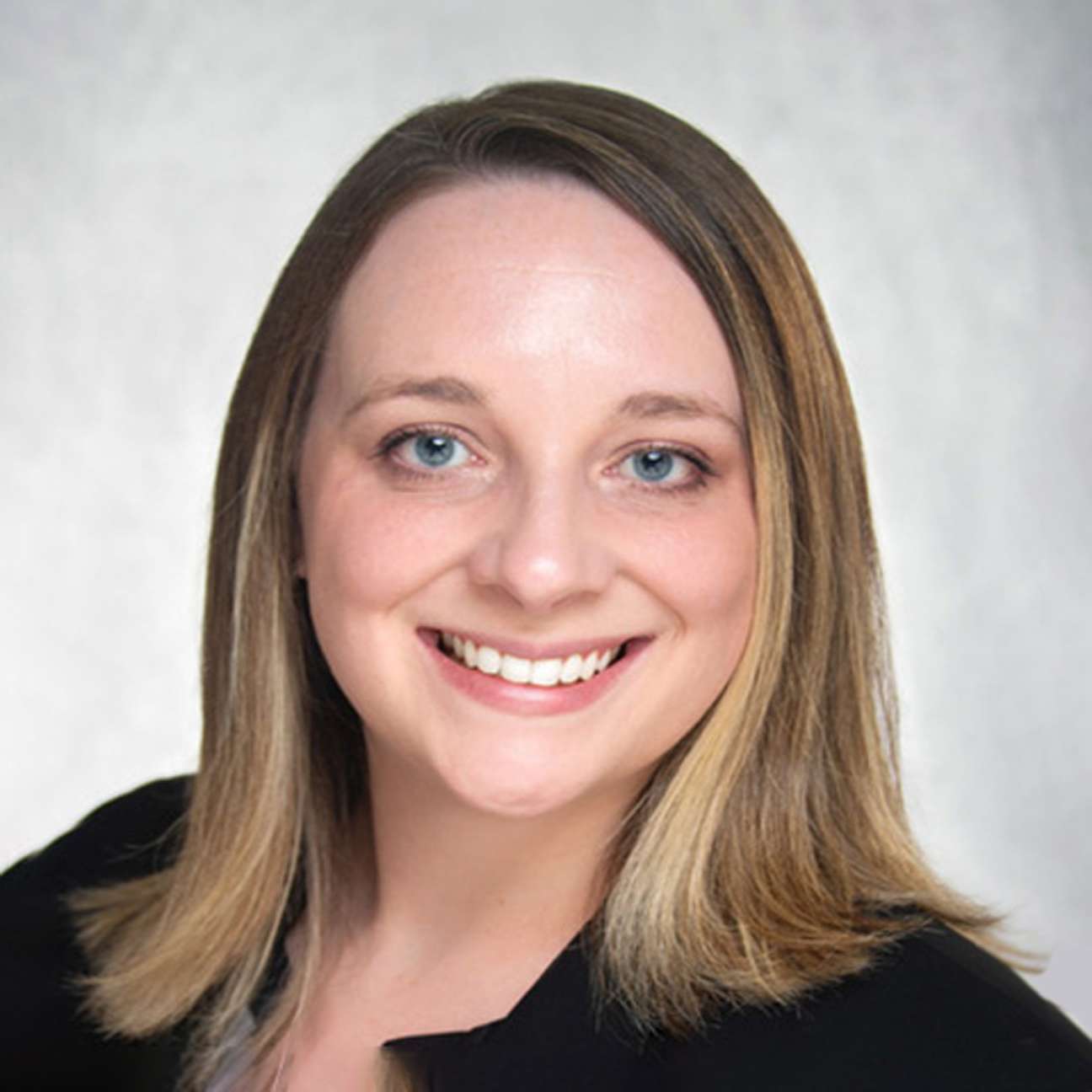
Sarah Costello, MD
“With my mom being a midwife, I’ve always had a passion for maternity care, and taking care of kids is something that I was excited about as well. I became excited by the idea that in family medicine I could care for someone during pregnancy, be there for the birth of their baby, care for that child as they grow, and continue caring for the whole family over time. What I value most is that continuity — the opportunity to really know my patients, hear their stories, understand what matters to them, and care for them in the context of their families and communities.”
From shy scientist to medical student
Costello, who was born in Australia and moved to England as a teenager, earned a science degree at the University College London. She spent years working as a molecular scientist before taking a job in a clinical microbiology lab at the University of Iowa Hospitals and Clinics. There she started wondering about the patients behind the labs and wanting to know and do more.
During those years, Costello was also building her own family. Her experiences with pregnancy, birth and becoming a mother in the United States, after growing up with a different model of maternity care in the United Kingdom, deepened her interest in maternity care, patient autonomy and the ways health care systems shape patients’ experiences. Those experiences helped drive her decision to pursue medicine.
Having experienced health systems in Australia and the United Kingdom, Costello also had a growing interest in the U.S. health system and a desire to make it better. Her husband, an American scientist, encouraged her to go to medical school.
“I thought I would continue doing something behind the scenes like pathology because I’d always been in the lab,” she said, “but family medicine became an easy decision when I got into the clinic and realized how much I loved sitting down with patients, hearing their stories and understanding what mattered to them. Then I could think about what I could actually do to help. I was not an introvert by choice. I just was really anxious and didn’t know how to speak to people.”
Costello said all it took to get over it was medical school communication classes and “being forced into a room a couple of times with a person.” The thing that once intimidated her—sitting down with someone she had never met and hearing their story—became one of the things she valued most about medicine.
What inspired you?
Initially, I followed in my dad’s footsteps and became a microbiologist. After spending 10 years or so working in the lab, I transitioned from research to more of the clinical side and became very interested in the patients whose labs I was running and really wanted to understand the full picture behind those lab results. At the same time, my own experiences with pregnancy, birth and becoming a mother in the U.S. made me think much more deeply about health care and the kind of care I believed patients and families deserved. Together, those experiences ultimately pushed me toward medicine.
The midwife’s daughter found she loved maternity care and caring for children, but it was family medicine’s emphasis on relationships and continuity that made the specialty fit. She valued the opportunity to care for patients through different stages of their lives, to know their stories and to understand their health in the context of their families and communities.
Building leadership skills in organized medicine
Coming out of her shell helped her find another passion: advocacy.
While Costello was a student at the University of Iowa Carver College of Medicine, the Iowa Legislature was considering a bill that would establish licensing of home birth midwives in the state. The Iowa Medical Society was opposed. Costello, having lived in countries where midwives are well integrated into health care systems, offered a different perspective.
Why are you passionate about leadership and advocacy?
I think it’s hugely important that trainees have a voice when important decisions are being made. A lot of times when positions are available, students and residents might feel intimidated or feel like someone else is going to step in and do it, but that can very easily be you giving that perspective. Leaders in the AAFP want to hear the trainee voice. It’s really valued. So if you are passionate about an issue, speak up, your voice matters!
“I felt really strongly that the medical society should support the bill,” she said. “So I wrote a policy proposal and testified, asking them to change their stance. My argument was that we could be doing more to make it safer for women who choose to give birth at home by integrating midwifes and licensing and regulating them. They didn’t like it at all. They shot me down. They asked a lot of pointed questions. But instead of backing away, I decided to stay involved, and I joined their legislative committee and was able to help give them insight when they offered amendments.”
The bill passed, leading to the licensing of certified professional midwives in Iowa. For Costello, the experience reinforced the importance of listening to perspectives that may not otherwise be represented in medical decision-making.

Dr. Costello (second from right) poses with members of the Iowa Medical Society during an advocacy day at the state capitol.
“That was my stepping stone,” Costello said, “the issue that got me involved with organized medicine.”
Costello later served as the student director for University of Iowa on the state medical society’s board of directors. Numerous student and resident leadership roles within the AMA followed. She also served more than three years in the AAFP’s AMA delegation in the student and resident sections.
“Learning from AAFP leaders like (CEO) Shawn Martin and (Board Chair) Jen Brull and (President) Sarah Nosal was incredibly valuable,” said Costello, who is the resident member of the Iowa AFP Board of Directors. “Everyone on the delegation is knowledgeable about policy. One of the big things I learned is how to express your ideas in a way that moves people. It was a great experience. There were a lot of tears when I recently termed out of that role.”
Costello also has been a regular attendee at FUTURE, the AAFP’s conference for students and residents, and has served as a reference committee chair in both the student and resident congresses.
“At FUTURE you can build connections, meet leadership mentors and learn leadership skills,” she said. “These are lifelong connections that you make when you do these roles. I think it’s valuable on a personal level, but it’s also important that someone’s there representing the trainee voices.”
Recognized for excellence in graduate medical education
Costello will be recognized as one of 12 winners of the AAFP’s Award for Excellence in Graduate Medical Education during the Family Medicine Experience Oct. 20-24 in Nashville, Tennessee. Each recipient gets a $2,500 scholarship plus three nights of hotel accommodations, airfare and FMX registration.
“For me, it’s a recognition of all of the hard work that I’ve put in over the years,” said Costello, whose children are 6, 9 and 11. “My kids have been part of this journey from the beginning. Becoming a mother helped shape why I wanted to pursue medicine, and they’ve grown up alongside my training. This award feels like recognition not just of the work I’ve put in, but of the support and sacrifices my whole family has made along the way.”
Costello plans to stay at Iowa as faculty after she completes her training.
“I really enjoy the teaching aspect,” she said. “I enjoy working with medical students and other residents. I’ve had the opportunity to work in research with other medical students and mentor them in research as well. That’s something I really want to continue. I had a lot of papers from my time in microbiology and molecular biology. The research I’m doing now is different, much more clinical based, but some of the same skills transfer, especially the confidence in sitting down and writing a manuscript.”