
Meet a family medicine mentor who’s inspiring medical students
Jessica Zimmerman, MD, didn’t have to go far to find her family medicine residency or her first job.
From medical student to faculty, Zimmerman has spent more than a decade at East Carolina University’s Brody School of Medicine in Greenville, North Carolina.
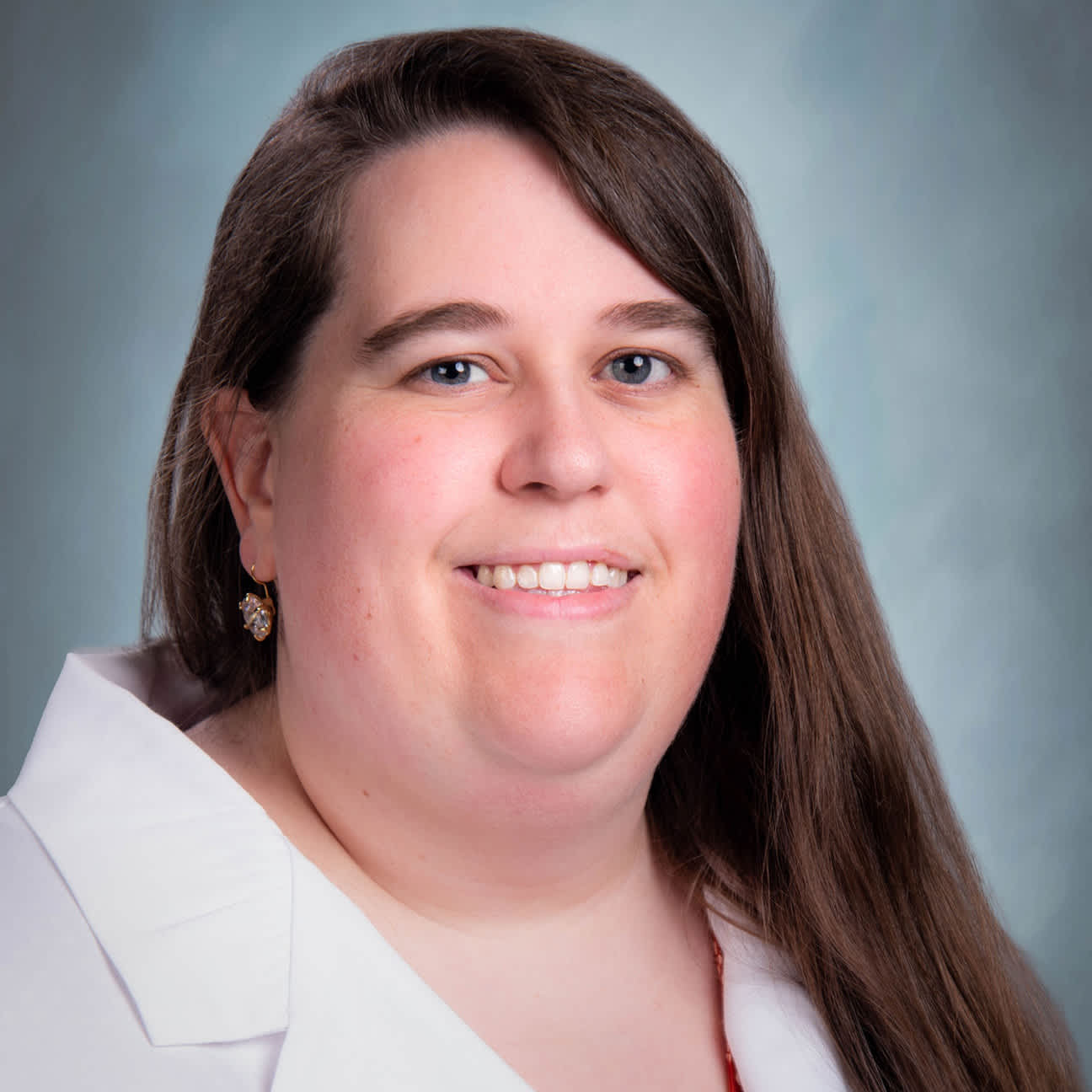
Why family medicine?
“I started med school interested in gynecology. Then, like a lot of students in their clinical years, discovered that anything surgical was not for me. I noticed throughout my third year there was a family medicine resident on each of my clerkships, and they all said to me, ‘You really need to think about going into family medicine because it seems to have everything you want.’ They were right.”
“As I was going through my clerkships, I ended on family medicine,” she said, “and I realized all the things I liked came together in that one clerkship. I also liked all the people I’d worked with, residents and the faculty. On my interview trail, I found myself comparing every program to this program. It was a natural decision to stay here.
“As I did my residency training, I looked at the faculty and thought, ‘These are the people I want to be like when I grow up.’ I wanted to continue the relationships I had with them as colleagues. It felt like I’m meant to be here.”
Helping medical students discover family medicine
Now Zimmerman is doing her part to attract more Brody students to the specialty as advisor of the school’s family medicine interest group (FMIG).
“My passion is making sure students know early on all the things family physicians do, whether that’s hospital medicine, women’s health, procedures, end-of-life discussions, etc.,” said Zimmerman, who is also a clinical assistant professor, family medicine clerkship director and director of the Medical Student Education Division. “By their third and fourth years, students are somewhat differentiated. If you can get to them early and show them that there are passionate physicians in family medicine and there is a wide variety of things we can do, you may get them to consider a career in family medicine earlier on.”
Who inspired you?
It was my physicians growing up, starting with my pediatrician and then my family physician, and wanting to learn more about what they do. My mom has had a lot of health issues. Seeing how her doctor, who was also my doctor, helped us cope with those situations really impacted me and motivated me to consider a career in medicine.
Zimmerman said that last year’s student leaders set a goal for the FMIG to have at least monthly events, a huge change for a group that previously had only a few events each academic year. Students added multiple service projects to the FMIG’s calendar, along with social events with residents and a “speed dating” event with family docs from different practice settings. They also added a workshop where students rotated through different stations highlighting family medicine procedures, including IUD insertions, suturing and ultrasound-guided injections.
“We actually had to limit how many students could come because there were so many signing up,” Zimmerman said. “Seeing the FMIG go from offering a few things we could get people to attend to these giant events was huge. The students did an incredible job, making that happen for us over the year.”
AAFP honors outstanding FMIG faculty advisor
Zimmerman will be honored during FUTURE with the AAFP’s Joyce Jeardeau Memorial Award, which recognizes a faculty advisor for exemplary support of an FMIG. In their nomination letter, Zimmerman’s students highlighted her efforts to secure the additional funding needed to expand the group’s programming.
“The whole reason you do this is for the students,” Zimmerman said. “You can get different awards, recognitions, titles in academic medicine, but what really matters to me is what my students think.”
Brody’s FMIG also will be recognized with a Program of Excellence Award during FUTURE, the AAFP’s conference for medical students and family medicine residents, which is scheduled for July 30-Aug. 1 in Kansas City, Missouri.
What do you love about academic medicine?
I always said to myself, ‘If I get through med school, I’m going to give back.’ I think of all of the people who taught me, trained me and helped me become the physician I am today. It’s my honor to give back to students the same way help was given to me.
Advice for FMIG advisors
Zimmerman, who tapped into funding from her medical school, the North Carolina AFP and the AAFP, said her advice to other FMIG advisors is to keep an open mind.
“We have really large turnouts now at our interest group meetings because we have the resources to fund them,” she said. “Try not to say no to your student leaders unless you really have to. Let them be creative, explore and find what they want to do, and then just be supportive of that. What can you do to help students achieve what they want to do? For us, it was as simple as asking for help. I was amazed at how many times the answer was yes.”