
Domino explores changing medical evidence at FMX 2026

Family physician Frank Domino, MD, shares updates in family medicine at FMX 2026.
Frank Domino, MD, the mainstay of the mainstage, was back at the Family Medicine Experience Oct. 23 in Nashville, Tennessee, where his presentation capped a day of sessions highlighting confidence in evidence-based care.
But just like science, Dr. Domino’s presentation of the top updates in evidence-based medicine changes every year.
Sometimes from week to week.
“I'm going to urge you to keep an open mind because things that you think you know today are vastly changing,” said Dr. Domino, who has been presenting at the AAFP’s annual meeting for more than 20 years and whose mainstage mixture of science and entertainment has been a draw since 2017. “As late as (last) Friday, I had to change these slides because things change.”
One thing didn’t change: Dr. Domino’s rapid-fire delivery of statistics, recommendations and jokes.
Some of the evidence, of course, wasn’t funny.
Maternal mortality and firearm deaths: New evidence highlights risks
“We have the highest maternal mortality in affluent countries in the world,” said Dr. Domino, professor of family medicine and community health at the University of Massachusetts Chan Medical School.
Previous data had showed that the leading causes were issues like cardiovascular disease and endometritis, but a study published in February in the New England Journal of Medicine found that accidental overdose (four per day) and violence are the leading causes of death of new moms in the United States.
“Even if you don't do OB, you take care of kids, you take care of pregnant women,” said Dr. Domino, who also is editor of the Five Minute Clinical Consult and host of the Frankly Speaking About Family Medicine podcast. “We should be checking in with them because accidental overdose happens everywhere. Violence happens everywhere.”
Similarly, Dr. Domino said family physicians need to “keep a close eye on our families, especially our adolescents and even our young adults,” noting the leading cause of death for U.S. children and adolescents is guns (12 per day).
There are six firearm fatalities per 100,000 children and teens in the United States. Canada ranks a distant second at 0.62 deaths per 100,000. Dr. Domino said the latest data indicate that firearm deaths in the United States have decreased by 5%, but one American dies every 12 minutes from a firearm related injury. The leading cause is suicide.
“If you look at the news, you think everyone's shooting each other,” Dr. Domino said. “The reality of the matter is people are harming themselves. So that is on us to some degree. More than ever, people are isolated. They're looking at their phones, keeping very insular, very close-minded, very small circle. Talk to folks, see how they're doing.”
Screen time, social media and adolescent mental health risks
Dr. Domino said too much screen time is bad for adults, increasing the risk of depression, obesity and metabolic syndrome.
“Putting the phone down, getting it under two hours a day for just three weeks, improves the mental health aspects associated with heavy phone use. So this is beatable. More than four hours a day causes a 50% increase in all-cause mortality and 100% increase in cardiovascular risk, primarily through our inactivity.”
Apps like Screen-Sense can help limit phone use, he said.
“It’s very friendly,” Dr. Domino said. “It's like, ‘Hey, you've been on Instagram for 30 minutes. Maybe you could think of any freaking thing better to do than this.’”
A study in JAMA Pediatrics found that about half of adolescents used their phones between 10 p.m. and 6 a.m. on school nights. The average was 50 minutes, primarily spent on social media.
“Our adolescents not only are sleep deprived, they’re grumpy from getting up in the middle of the night and looking at their problems,” Dr. Domino said.
Screen time and social media use, he said, correlate with increased risks for alcohol nicotine and cannabis use.
“When you're chatting with your adolescent patients, ask them about marijuana, vaping, nicotine, screen time—and in particular, screen time at night,” said Dr. Domino, who pointed out that the FDA earlier this year approved fruit-flavored vapes and nicotine patches. “And ask about their mental health and chat about use.”

Frank Domino, MD, speaks with members of the AAFP's Early Career Pathfinder program Oct. 23 after his mainstage presentation at FMX.
AI chatbots and mental health: Opportunities and concerns
Adolescents are turning to artificial intelligence for help at a growing rate. Survey findings in JAMA Pediatrics indicated that one in five adolescents are using a chatbot for mental health advice, up from one in eight a year earlier.
“And that's those who reported it on the survey,” Dr. Domino said. “I suspect it's even more common.”
More than one-fourth of respondents who reported using the technology for mental health advice used it daily. Two-thirds of chatbot users had not told anyone they were doing so.
“I think on one hand, this is worrisome,” Dr. Domino said. “On the other hand, I think this is amazing because I've worked with underserved populations my entire career and having mental health access for patients has always been a challenge. This may be a bridge. It's not ideal, don't get me wrong, but it may be OK.”
Dr. Domino said he had tried and recommended Ash, finding the mental health chat bot “incredibly insightful and safe.”

FMX emcee Rich Redmond, left, gives percussion pointers to Jessica Gray, MD, FAAFP, of Lubbock, Texas; Liz Kazarian, MD, of Arlington Texas; Clobert Broussard of St. Louis; and Castro Bonny, MD, of Opa Locka, Fla., during the Oct. 23 mainstage event at FMX.
Domino challenges changes to vaccine recommendations
Dr. Domino also talked about patient misconceptions and concerns about vaccines. For example, a study published in JAMA Pediatrics found that more parents in Sweden were skipping the routine intramuscular vitamin K injection for newborns, and that infants who do not receive it have a their 2-day-old infant because the mother did not want the child to be immunized.
“It's vitamin K,” Dr. Domino said. “It's not immunization. This is an essential vitamin. The reasons around hesitancy are, ‘It's a vaccine.’ It isn't. ‘It's full of toxins.’ It isn't. It's natural. It's a vitamin. They think it can cause cancer. It can't.”
He also took aim at the administration’s move to cut the number of recommended childhood vaccines from 18 to 11 and new recommendations to separate combined vaccine into single-disease shots given during separate medical visits
“Right now, we give 22 injections over eight visits,” he said. “If we follow this new order, it's going to be 32 injections over the first five years of life, which means the baby needs to come in for their immunizations every two months for five years. That's not going to happen.”
He also expressed dismay that several immunizations, including hepatitis A, hepatitis B and meningococcal vaccines, are no longer routinely recommended by the CDC.
“Is anyone else old enough to have seen meningococcal disease?” he asked the packed ballroom. “I saw it twice in my career. First person lost his leg, second person died. This is ridiculous.”
He also urged family physicians to resist parent requests for unneeded vaccine exemptions.
“The rate of children entering kindergarten with vaccine exemptions is going up,” he said. “Parents are going to pester you for this. Tell them that you really can't give them an exception. If they're really sure they don't want their child to be immunized, probably the last place their children need to be is in the school. They should think about home schooling.”
GLP-1 medications show benefits beyond diabetes, weight loss
Dr. Domino cited five studies showing that GLP-1s are effective at treating a wide range of conditions.
“My prediction is statins have had their moment,” he said. “Over the next 10 years, statins are going to be used less and less. Antihypertensives are going to be used less and less, and these drugs are going to supplant them as the drugs of choice.
“These drugs are quite amazing beyond what they do for diabetes. They decrease all-cause mortality. They decrease heart failure. They decrease AFib. They treat liver disease. They help benefit people with osteoarthritis. They treat obstructive sleep apnea. They decrease addictions. They decrease dementia.”
Watch more evidence-based updates with FMX On Demand
Dr. Domino also was critical of multiple American College of Cardiology guidelines, including hypertension and lipidemia that, did not include randomized controlled trial data.
“The new ACC guidelines have a very, very limited base,” he said. “Over 50% of these guidelines are expert opinion. They're not based on data.”
You can hear all of Dr. Domino’s thoughts on the ACC guidelines as well as his takes on colonoscopy for cancer prevention, creatine use in teens, screening for gambling addiction, benefits of sunlight exposure, acute sinusitis treatment—and find out what vagina-maxing is—in FMX On Demand.
With a nod to Dr. Domino’s focus on evidence, here’s a sampling of other highlights from Friday at FMX:
Using social media to combat health misinformation
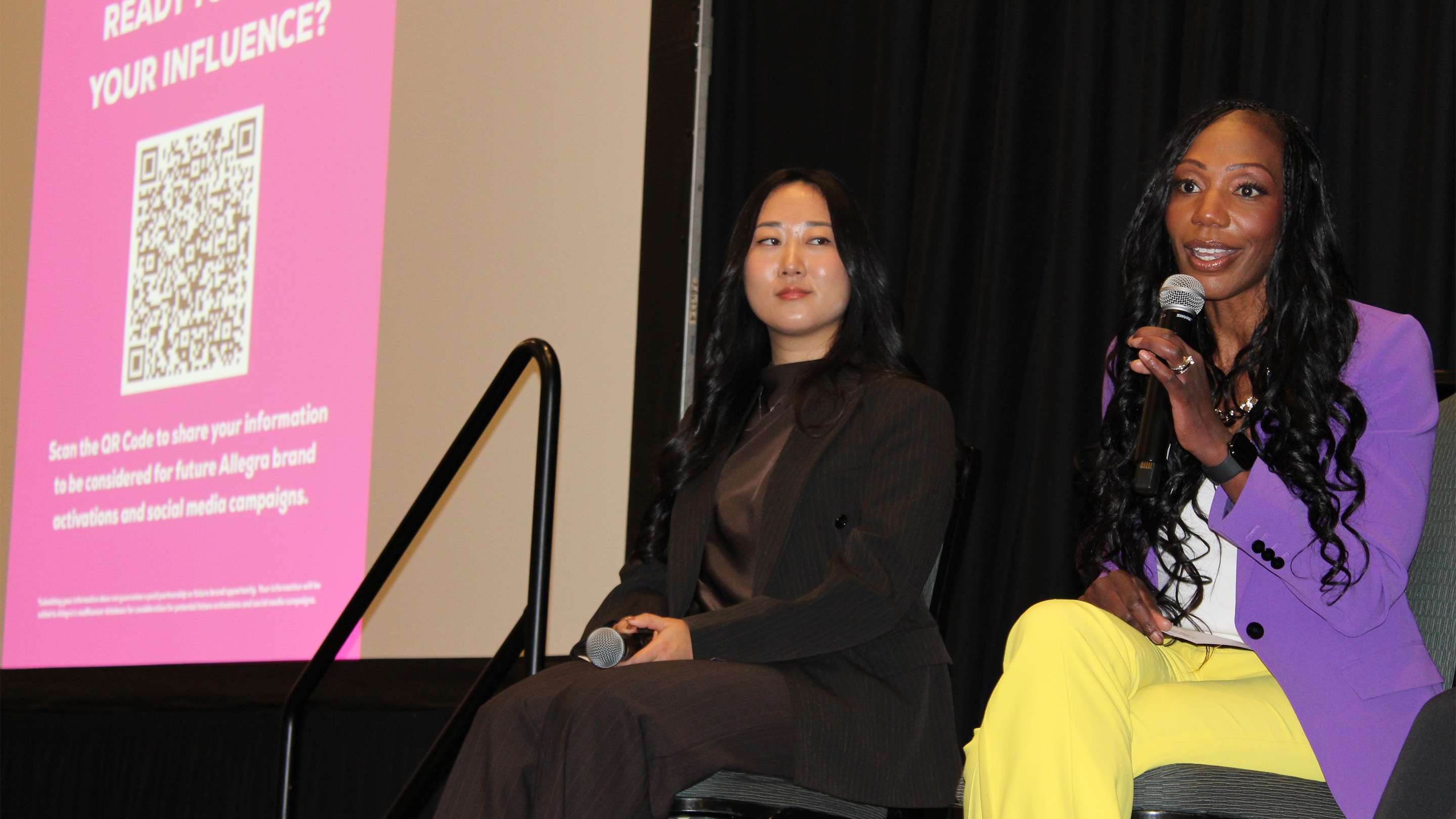
Bayo Curry-Winchell, MD, right, speaks about social media during a session Oct. 23 at FMX with Meta client solutions manager Tiffany Weng.
Family physician Bayo Curry-Winchell, MD—Dr. Bayo to her more than 600,000 followers—drew a packed audience of her peers for a session on patient education, combating misinformation and building your own brand on social media. Among the attendees was Tema Fodge, MD, of Fort Belvoir, Virginia.
“A lot of potential patients can’t see us in person because there aren’t enough primary care physicians,” said Dr. Fodje, a recent graduate of the National Capital Consortium Family Medicine Residency. “They’re going online to find health information, and there are wellness influencers posting absolute nonsense. We need more physicians on social media because that’s where people are.”
Dr. Fodje said building an online presence can help patients relate to, and trust, their physicians. She has 11,000 followers across Instagram and TikTok, and recently started a YouTube channel.
“This was reaffirming that I need to be myself,” she said of Dr. Curry-Winchell’s presentation. “Just because I don’t have a big following doesn’t mean I’m not having an impact. I’ve had people come up to me here at FMX and say, ‘I’ve been following you since you were on Twitter.’”
Family physicians receive AAFP Fellow designation at FMX

Dale-Marie McKie, DO, FAAFP, left, celebrates with a family photo after she received the degree of AAFP Fellow Oct. 23 during FMX.
More than 140 family physicians were conferred as AAFP Fellows during a breakfast Oct. 23. To become a fellow, family physicians must participate in certain activities such as lifelong learning, research, teaching and public service.
Stephanie Purnell, MD, FAAFP, earned the designation just four years after completing residency.
“I’m on a mission,” said Dr. Purnell, who attended the ceremony with her family. “I want to be a good example for my children. I want to show them that it takes hard work and sacrifice, but you can make a career out of whatever you’re passionate about.”
Dr. Purnell’s passion is sexual and reproductive health, which she practices in Baltimore. She said earning the fellow designation “adds another level of credibility” that she hopes others will take note of.
“There are a lot of people who want to work in sexual and reproductive health,” she said, “but not enough people who want to train them. I want to champion and amplify it.”
GLP-1 therapy discussion draws early risers to CME session

Jay Shubrook, DO, FAAFP, deputy editor of Diabetes, Obesity, and CardioMetabolic CARE, speaks Oct. 23 during an FMX session on GLP-1 RA therapy.
Dozens of family docs made it to a two-hour CME session on GLP-1 RA therapy that started at 6 a.m. on a Friday. Attendee Dale-Marie McKie, DO, said the early start was worth the effort.
“Last year was my first FMX, and I came for 2 ½ days,” said Dr. McKie, who completed residency in 2021. “This year I came for the whole week.”
In her Chesapeake, Virginia, practice, Dr. McKie has many patients with diabetes as well as others who are asking about GLP-1 medications for weight loss.
“Any information I can get to prescribe better and safer is helpful,” said Dr. McKie, who noted she’ll share what she learned at FMX in her role as a community preceptor.
Vaccine session addresses immunization challenges

Peter Ziemkowski, MD, FAAFP, speaks about reemerging infections and vaccinations during a session Oct. 23 at FMX.
Longtime family medicine mentor Peter Ziemkowski, MD, FAAFP, drew a big crowd for a talk about reemerging infections and vaccinations. Dr. Ziemkowski covered vaccine safety and efficacy, administration strategies, schedules and evidence-based recommendations.
Attendee Ted Warren, MD, FAAFP, who has been in practice since the 1980s, said his vaccination rates have dropped significantly since the pandemic. Dr. Warren said many patients take his advice to get the shingles vaccine because “fear and pain will make people do things they don’t want to do.” But many other immunizations are more complicated, he said.
“I’m having a hard time getting people to take even the flu shot,” he said. “Maybe half the people I recommend it to get it. I talk to people about immunizations every day, especially this time of year. People know what the flu shot is, but they don’t understand what RSV is. I have to explain it to them and give them something to read.”
Dr. Ziemkowski’s session, which is available in FMX On Demand, pointed attendees to the AAFP’s vaccine resources for physicians, as well as patient education on FamilyDoctor.org (which is also available in Spanish).
Dr. Warren said he would review everything he learned at FMX before deciding how to implement changes in his practice, but he said the vaccine session was reassuring.
“It’s nice to hear from people who are fighting the same battles and know that I’m on the right track,” he said.