
Longtime mentor brings expertise in vaccines, AI and diabetes to FMX

Peter Ziemkowski, MD, FAAFP, spent more than 20 years caring for patients while teaching medical students and family medicine residents to do the same. Now a medical education consultant, Ziemkowski will continue his long tradition of serving as faculty at the Family Medicine Experience Oct. 20-24 event in Nashville, Tennessee.
“We’re family docs and anything I can prevent, whether it be a case of measles or a heart attack or a stroke 20 years down the road, that's a real win for me,” he said. "We’re champions for our patient and look out for their long-term health. A big part of our role is to encourage consistent immunizations, and we have to keep doing that.”
Why family medicine?
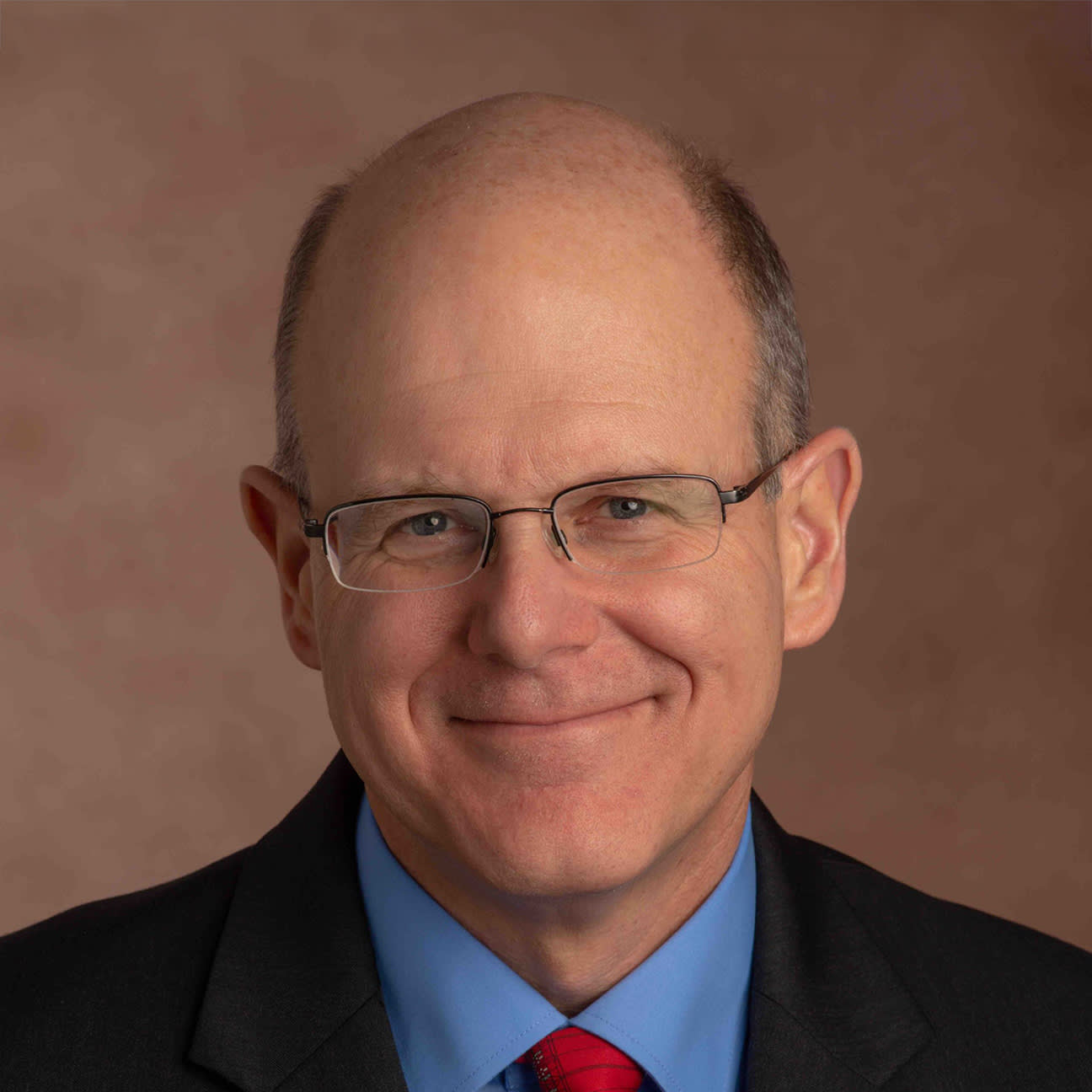
Peter Ziemkowski, MD, FAAFP
“My first time in the family medicine office as a medical student, we saw an elderly patient. Then we went to the next room and saw a 4-year-old. It was that combination: Those cradle -to-grave, longitudinal relationships are what I wanted. I did some emergency medicine because I thought for a while that’s what I wanted to do, but I missed longitudinal relationships. Someone much smarter than me told me that in family medicine, you start your practice working with patients. After a few years, you’re working with friends. That’s absolutely true.”
Helping patients make informed vaccine decisions
Two of Ziemkowski’s FMX sessions will be related to vaccinations. One of those sessions will focus on shared decision making on clinical issues, including vaccines. Ziemkowski said he’s not in favor of the practice of dismissing patients who decline vaccinations.
“I’ve been a lecturer too long, so my natural tendency when parents didn’t want a vaccine for their children would be to lecture them,” said Ziemkowski, who was a family medicine clerkship director at Michigan State University for 14 years before spending more than a decade as associate dean for student affairs at Western Michigan University’s Homer Stryker M.D. School of Medicine. “You don’t win many converts that way. I learned the best thing to do is listen to their concerns and try to keep them in the practice.
“Sometimes the short-term win isn’t really what we need. It’s the long-term win. We need to actually get them on board, not just the one shot today to shut me up, but a commitment to the vaccine series. Parents make the choice whether they’re going to immunize or not. It’s my job to make sure their choice is fully informed.”
What inspired you?
When I was working in software engineering, I missed human contact and I missed the opportunity to be a teacher. I volunteered as a literacy tutor. I was always a teacher at heart, so I loved instructing and supervising medical students, especially. I got really excited about career development. I worked with hundreds of students, really focused on helping them apply for residency and got a lot of them into a lot of great places. I used to tell them my job was to help them achieve their goals, not mine.
Ziemkowski was the longtime chair of the AAFP’s child and adolescent CME course. He’s now moved into a similar role for a CME program related to re-emerging infectious diseases that will include an on-demand product launching in mid-October, a two-day livestream event in early November and a session at FMX.
He said the program’s content will cover preventing, diagnosing and treating vaccine-preventable illnesses that are on the rise, such as measles, as well as other infectious diseases like syphilis.
Keeping up with advances in diabetes treatment
Ziemkowski’s packed FMX schedule also will include a session on the evolving treatment and management of diabetes.
“I decided during residency that if I could take care of hypertension, high cholesterol and diabetes, I could take care of about 80% of what walked in my door,” he said, “because people may have other conditions, but they often had some combination, if not all three, of those conditions. When I first started doing diabetes talks, it was about insulin and sulfonylureas. Now it’s not just diagnosis and treatment of diabetes, but also prevention or delay of onset. The treatment options have exploded.”
Exploring the promise and risks of AI in family medicine
Ziemkowski also will present a session on the future of artificial intelligence in family medicine. He has known the promise, and pitfalls, of the technology for decades.
“People think AI is brand new, but some of the issues that we face with the use of AI today are similar to the issues we faced 25 years ago with the first expert systems,” said Ziemkowski, who spent a summer working on expert systems for IBM when he was an undergraduate studying computer science engineering and biology at the University of Illinois. “The challenges we face now are just a lot faster. Someone said recently that with AI you can get to the wrong answer much faster. That means we can do the wrong thing much quicker as well.”
Alternatively, he said, AI has the potential to address some of the most time-consuming tasks in primary care, like documentation and inbox management.
“I take any opportunity to reduce some of the drudgery in the practice of medicine as another win,” he said.
From software engineering to medical informatics
After college, Ziemkowski worked as a software engineer for a defense contractor and later for the Reuters news agency, providing financial information for traders. In medical school, he ran a student computer lab and received a tuition waiver that allowed him to finish med school without any debt.
“That skill was not that common back then,” said Ziemkowski, who later completed a fellowship in medical informatics. “I had degrees in biology and engineering. During the years I was in college, I had to explain to people why I was doing that. And now schools offer bioengineering degrees. I feel like I was born 30 years too early.”
What did you love about academic medicine?
We got to found a new med school, and for 10 years I was dean of student affairs and helped a lot of students through their career development and the match. Most people think graduation is the most exciting day, and perhaps the most terrorizing day in medical education is July 1 when all the new interns start. But those who work with students know it's really the Monday of the third week of March when students find out if they matched in the main match. That’s the week we really have to be involved and help get them through that whole process.
Ziemkowski is a member of the Board of Directors for the Michigan Academy of Family Physicians and chair of the Family Medicine Foundation of Michigan’s Professional Development Committee.
“When you join the board, you have to be on a committee,” he said. “There were a number of options, but when I saw professional development, I said, ‘That’s what I’ve done, from undergraduate to graduate to continuing medical education.’ That's what I wanted.”