
Speaker brings AI scribe and cancer communication insight to FMX

Lisa Masson, MD, MBA, FAAFP, FAMIA, will give two very different presentations at the Family Medicine Experience.
Cedars-Sinai’s medical director of enterprise information services will offer practical tips and information about using AI scribes in one session during the Oct. 20-24 event in Nashville, Tennessee. In her other FMX session, Masson, a cancer survivor, will discuss how to talk to patients who have cancer.
Talking (and listening) to patients with cancer
“I have to admit, I feel a little bit like an imposter because I have thyroid cancer,” she said. “It’s not curable, but it’s very treatable. It’s a ‘good cancer.’ But that’s kind of the point of my talk: Don’t tell patients their cancer is ‘good’ because when you’re living with it, it doesn’t feel good, right? We tell patients, ‘You’re going to be all right.’ Or, ‘Here’s the next step.’ It’s about how to avoid that toxic positivity. It’s OK to be quiet for a minute. It’s OK to say, ‘Golly, that’s really tough,’ and just sit and listen.”
Masson’s cancer conversation in Nashville won’t go exactly how she first imagined it. She was inspired by a similar presentation Liz Kuper Reitan, MD, of Eagle, Idaho, gave at FMX a few years ago. Masson had hoped for input from Kuper Reitan, but her friend died this summer after a battle with cancer at age 45.
The family doctors both belonged to the Female Physician Facing Cancer group on Facebook, which Masson said was “the best group you never want to join.”
“It’s going to be a difficult slide deck to create,” Masson said.
Masson, who still is looking forward to being FMX faculty for the fourth time, said she considered not sharing her own diagnosis with her peers, but that approach didn’t feel right.
“It’s personal,” she said, “but how do you give this talk without being personal? That’s kind of what it’s all about.”
Why family medicine?
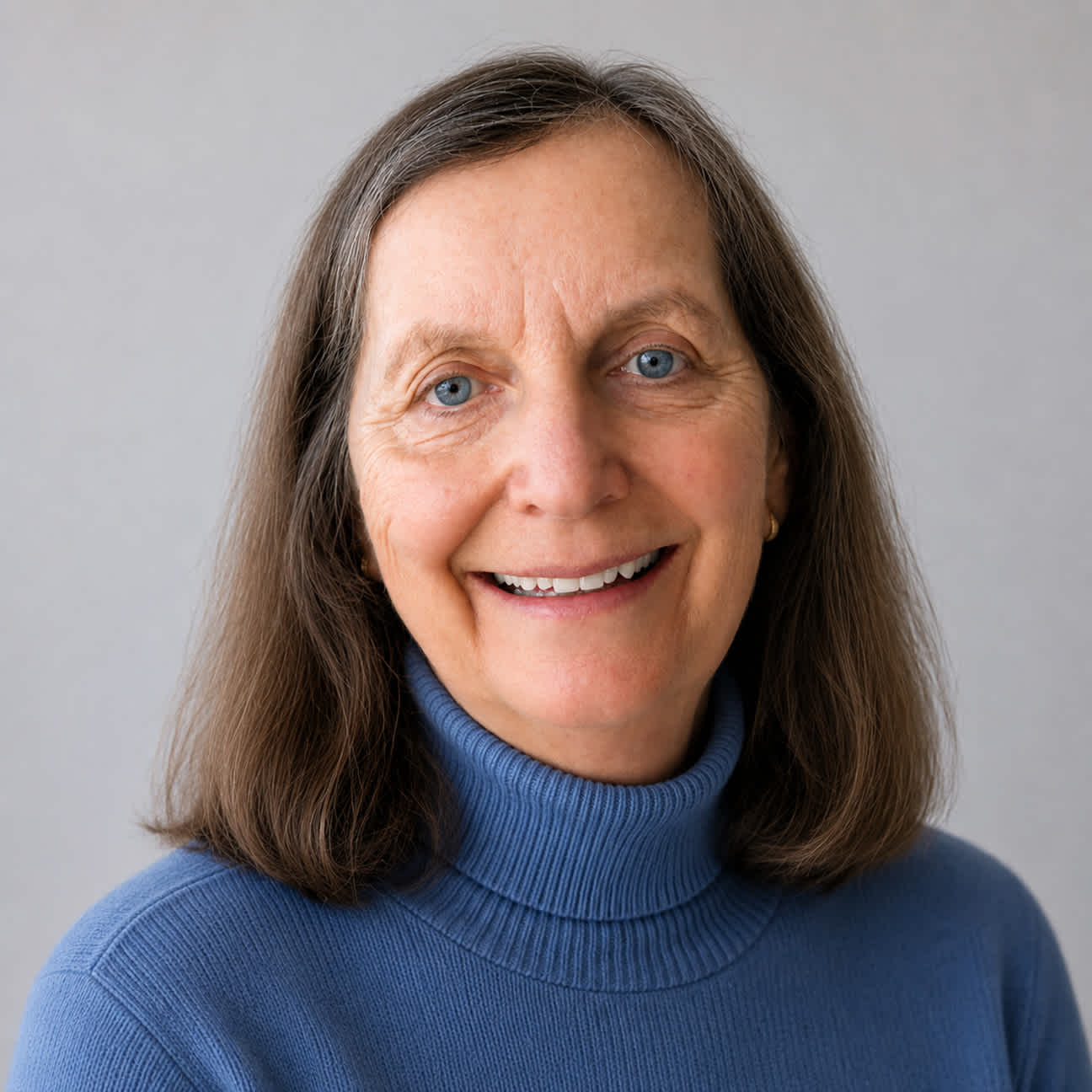
Lisa Masson, MD, MBA, FAAFP, FAMIA
“I went to med school planning to do family medicine. I did a surgery rotation, and one of the attendees said, ‘Girls should never be surgeons. You’ll never make it.’ Don’t ever tell me I can’t do something. It ticks me off. I got the highest score on the shelf exam and applied to surgery residencies. I did not love it. Funny that. I look back and give myself credit for doing two years and then totally pivoting. The turning point? I went into a room, and it was a post-op gallbladder. The patient was chatting with me. She goes, ‘Oh, you’re lovely. I wish you were my daughter.’ I thought, ‘Surgeons aren’t really supposed to talk to patients. This isn’t why I went into medicine.’ I flipped and never regretted it. I love family medicine.”
Bringing health IT expertise to family medicine
Masson’s presentation on artificial intelligence should be a bit easier. She’s been deeply involved in the American Medical Informatics Association (AMIA) for more than a decade and is past chair of the Physicians in AMIA. She also has served on numerous committees and workgroups related to electronic health records for the Healthcare Information and Management Systems Society and the Agency for Healthcare, Research and Quality.
It all started because Masson had strong opinions about EHRs and wasn’t shy about sharing them.
“I practiced cradle-to-grave family medicine for the first 20 years of my career,” said Masson, who was the chair of the Department of Family Medicine at Memorial Hospital in Modesto, California, from 1997-2001 and later its chief of staff. “Then they gave me an EHR, which I was really excited about, only it was cumbersome. At the time I had lots of leadership roles, and I offered so much constructive criticism that they put me in charge. I’ve had a tech role since 2001. I feel like I need to tell others what that looks like, what they could do, what questions they need to ask.”
Who inspired you?
My dad was a cardiologist. I carried a black bag when I was 4 and followed him around. It’s in my blood, and it’s not just me and my dad. My oldest daughter has a PhD in biomedical engineering, my middle daughter’s an orthopedic surgeon and my youngest daughter is in internal medicine.
Masson has used multiple scribing tools and will share what she’s learned during her session.
“What do you need to think about if you’re going to use an AI scribe?” she said. “They all have their pros and their cons. Some are in formatting. Some are in how long they keep the transcription. Some are in how much they cost. Some are in how integrated they are. The lesson I want people to take home is that some of these options are really very good. They’re going to save you a lot of angst. You get to actually look the patient in the eye because it’s taking notes for you. The downside is it’s so good that at the end of the day you have 30 to 40 notes. But they do make mistakes, so it is imperative that you read and edit them.”

Dr. Masson, her dad and daughters all went into health-related careers.
Masson, who still sees patients in an urgent care setting, said her relationship with EHRs is of the love-hate variety.
“I still get that serotonin burst when I show somebody something and it works,” she said. “Sometimes it’s something really trivial. I’ll be working urgent care, and there’s an extra click and I think, why is that? I put in an optimization, it actually happens, and someone thanks me. Sometimes it’s just a little-bitty thing.”
Masson, a member of the California AFP, also is a health sciences clinical professor at UCLA’s Geffen School of Medicine and supervises residents in Cedars-Sinai’s internal medicine residency program.
Why are you passionate about informatics?
If you say informatics, even my own family is like, ‘Oh, so you play on a computer?’ Well, no, it’s really the intersection of medicine and technology. The brain and the computer are better together than just the brain alone. How do we make it work, and how can we make it easier to have evidence-based medicine? Informatics is great. Even if a physician has zero desire to do informatics, they should know what it is because it’s going to touch them. You should know what questions to ask and what people in informatics can do for you.

Jameson and Dr. Masson can both be found at Cedars-Sinai Medical Center.
If you happen to run into Masson at Cedars, she likely won’t be alone.
“My dog, Jameson, goes everywhere with me,” she said of the mini golden doodle, who has nearly 900 followers on Instagram. “I went through the process for him to be an official volunteer dog at Cedars. It was almost harder to get him credentialed than me.”