
Russell W. Kohl, MD, FAAFP
Candidate for president-elect
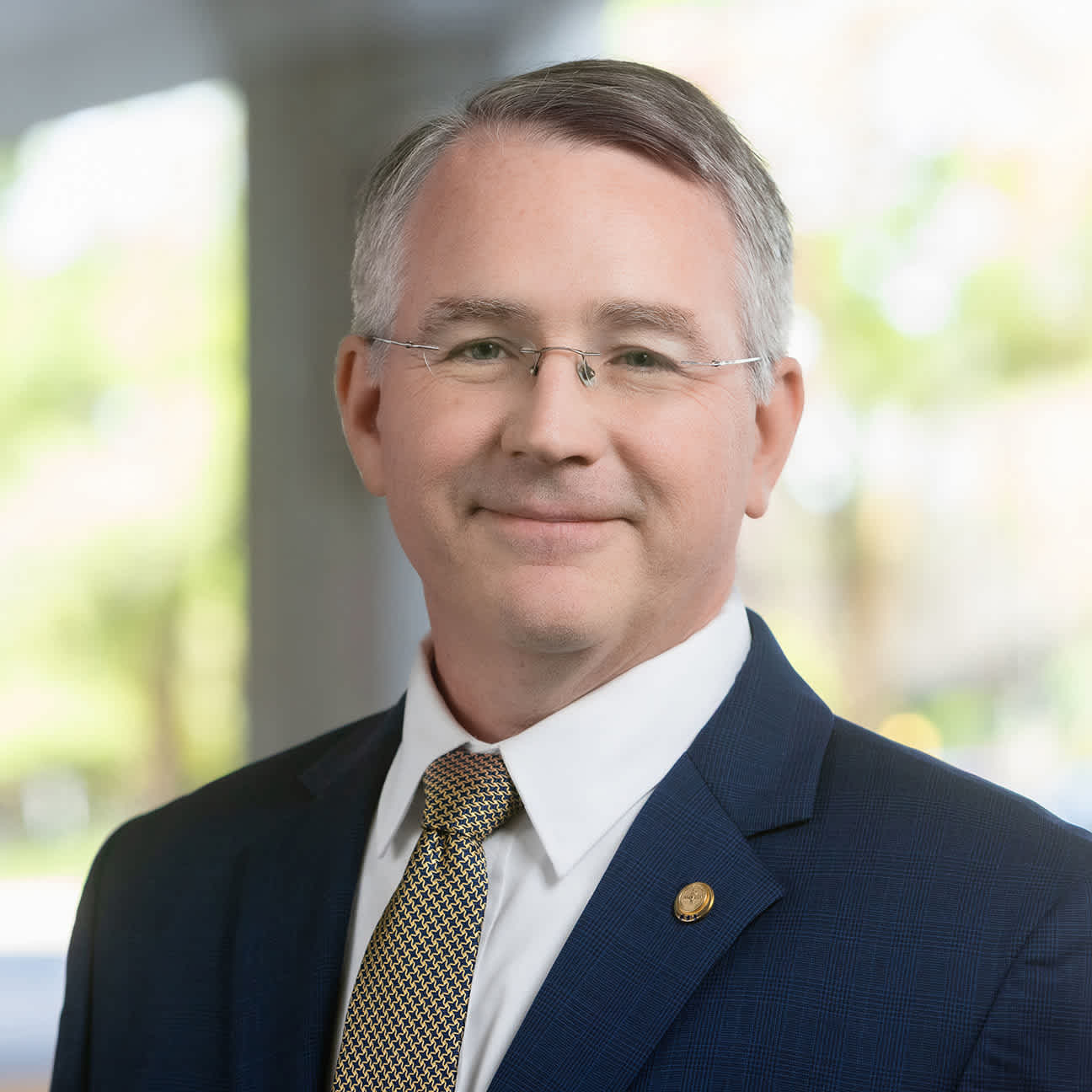
Russell W. Kohl, MD, FAAFP
Personal statement
Family physicians go where others will not, to provide the care that others cannot. That calling has never been more important—but family physicians today are being asked to care for patients in a system that too often works against the very things our specialty does best: continuity, comprehensiveness, trusted relationships and clear, evidence-based guidance.
The concerns I hear from family physicians reflect the same deeper problem: outside decisions intruding into the exam room, distrust of science undermining evidence-based recommendations and practices consolidating into corporations that make decisions far from the communities we serve. Rapid changes in technology and generational shifts in expectations are simultaneously reshaping how care is delivered and patients’ experiences. Whether in my solo first practice, as rural residency faculty or on the streets of Kansas City caring for our most vulnerable neighbors, I’ve experienced these growing challenges.
These forces all point to the same essential question: will future family physicians be empowered to comprehensively care for patients, inform them honestly and build the relationships that make our specialty indispensable? I believe the answer is yes—but only if we are clear about what must endure and courageous about what must change.
Patients do not live their lives in fragments, and family medicine cannot flourish when reduced to transactions. In a world that feels more complex and more impersonal, patients need physicians who can see the whole person, apply science with judgment and help navigate difficult choices in a complex system. That is the enduring value of family medicine, and the future we must secure.
The AAFP has an essential role in that work. We must defend the physician-patient relationship, support evidence-based care, confront administrative barriers that make good doctoring harder and ensure that new technologies strengthen, rather than diminish, the family physician's role. We must speak clearly when forces—inside or outside medicine—make it harder for family physicians to meet their patients' needs.
The Academy must also remain a broad and welcoming home for our specialty. There are many ways to practice family medicine, and that diversity is one of our greatest strengths. But our differences must never become more important than the shared identity that binds us together and we must not surrender our specialty to fragmentation. We are strongest when we are clear about what family medicine needs to flourish and are willing to defend it together.
I am running because I believe that family medicine still has the power to shape what comes next. Patients need family physicians who provide continuous, comprehensive, relationship-based care and help them navigate complexity with honesty and trust. Family physicians need an Academy that is clear about what our specialty requires, bold in defending it, and broad enough to remain a home for every one of us.
That is the leadership I hope to bring: grounded in the enduring purpose and promise of our specialty, confident in its future and committed to helping family medicine shape what comes next.
Russell Kohl, MD, FAAFP, is a family physician and national leader known for connecting the voices of family physicians to meaningful action at every level of the Academy.
Dr. Kohl brings a broad perspective to leadership, shaped by a career that began as a firefighter/EMT with the Oklahoma City Fire Department, then medical school and family medicine residency at the University of Oklahoma, interrupted by a two-year mobilization to Iraq and Afghanistan as a U.S. Air Force flight surgeon. His professional practice experience has included full-scope rural solo practice, academic medicine, national quality improvement work and a street medicine practice serving individuals experiencing homelessness in the Kansas City metro area, where he precepts and mentors medical students from three different medical schools in the community. He currently serves as chief medical officer for TMF Health Quality Institute and as the Air National Guard Assistant to the National Guard Bureau Joint Surgeon General.
A member of the AAFP since 1998, Dr. Kohl began his Academy leadership journey as a student alternate delegate to the Congress of Delegates and has remained deeply engaged in organized medicine ever since. His service includes 16 years of leadership within the Oklahoma Academy of Family Physicians, including serving as president, as well as service on multiple AAFP commissions, as a National Conference of Constituency Leaders co-convener, new physician member of the Board, chair of the AAFP Commission on Finance and Insurance, and vice speaker and speaker of the Congress of Delegates. In these roles, he has worked with family physicians from across the country to help ensure that member perspectives meaningfully shape the Academy’s direction, while supporting governance that is transparent, responsive and grounded in the realities that family physicians face every day.
The father of two now-grown Eagle Scouts, Russell spent nearly a decade as a scoutmaster, including serving as the inaugural scoutmaster of Kansas City’s first linked male and female scout troop. Outside of medicine and service, he enjoys sailing, working on old cars, spending time outdoors and spending time with his wife of more than 25 years, an enthusiastic crafter whose current creative pursuits include 3-D printing and crochet.
Known for a leadership style that is collaborative, steady and mission-driven, Dr. Kohl brings a practical understanding of the challenges facing family physicians today—from practice sustainability and administrative burden to workforce pressures, payment and the evolving demands of patient care. Across each of his roles, he has remained grounded in the belief that effective leadership begins with listening and requires translating member priorities into clear, actionable results.
I’ll keep this short:
I’m running for president-elect of the American Academy of Family Physicians because I believe in the future of family medicine, and want to carry your stories and wisdom forward.
As vice speaker and speaker, it has been my honor to help facilitate discussions around many challenging topics while working to ensure that the voices of our members are heard, and that your time as leaders in our Academy is used efficiently and effectively. I’ve also had the opportunity to advocate on your behalf with Congress, the executive branch and payers—fighting to preserve your ability to give patients the care they need.
As president-elect, I intend to lead with those same priorities as we navigate and help shape the future of health care together.
Recognizing that you’re busy and your time is valuable, I wanted to keep this brief. If you would like to continue the conversation, ask a question, or share any thoughts or ideas, please feel free to text or call me at 405-706-3821 or email me at russellkohlmd@sbcglobal.net.
See you in Nashville!
Russell
Russell Kohl, MD, FAAFP
2026 candidate for AAFP president-elect

Dr. Kohl practicing family medicine wherever it’s needed with his Kansas City-based street medicine team.
Explain how your experiences as a family physician would inform your work on behalf of members as president-elect.
Family medicine has taught me that the most important decisions begin with relationships and context. Throughout my career, I've learned that people are never defined by a single problem. Every patient has a unique story with different challenges and diverse goals. As president-elect, I will approach our members with that same perspective: listening first, understanding the context in which they work and making sure that our Academy builds a future where each family physician can thrive in their unique circumstances, while strengthening the enduring values that define our specialty.
What unique skills and/or experiences do you have that would be valuable to the AAFP membership if you were elected, and why or how would those skills and/or experiences apply to your new role?
My career has allowed me to view family medicine from many different perspectives: rural practice, residency education, executive leadership, military service, quality improvement and caring for people experiencing homelessness. This has been my unique family medicine journey. Through it, I've learned that successful leadership is less about immediately having all the answers than it is about helping people navigate change without losing sight of their purpose—a skill which my time as a flight surgeon in Iraq and Afghanistan helped solidify. We are experiencing a time of tremendous transformation driven by technology, payment reform, workforce challenges and changing patient expectations. My time as vice speaker and speaker has allowed me to demonstrate my skill in helping family physicians navigate that type of complexity and finding consensus between those who may have differing views by focusing on our common goals. I lead with optimistic practicality. I believe our Academy can both embrace and guide innovation, while still remaining grounded in the principles that make family medicine exceptional. I think the breadth of my experiences will help me make sure that no family physician gets left behind, or feels alone, in those discussions.
Promoting the value of AAFP membership is an important leadership responsibility. If you were speaking to non-members, what are the top three things the AAFP has done or is doing well that you would highlight, and why?
I could just jump in and talk all about the AAFP’s legislative advocacy, physician wellness, education and resources that the AAFP provides to members, but I think it would be more important to start by listening and understanding why they aren’t a member.
I believe that too many times young family physicians transition from residency to practice, cross state lines to start their new professional lives, and find themselves disconnected from the chapter or infrastructure that was their AAFP home. As life and transitioning to a new work environment take over, seeking out and renewing membership may fall to the wayside. We must make that an easier process—and AAFP must better support our state chapters, who are often the front lines of our relationship with our members.
However, that doesn’t account for all non-member family physicians. There may be some who have dropped their membership over dues prices or over positions the AAFP has taken, or not taken, on political issues, or a myriad of other reasons. Additionally, I’ve heard from some employed physicians who see their employer as their representative—and who wonder what more the AAFP could do for them. I don’t think we, as an Academy, and each of us as leaders, should start from the place that “they’re bad for not joining;” I think we must start by better understanding what they want or need from the AAFP. We have the right answer for 58% of America’s family physicians, but I think that we have a responsibility to make that percentage of family physicians who are members even higher.
How would you use your leadership position to address the political divide that is currently happening within our country and in some respects within our community of family physicians? Can you offer an example of a time when you were able to build a consensus or reach a compromise on a contentious issue?
I’m reminded of the saying: “That which binds us together is far more important than that which divides us.” If you look at the family physicians who make up our Academy, you will see a full spectrum of different practice settings, communities, backgrounds and perspectives. But those differences are not a weakness to divide us—they’re a strength to find creative answers to overcome anything that can be thrown at our specialty. Unity doesn’t require uniformity.
Throughout my leadership experience, whether within AAFP, the National Guard, or leading multidisciplinary organizations, I have found that lasting consensus begins by identifying shared purpose rather than debating differences. Essentially every policy of the AAFP comes back to one belief: that everyone deserves accessible, evidence-informed care, personalized to their unique situation from a known, trusted and well-trained family physicians who should be able to provide it without unnecessary barriers. I believe my responsibility as president-elect would be to continually bring us back to that common purpose while fostering respectful dialogue and encouraging thoughtful action.
The success of the AAFP five years from now will be determined by our ability to do—what?
It’s comforting to believe that our actions today can decide where we’ll be in five years, but I don’t actually believe that’s true. Our actions today simply “nudge” the trajectory of the world that we will deal with tomorrow. And tomorrow we’ll make another “nudge.” And the day after. Those “nudges” are the small decisions that are true to the core of who we are as a specialty.
I was once told that the most powerful diagnostic tool a family physician has is a follow-up appointment—because your patient and their condition will be different tomorrow, regardless of what you do. Likewise, one of the last-remaining early pioneers of our specialty, Dr. G. Gayle Stephens was fond of saying, “You can fake most things in medicine, but you can’t fake being there when you were needed.” Our success as the AAFP will come from “being there when we’re needed” and following up day after day. Whether for our members, our patients or health care policy advocacy, there is no grand intervention, no silver bullet, nor magical incantation that will guarantee AAFP’s success in five years. Five years from now, people may think our success happened overnight from a moment of sheer brilliance, but it will have actually been the result of 1,825 days of showing up and making those small “nudges.”