
Sarah Sams, MD, FAAFP
Candidate for president-elect
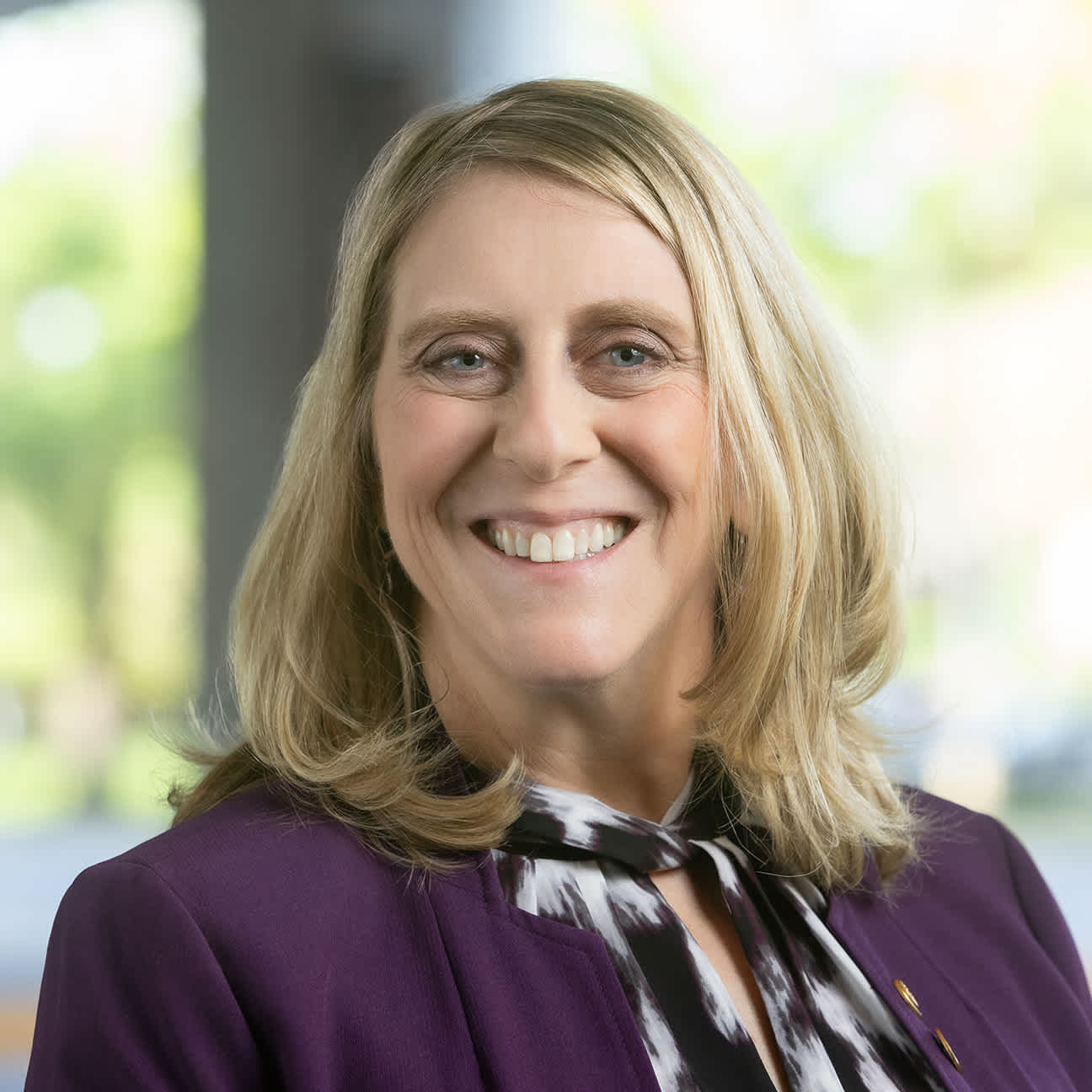
Personal statement
Family medicine stands at a pivotal moment. The challenges facing our patients, our communities and our profession are complex, but so is our capacity to lead. I have spent my career preparing for this moment: caring for patients, training the next generation, advocating for change and investing in the future of family medicine.
I began my career in private practice and now serve as faculty in an urban residency program, but my purpose has remained constant: to provide full-spectrum, continuous care, including obstetrics, in both inpatient and outpatient settings, and to help others do the same. I navigate the same barriers our members face every day: administrative burden, coverage denials and the persistent challenges of addressing social determinants of health. These realities mirror those in rural communities like the one where I was raised in Iowa. Across settings, our members are asking the same question: how do we preserve the heart of family medicine while building a sustainable future?
I believe the answer lies in action, alignment and leadership. I have turned the frustrations we all share into purposeful advocacy, bringing the realities of our exam rooms into conversations to inform legislative changes and elevate the voice of family physicians where it matters most.
At the same time, I see our future in the learners we train and the leaders we cultivate. Teaching has been one of the greatest joys of my career. I am continually inspired by the students, residents and early-career physicians who I have the privilege to mentor. Supporting others as they find their voice and step into leadership has been among the most meaningful parts of my work, and I am proud of the many journeys that I have been able to walk alongside.
My commitment to family medicine also extends to philanthropy. Through my work with the AAFP Foundation, including funding two endowments, I have invested in the long-term success of students, residents and the communities they will serve.
I am a connector and a servant leader. I listen with intention, build trust and lead in partnership. I value relationships, seek to understand, and work to bring people together. If given the opportunity to serve as president-elect, I would work to unite our diverse membership around a shared vision: reducing administrative burden, strengthening the physician workforce, advancing health equity and ensuring that every family physician can thrive while delivering the care their patients deserve.
I would bring not only my experience, but also my heart for this specialty. I am committed to supporting you, advocating alongside you, and helping ensure that family medicine remains a place where physicians and patients alike can thrive. The future of family medicine will not be defined for us; it will be defined by us. I would be honored to serve and to lead together.
Sarah Sams, MD, FAAFP, is a passionate board-certified family physician, educator and advocate. For over 18 years, she has served as an associate director and full-time faculty member at Grant Family Medicine Residency in Columbus, Ohio, where she provides full-spectrum family medicine, including obstetrics and office-base procedures. She has trained over 200 family medicine residents and helped to showcase how bonds built through the patient-physician relationship are the true joy in family medicine. Prior to joining the residency faculty, Dr. Sams owned and operated her own independent, private practice and, as a result, understands the complexity of the business aspects in medicine. In fact, when her medical malpractice insurance rates for her independent practice skyrocketed, she got deeply invested in the advocacy efforts of the Ohio Academy of Family Physicians (OAFP) and its coalition partners. That advocacy effort not only turned the tide for malpractice legislation in Ohio but also set her trajectory for a journey of unparalleled state-level leadership. This also sparked her passion for advocacy and her involvement in the American Academy of Family Physicians.
Prior to her service on the AAFP Board of Directors, Dr. Sams was a past president of the OAFP and served as an OAFP delegate to the American Academy of Family Physicians Congress of Delegates. She served as chair of the AAFP Commission on Finance and Insurance, and the AAFP Commission on Governmental Advocacy (now the Commission on Federal and State Policy), as well as a multitude of state chapter committees that advanced OAFP’s strategic initiatives. Dr. Sams is adept at moderating thorny discussions, making certain that everyone feels heard, and bringing groups to thoughtful consensus. Dr. Sams has an outgoing personality; is a connector of people and thoughts; and has relationships with chapter members, leaders and staff across the country. She has mentored family physicians during the AAFP’s National Conference of Constituency Leaders, early-career leaders at AAFP’s FUTURE conference, and scholars of the AAFP Foundation’s Emerging Leader Institute.
In testament to her dedicated leadership and outstanding advocacy skills, her colleagues named Dr. Sams as the recipient of the 2012 OAFP Torchlight Leadership Award and in 2013 she was selected as the OAFP Foundation Philanthropist of the Year. She was recently recognized for her work as a recipient of the Ohio State University College of Medicine Community Practice Alumni Award.
Dr. Sams received her undergraduate degree in agriculture at Iowa State University and her medical degree at The Ohio State University. Her residency was completed at Grant Family Medicine in Columbus, Ohio, where she returned as faculty.
In her free time, Dr. Sams participates in her local and national church, and has served as a ruling elder and faculty for CREDO, a wellness program for pastors. She enjoys spending time with her family, including two adult daughters, Crystal and Grace, and fiancé, David. She is known for her quilting skills, which have benefitted both the OAFP and AAFP Foundations.
Colleagues and friends,
My journey in advocacy began in 2001, just months after opening my solo family medicine practice. I was providing full-spectrum care when the malpractice insurance crisis threatened my ability to continue practicing obstetrics. Rather than accept this, I took action, testifying on tort reform legislation, working with legislators, and sharing the real impact on physicians and patients through local media. This led to passage of tort reform legislation in Ohio. That experience taught me the power of advocacy and the importance of ensuring family physicians have a strong voice.
Since then, I have continued advocating for our patients, our profession and evidence-based care, from reducing prior authorization burdens to supporting vaccines and parental-child health. During my time on the AAFP Board, I never imagined we would need to defend long-established lifesaving interventions, yet I remain committed to championing science, protecting patients and supporting physicians.
I continue to practice full-spectrum family medicine with obstetrics and teach residents because staying connected to patient care and the next generation matters deeply to me.
If given the opportunity to serve as your president-elect, I will advocate passionately and tirelessly for you, your patients and the future of family medicine.
Thank you for your support.
Sarah Sams, MD FAAFP

Sarah Sams, MD, FAAFP speaking at the press conference for signing of step therapy legislation
Explain how your experiences as a family physician would inform your work on behalf of members as president-elect.
Throughout my career, I have practiced family medicine in multiple settings, as an employed physician in a private practice, the owner of a solo practice, and now as a faculty physician employed by a hospital system where I combine patient care, teaching and leadership. These experiences have given me first-hand insight into the opportunities and challenges facing family physicians across diverse practice environments. I understand the realities of owning a business, managing employees, negotiating benefits, navigating health system administration, adapting to technology, and responding to changing regulatory and payment environments.
While my practice setting has changed over the years, one thing has remained constant: Relationships are at the heart of family medicine. Caring for as many as five generations of the same family has reinforced for me the extraordinary value of continuity of care. Trust built over years, and often decades, allows us to care for patients through life's greatest joys and its greatest challenges. Those relationships improve health outcomes while reminding us why family medicine is such a unique and rewarding specialty.
Because I continue to practice full-scope family medicine, I experience the same opportunities and frustrations as our members. Whether the issue is prior authorization, payment reform, legislative change, workforce shortages, or new technologies, I understand how those decisions affect physicians and patients every day.
As president-elect, I will bring the perspective of an actively practicing family physician who understands the diversity of our membership and is committed to building relationships that strengthen our Academy, support our members and preserve the physician-patient relationship that defines our specialty.
What unique skills and/or experiences do you have that would be valuable to the AAFP membership if you were elected, and why or how would those skills and/or experiences apply to your new role?
The greatest strength I would bring to this role is my ability to build relationships that bring people together around a common purpose. Throughout my career, I have learned that meaningful progress occurs when people feel heard, respected and empowered to contribute.
Serving as president of one of the Academy's largest state chapters gave me a deep appreciation for the essential role state chapters play in member engagement and leadership development. Through strategic planning initiatives, we made difficult decisions about programs that no longer met members' evolving needs. Those experiences reinforced that effective leadership requires both thoughtful stewardship and the courage to embrace change.
Serving on the AAFP Board during implementation of the Academy's strategic plan, chairing the Commission on Finance and Insurance and the Commission on Governmental Advocacy (now Federal and State Policy), serving on three additional AAFP commissions, and serving on the AAFP Foundation Board of Trustees has given me a broad understanding of the Academy's work, governance, fiscal responsibility and strategic priorities. These experiences have prepared me to make informed decisions that align resources with our mission while ensuring the Academy continues to deliver meaningful value to members.
Mentorship has been one of the greatest privileges of my career. For the past decade, I have mentored scholars in the AAFP Foundation Emerging Leader Institute, building lasting relationships with students and residents who represent the future of our specialty. Those experiences have provided valuable insight into the aspirations and challenges of emerging physician leaders while allowing me to help cultivate the next generation of Academy leadership.
One of those mentoring relationships led to an opportunity to teach the Advanced Life Support in Obstetrics (ALSO) course to midwives serving 13 rural clinics in Uganda. Adapting evidence-based education to a resource-limited environment reinforced the importance of listening first, understanding local needs and tailoring solutions that improve patient outcomes. Those same leadership principles apply to the diverse practice settings represented within our Academy.
Advocacy has likewise been built on relationships. What began as efforts to preserve my ability to provide obstetrical care during the malpractice insurance crisis evolved into a lifelong commitment to advocating for patients and family physicians. As a legislative key contact and Advocacy Ambassador, I have worked with policymakers to advance meaningful reforms, including tort reform and Medicare payment improvements. Those successes were built on credibility, persistence and trusted relationships developed over time.
Beyond medicine, serving as vice president and treasurer of my family's Iowa farm has strengthened my business and financial management skills, while serving on the Board of Directors of the Core Content Review of Family Medicine has expanded my governance and continuing education experience.
Together, these experiences have prepared me to lead collaboratively, build consensus, steward resources responsibly and ensure every member knows their voice matters.
Promoting the value of AAFP membership is an important leadership responsibility. If you were speaking to non-members, what are the top three things the AAFP has done or is doing well that you would highlight, and why?
First, the AAFP is the trusted voice of family medicine. Through decades of advocacy and relationship building, the Academy has earned credibility with legislators, federal agencies and health care organizations. While every advocacy effort does not produce an immediate victory, our consistent presence at the table ensures that family physicians have a respected voice influencing policies that affect our patients and our profession. Members know they can rely on the Academy for evidence-based guidance and unwavering advocacy.
Second, the Academy recognizes and supports the diversity of family medicine. Our members practice in urban, suburban, rural, frontier, military, correctional, academic, direct primary care, community health centers and many other settings. We also represent diverse backgrounds, career stages and life experiences. The Academy continues to create opportunities that ensure every member feels welcomed, respected and represented while strengthening programs that promote member engagement and health equity.
Third, the Academy invests in the future of family medicine. Through leadership development, mentorship, advocacy training, educational resources and targeted programs for students, residents, new physicians and international medical graduates, the AAFP supports physicians throughout every stage of their careers. By intentionally cultivating future leaders and promoting the value of family medicine to medical students, the Academy is helping ensure that future generations of patients continue to benefit from comprehensive, relationship-centered care.
How would you use your leadership position to address the political divide that is currently happening within our country and, in some respects, within our community of family physicians? Can you offer an example of a time when you were able to build a consensus or reach a compromise on a contentious issue?
One of the greatest strengths of family medicine is that we bring together physicians with diverse backgrounds, beliefs, practice settings, and life experiences. While we may disagree on individual issues, we share a common commitment to improving the health of our patients and communities. I believe leadership begins by creating an environment where people feel respected, listened to, and valued. Building relationships founded on trust allows us to have difficult conversations without losing sight of our shared purpose.
One example occurred in 2019 following the tragic mass shooting in Dayton, Ohio. Historically, our state academy had avoided taking positions related to firearm legislation because of the diversity of member opinions. Following that tragedy, our Board recognized the need for thoughtful dialogue and created a task force that I was honored to chair.
Our goal was not to debate politics but to focus on prevention and public health. We intentionally included physicians with differing viewpoints, patient advocates and members of law enforcement so every perspective could be heard respectfully. Through months of honest conversation, we reached consensus on meaningful actions. We dedicated an issue of our state academy magazine to firearm injury prevention, formally endorsed the AAFP position on prevention of gun violence, supported the national call to action developed by multiple physician organizations, committed to educating members and policymakers, and supported legislation related to firearm protection orders. By the end of this process, the members of this task force who spanned the political spectrum felt more connected rather than divided and felt that their contributions were reflected in the final results.
That experience reinforced an important lesson: Consensus does not require unanimity. It requires trust, respect, listening and a willingness to seek common ground. As president-elect, I would lead with those same principles, recognizing that our relationships with one another are among the Academy's greatest strengths.
The success of the AAFP five years from now will be determined by our ability to do—what?
Five years from now, our greatest measure of success won't simply be the milestones the AAFP reaches. It will be the hundred thousand family physician members across the country who feel equipped, connected and empowered to lead in their practices, their communities and our specialty.
We must continue to preserve the relationship between family physicians and their patients by advocating for policies that protect continuity of care while embracing innovations, including artificial intelligence and new technologies, which enhance rather than replace the human connection at the center of family medicine.
We must strengthen relationships within our profession by ensuring physicians from every practice setting, career stage and background feel welcomed, supported and represented. We must continue investing in students, residents, new physicians and emerging leaders so the future of family medicine remains strong.
Finally, we must continue building trusted relationships with policymakers, health care organizations, employers and communities. Lasting influence is built through credibility, consistency, collaboration and service.
Family medicine has always been a relationship-centered specialty. If we remain grounded in science, embrace innovation thoughtfully, and continue investing in relationships with our patients, our members and our partners, the Academy and our specialty will be well positioned to thrive for generations to come.