

Medications for Alcohol Use Disorder

Elisabeth Poorman, MD, MPH
Brianna M. McQuade, PharmD, MHPE
Sarah Messmer, MD

American Family Physician. 2024;109(1):71-78.

Author disclosure: No relevant financial relationships.

Excessive alcohol use is a leading cause of preventable death in the United States, with alcohol-related deaths increasing during the pandemic. The Substance Abuse and Mental Health Services Administration recommends that physicians offer pharmacotherapy with behavioral interventions for patients diagnosed with alcohol use disorder. Several medications are available to help patients reduce drinking and maintain abstinence; however, in 2019, only 7.3% of Americans with alcohol use disorder received any treatment, and only 1.6% were prescribed medications to treat the disorder. Strong evidence shows that naltrexone and gabapentin reduce heavy-drinking days and that acamprosate prevents return-to-use in patients who are currently abstinent; moderate evidence supports the use of topiramate in decreasing heavy-drinking days. Disulfiram has been commonly prescribed, but little evidence supports its effectiveness outside of supervised settings. Other medications, including varenicline and baclofen, may be beneficial in reducing heavy alcohol use. Antidepressants do not decrease alcohol use in patients who do not have mood disorders, but they may help patients who meet criteria for depression to decrease their alcohol intake. Systematic policies are needed to expand the use of medications when treating alcohol use disorder in inpatient and outpatient populations.

Excessive alcohol use is a leading cause of preventable death in the United States, contributing to an estimated 1 in 5 deaths among adults 20 to 49 years of age between 2015 and 2019.1 Alcohol-related deaths in the United States have been increasing steadily for the past two decades at a rate of 2.2% per year.2 This trend accelerated significantly after the start of the COVID-19 pandemic; preliminary data show that where alcohol was listed as a proximate cause on the death certificate, a 25.9% increase in deaths occurred in the first 12 months after March 2020 (79,000 to 95,000 deaths) compared with the previous year.2 Excessive alcohol consumption is also a major risk factor for many common chronic conditions, including high blood pressure, sleep apnea, and liver disease.3 The health effects of alcohol are most closely related to the total amount of alcohol consumed, as well as the number of heavy-drinking days, with a linear increase in alcohol-related mortality for every heavy-drinking day.4 A heavy-drinking day is defined as three or more standard drinks in a day for a woman and four or more in a day for a man.

SORT: KEY RECOMMENDATIONS FOR PRACTICE
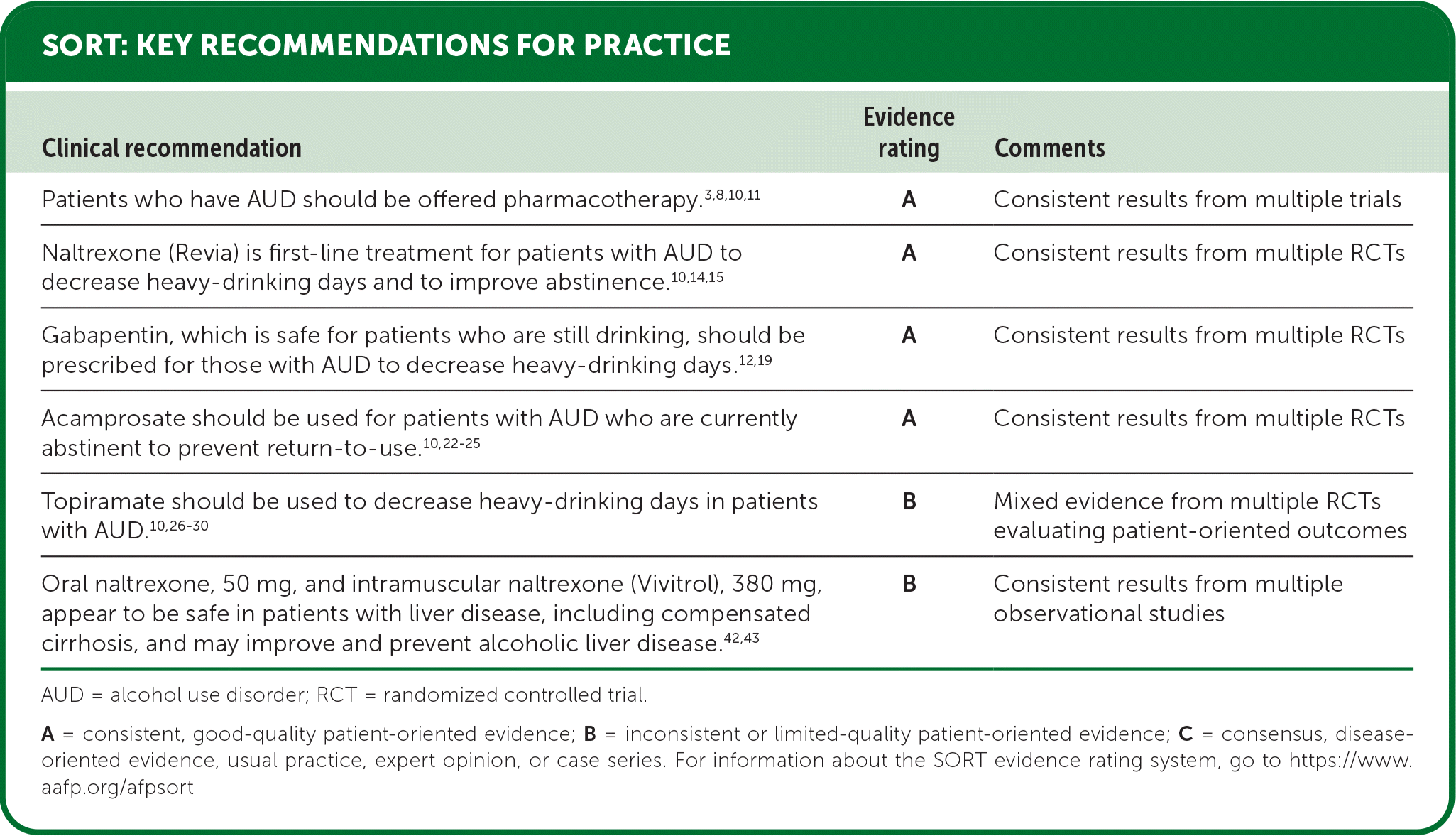
AUD = alcohol use disorder; RCT = randomized controlled trial.

A = consistent, good-quality patient-oriented evidence; B = inconsistent or limited-quality patient-oriented evidence; C = consensus, disease-oriented evidence, usual practice, expert opinion, or case series. For information about the SORT evidence rating system, go to https://www.aafp.org/afpsort

ELISABETH POORMAN, MD, MPH, is an assistant professor of internal medicine and addiction medicine at the University of Illinois Chicago and medical director of the inpatient addiction consult service at the Jesse Brown Veterans Health Affairs Medical Center.

BRIANNA M. MCQUADE, PharmD, BCACP, MHPE, is a clinical assistant professor in the Department of Pharmacy Practice at the University of Illinois Chicago—College of Pharmacy.

SARAH MESSMER, MD, is an assistant professor of clinical medicine and pediatrics in the Department of Medicine at the University of Illinois Chicago—College of Medicine.

Address correspondence to Elisabeth Poorman, MD, MPH, University of Illinois Medical Center at Chicago: University of Illinois Hospital, 840 South Wood St., Chicago, IL 60612 (elisabeth.poorman@gmail.com). Reprints are not available from the authors.

Author disclosure: No relevant financial relationships.

  1. 1.Esser MB, Leung G, Sherk A, et al. Estimated deaths attributable to excessive alcohol use among US adults aged 20 to 64 years, 2015 to 2019. JAMA Netw Open. 2022;5(11):e2239485.
  2. 2.White AM, Castle I-JP, Powell PA, et al. Alcohol-related deaths during the COVID-19 pandemic. JAMA. 2022;327(17):1704-1706.
  3. 3.Donroe JH, Edelman EJ. Alcohol use. Ann Intern Med. 2022;175(10):ITC145-ITC160.
  4. 4.Plunk AD, Syed-Mohammed H, Cavazos-Rehg P, et al. Alcohol consumption, heavy drinking, and mortality: rethinking the J-shaped curve. Alcohol Clin Exp Res. 2014;38(2):471-478.
  5. 5.Witkiewitz K, Wilson AD, Pearson MR, et al. Temporal stability of heavy drinking days and drinking reductions among heavy drinkers in the COMBINE study. Alcohol Clin Exp Res. 2017;41(5):1054-1062.
  6. 6.Substance Abuse and Mental Health Services Administration. Medication for the treatment of alcohol use disorder: a brief guide. Accessed March 25, 2023. https://store.samhsa.gov/sites/default/files/sma15-4907.pdf
  7. 7.Han B, Jones CM, Einstein EB, et al. Use of medications for alcohol use disorder in the US: results from the 2019 National Survey on Drug Use and Health. JAMA Psychiatry. 2021;78(8):922-924.
  8. 8.McPheeters M, O’Connor EA, Riley S, et al. Pharmacotherapy for alcohol use disorder: a systematic review and meta-anaysis. JAMA. 2023;330(17):1653-1665.
  9. 9.Zoorob RJ, Grubb RJ, Gonzalez SJ, et al. Using alcohol screening and brief intervention to address patients’ risky drinking. Fam Pract Manag. 2017;24(3):12-16.
  10. 10.McPheeters M, O’Connor EA, Riley S, et al. Pharmacotherapy for adults with alcohol-use disorder in outpatient settings: systematic review. November 7, 2023. Agency for Healthcare Research and Quality; 2023.
  11. 11.Reus VI, Fochtmann LJ, Bukstein O, et al. The American Psychiatric Association practice guideline for the pharmacological treatment of patients with alcohol use disorder. Am J Psychiatry. 2018;175(1):86-90.
  12. 12.Anton RF, Latham P, Voronin K, et al. Efficacy of gabapentin for the treatment of alcohol use disorder in patients with alcohol withdrawal symptoms: a randomized clinical trial. JAMA Intern Med. 2020;180(5):728-736.
  13. 13.Holt SR, Tetrault JM. Alcohol withdrawal: ambulatory management. Updated October 6, 2022. Accessed March 25, 2023. https://www.uptodate.com/contents/alcohol-withdrawal-ambulatory-management
  14. 14.Lexicomp. Accessed March 26, 2023. https://online.lexi.com/action/login
  15. 15.Bahji A, Crockford D, El-Guebaly N. Neurobiology and symptomatology of post-acute alcohol withdrawal: a mixed-studies systematic review. J Stud Alcohol Drugs. 2022;83(4):461-469.
  16. 16.Rösner S, Hackl-Herrwerth A, Leucht S, et al. Opioid antagonists for alcohol dependence. Cochrane Database Syst Rev. 2010(12):CD001867.
  17. 17.Dunbar JL, Turncliff RZ, Dong Q, et al. Single- and multiple-dose pharmacokinetics of long-acting injectable naltrexone. Alcohol Clin Exp Res. 2006;30(3):480-490.
  18. 18.Leighty AE, Ansara ED. Treatment outcomes of long-acting injectable naltrexone versus oral naltrexone in alcohol use disorder in veterans. Ment Health Clin. 2019;9(6):392-396.
  19. 19.Kranzler HR, Feinn R, Morris P, et al. A meta-analysis of the efficacy of gabapentin for treating alcohol use disorder. Addiction. 2019;114(9):1547-1555.
  20. 20.Myrick H, Anton R, Voronin K, et al. A double-blind evaluation of gabapentin on alcohol effects and drinking in a clinical laboratory paradigm. Alcohol Clin Exp Res. 2007;31(2):221-227.
  21. 21.Bonnet U, Richter EL, Isbruch K, et al. On the addictive power of gabapentinoids: a mini-review. Psychiatr Danub. 2018;30(2):142-149.
  22. 22.Maisel NC, Blodgett JC, Wilbourne PL, et al. Meta-analysis of naltrexone and acamprosate for treating alcohol use disorders: when are these medications most helpful?. Addiction. 2013;108(2):275-293.
  23. 23.Yahn SL, Watterson LR, Olive MF. Safety and efficacy of acamprosate for the treatment of alcohol dependence. Subst Abuse. 2013;6:1-12.
  24. 24.Rösner S, Hackl-Herrwerth A, Leucht S, et al. Acamprosate for alcohol dependence. Cochrane Database Syst Rev. 2010(9):CD004332.
  25. 25.Bahji A, Bach P, Danilewitz M, et al. Pharmacotherapies for adults with alcohol use disorders: a systematic review and network meta-analysis. J Addict Med. 2022;16(6):630-638.
  26. 26.Johnson BA, Ait-Daoud N, Bowden CL, et al. Oral topiramate for treatment of alcohol dependence: a randomised controlled trial. Lancet. 2003;361(9370):1677-1685.
  27. 27.Johnson BA, Rosenthal N, Capece JA, et al.; Topiramate for Alcoholism Advisory Board; Topiramate for Alcoholism Study Group. Topiramate for treating alcohol dependence: a randomized controlled trial. JAMA. 2007;298(14):1641-1651.
  28. 28.Paparrigopoulos T, Tzavellas E, Karaiskos D, et al. Treatment of alcohol dependence with low-dose topiramate: an open-label controlled study. BMC Psychiatry. 2011;11:41.
  29. 29.Likhitsathian S, Uttawichai K, Booncharoen H, et al. Topiramate treatment for alcoholic outpatients recently receiving residential treatment programs: a 12-week, randomized, placebo-controlled trial. Drug Alcohol Depend. 2013;133(2):440-446.
  30. 30.Blodgett JC, Del Re AC, Maisel NC, et al. A meta-analysis of topiramate’s effects for individuals with alcohol use disorders. Alcohol Clin Exp Res. 2014;38(6):1481-1488.
  31. 31.Agabio R, Saulle R, Rösner S, et al. Baclofen for alcohol use disorder. Cochrane Database Syst Rev. 2023(1):CD012557.
  32. 32.Addolorato G, Leggio L, Ferrulli A, et al. Effectiveness and safety of baclofen for maintenance of alcohol abstinence in alcohol-dependent patients with liver cirrhosis: randomised, double-blind controlled study. Lancet. 2007;370(9603):1915-1922.
  33. 33.Morley KC, Baillie A, Fraser I, et al. Baclofen in the treatment of alcohol dependence with or without liver disease: multisite, randomised, double-blind, placebo-controlled trial. Br J Psychiatry. 2018;212(6):362-369.
  34. 34.Fischler PV, Soyka M, Seifritz E, et al. Off-label and investigational drugs in the treatment of alcohol use disorder: a critical review. Front Pharmacol. 2022;13:927703.
  35. 35.Burnette EM, Nieto SJ, Grodin EN, et al. Novel agents for the pharmacological treatment of alcohol use disorder. Drugs. 2022;82(3):251-274.
  36. 36.Litten RZ, Ryan ML, Fertig JB, et al.; NCIG (National Institute on Alcohol Abuse and Alcoholism Clinical Investigations Group) Study Group. A double-blind, placebo-controlled trial assessing the efficacy of varenicline tartrate for alcohol dependence. J Addict Med. 2013;7(4):277-286.
  37. 37.Phimarn W, Sakhancord R, Paitoon P, et al. Efficacy of varenicline in the treatment of alcohol dependence: an updated meta-analysis and meta-regression. Int J Environ Res Public Health. 2023;20(5):4091.
  38. 38.Laaksonen E, Koski-Jännes A, Salaspuro M, et al. A randomized, multicentre, open-label, comparative trial of disulfiram, naltrexone and acamprosate in the treatment of alcohol dependence. Alcohol Alcohol. 2008;43(1):53-61.
  39. 39.Cheng HY, McGuinness LA, Elbers RG, et al. Treatment interventions to maintain abstinence from alcohol in primary care: systematic review and network meta-analysis. BMJ. 2020;371:m3934.
  40. 40.Jonas DE, Amick HR, Feltner C, et al. Pharmacotherapy for adults with alcohol use disorders in outpatient settings: a systematic review and meta-analysis. JAMA. 2014;311(18):1889-1900.
  41. 41.Skinner MD, Lahmek P, Pham H, et al. Disulfiram efficacy in the treatment of alcohol dependence: a meta-analysis. PLoS One. 2014;9(2):e87366.
  42. 42.Ayyala D, Bottyan T, Tien C, et al. Naltrexone for alcohol use disorder: hepatic safety in patients with and without liver disease. Hepatol Commun. 2022;6(12):3433-3442.
  43. 43.Vannier AGL, Shay JES, Fomin V, et al. Incidence and progression of alcohol-associated liver disease after medical therapy for alcohol use disorder. JAMA Netw Open. 2022;5(5):e2213014.
  44. 44.Hammond CJ. The role of pharmacotherapy in the treatment of adolescent substance use disorders. Child Adolesc Psychiatr Clin N Am. 2016;25(4):685-711.
  45. 45.Hammond CJ, Mayes LC, Potenza MN. Neurobiology of adolescent substance use and addictive behaviors: treatment implications. Adolesc Med State Art Rev. 2014;25(1):15-32.
  46. 46.Deas D, May MPHK, Randall C, et al. Naltrexone treatment of adolescent alcoholics: an open-label pilot study. J Child Adolesc Psychopharmacol. 2005;15(5):723-728.
  47. 47.Miranda R, Ray L, Blanchard A, et al. Effects of naltrexone on adolescent alcohol cue reactivity and sensitivity: an initial randomized trial. Addict Biol. 2014;19(5):941-954.
  48. 48.Niederhofer H, Staffen W. Comparison of disulfiram and placebo in treatment of alcohol dependence of adolescents. Drug Alcohol Rev. 2003;22(3):295-297.
  49. 49.DeVido J, Bogunovic O, Weiss RD. Alcohol use disorders in pregnancy. Harv Rev Psychiatry. 2015;23(2):112-121.
  50. 50.Kelty E, Hulse G. A retrospective cohort study of birth outcomes in neonates exposed to naltrexone in utero: a comparison with methadone-, buprenorphine- and non-opioid-exposed neonates. Drugs. 2017;77(11):1211-1219.
  51. 51.Patorno E, Hernandez-Diaz S, Huybrechts KF, et al. Gabapentin in pregnancy and the risk of adverse neonatal and maternal outcomes: a population-based cohort study nested in the US Medicaid Analytic eXtract dataset. PLoS Med. 2020;17(9):e1003322.
  52. 52.Louw KA. Substance use in pregnancy: the medical challenge. Obstet Med. 2018;11(2):54-66.
  53. 53.Malhorta A, Drexler K, Hsu M, et al. Medication treatment for alcohol use disorder in special populations. Am J Addict. 2023;32(5):433-441.
  54. 54.Vivitrol (naltrexone for extended-release injectable suspension) intramuscular [package insert]. Alkermes; 2010. Updated October 2010. Accessed December 9, 2023. https://www.accessdata.fda.gov/drug-satfda_docs/label/2010/021897s015lbl.pdf
  55. 55.Larochelle MR, Bernson D, Land T, et al. Medication for opioid use disorder after nonfatal opioid overdose and association with mortality: a cohort study. Ann Intern Med. 2018;169(3):137-145.
  56. 56.Mintz CM, Presnall NJ, Xu KY, et al. An examination between treatment type and treatment retention in persons with opioid and co-occurring alcohol use disorders. Drug Alcohol Depend. 2021;226:108886.
  57. 57.Gluck R, Hochman K, Tang Y-I. Managing patients with comorbid opioid and alcohol use disorders. Current Psych. 2023;22(2):20-28.
  58. 58.Cornelius JR, Salloum IM, Ehler JG, et al. Fluoxetine in depressed alcoholics. A double-blind, placebo-controlled trial. Arch Gen Psychiatry. 1997;54(8):700-705.
  59. 59.Pettinati HM, Oslin DW, Kampman KM, et al. A double-blind, placebo-controlled trial combining sertraline and naltrexone for treating co-occurring depression and alcohol dependence. Am J Psychiatry. 2010;167(6):668-675.
  60. 60.Agabio R, Trogu E, Pani PP. Antidepressants for the treatment of people with co-occurring depression and alcohol dependence. Cochrane Database Syst Rev. 2018(4):CD008581.
  61. 61.Winslow BT, Onysko M, Hebert M. Medications for alcohol use disorder. Am Fam Physician. 2016;93(6):457-465.
  62. 62.Williams SH. Medications for treating alcohol dependence. Am Fam Physician. 2005;72(9):1775-1780.
  63. 63.Enoch MA, Goldman D. Problem drinking and alcoholism: diagnosis and treatment. Am Fam Physician. 2002;65(3):441-448.

Copyright © 2026 by the American Academy of Family Physicians.

This content is owned by the AAFP. A person viewing it online may make one printout of the material and may use that printout only for his or her personal, non-commercial reference. This material may not otherwise be downloaded, copied, printed, stored, transmitted or reproduced in any medium, whether now known or later invented, except as authorized in writing by the AAFP. See permissions for copyright questions and/or permission requests.
