Rosacea: Common Questions and Answers

Winfred Frazier, MD, MPH
Raquel K. Zemtsov, MD, MPH
Yufei Ge, MD, MS

American Family Physician. 2024;109(6):533-542.

Author disclosure: No relevant financial relationships.

This clinical content conforms to AAFP criteria for CME.

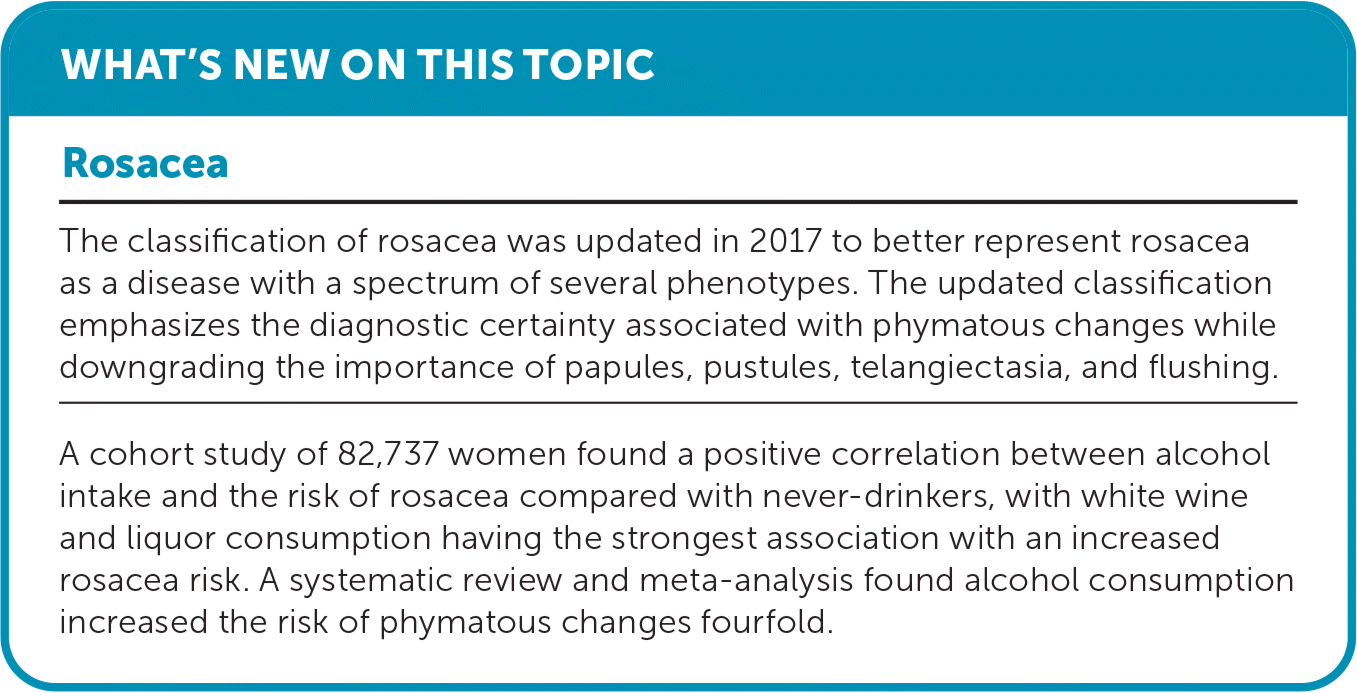
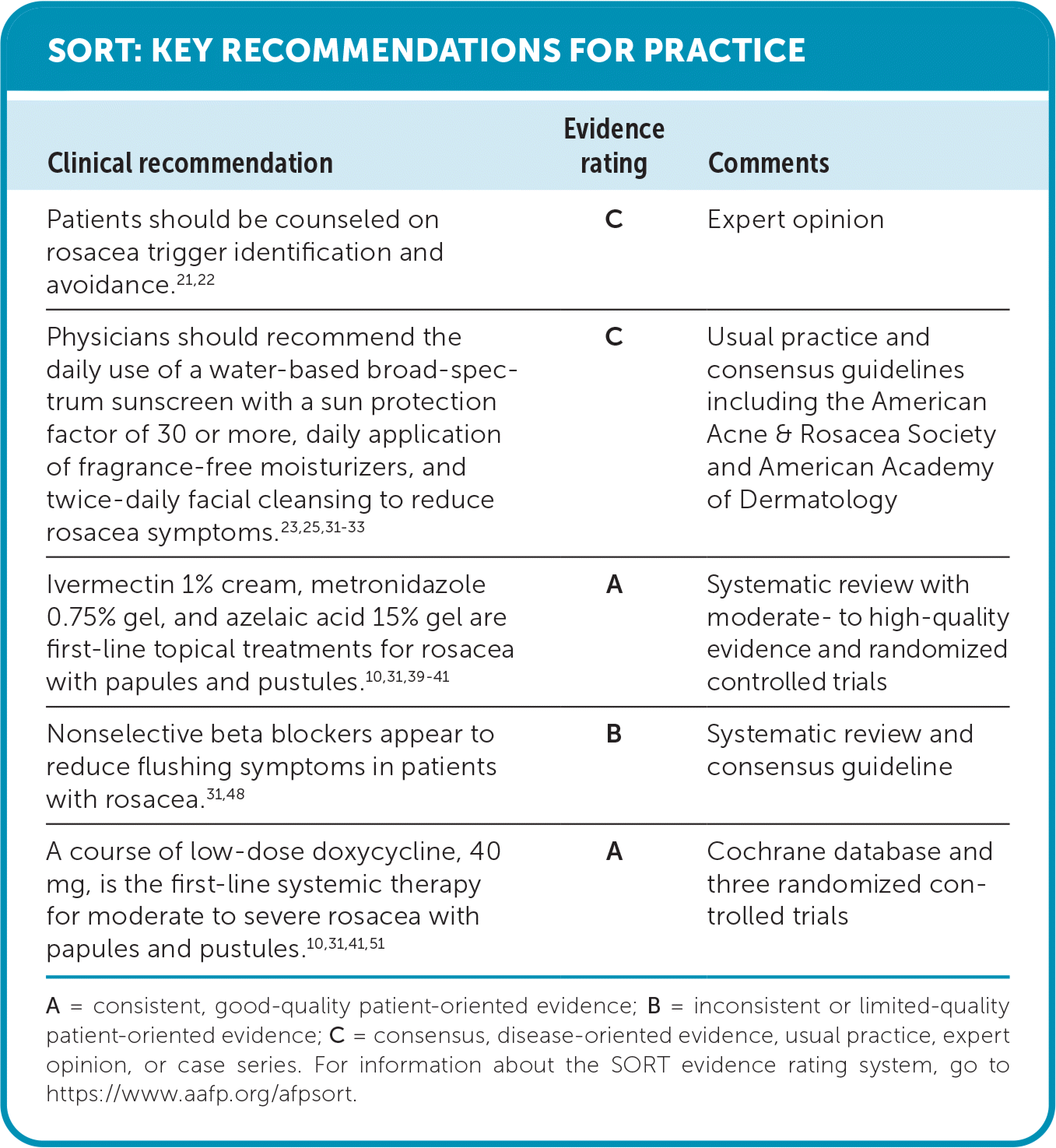
Rosacea is a chronic inflammatory skin disease of the central face, affecting 5% of the population. The exact etiology is unknown. A diagnosis is made based on the updated 2017 National Rosacea Society Expert Committee guidelines, including fixed erythema, phymatous changes of skin thickening due to sebaceous gland hyperplasia and fibrosis, papules, pustules, telangiectasia, and flushing. Delays in an accurate diagnosis and treatment may occur in skin of color due to difficulty visualizing erythema and telangiectasia. The daily use of sunscreen, moisturizers, and mild skin cleansers and avoidance of triggers are essential aspects of maintenance treatment. Effective topical treatment options include alpha-adrenergic receptor agonists for flushing and ivermectin, metronidazole, and azelaic acid for papules and pustules. Systemic treatments include nonselective beta blockers for flushing, low-dose doxycycline, and isotretinoin for papules and pustules. Rosacea can significantly affect a patient's emotional health and quality of life. A referral for care is recommended for fixed phymatous changes and ocular rosacea. (Am Fam Physician. 2024;109(6):533-542. Copyright © 2024 American Academy of Family Physicians.)

WINFRED FRAZIER, MD, MPH, FAAFP, is the associate program director and director of scholarly activity of the UPMC St. Margaret Family Medicine Residency Program, Pittsburgh, Pa., and medical director of the UPMC St. Margaret New Kensington Family Health Center, New Kensington, Pa.

RAQUEL K. ZEMTSOV, MD, MPH, is a resident physician in the UPMC St. Margaret Family Medicine Residency Program.

YUFEI GE, MD, MS, is the assistant medical director of the UPMC St. Margaret Lawrenceville Family Health Center, Pittsburgh, Pa., and director of didactic education of the UPMC St. Margaret Family Medicine Residency Program.

Address correspondence to Winfred Frazier, MD, MPH, FAAFP, UPMC St. Margaret, 1072 5th Ave., New Kensington, PA 15068 (frazierwt2@upmc.edu). Reprints are not available from the authors.

Author disclosure: No relevant financial relationships.

  1. 1.Gallo RL, Granstein RD, Kang S, et al. Standard classification and pathophysiology of rosacea: the 2017 update by the National Rosacea Society Expert Committee. J Am Acad Dermatol. 2018;78(1):148-155.
  2. 2.Vemuri RC, Gundamaraju R, Sekaran SD, et al. Major pathophysiological correlations of rosacea: a complete clinical appraisal. Int J Med Sci. 2015;12(5):387-396.
  3. 3.Gether L, Overgaard LK, Egeberg A, et al. Incidence and prevalence of rosacea: a systematic review and meta-analysis. Br J Dermatol. 2018;179(2):282-289.
  4. 4.National Rosacea Society. Rosacea triggers survey. Accessed June 13, 2023. https://www.rosacea.org/patients/rosacea-triggers/rosacea-triggers-survey
  5. 5.Chang YS, Huang YC. Role of Demodex mite infestation in rosacea: a systematic review and meta-analysis. J Am Acad Dermatol. 2017;77(3):441-447.e6.
  6. 6.Frazier WT, Proddutur S, Swope K. Common dermatologic conditions in skin of color. Am Fam Physician. 2023;107(1):26-34.
  7. 7.Fitzpatrick TB. Ultraviolet-induced pigmentary changes: benefits and hazards. Curr Probl Dermatol. 1986;15:25-38.
  8. 8.Sarkar R, Podder I, Jagadeesan S. Rosacea in skin of color: a comprehensive review. Indian J Dermatol Venereol Leprol. 2020;86(6):611-621.
  9. 9.van Zuuren EJ. Rosacea. N Engl J Med. 2017;377(18):1754-1764.
  10. 10.van Zuuren EJ, Fedorowicz Z, Tan J, et al. Interventions for rosacea based on the phenotype approach: an updated systematic review including GRADE assessments. Br J Dermatol. 2019;181(1):65-79.
  11. 11.Thiboutot D, Anderson R, Cook-Bolden F, et al. Standard management options for rosacea: the 2019 update by the National Rosacea Society Expert Committee. J Am Acad Dermatol. 2020;82(6):1501-1510.
  12. 12.Oge' LK, Muncie HL, Phillips-Savoy AR. Rosacea: diagnosis and treatment. Am Fam Physician. 2015;92(3):187-196.
  13. 13.Tan J, Almeida LMC, Bewley A, et al. Updating the diagnosis, classification and assessment of rosacea: recommendations from the global ROSacea COnsensus (ROSCO) panel. Br J Dermatol. 2017;176(2):431-438.
  14. 14.Schaller M, Almeida LMC, Bewley A, et al. Recommendations for rosacea diagnosis, classification and management: update from the global ROSacea COnsensus 2019 panel. Br J Dermatol. 2020;182(5):1269-1276.
  15. 15.Alexis AF, Callender VD, Baldwin HE, et al. Global epidemiology and clinical spectrum of rosacea, highlighting skin of color: review and clinical practice experience. J Am Acad Dermatol. 2019;80(6):1722-1729.e7.
  16. 16.Onalaja AA, Lester JC, Taylor SC. Establishing the diagnosis of rosacea in skin of color patients. Cutis. 2019;104(1):38-41.
  17. 17.Al-Dabagh A, Davis SA, McMichael AJ, et al. Rosacea in skin of color: not a rare diagnosis. Dermatol Online J. 2014;20(10) ): 13030/qt1mv9r0ss.
  18. 18.Maruthappu T, Taylor M. Acne and rosacea in skin of colour. Clin Exp Dermatol. 2022;47(2):259-263.
  19. 19.Dlova NC, Mosam A. Rosacea in Black South Africans with skin phototypes V and VI. Clin Exp Dermatol. 2017;42(6):670-673.
  20. 20.Lee GL, Zirwas MJ. Granulomatous rosacea and periorificial dermatitis: controversies and review of management and treatment. Dermatol Clin. 2015;33(3):447-455.
  21. 21.Yamasaki K, Miyachi Y. Perspectives on rosacea patient characteristics and quality of life using baseline data from a phase 3 clinical study conducted in Japan. J Dermatol. 2022;49(12):1221-1227.
  22. 22.Odom R, Dahl M, Dover J, et al.; National Rosacea Society Expert Committee on the classification and staging of rosacea. Standard management options for rosacea, part 1: overview and broad spectrum of care. Cutis. 2009;84(1):43-47.
  23. 23.Zip C. The role of skin care in optimizing treatment of acne and rosacea. Skin Therapy Lett. 2017;22(3):5-7.
  24. 24.Rigel DS, Taylor SC, Lim HW, et al. Photoprotection for skin of all color: consensus and clinical guidance from an expert panel. J Am Acad Dermatol. 2022;86(3S):S1-S8.
  25. 25.Morgado-Carrasco D, Granger C, Trullas C, et al. Impact of ultraviolet radiation and exposome on rosacea: key role of photoprotection in optimizing treatment. J Cosmet Dermatol. 2021;20(11):3415-3421.
  26. 26.National Rosacea Society. Hot sauce, wine and tomatoes cause flare-ups, survey finds. Fall 2005. Accessed December 12, 2023. https://www.rosacea.org/rosacea-review/2005/fall/hot-sauce-wine-and-tomatoes-cause-flare-ups-survey-finds
  27. 27.Li S, Cho E, Drucker AM, et al. Alcohol intake and risk of rosacea in US women. J Am Acad Dermatol. 2017;76(6):1061-1067.e2.
  28. 28.Liu L, Xue Y, Chen Y, et al. Alcohol consumption and the risk of rosacea: a systematic review and meta-analysis. J Cosmet Dermatol. 2022;21(7):2954-2961.
  29. 29.Yuan X, Yin D. Association between rosacea and smoking: a systematic review and meta-analysis. Dermatol Ther. 2021;34(2):e14747.
  30. 30.Zhang L, Wang L, Jiang X. The relationship between rosacea and smoking: a systematic review and meta-analysis. Australas J Dermatol. 2021;62(4):e600-e602.
  31. 31.Hampton PJ, Berth-Jones J, Duarte Williamson CE, et al.; British Association of Dermatologists' Clinical Standards Unit. British Association of Dermatologists guidelines for the management of people with rosacea 2021. Br J Dermatol. 2021;185(4):725-735.
  32. 32.Del Rosso JQ, Thiboutot D, Gallo R, et al. Consensus recommendations from the American Acne & Rosacea Society on the management of rosacea, part 1: a status report on the disease state, general measures, and adjunctive skin care. Cutis. 2013;92(5):234-240.
  33. 33.American Academy of Dermatology. Sunscreen FAQs. Updated October 19, 2023. Accessed December 12, 2023. https://www.aad.org/media/stats-sunscreen
  34. 34.Weiss E, Katta R. Diet and rosacea: the role of dietary change in the management of rosacea. Dermatol Pract Concept. 2017;7(4):31-37.
  35. 35.Saric S, Clark AK, Sivamani RK, et al. The role of polyphenols in rosacea treatment: a systematic review. J Altern Complement Med. 2017;23(12):920-929.
  36. 36.Fisk WA, Lev-Tov HA, Clark AK, et al. Phytochemical and botanical therapies for rosacea: a systematic review. Phytother Res. 2015;29(10):1439-1451.
  37. 37.Wang B, Huang Y, Tang Y, et al. Paroxetine is an effective treatment for refractory erythema of rosacea: primary results from the prospective rosacea refractory erythema randomized clinical trial. J Am Acad Dermatol. 2023;88(6):1300-1307.
  38. 38.Taieb A, Ortonne JP, Ruzicka T, et al.; Ivermectin Phase III study group. Superiority of ivermectin 1% cream over metronidazole 0.75% cream in treating inflammatory lesions of rosacea: a randomized, investigator-blinded trial. Br J Dermatol. 2015;172(4):1103-1110.
  39. 39.Stein L, Kircik L, Fowler J, et al. Efficacy and safety of ivermectin 1% cream in treatment of papulopustular rosacea: results of two randomized, double-blind, vehicle-controlled pivotal studies. J Drugs Dermatol. 2014;13(3):316-323.
  40. 40.Miyachi Y, Yamasaki K, Fujita T, et al. Metronidazole gel (0.75%) in Japanese patients with rosacea: a randomized, vehicle-controlled, phase 3 study. J Dermatol. 2022;49(3):330-340.
  41. 41.van Zuuren EJ, Fedorowicz Z, Carter B, et al. Interventions for rosacea. Cochrane Database Syst Rev. 2015(4):CD003262.
  42. 42.Fowler J, Jackson M, Moore A, et al. Efficacy and safety of once-daily topical brimonidine tartrate gel 0.5% for the treatment of moderate to severe facial erythema of rosacea: results of two randomized, double-blind, and vehicle-controlled pivotal studies. J Drugs Dermatol. 2013;12(6):650-656.
  43. 43.Kircik LH, DuBois J, Draelos ZD, et al. Pivotal trial of the efficacy and safety of oxymetazoline cream 1.0% for the treatment of persistent facial erythema associated with rosacea: findings from the first REVEAL trial. J Drugs Dermatol. 2018;17(1):97-105.
  44. 44.Baumann L, Goldberg DJ, Stein Gold L, et al. Pivotal trial of the efficacy and safety of oxymetazoline cream 1.0% for the treatment of persistent facial erythema associated with rosacea: findings from the second REVEAL trial. J Drugs Dermatol. 2018;17(3):290-298.
  45. 45.Layton AM, Schaller M, Homey B, et al. Brimonidine gel 0.33% rapidly improves patient-reported outcomes by controlling facial erythema of rosacea: a randomized, double-blind, vehicle-controlled study. J Eur Acad Dermatol Venereol. 2015;29(12):2405-2410.
  46. 46.Maliyar K, Abdulla SJ. Dermatology: how to manage rosacea in skin of colour. Drugs Context. 2022;11 : 2021-11-1.
  47. 47.Stein Gold L, Del Rosso JQ, Kircik L, et al. Minocycline 1.5% foam for the topical treatment of moderate to severe papulopustular rosacea: results of 2 phase 3, randomized, clinical trials. J Am Acad Dermatol. 2020;82(5):1166-1173.
  48. 48.Logger JGM, Olydam JI, Driessen RJB. Use of beta-blockers for rosacea-associated facial erythema and flushing: a systematic review and update on proposed mode of action. J Am Acad Dermatol. 2020;83(4):1088-1097.
  49. 49.Del Rosso JQ, Brantman S, Baldwin H. Long-term inflammatory rosacea management with subantibiotic dose oral doxycycline 40 mg modified-release capsules once daily. Dermatol Ther. 2022;35(1):e15180.
  50. 50.Baldwin HE, Harper J, Baradaran S, et al. Erythema of rosacea affects health-related quality of life: results of a survey conducted in collaboration with the National Rosacea Society. Dermatol Ther (Heidelb). 2019;9(4):725-734.
  51. 51.Del Rosso JQ, Webster GF, Jackson M, et al. Two randomized phase III clinical trials evaluating anti-inflammatory dose doxycycline (40-mg doxycycline, USP capsules) administered once daily for treatment of rosacea. J Am Acad Dermatol. 2007;56(5):791-802.
  52. 52.Schaller M, Kemény L, Havlickova B, et al. A randomized phase 3b/4 study to evaluate concomitant use of topical ivermectin 1% cream and doxycycline 40-mg modified-release capsules, versus topical ivermectin 1% cream and placebo in the treatment of severe rosacea [published correction appears in J Am Acad Dermatol. 2021; 84(5): 1506]. J Am Acad Dermatol. 2020;82(2):336-343.
  53. 53.Gollnick H, Blume-Peytavi U, Szabó EL, et al. Systemic isotretinoin in the treatment of rosacea - doxycycline- and placebo-controlled, randomized clinical study. J Dtsch Dermatol Ges. 2010;8(7):505-515.
  54. 54.Sbidian E, Vicaut É, Chidiack H, et al. A randomized-controlled trial of oral low-dose isotretinoin for difficult-to-treat papulopustular rosacea. J Invest Dermatol. 2016;136(6):1124-1129.
  55. 55.van Zuuren EJ, Fedorowicz Z. Interventions for rosacea: abridged updated Cochrane systematic review including GRADE assessments. Br J Dermatol. 2015;173(3):651-662.
  56. 56.Tanzi EL, Weinberg JM. The ocular manifestations of rosacea. Cutis. 2001;68(2):112-114.
  57. 57.Haber R, El Gemayel M. Comorbidities in rosacea: a systematic review and update. J Am Acad Dermatol. 2018;78(4):786-792.e8.
  58. 58.Rainer BM, Fischer AH, Luz Felipe da Silva D, et al. Rosacea is associated with chronic systemic diseases in a skin severity-dependent manner: results of a case-control study. J Am Acad Dermatol. 2015;73(4):604-608.
  59. 59.Jørgensen AHR, Egeberg A, Gideonsson R, et al. Rosacea is associated with Helicobacter pylori: a systematic review and meta-analysis. J Eur Acad Dermatol Venereol. 2017;31(12):2010-2015.
  60. 60.Huynh TT. Burden of disease: the psychosocial impact of rosacea on a patient's quality of life. Am Health Drug Benefits. 2013;6(6):348-354.
  61. 61.Zeichner JA, Eichenfield LF, Feldman SR, et al. Quality of life in individuals with erythematotelangiectatic and papulopustular rosacea: findings from a web-based survey. J Clin Aesthet Dermatol. 2018;11(2):47-52.
  62. 62.Bewley A, Fowler J, Schöfer H, et al. Erythema of rosacea impairs health-related quality of life: results of a meta-analysis [published correction appears in Dermatol Ther (Heidelb). 2016; 6(2): 249]. Dermatol Ther (Heidelb). 2016;6(2):237-247.
  63. 63.Dai R, Lin BJ, Zhang X, et al. Depression and anxiety in rosacea patients: a systematic review and meta-analysis. Dermatol Ther (Heidelb). 2021;11(6):2089-2105.
  64. 64.Chang HC, Huang YC, Lien YJ, et al. Association of rosacea with depression and anxiety: a systematic review and meta-analysis. J Affect Disord. 2022;299:239-245.
  65. 65.Goldgar C, Keahey DJ, Houchins J. Treatment options for acne rosacea. Am Fam Physician. 2009;80(5):461-468.
  66. 66.Blount BW, Pelletier AL. Rosacea: a common, yet commonly overlooked, condition. Am Fam Physician. 2002;66(3):435-440.

Copyright © 2026 by the American Academy of Family Physicians.

This content is owned by the AAFP. A person viewing it online may make one printout of the material and may use that printout only for his or her personal, non-commercial reference. This material may not otherwise be downloaded, copied, printed, stored, transmitted or reproduced in any medium, whether now known or later invented, except as authorized in writing by the AAFP. See permissions for copyright questions and/or permission requests.