Testosterone Replacement Therapy for Male Hypogonadism

Joel J. Heidelbaugh, MD
Aleksandr Belakovskiy, MD

American Family Physician. 2024;109(6):543-549.

Author disclosure: No relevant financial relationships.

This clinical content conforms to AAFP criteria for CME.

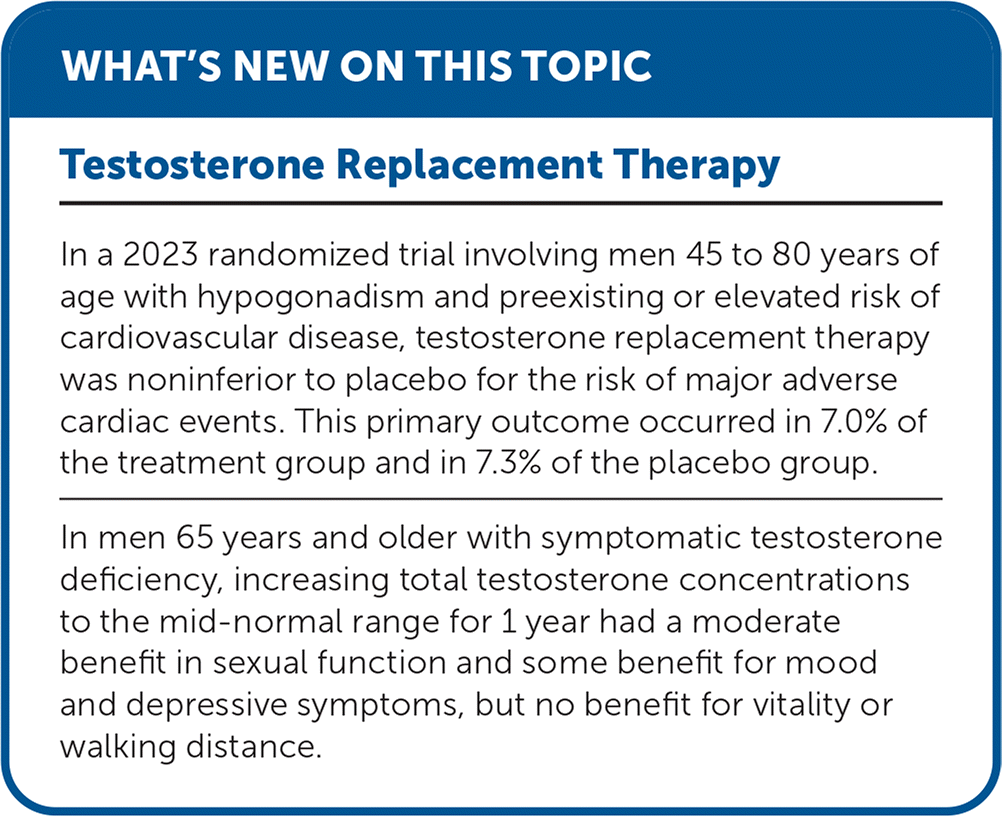
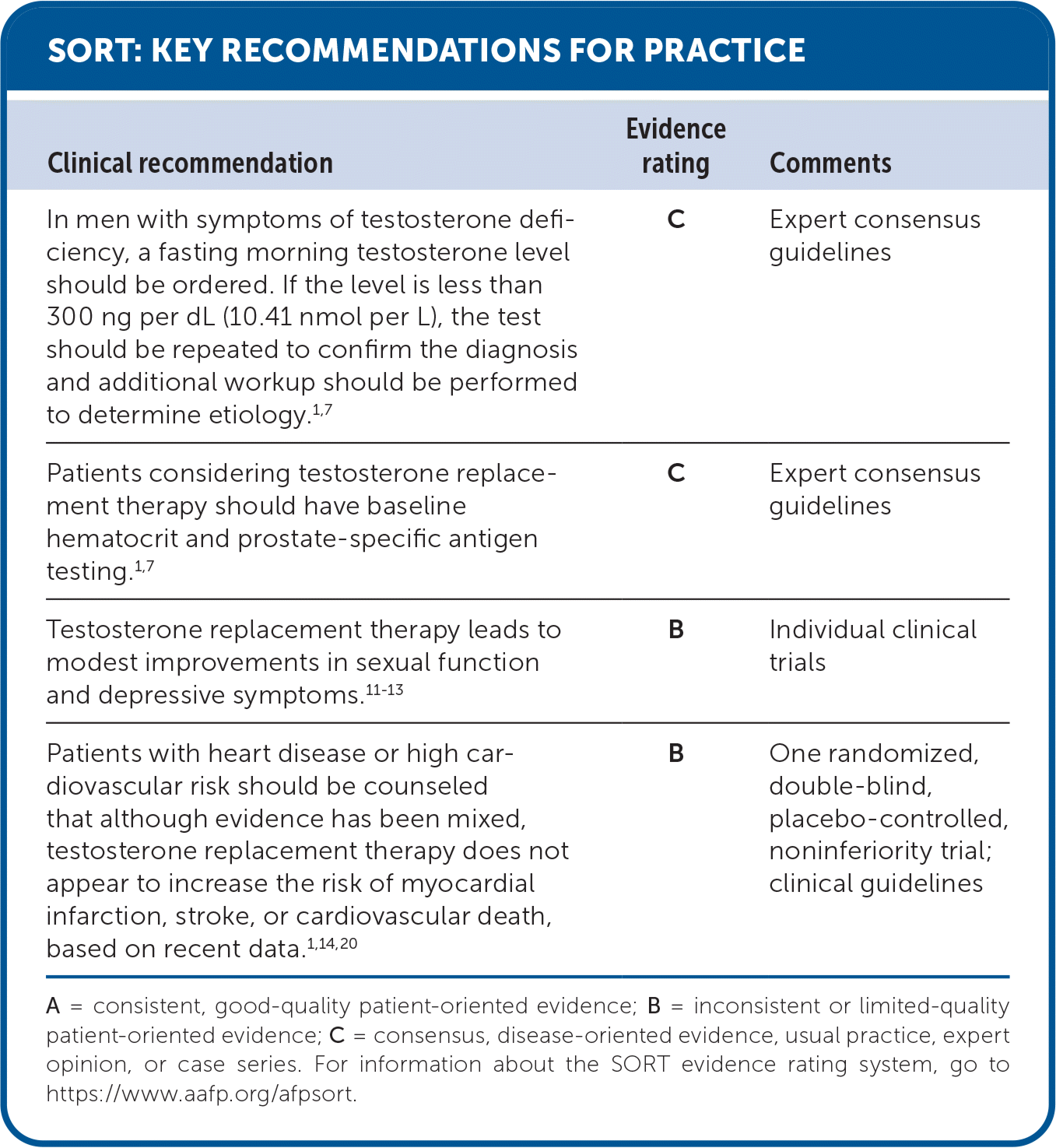
Testosterone deficiency, or male hypogonadism, is a clinical syndrome that can be defined as persistently low serum testosterone levels in the setting of symptoms consistent with testosterone deficiency. Studies suggest that testosterone replacement therapy may improve sexual function, depressive symptoms, bone density, and lean body mass. Evidence is conflicting regarding its effect on cardiovascular events and mortality. Although prior studies suggested that testosterone replacement therapy increased the risk of cardiovascular disease, a large, randomized trial showed that it does not increase the risk of myocardial infarction or stroke, even in patients at high risk. After a detailed discussion of the potential benefits and risks through shared decision-making, testosterone replacement therapy should be considered for men with testosterone deficiency to correct selected symptoms and induce and maintain secondary sex characteristics. Treatment method should take into consideration patient preference, pharmacokinetics, potential for medication interactions, formulation-specific adverse effects, treatment burden, and cost. Clinicians should monitor men receiving testosterone replacement therapy for symptom improvement, potential adverse effects, and adherence. Serum testosterone, hematocrit, and prostate-specific antigen levels should be measured at baseline and at least annually in men 40 years or older receiving testosterone replacement therapy. (Am Fam Physician. 2024;109(6):543-549. Copyright © 2024 American Academy of Family Physicians.)

JOEL J. HEIDELBAUGH, MD, FAAFP, FACG, is a clinical professor in the Department of Family Medicine and the Department of Urology at the University of Michigan Medical School, Ann Arbor.

ALEKSANDR BELAKOVSKIY, MD, is a clinical assistant professor in the Department of Family Medicine at the University of Michigan Medical School.

Address correspondence to Joel J. Heidelbaugh, MD, University of Michigan, Ypsilanti Health Center, 200 Arnet St., Ste. 200, Ypsilanti, MI 48198 (jheidel@umich.edu). Reprints are not available from the authors.

Author disclosure: No relevant financial relationships.

  1. 1.Bhasin S, Brito JP, Cunningham GR, et al. Testosterone therapy in men with hypogonadism: an Endocrine Society clinical practice guideline. J Clin Endocrinol Metab. 2018;103(5):1715-1744.
  2. 2.Anaissie J, DeLay KJ, Wang W, et al. Testosterone deficiency in adults and corresponding treatment patterns across the globe. Transl Androl Urol. 2017;6(2):183-191.
  3. 3.Harman SM, Metter EJ, Tobin JD, et al.; Baltimore Longitudinal Study of Aging. Longitudinal effects of aging on serum total and free testosterone levels in healthy men. J Clin Endocrinol Metab. 2001;86(2):724-731.
  4. 4.Klein DA, Paradise SL, Goodwin ET. Caring for transgender and gender-diverse persons: what clinicians should know. Am Fam Physician. 2018;98(11):645-653.
  5. 5.Bhasin S, Cunningham GR, Hayes FJ, et al. Testosterone therapy in men with androgen deficiency syndromes: an Endocrine Society clinical practice guideline [published correction appears in J Clin Endocrinol Metab. 2021; 106(7): e2848]. J Clin Endocrinol Metab. 2010;95(6):2537.
  6. 6.Morley JE, Charlton E, Patrick P, et al. Validation of a screening questionnaire for androgen deficiency in aging males. Metabolism. 2000;49(9):1239-1242.
  7. 7.Mulhall JP, Trost LW, Brannigan RE, et al. Evaluation and management of testosterone deficiency: AUA guideline. J Urol. 2018;200(2):423-432.
  8. 8.Petering RC, Brooks NA. Testosterone therapy: review of clinical applications [published correction appears in Am Fam Physician. 2019; 100(7): 393]. Am Fam Physician. 2017;96(7):441-449.
  9. 9.Sharma R, Oni OA, Gupta K, et al. Normalization of testosterone level is associated with reduced incidence of myocardial infarction and mortality in men. Eur Heart J. 2015;36(40):2706-2715.
  10. 10.Basaria S, Harman SM, Travison TG, et al. Effects of testosterone administration for 3 years on subclinical atherosclerosis progression in older men with low or low-normal testosterone levels: a randomized clinical trial. JAMA. 2015;314(6):570-581.
  11. 11.Brock G, Heiselman D, Maggi M, et al. Effect of testosterone solution 2% on testosterone concentration, sex drive and energy in hypogonadal men: results of a placebo controlled study. J Urol. 2016;195(3):699-705.
  12. 12.Wang C, Alexander G, Berman N, et al. Testosterone replacement therapy improves mood in hypogonadal men—a clinical research center study. J Clin Endocrinol Metab. 1996;81(10):3578-3583.
  13. 13.Snyder PJ, Bhasin S, Cunningham GR, et al.; Testosterone Trials Investigators. Effects of testosterone treatment in older men. N Engl J Med. 2016;374(7):611-624.
  14. 14.Qaseem A, Horwitch CA, Vijan S, et al. testosterone treatment in adult men with age-related low testosterone: a clinical guideline from the American College of Physicians [published correction appears in Ann Intern Med. 2023; 176(4): 584]. Ann Intern Med. 2020;172(2):126-133.
  15. 15.Snyder PJ, Kopperdahl DL, Stephens-Shields AJ, et al. Effect of testosterone treatment on volumetric bone density and strength in older men with low testosterone: a controlled clinical trial [published corrections appear in JAMA Intern Med. 2017; 177(4): 600 and JAMA Intern Med. 2019; 179(3): 457]. JAMA Intern Med. 2017;177(4):471-479.
  16. 16.Srinivas-Shankar U, Roberts SA, Connolly MJ, et al. Effects of testosterone on muscle strength, physical function, body composition, and quality of life in intermediate-frail and frail elderly men: a randomized, double-blind, placebo-controlled study. J Clin Endocrinol Metab. 2010;95(2):639-650.
  17. 17.Basaria S, Coviello AD, Travison TG, et al. Adverse events associated with testosterone administration. N Engl J Med. 2010;363(2):109-122.
  18. 18.Finkle WD, Greenland S, Ridgeway GK, et al. Increased risk of non-fatal myocardial infarction following testosterone therapy prescription in men. PLoS One. 2014;9(1):e85805.
  19. 19.U.S. Food and Drug Administration. FDA Drug Safety Communication: FDA cautions about using testosterone products for low testosterone due to aging; requires labeling change to inform of possible increased risk of heart attack and stroke with use. Updated February 26, 2018. Accessed February 4, 2023. https://www.fda.gov/drugs/drug-safety-and-availability/fda-drug-safety-communication-fda-cautions-about-using-testosterone-products-low-testosterone-due
  20. 20.Lincoff AM, Bhasin S, Flevaris P, et al.; TRAVERSE Study Investigators. Cardiovascular safety of testosterone-replacement therapy. N Engl J Med. 2023;389(2):107-117.
  21. 21.Fugh-Berman A. Treating aging with testosterone. Am Fam Physician. 2017;96(7):428-430.
  22. 22.National Library of Medicine DailyMed. Label: androderm–testosterone patch. Updated January 18, 2020. Accessed April 28, 2024. https://dailymed.nlm.nih.gov/dailymed/drugInfo.cfm?setid=e58a5328-fdd9-40cba19f-8ed798989b9c
  23. 23.National Library of Medicine DailyMed. Label: androgel–testosterone gel. Updated November 1, 2020. Accessed April 28, 2024. https://dailymed.nlm.nih.gov/dailymed/drugInfo.cfm?setid=8677ba5b-8374-46cb-854c-403972e9ddf3
  24. 24.National Library of Medicine DailyMed. Label: depo-testosterone–testosterone cypionate injection, solution. Updated August 18, 2020. Accessed April 28, 2024. https://dailymed.nlm.nih.gov/dailymed/drugInfo.cfm?setid=735b5bf3-4464-412c-a072-1bd02f2e5380
  25. 25.National Library of Medicine DailyMed. Label: testosterone enanthate injection, solution. Updated November 12, 2021. Accessed April 28, 2024. https://dailymed.nlm.nih.gov/dailymed/drugInfo.cfm?setid=e89d6458-428c-4256-97a3-f1fa851293c1
  26. 26.National Library of Medicine DailyMed. Label: aveed–testosterone undecanoate injection. Updated August 28, 2021. Accessed April 28, 2024. https://dailymed.nlm.nih.gov/dailymed/drugInfo.cfm?setid=f80f025b-17d8-40af-8739-20ce07902045
  27. 27.National Library of Medicine DailyMed. Label: jatenzo–testosterone undecanoate capsule, liquid filled. Updated August 15, 2023. Accessed April 28, 2024. https://dailymed.nlm.nih.gov/dailymed/drugInfo.cfm?setid=ed7b5d41-7475-4c10-99b9-b62b3434ae60
  28. 28.National Library of Medicine DailyMed. Label: testopel–testosterone pellet. Updated March 28, 2024. Accessed April 28, 2024. https://dailymed.nlm.nih.gov/dailymed/drugInfo.cfm?setid=03b9c0b1-5884-11e4-8ed6-0800200c9a66
  29. 29.Margo K, Winn R. Testosterone treatments: why, when, and how?. Am Fam Physician. 2006;73(9):1591-1598.

Copyright © 2026 by the American Academy of Family Physicians.

This content is owned by the AAFP. A person viewing it online may make one printout of the material and may use that printout only for his or her personal, non-commercial reference. This material may not otherwise be downloaded, copied, printed, stored, transmitted or reproduced in any medium, whether now known or later invented, except as authorized in writing by the AAFP. See permissions for copyright questions and/or permission requests.