Management of Late-Term and Postterm Pregnancy

Breanna Gawrys, DO
Diana Trang, DO
Whay Cheng, DO

American Family Physician. 2024;110(4):378-384.

Author disclosure: No relevant financial relationships.

This clinical content conforms to AAFP criteria for CME.

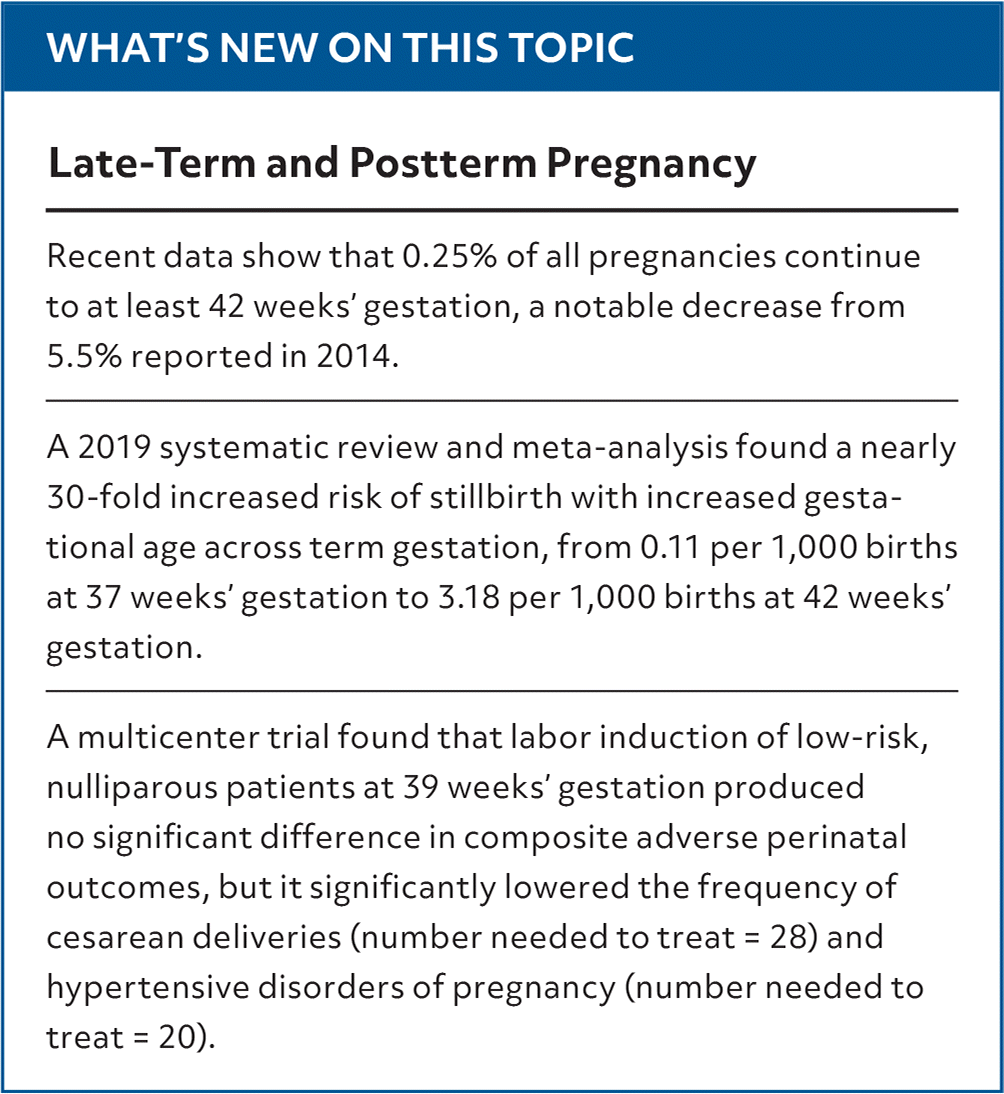
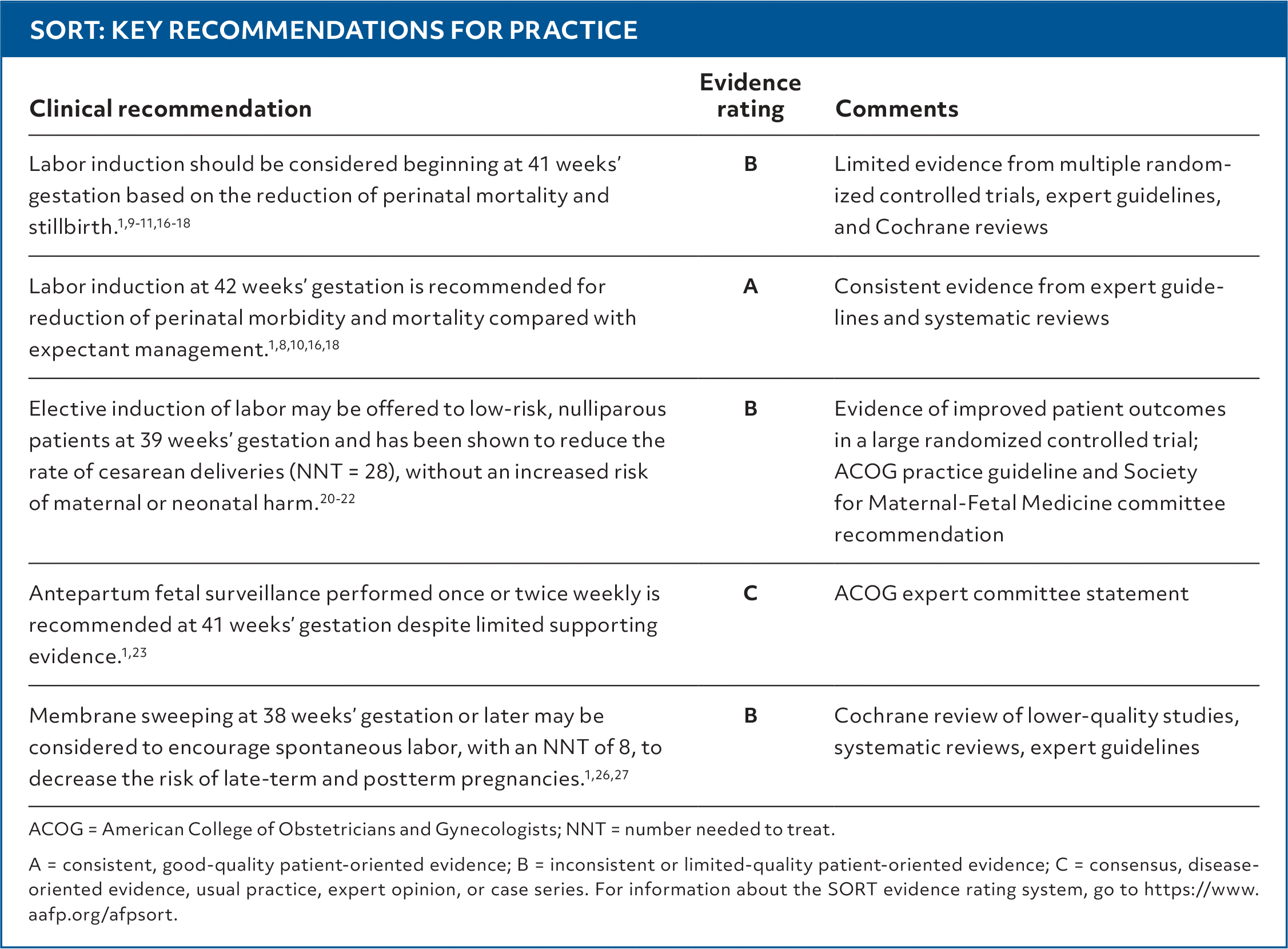
Postterm pregnancy is defined as a pregnancy that has reached 42 weeks' gestation and late-term pregnancy includes 41 weeks' and 0 days' to 41 weeks' and 6 days' gestation. Accurate first-trimester dating is essential for determining or verifying gestational age. Ideal management of late-term and postterm pregnancy involves shared decision-making on timing of planned delivery based on risks and preferences. Starting at 42 weeks' gestation, the risks of fetal mortality, admission to the neonatal intensive care unit, and stillbirth increase exponentially. Induction of labor at 41 weeks' gestation reduces perinatal mortality and stillbirth compared with expectant management or induction starting at 42 weeks' gestation. Recent studies have shown a decrease in cesarean deliveries and hypertensive disorders of pregnancy with induction of labor in nulliparous, low-risk pregnancies beginning at 39 weeks' gestation. Induction of labor before 42 weeks' gestation decreases the risk of stillbirth, perinatal mortality, and cesarean delivery compared with expectant management. The American College of Obstetricians and Gynecologists suggests considering an elective induction of labor in low-risk, nulliparous patients starting at 39 weeks' and 0 days' gestation and recommends induction of labor in all patients by 42 weeks' gestation. The American College of Obstetricians and Gynecologists recommends antepartum monitoring of pregnancies beginning at 41 weeks' gestation to mitigate the risks of perinatal morbidity and mortality.

BREANNA GAWRYS, DO, FAAFP, FACLM, DipABLM, is associate program director of the David Grant Medical Center Family Medicine Residency, Travis Air Force Base, Calif.; an associate professor of family medicine at the Uniformed Services University of the Health Sciences, Bethesda, Md.; and an associate professor of family medicine at the University of California Davis School of Medicine.

DIANA TRANG, DO, is core faculty at the David Grant Medical Center Family Medicine Residency, an assistant professor of family medicine at the Uniformed Services University of the Health Sciences, and an assistant professor of family medicine at the University of California Davis School of Medicine.

WHAY CHENG, DO, is core faculty at the David Grant Medical Center Family Medicine Residency, an assistant professor of family medicine at the Uniformed Services University of the Health Sciences, and an assistant professor of family medicine at the University of California Davis School of Medicine.

Address correspondence to Breanna Gawrys, DO, at Breanna.L.Gawrys.mil@health.mil.

Author disclosure: No relevant financial relationships.

  1. 1.Practice bulletin no. 146: management of late-term and postterm pregnancies. Obstet Gynecol. 2014;124(2 pt 1):390-396.
  2. 2.Wang M, Fontaine P. Common questions about late-term and postterm pregnancy. Am Fam Physician. 2014;90(3):160-165.
  3. 3.Committee opinion no. 700: Methods for estimating the due date. Obstet Gynecol. 2017;129(5):e150-e154.
  4. 4.Osterman MJK, Hamilton BE, Martin JA, et al. Births: final data for 2021. Natl Vital Stat Rep. 2023;72(1):1-53.
  5. 5.Ely DM, Driscoll AK. Infant mortality by selected maternal characteristics and race and Hispanic origin in the United States, 2019–2021. Natl Vital Stat Rep. 2024;73(3):1-9.
  6. 6.Näslund Thagaard I, Krebs L, Lausten-Thomsen U, et al. Dating of pregnancy in first versus second trimester in relation to post-term birth rate: a cohort study. PLoS One. 2016;11(1):e0147109.
  7. 7.Shah JS, Revere FL, Toy EC. Improving rates of early entry prenatal care in an underserved population. Matern Child Health J. 2018;22(12):1738-1742.
  8. 8.Muglu J, Rather H, Arroyo-Manzano D, et al. Risks of stillbirth and neonatal death with advancing gestation at term: a systematic review and meta-analysis of cohort studies of 15 million pregnancies. PLoS Med. 2019;16(7):e1002838.
  9. 9.Keulen JK, Bruinsma A, Kortekaas JC, et al. Induction of labour at 41 weeks versus expectant management until 42 weeks (INDEX): multicentre, randomised non-inferiority trial. BMJ. 2019;364:l344.
  10. 10.Middleton P, Shepherd E, Morris J, et al. Induction of labour at or beyond 37 weeks' gestation. Cochrane Database Syst Rev. 2020(7):CD004945.
  11. 11.Middleton P, Shepherd E, Crowther CA. Induction of labour for improving birth outcomes for women at or beyond term. Cochrane Database Syst Rev. 2018(5):CD004945.
  12. 12.Kortekaas JC, Bruinsma A, Keulen JKJ, et al. Management of late-term pregnancy in midwifery- and obstetrician-led care. BMC Pregnancy Childbirth. 2019;19(1):181.
  13. 13.Azria E, Haaser T, Schmitz T, et al. The ethics of induction of labor at 39 weeks in low-risk nulliparas in research and clinical practice. Am J Obstet Gynecol. 2024;230(3S):S775-S782.
  14. 14.Wood R, Freret TS, Clapp M, et al. Rates of induction of labor at 39 weeks and cesarean delivery following publication of the ARRIVE trial [published correction appears in JAMA Netw Open. 2023; 6(9): e2335837]. JAMA Netw Open. 2023;6(8):e2328274.
  15. 15.Gilroy LC, Al-Kouatly HB, Minkoff HL, et al. Changes in obstetrical practices and pregnancy outcomes following the ARRIVE trial. Am J Obstet Gynecol. 2022;226(5):716.e1-716.e12.
  16. 16.National Institute for Health and Care Excellence (NICE). Inducing labor. NICE guideline [NG207]. November 4, 2021. Accessed October 13, 2023. https://www.nice.org.uk/guidance/ng207
  17. 17.Wennerholm UB, Saltvedt S, Wessberg A, et al. Induction of labour at 41 weeks versus expectant management and induction of labour at 42 weeks (SWEdish Post-term Induction Study, SWEPIS): multicentre, open label, randomised, superiority trial [published correction appears in BMJ. 2021; 375: n3072]. BMJ. 2019;367:l6131.
  18. 18.World Health Organization. WHO recommendations on induction of labour, at or beyond term. October 5, 2022. Accessed October 14, 2023. https://www.who.int/publications-detail-redirect/9789240052796
  19. 19.Rydahl E, Eriksen L, Juhl M. Effects of induction of labor prior to post-term in low-risk pregnancies: a systematic review. JBI Database System Rev Implement Rep. 2019;17(2):170-208.
  20. 20.Grobman WA, Rice MM, Reddy UM, et al.; Eunice Kennedy Shriver National Institute of Child Health and Human Development Maternal–Fetal Medicine Units Network. Labor induction versus expectant management in low-risk nulliparous women. N Engl J Med. 2018;379(6):513-523.
  21. 21.American College of Obstetricians and Gynecologists. Clinical guidance for integration of the findings of the ARRIVE trial: labor induction versus expectant management in low-risk nulliparous women. August 2018. Accessed October 19, 2023. https://www.acog.org/clinical/clinical-guidance/practice-advisory/articles/2018/08/clinical-guidance-for-integration-of-the-findings-of-the-arrive-trial
  22. 22.Society of Maternal-Fetal (SMFM) Publications Committee. SMFM statement on elective induction of labor in low-risk nulliparous women at term: the ARRIVE trial. Am J Obstet Gynecol. 2019;221(1):B2-B4.
  23. 23.Indications for outpatient antenatal fetal surveillance: ACOG committee opinion, number 828. Obstet Gynecol. 2021;137(6):e177-e197.
  24. 24.Prevention of group B streptococcal early-onset disease in newborns: ACOG committee opinion, number 797 [published correction appears in Obstet Gynecol. 2020; 135(4): 978–979]. Obstet Gynecol. 2020;135(2):e51-e72.
  25. 25.Briscoe D, Nguyen H, Mencer M, et al. Management of pregnancy beyond 40 weeks' gestation. Am Fam Physician. 2005;71(10):1935-1941.
  26. 26.Wheeler V, Hoffman A, Bybel M. Cervical ripening and induction of labor [published correction appears in Am Fam Physician. 2022; 106(2): 121]. Am Fam Physician. 2022;105(2):177-186.
  27. 27.Finucane EM, Murphy DJ, Biesty LM, et al. Membrane sweeping for induction of labour. Cochrane Database Syst Rev. 2020(2):CD000451.
  28. 28.Pereira IB, Silva R, Ayres-de-Campos D, et al. Physical exercise at term for enhancing the spontaneous onset of labor: a randomized clinical trial. J Matern Fetal Neonatal Med. 2022;35(4):775-779.
  29. 29.Stark EL, Athens ZG, Son M. Intrapartum nipple stimulation therapy for labor induction: a randomized controlled external pilot study of acceptability and feasibility. Am J Obstet Gynecol MFM. 2022;4(2):100575.
  30. 30.Singh N, Tripathi R, Mala YM, et al. Breast stimulation in low-risk primigravidas at term: does it aid in spontaneous onset of labour and vaginal delivery? A pilot study. Biomed Res Int. 2014: 695037.
  31. 31.Carbone L, De Vivo V, Saccone G, et al. Sexual intercourse for induction of spontaneous onset of labor: a systematic review and meta-analysis of randomized controlled trials. J Sex Med. 2019;16(11):1787-1795.

Copyright © 2026 by the American Academy of Family Physicians.

This content is owned by the AAFP. A person viewing it online may make one printout of the material and may use that printout only for his or her personal, non-commercial reference. This material may not otherwise be downloaded, copied, printed, stored, transmitted or reproduced in any medium, whether now known or later invented, except as authorized in writing by the AAFP. See permissions for copyright questions and/or permission requests.