Bone Stress Injuries: Diagnosis and Management

Jeremy D. Schroeder, DO
Steven D. Trigg, MD
Gerardo E. Capo Dosal, MD

American Family Physician. 2024;110(6):592-600.

Author disclosure: No relevant financial relationships.

This clinical content conforms to AAFP criteria for CME.

Patient information: See related handout on bone stress injuries, including stress fractures.

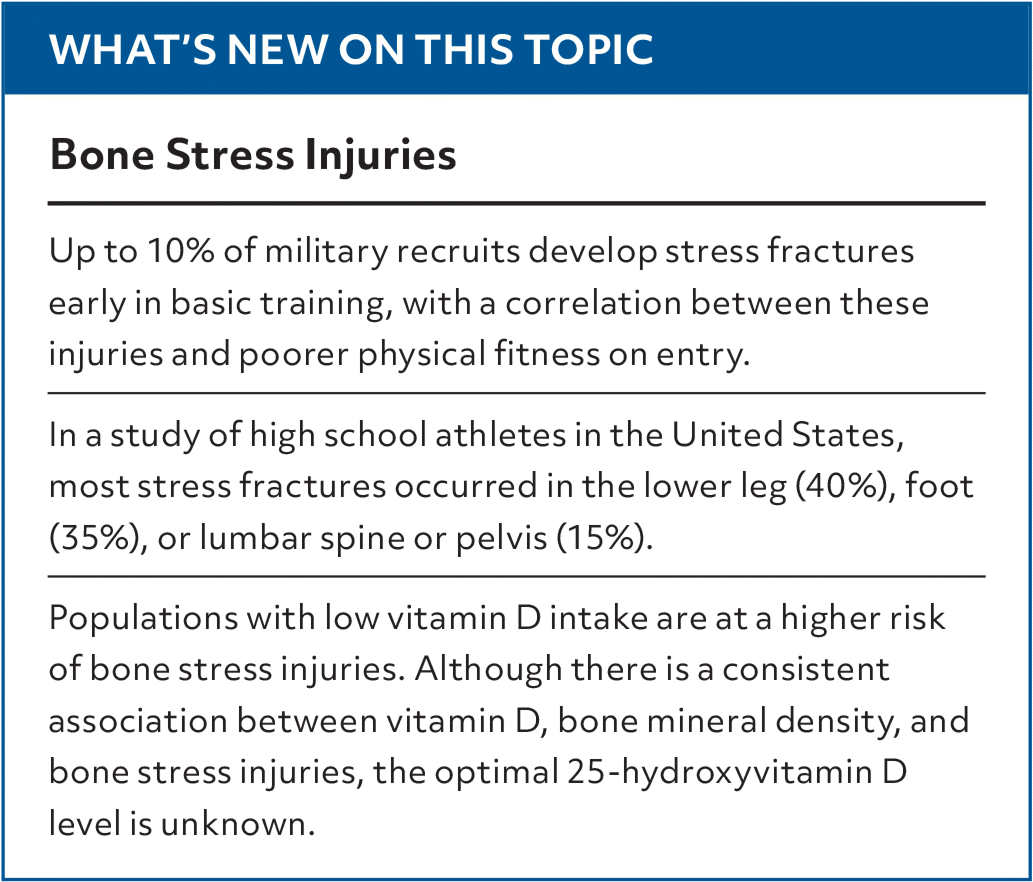
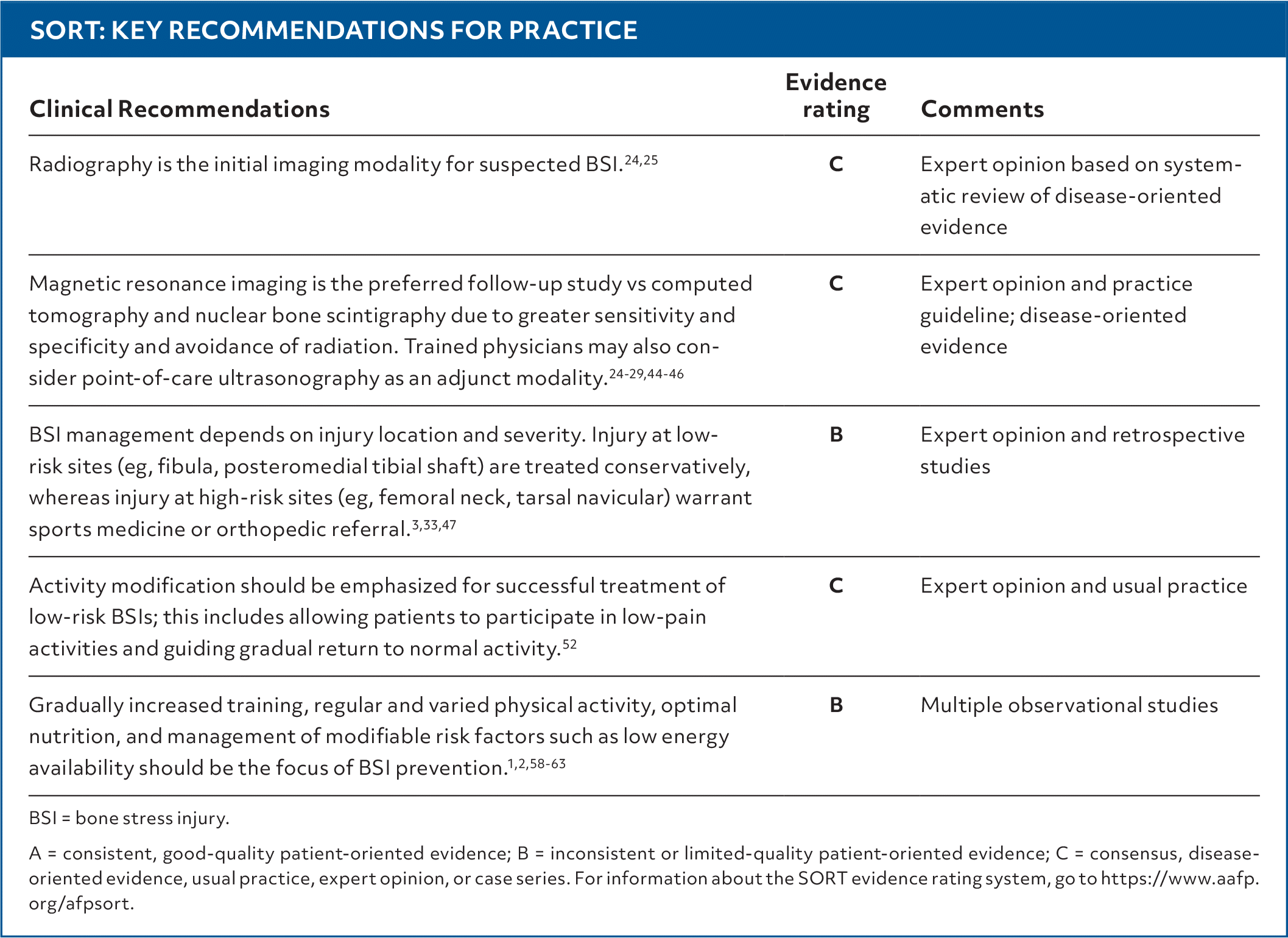
Bone stress injuries (BSIs) are a spectrum of overuse injuries caused by an accumulation of microdamage, from high physical demands on normal bone or normal physiologic loads on structurally compromised bone. They typically result from overuse in younger patients but are also caused by pathologic bone conditions, including relative energy deficiency in sport, which features decreased bone mineral density. Stress fractures, representing 20% of BSIs, are the most severe type and feature discernable sclerosis or fracture lines on imaging. Without treatment, they can progress to complete fractures. BSIs present as localized pain and loss of function, most often in the setting of sudden load volume changes. Palpatory bony tenderness is the most significant examination finding. Prevention focuses on recognition and optimization of modifiable risk factors, which include nutritional, lifestyle, and physical activity habits. Despite low sensitivity, radiography should be the initial imaging modality for suspected BSI. Magnetic resonance imaging is the preferred definitive study. Point-of-care ultrasonography is gaining popularity, but training and availability are barriers in primary care. Once a BSI is diagnosed, early intervention is imperative to reduce pain and promote healing. Severity of BSI (grade) and location (low- vs high-risk of complications) guide the management approach. Injuries in low-risk sites are treated conservatively, whereas fractures in high-risk sites warrant consultation with sports medicine or orthopedics. Femoral neck BSIs, especially when tension-sided, require urgent surgical consultation.

JEREMY D. SCHROEDER, DO, CAQSM, ATC, is chief of the Department of Family Medicine at Madigan Army Medical Center, Tacoma, Washington; an assistant professor in the Department of Family Medicine at the Uniformed Services University of the Health Sciences, Bethesda, Maryland; and a clinical instructor in the Department of Family Medicine at the University of Washington, Seattle.

STEVEN D. TRIGG, MD, CAQSM, FAAFP, is director of sports medicine at Joint Base San Antonio-Lackland, Texas, and an assistant professor in the Department of Family Medicine at the Uniformed Services University of the Health Sciences.

GERARDO E. CAPO DOSAL, MD, CAQSM, is a primary care sports medicine physician at Hugo V. Mendoza Soldier Family Care Center at Fort Bliss, Texas, and an assistant professor in the Department of Family Medicine at the Uniformed Services University of the Health Sciences. At the time this article was written, he was a sports medicine fellow in the National Capital Consortium Primary Care Sports Medicine Fellowship at the Alexander T. Augusta Military Medical Center, Fort Belvoir, Virginia.

Address correspondence to Jeremy D. Schroeder, DO, CAQSM, ATC, at schrosportsmed@gmail.com.

Author disclosure: No relevant financial relationships.

  1. 1.Hoenig T, Ackerman KE, Beck BR, et al. Bone stress injuries. Nat Rev Dis Primers. 2022;8(1):26.
  2. 2.Mountjoy M, Ackerman KE, Bailey DM, et al. 2023 International Olympic Committee’s (IOC) consensus statement on relative energy deficiency in sport (REDs). Br J Sports Med. 2023;57(17):1073-1097.
  3. 3.Hoenig T, Eissele J, Strahl A, et al. Return to sport following low-risk and high-risk bone stress injuries: a systematic review and meta-analysis. Br J Sports Med. 2023;57(7):427-432.
  4. 4.Hoenig T, Tenforde AS, Strahl A, et al. Does magnetic resonance imaging grading correlate with return to sports after bone stress injuries? A systematic review and meta-analysis. Am J Sports Med. 2022;50(3):834-844.
  5. 5.Waterman BR, Gun B, Bader JO, et al. Epidemiology of lower extremity stress fractures in the United States military. Mil Med. 2016;181(10):1308-1313.
  6. 6.Rizzone KH, Ackerman KE, Roos KG, et al. The epidemiology of stress fractures in collegiate student-athletes, 2004–2005 through 2013–2014 academic years. J Athl Train. 2017;52(10):966-975.
  7. 7.Tenforde AS, Kraus E, Fredericson M. Bone stress injuries in runners. Phys Med Rehabil Clin N Am. 2016;27(1):139-149.
  8. 8.Matcuk GR, Mahanty SR, Skalski MR, et al. Stress fractures: pathophysiology, clinical presentation, imaging features, and treatment options. Emerg Radiol. 2016;23(4):365-375.
  9. 9.Changstrom BG, Brou L, Khodaee M, et al. Epidemiology of stress fracture injuries among US high school athletes, 2005–2006 through 2012–2013. Am J Sports Med. 2015;43(1):26-33.
  10. 10.Holtzman B, Popp KL, Tenforde AS, et al. Low energy availability surrogates associated with lower bone mineral density and bone stress injury site. PM R. 2022;14(5):587-596.
  11. 11.Tenforde AS, Sayres LC, Sainani KL, et al. Evaluating the relationship of calcium and vitamin D in the prevention of stress fracture injuries in the young athlete: a review of the literature. PM R. 2010;2(10):945-949.
  12. 12.Knapik JJ, Sharp MA, Montain SJ. Association between stress fracture incidence and predicted body fat in United States Army basic combat training recruits. BMC Musculoskelet Disord. 2018;19(1):161.
  13. 13.Fedgo AA, Stahlman S. Increased risk for stress fractures and delayed healing with NSAID receipt, U.S. Armed Forces, 2014–2018. MSMR. 2020;27(2):18-25.
  14. 14.Hughes JM, McKinnon CJ, Taylor KM, et al. Nonsteroidal anti-inflammatory drug prescriptions are associated with increased stress fracture diagnosis in the US Army population. J Bone Miner Res. 2019;34(3):429-436.
  15. 15.Abbott A, Bird M, Brown SM, et al. Part II: presentation, diagnosis, classification, treatment, and prevention of stress fractures in female athletes. Phys Sportsmed. 2020;48(1):25-32.
  16. 16.Kasper KB, Nye NS, Casey TM, et al. The effect of lightweight shoes on Air Force basic training injuries: a randomized controlled trial. Transl J Am Coll Sports Med. 2023;8(4):1-7.
  17. 17.Hollander K, Rahlf AL, Wilke J, et al. Sex-specific differences in running injuries: a systematic review with meta-analysis and meta-regression. Sports Med. 2021;51(5):1011-1039.
  18. 18.Bulathsinhala L, Hughes JM, McKinnon CJ, et al. Risk of stress fracture varies by race/ethnic origin in a cohort study of 1.3 million US Army soldiers. J Bone Miner Res. 2017;32(7):1546-1553.
  19. 19.Kahanov L, Eberman LE, Games KE, et al. Diagnosis, treatment, and rehabilitation of stress fractures in the lower extremity in runners. Open Access J Sports Med. 2015;6:87-95.
  20. 20.Rosenthal MD, Rauh MJ, Cowan JE. Prospective assessment of clinical tests used to evaluate tibial stress fracture. Orthop J Sports Med. 2022;10(9) ): 23259671221122356.
  21. 21.Nye NS, Covey CJ, Pawlak M, et al. Evaluating an algorithm and clinical prediction rule for diagnosis of bone stress injuries. Sports Health. 2020;12(5):449-455.
  22. 22.Johnson AW, Weiss CB, Wheeler DL. Stress fractures of the femoral shaft in athletes—more common than expected. A new clinical test. Am J Sports Med. 1994;22(2):248-256.
  23. 23.Schneiders AG, Sullivan SJ, Hendrick PA, et al. The ability of clinical tests to diagnose stress fractures: a systematic review and meta-analysis. J Orthop Sports Phys Ther. 2012;42(9):760-771.
  24. 24.Wright AA, Hegedus EJ, Lenchik L, et al. Diagnostic accuracy of various imaging modalities for suspected lower extremity stress fractures: a systematic review with evidence-based recommendations for clinical practice. Am J Sports Med. 2016;44(1):255-263.
  25. 25.Bencardino JT, Stone TJ, Roberts CC, et al.; Expert Panel on Musculoskeletal Imaging. ACR Appropriateness Criteria® stress (fatigue/insufficiency) fracture, including sacrum, excluding other vertebrae. J Am Coll Radiol. 2017;14(5S):S293-S306.
  26. 26.Ishibashi Y, Okamura Y, Otsuka H, et al. Comparison of scintigraphy and magnetic resonance imaging for stress injuries of bone. Clin J Sport Med. 2002;12(2):79-84.
  27. 27.Dobrindt O, Hoffmeyer B, Ruf J, et al. MRI versus bone scintigraphy. Evaluation for diagnosis and grading of stress injuries. Nuklearmedizin. 2012;51(3):88-94.
  28. 28.Kiuru MJ, Pihlajamaki HK, Hietanen HJ, et al. MR imaging, bone scintigraphy, and radiography in bone stress injuries of the pelvis and the lower extremity. Acta Radiol. 2002;43(2):207-212.
  29. 29.Beck BR, Bergman AG, Miner M, et al. Tibial stress injury: relationship of radiographic, nuclear medicine bone scanning, MR imaging, and CT severity grades to clinical severity and time to healing. Radiology. 2012;263(3):811-818.
  30. 30.Fredericson M, Bergman AG, Hoffman KL, et al. Tibial stress reaction in runners. Correlation of clinical symptoms and scintigraphy with a new magnetic resonance imaging grading system. Am J Sports Med. 1995;23(4):472-481.
  31. 31.Arendt E, Agel J, Heikes C, et al. Stress injuries to bone in college athletes: a retrospective review of experience at a single institution. Am J Sports Med. 2003;31(6):959-968.
  32. 32.Nattiv A, Kennedy G, Barrack MT, et al. Correlation of MRI grading of bone stress injuries with clinical risk factors and return to play: a 5-year prospective study in collegiate track and field athletes. Am J Sports Med. 2013;41(8):1930-1941.
  33. 33.Boden BP, Osbahr DC, Jimenez C. Low-risk stress fractures. Am J Sports Med. 2001;29(1):100-111.
  34. 34.Zwas ST, Elkanovitch R, Frank G. Interpretation and classification of bone scintigraphic findings in stress fractures. J Nucl Med. 1987;28(4):452-457.
  35. 35.Kijowski R, Choi J, Shinki K, et al. Validation of MRI classification system for tibial stress injuries. AJR Am J Roentgenol. 2012;198(4):878-884.
  36. 36.Ramey LN, McInnis KC, Palmer WE. Femoral neck stress fracture: can MRI grade help predict return-to-running time? Am J Sports Med. 2016;44(8):2122-2129.
  37. 37.Bergman AG, Fredericson M, Ho C, et al. Asymptomatic tibial stress reactions: MRI detection and clinical follow-up in distance runners. AJR Am J Roentgenol. 2004;183(3):635-638.
  38. 38.Kiuru MJ, Niva M, Reponen A, et al. Bone stress injuries in asymptomatic elite recruits: a clinical and magnetic resonance imaging study. Am J Sports Med. 2005;33(2):272-276.
  39. 39.Mandalia V, Williams C, Kosy J, et al. Bone marrow oedema in the knees of asymptomatic high-level athletes: prevalence and associated factors. Indian J Orthop. 2020;54(3):324-331.
  40. 40.Yao W, Zhang Y, Zhang L, et al. MRI features of and factors related to ankle injuries in asymptomatic amateur marathon runners. Skeletal Radiol. 2021;50(1):87-95.
  41. 41.Horga LM, Hirschmann AC, Henckel J, et al. Prevalence of abnormal findings in 230 knees of asymptomatic adults using 3.0 T MRI. Skeletal Radiol. 2020;49(7):1099-1107.
  42. 42.Polat B, Aydın D, Polat AE, et al. Evaluation of the knees of asymptomatic Kangoo Jumpers with MR imaging. Magn Reson Med Sci. 2020;19(1):7-13.
  43. 43.Kornaat PR, de Jonge MC, Maas M. Bone marrow edema-like signal in the athlete. Eur J Radiol. 2008;67(1):49-53.
  44. 44.Syrop I, Fukushima Y, Mullins K, et al. Comparison of ultrasonography to MRI in the diagnosis of lower extremity bone stress injuries: a prospective cohort study. J Ultrasound Med. 2022;41(11):2885-2896.
  45. 45.Banal F, Gandjbakhch F, Foltz V, et al. Sensitivity and specificity of ultrasonography in early diagnosis of metatarsal bone stress fractures: a pilot study of 37 patients. J Rheumatol. 2009;36(8):1715-1719.
  46. 46.Fukushima Y, Ray J, Kraus E, et al. A review and proposed rationale for the use of ultrasonography as a diagnostic modality in the identification of bone stress injuries. J Ultrasound Med. 2018;37(10):2297-2307.
  47. 47.Boden BP, Osbahr DC. High-risk stress fractures: evaluation and treatment. J Am Acad Orthop Surg. 2000;8(6):344-353.
  48. 48.Ohta-Fukushima M, Mutoh Y, Takasugi S, et al. Characteristics of stress fractures in young athletes under 20 years. J Sports Med Phys Fitness. 2002;42(2):198-206.
  49. 49.Schroeder JD, Turner SP, Buck E. Hip fractures: diagnosis and management. Am Fam Physician. 2022;106(6):675-683.
  50. 50.Dodwell ER, Latorre JG, Parisini E, et al. NSAID exposure and risk of nonunion: a meta-analysis of case-control and cohort studies. Calcif Tissue Int. 2010;87(3):193-202.
  51. 51.Staab JS, Kolb AL, Tomlinson RE, et al. Emerging evidence that adaptive bone formation inhibition by non-steroidal anti-inflammatory drugs increases stress fracture risk. Exp Biol Med (Maywood). 2021;246(9):1104-1111.
  52. 52.Warden SJ, Davis IS, Fredericson M. Management and prevention of bone stress injuries in long-distance runners. J Orthop Sports Phys Ther. 2014;44(10):749-765.
  53. 53.Rhim HC, Shin J, Kang J, et al. Use of extracorporeal shockwave therapies for athletes and physically active individuals: a systematic review. Br J Sports Med. 2024;58(3):154-163.
  54. 54.Swenson EJ, DeHaven KE, Sebastianelli WJ, et al. The effect of a pneumatic leg brace on return to play in athletes with tibial stress fractures. Am J Sports Med. 1997;25(3):322-328.
  55. 55.Miller TL, Kaeding CC, Rodeo SA. Emerging options for biologic enhancement of stress fracture healing in athletes. J Am Acad Orthop Surg. 2020;28(1):1-9.
  56. 56.Hughes JM, O'Leary TJ, Koltun KJ, et al. Promoting adaptive bone formation to prevent stress fractures in military personnel. Eur J Sport Sci. 2022;22(1):4-15.
  57. 57.Hughes JM, Popp KL, Yanovich R, et al. The role of adaptive bone formation in the etiology of stress fracture. Exp Biol Med (Maywood). 2017;242(9):897-906.
  58. 58.Tenforde AS, Sainani KL, Carter Sayres L, et al. Participation in ball sports may represent a prehabilitation strategy to prevent future stress fractures and promote bone health in young athletes. PM R. 2015;7(2):222-225.
  59. 59.Fisher R, Kasper K, Trigg S, et al. Running gait training improves outcomes at United States Air Force basic military training. Mil Med. 2024;189(3–4):692-697.
  60. 60.Fredericson M, Roche M, Barrack MT, et al. Healthy runner project: a 7-year, multisite nutrition education intervention to reduce bone stress injury incidence in collegiate distance runners. BMJ Open Sport Exerc Med. 2023;9(2):e001545.
  61. 61.Erdmann J, Wiciński M, Szyperski P, et al. Vitamin D supplementation and its impact on different types of bone fractures. Nutrients. 2022;15(1):103.
  62. 62.Lawley R, Syrop IP, Fredericson M. Vitamin D for improved bone health and prevention of stress fractures: a review of the literature. Curr Sports Med Rep. 2020;19(6):202-208.
  63. 63.Sivakumar G, Koziarz A, Farrokhyar F. Vitamin D supplementation in military personnel: a systematic review of randomized controlled trials. Sports Health. 2019;11(5):425-431.
  64. 64.Patel DS, Roth M, Kapil N. Stress fractures: diagnosis, treatment, and prevention. Am Fam Physician. 2011;83(1):39-46.
  65. 65.Sanderlin BW, Raspa RF. Common stress fractures. Am Fam Physician. 2003;68(8):1527-1532.
  66. 66.Coris EE, Lombardo JA. Tarsal navicular stress fractures. Am Fam Physician. 2003;67(1):85-91.

Copyright © 2026 by the American Academy of Family Physicians.

This content is owned by the AAFP. A person viewing it online may make one printout of the material and may use that printout only for his or her personal, non-commercial reference. This material may not otherwise be downloaded, copied, printed, stored, transmitted or reproduced in any medium, whether now known or later invented, except as authorized in writing by the AAFP. See permissions for copyright questions and/or permission requests.