Genital Warts: Rapid Evidence Review

Richard W. Temple, MD
Jackeline C. L. Larker, DO, MS
Janelle M. Brus, DO

American Family Physician. 2025;111(2):156-162.

Author disclosure: No relevant financial relationships.

This clinical content conforms to AAFP criteria for CME.

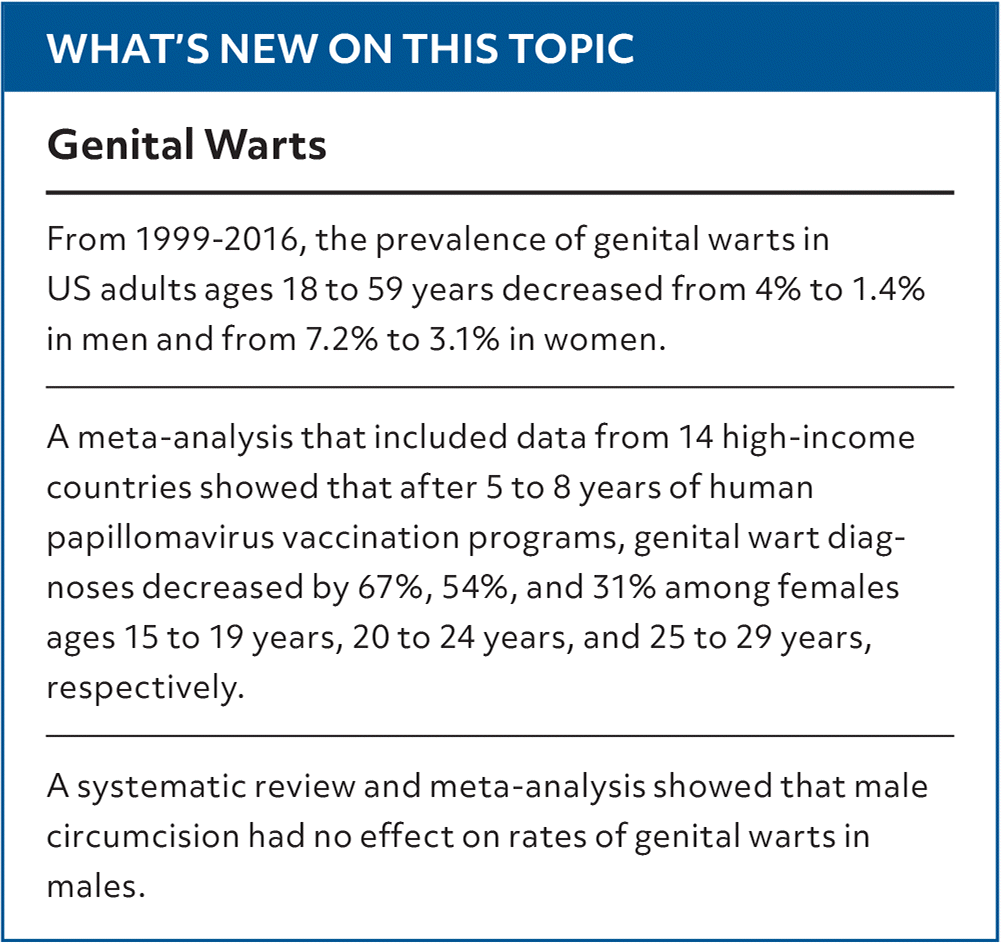
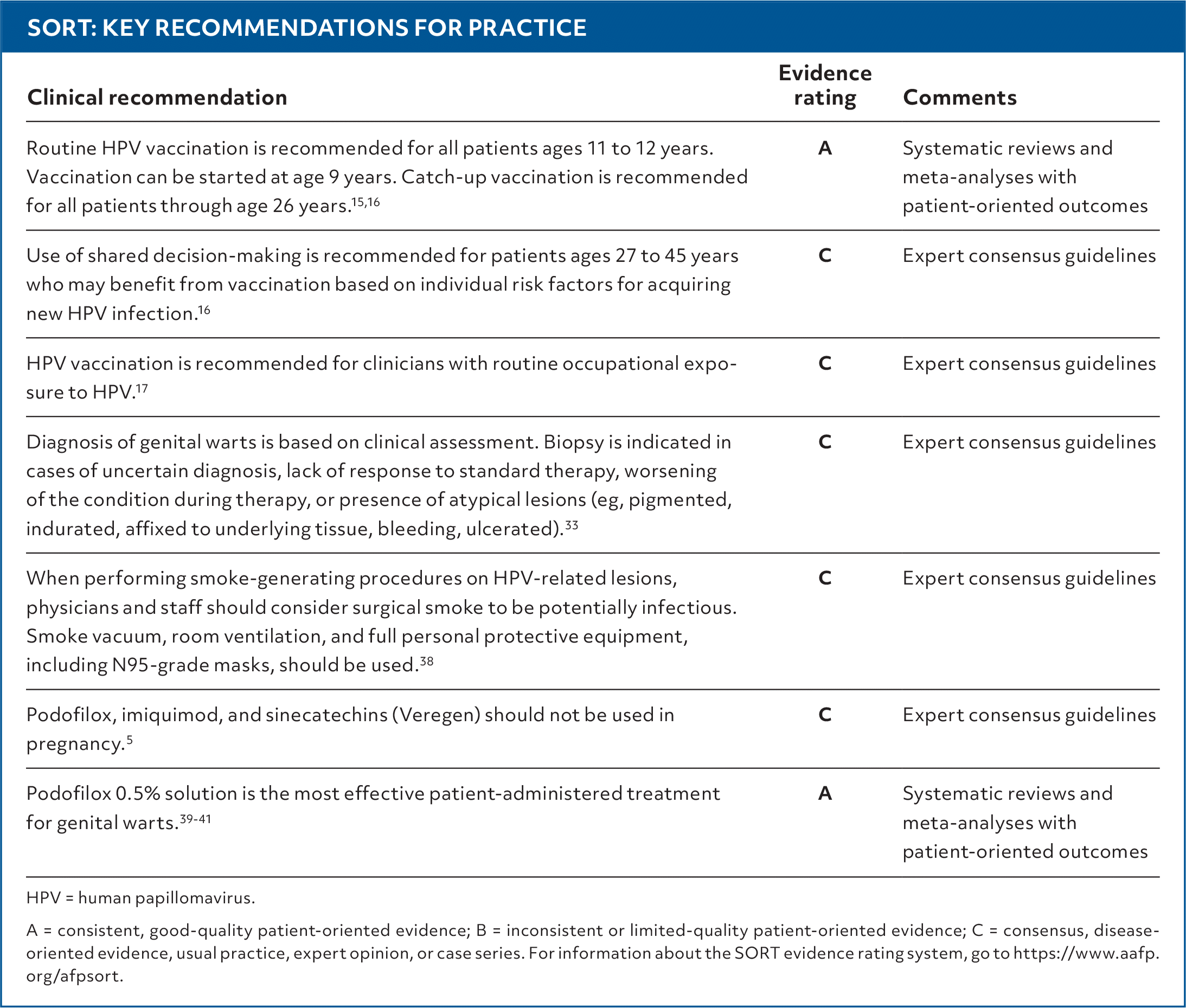
Genital warts (also referred to as anogenital warts and condyloma acuminatum) are caused by human papillomavirus types 6 and 11 in 90% of cases. They are transmitted primarily through anogenital contact and penetrative and non-penetrative sex. Transmission can be effectively prevented with vaccination. Current evidence regarding the effects of condom use on the prevalence of genital warts is conflicting. In the United States from 2013–2016, the prevalence of genital warts among individuals ages 18 to 59 years was 1.3% in men and 3.1% in women. The diagnosis is made clinically by the appearance of single or multiple lesions that may coalesce or be the same color as surrounding skin, cauliflower-like, flat, papular, or keratotic. Biopsy is indicated in some cases, such as for atypical lesions. Treatment may be patient- or physician-administered, with choice of treatment informed by shared decision-making. Treatment options may be limited by physician skills and clinic availability. Podofilox 0.5% solution is the most effective patient-administered therapy and carbon dioxide laser therapy, surgery, and electrosurgery are the most effective for wart removal at the end of treatment. All treatment strategies are associated with some recurrence, but most successfully treated warts do not recur. Use of podofilox, imiquimod, and sinecatechins should be avoided in pregnancy.

RICHARD W. TEMPLE, MD, is a clinical associate professor in the Departments of Family Medicine and Obstetrics and Gynecology at East Carolina University Brody School of Medicine, Greenville, North Carolina.

JACKELINE C. L. LARKER, DO, MS, is an obstetrician-gynecologist at WakeMed in Raleigh, North Carolina. At the time the article was written, she was a resident physician in the Department of Obstetrics and Gynecology at East Carolina University Health Medical Center, Greenville.

JANELLE M. BRUS, DO, is a resident physician in the Department of Family Medicine at East Carolina University Health Medical Center.

Address correspondence to Richard W. Temple, MD, at templer23@ecu.edu.

Author disclosure: No relevant financial relationships.

  1. 1.Singh P, Zumpf KB, Liszewski W. Rates of genital warts after the age of 26: an analysis of the National Health and Nutrition Examination Survey. Int J Womens Dermatol. 2020;6(5):429-430.
  2. 2.Berna R, Margolis DJ, Barbieri JS. Annual health care utilization and costs for treatment of cutaneous and anogenital warts among a commercially insured population in the US, 2017–2019. JAMA Dermatol. 2022;158(6):695-697.
  3. 3.Dinh TH, Sternberg M, Dunne EF, et al. Genital warts among 18- to 59-year-olds in the United States, National Health and Nutrition Examination Survey, 1999–2004. Sex Transm Dis. 2008;35(4):357-360.
  4. 4.Patel H, Wagner M, Singhal P, et al. Systematic review of the incidence and prevalence of genital warts. BMC Infect Dis. 2013;13:39.
  5. 5.Workowski KA, Bachmann LH, Chan PA, et al.; Centers for Disease Control and Prevention (CDC). Sexually transmitted infections treatment guidelines, 2021. MMWR Recomm Rep. 2021;70(4):1-187.
  6. 6.Nugent D, Apoola A, Coleman H, et al. British association for sexual health and HIV national guideline for the management of anogenital warts in adults (2024). Int J STD AIDS. 2024;35(7):498-509.
  7. 7.Winer RL, Lee SK, Hughes JP, et al. Genital human papillomavirus infection: incidence and risk factors in a cohort of female university students. Am J Epidemiol. 2003;157(3):218-226.
  8. 8.Brianti P, De Flammineis E, Mercuri SR. Review of HPV-related diseases and cancers. New Microbiol. 2017;40(2):80-85.
  9. 9.Bacaj P, Burch D. Human papillomavirus infection of the skin. Arch Pathol Lab Med. 2018;142(6):700-705.
  10. 10.Coleman N, Birley HD, Renton AM, et al. Immunological events in regressing genital warts. Am J Clin Pathol. 1994;102(6):768-774.
  11. 11.Winer RL, Kiviat NB, Hughes JP, et al. Development and duration of human papillomavirus lesions, after initial infection. J Infect Dis. 2005;191(5):731-738.
  12. 12.Arima Y, Winer RL, Feng Q, et al. Development of genital warts after incident detection of human papillomavirus infection in young men. J Infect Dis. 2010;202(8):1181-1184.
  13. 13.Lacey CJN. Therapy for genital human papillomavirus-related disease. J Clin Virol. 2005;32(suppl 1):S82-S90.
  14. 14.Tyros G, Mastraftsi S, Gregoriou S, et al. Incidence of anogenital warts: epidemiological risk factors and real-life impact of human papillomavirus vaccination. Int J STD AIDS. 2021;32(1):4-13.
  15. 15.Meites E, Kempe A, Markowitz LE. Use of a 2-dose schedule for human papillomavirus vaccination – updated recommendations of the Advisory Committee on Immunization Practices. MMWR Morb Mortal Wkly Rep. 2016;65(49):1405-1408.
  16. 16.Meites E, Szilagyi PG, Chesson HW, et al. Human papillomavirus vaccination for adults: updated recommendation of the Advisory Committee on Immunization Practices. MMWR Morb Mortal Wkly Rep. 2019;68(32):698-702.
  17. 17.Sharpless KE, Marcus JZ, Kuroki LM, et al. ASCCP committee opinion: adjuvant human papillomavirus vaccine for patients undergoing treatment for cervical intraepithelial neoplasia. J Low Genit Tract Dis. 2023;27(1):93-96.
  18. 18.Kjaer SK, Nygård M, Sundström K, et al. Final analysis of a 14-year long-term follow-up study of the effectiveness and immunogenicity of the quadrivalent human papillomavirus vaccine in women from four Nordic countries. EClinicalMedicine. 2020;23:100401.
  19. 19.Rosenblum HG, Lewis RM, Gargano JW, et al. Declines in prevalence of human papillomavirus vaccine-type infection among females after introduction of vaccine – United States, 2003–2018. MMWR Morb Mortal Wkly Rep. 2021;70(12):415-420.
  20. 20.Drolet M, Bénard É, Pérez N, et al.; HPV Vaccination Impact Study Group. Population-level impact and herd effects following the introduction of human papillomavirus vaccination programmes: updated systematic review and meta-analysis. Lancet. 2019;394(10197):497-509.
  21. 21.Hansen BT, Hagerup-Jenssen M, Kjaer SK, et al. Association between smoking and genital warts: longitudinal analysis. Sex Transm Infect. 2010;86(4):258-262.
  22. 22.Bencini PL, Guida S, Cazzaniga S, et al. Risk factors for recurrence after successful treatment of warts: the role of smoking habits. J Eur Acad Dermatol Venereol. 2017;31(4):712-716.
  23. 23.Wen LM, Estcourt CS, Simpson JM, et al. Risk factors for the acquisition of genital warts: are condoms protective? Sex Transm Infect. 1999;75(5):312-316.
  24. 24.Sonnenberg P, Tanton C, Mesher D, et al. Epidemiology of genital warts in the British population: implications for HPV vaccination programmes. Sex Transm Infect. 2019;95(5):386-390.
  25. 25.Cocchio S, Bertoncello C, Baldovin T, et al. Self-reported genital warts among sexually-active university students: a cross-sectional study. BMC Infect Dis. 2018;18(1):41.
  26. 26.Dareng EO, Adebamowo SN, Famooto A, et al. Prevalence and incidence of genital warts and cervical human papillomavirus infections in Nigerian women. BMC Infect Dis. 2019;19(1):27.
  27. 27.Kjaer SK, Tran TN, Sparen P, et al. The burden of genital warts: a study of nearly 70,000 women from the general female population in the 4 Nordic countries. J Infect Dis. 2007;196(10):1447-1454.
  28. 28.Wiley DJ, Harper DM, Elashoff D, et al. How condom use, number of receptive anal intercourse partners and history of external genital warts predict risk for external anal warts. Int J STD AIDS. 2005;16(3):203-211.
  29. 29.Larke N, Thomas SL, Dos Santos Silva I, et al. Male circumcision and human papillomavirus infection in men: a systematic review and meta-analysis. J Infect Dis. 2011;204(9):1375-1390.
  30. 30.Zhu YP, Jia ZW, Dai B, et al. Relationship between circumcision and human papillomavirus infection: a systematic review and meta-analysis. Asian J Androl. 2017;19(1):125-131.
  31. 31.Lynde C, Vender R, Bourcier M, et al. Clinical features of external genital warts. J Cutan Med Surg. 2013;17(suppl 2):S55-S60.
  32. 32.O’Mahony C, Gomberg M, Skerlev M, et al. Position statement for the diagnosis and management of anogenital warts. J Eur Acad Dermatol Venereol. 2019;33(6):1006-1019.
  33. 33.Park IU, Introcaso C, Dunne EF. Human papillomavirus and genital warts: a review of the evidence for the 2015 Centers for Disease Control and Prevention sexually transmitted diseases treatment guidelines. Clin Infect Dis. 2015;61(suppl 8):S849-S855.
  34. 34.Thurgar E, Barton S, Karner C, et al. Clinical effectiveness and cost-effectiveness of interventions for the treatment of anogenital warts: systematic review and economic evaluation. Health Technol Assess. 2016;20(24):v-vi.
  35. 35.Mehdi MH, Mahmood AS. Treatment of genital warts by using CO2 laser. Med J Babylon. 2019;16(2):94-98.
  36. 36.Azizjalali M, Ghaffarpour G, Mousavifard B. CO(2) laser therapy versus cryotherapy in treatment of genital warts; a randomized controlled trial (RCT). Iran J Microbiol. 2012;4(4):187-190.
  37. 37.Centers for Medicare and Medicaid Services. Search the physician fee schedule. Accessed November 27, 2024. https://www.cms.gov/medicare/physician-fee-schedule/search
  38. 38.Fox-Lewis A, Allum C, Vokes D, et al. Human papillomavirus and surgical smoke: a systematic review. Occup Environ Med. 2020;77(12):809-817.
  39. 39.Barton S, Wakefield V, O’Mahony C, et al. Effectiveness of topical and ablative therapies in treatment of anogenital warts: a systematic review and network meta-analysis. BMJ Open. 2019;9(10):e027765.
  40. 40.Bertolotti A, Ferdynus C, Milpied B, et al. Local management of anogenital warts in non-immunocompromised adults: a network meta-analysis of randomized controlled trials. Dermatol Ther (Heidelb). 2020;10(2):249-262.
  41. 41.Jung JM, Jung CJ, Lee WJ, et al. Topically applied treatments for external genital warts in nonimmunocompromised patients: a systematic review and network meta-analysis. Br J Dermatol. 2020;183(1):24-36.
  42. 42.Centers for Medicare and Medicaid Services. Billing and coding: removal of benign skin lesions. Accessed August 8, 2024. https://www.cms.gov/medicare-coverage-database/view/article.aspx?articleid=54602&ver=17&bc=0
  43. 43.Karnes JB, Usatine RP. Management of external genital warts. Am Fam Physician. 2014;90(5):312-318.
  44. 44.Kodner CM, Nasraty S. Management of genital warts. Am Fam Physician. 2004;70(12):2335-2342.

Copyright © 2026 by the American Academy of Family Physicians.

This content is owned by the AAFP. A person viewing it online may make one printout of the material and may use that printout only for his or her personal, non-commercial reference. This material may not otherwise be downloaded, copied, printed, stored, transmitted or reproduced in any medium, whether now known or later invented, except as authorized in writing by the AAFP. See permissions for copyright questions and/or permission requests.