

Down syndrome is the most commonly diagnosed chromosomal abnormality, occurring in 1 in 640 live births in the United States each year. Prenatally, cell-free DNA screening or integrated screening (combined first and second trimester screening) for aneuploidy is highly sensitive for identifying Down syndrome. The diagnosis should be confirmed at birth with fluorescence in situ hybridization followed by chromosomal karyotyping. Children with Down syndrome have varied degrees of intellectual disability and more health complications than typical children. Newborns with Down syndrome require a cardiac evaluation including echocardiography. Children with Down syndrome should have annual vision and hearing screenings, and laboratory tests for subclinical thyroid disease and hematologic disorders. Clinicians should provide unbiased and comprehensive culturally sensitive information regarding available services and support for children with Down syndrome and caregivers. Enrollment in comprehensive early intervention programs (eg, speech, visual, physical and occupational therapy, and child psychology) enhances development.
Down syndrome is the most commonly diagnosed chromosomal abnormality. Approximately 6,000 children are born with Down syndrome in the United States annually (1 in 640 live births; prevalence of 14 per 10,000).1–4 Birth rates are highest in mothers older than 35 years; however, 51% of children with Down syndrome are born to mothers younger than 35 years.4 Down syndrome occurs as 95% nonfamilial trisomy 21, 3% unbalanced translocation, and 2% genetic mosaicism.3,5 The 1-year survival rate with Down syndrome is 93%, and current life expectancy is up to 60 years.3,6,7 Most children can participate fully in integrated school education programs and community activities.
WHAT’S NEW ON THIS TOPIC
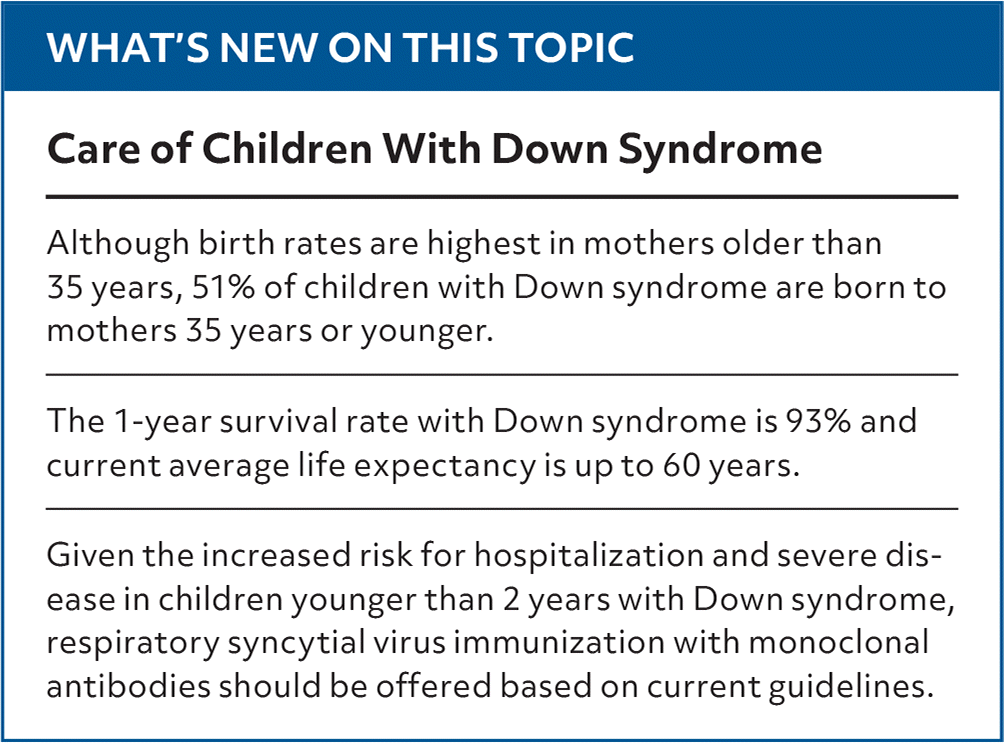
| Although birth rates are highest in mothers older than 35 years, 51% of children with Down syndrome are born to mothers 35 years or younger. |
| The 1-year survival rate with Down syndrome is 93% and current average life expectancy is up to 60 years. |
| Given the increased risk for hospitalization and severe disease in children younger than 2 years with Down syndrome, respiratory syncytial virus immunization with monoclonal antibodies should be offered based on current guidelines. |
SORT: KEY RECOMMENDATIONS FOR PRACTICE
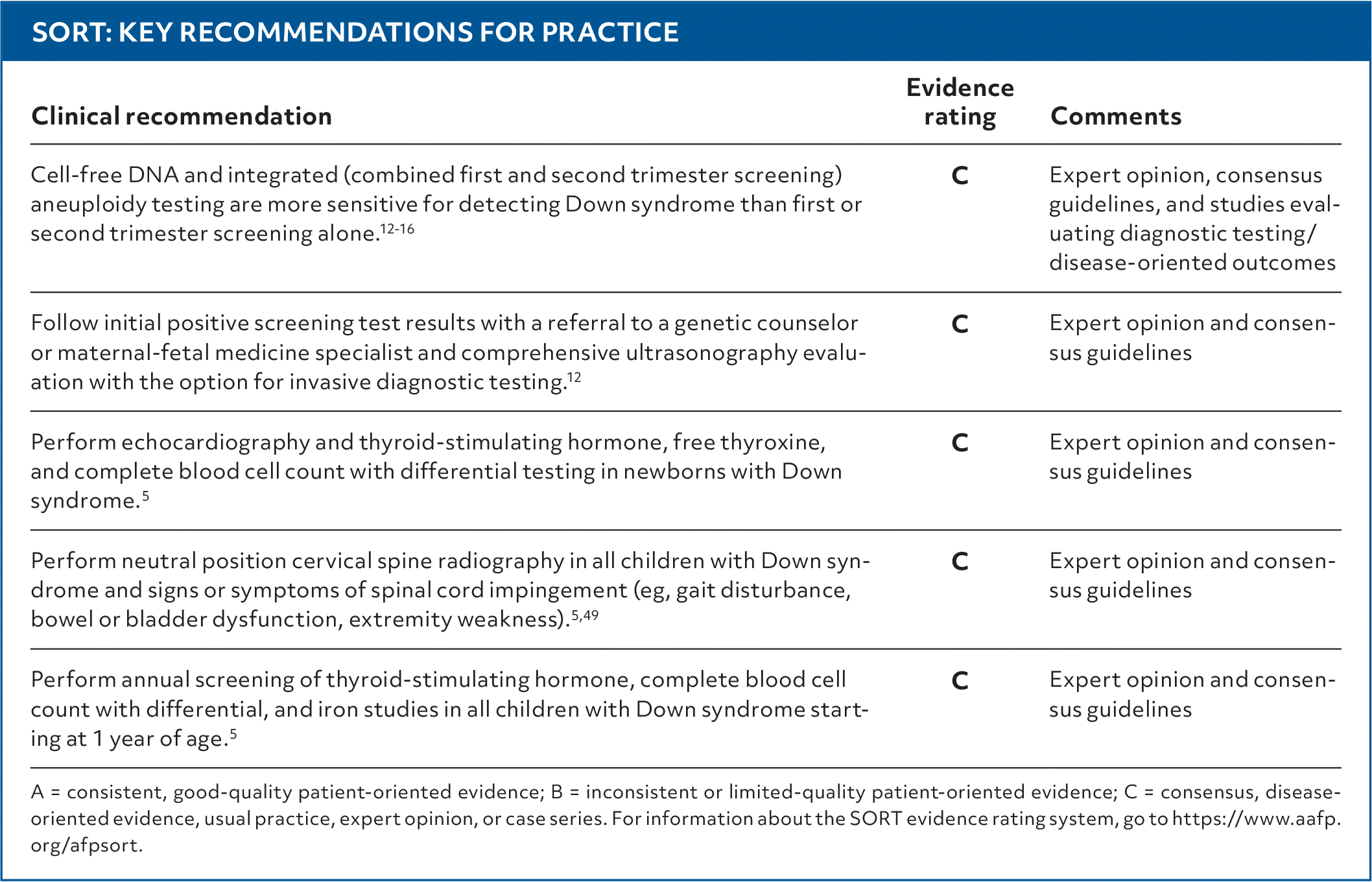
| Clinical recommendation | Evidence rating | Comments |
|---|---|---|
| Cell-free DNA and integrated (combined first and second trimester screening) aneuploidy testing are more sensitive for detecting Down syndrome than first or second trimester screening alone.12–16 | C | Expert opinion, consensus guidelines, and studies evaluating diagnostic testing/disease-oriented outcomes |
| Follow initial positive screening test results with a referral to a genetic counselor or maternal-fetal medicine specialist and comprehensive ultrasonography evaluation with the option for invasive diagnostic testing.12 | C | Expert opinion and consensus guidelines |
| Perform echocardiography and thyroid-stimulating hormone, free thyroxine, and complete blood cell count with differential testing in newborns with Down syndrome.5 | C | Expert opinion and consensus guidelines |
| Perform neutral position cervical spine radiography in all children with Down syndrome and signs or symptoms of spinal cord impingement (eg, gait disturbance, bowel or bladder dysfunction, extremity weakness).5,49 | C | Expert opinion and consensus guidelines |
| Perform annual screening of thyroid-stimulating hormone, complete blood cell count with differential, and iron studies in all children with Down syndrome starting at 1 year of age.5 | C | Expert opinion and consensus guidelines |
A = consistent, good-quality patient-oriented evidence; B = inconsistent or limited-quality patient-oriented evidence; C = consensus, disease-oriented evidence, usual practice, expert opinion, or case series. For information about the SORT evidence rating system, go to https://www.aafp.org/afpsort.
Read the full article
Get immediate access, anytime, anywhere.
Choose a single article, issue, or full-access subscription.
Earn up to 14 CME credits per issue.
