Common Questions About Buprenorphine Treatment for Opioid Use Disorder

Jeffrey D. Tiemstra, MD

American Family Physician. 2025;111(4):330-336.

Author disclosure: No relevant financial relationships.

This clinical content conforms to AAFP criteria for CME.

Related Letter to the Editor: Buprenorphine-Naloxone Safe in Pregnancy

Related Letter to the Editor: Buprenorphine Initiation in the Era of Fentanyl

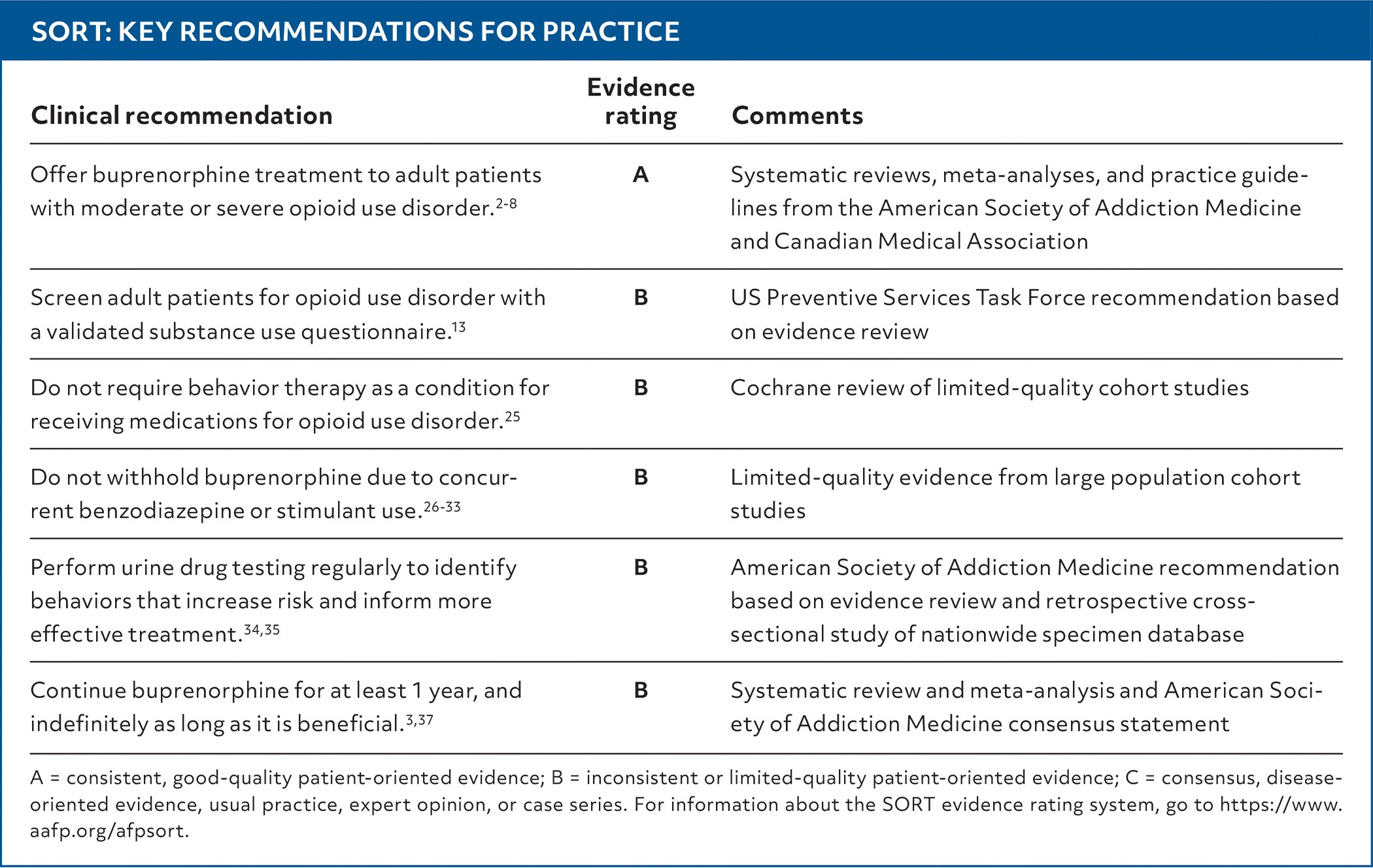
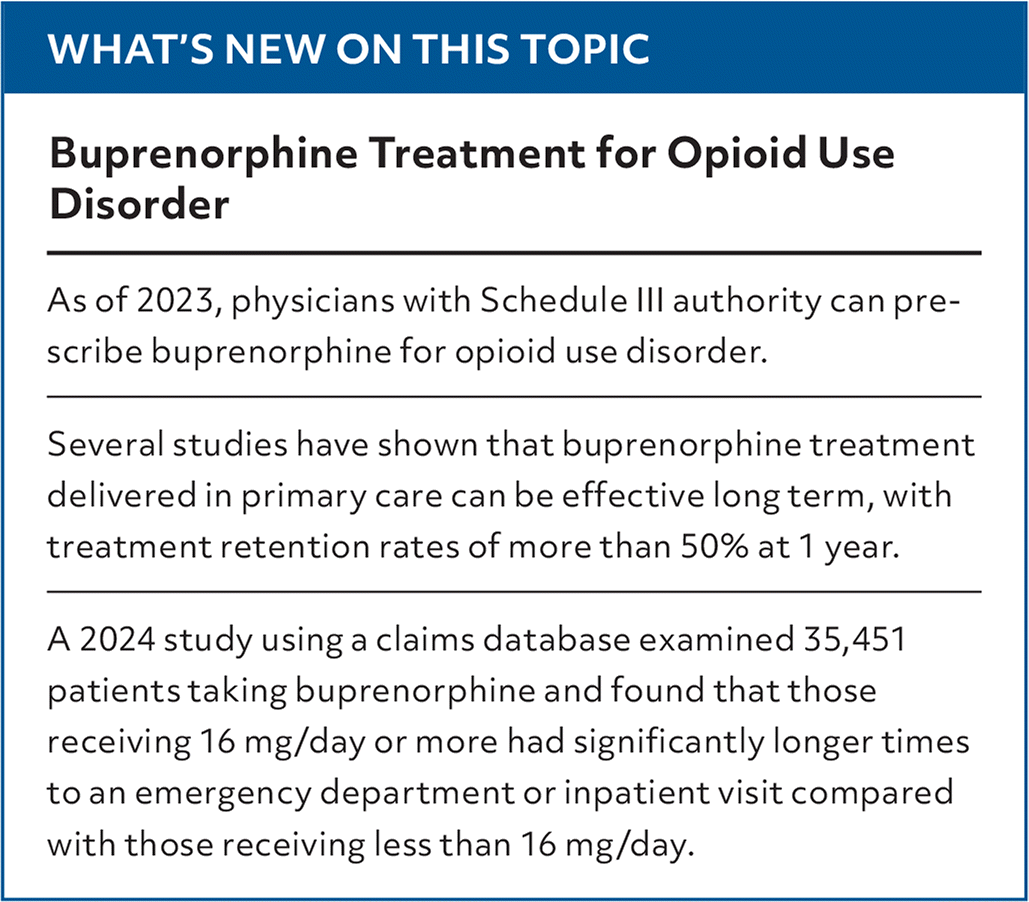
Buprenorphine is a highly effective treatment for opioid use disorder, with a treatment retention rate of more than 50% at 1 year and substantially less risk of respiratory depression compared with methadone. Based on its effectiveness and safety profile, buprenorphine was recently made available to all physicians with Schedule III authority. Physicians should screen adult patients with a validated tool and offer buprenorphine to those with moderate or severe opioid use disorder. Doses should be titrated quickly to fully suppress cravings and withdrawal symptoms, typically 16 to 32 mg/day. Once patients are stabilized, they should have follow-up appointments every 1 to 3 months. Counseling or behavior therapy is not necessary for success and should be offered based on each patient’s needs and preferences. Regular urine drug testing helps identify patients who may benefit from more intense treatment or other options; any unexpected test results should not be a primary reason for treatment termination. Buprenorphine is maintenance treatment for a chronic disease and should be continued for as long as it is beneficial. Relapse rates after discontinuation are lower in patients who complete 1 year of treatment, and they continue to decline with longer treatment duration.

JEFFREY D. TIEMSTRA, MD, is a family physician at Aurora Health Care, Paddock Lake, Wisconsin, and clinical adjunct professor of family medicine at the University of Wisconsin-Madison School of Medicine and Public Health.

Address correspondence to Jeffrey D. Tiemstra, MD, at jeffrey.tiemstra@aah.org.

Author disclosure: No relevant financial relationships.

  1. 1.Heidbreder C, Fudala PJ, Greenwald MK. History of the discovery, development, and FDA-approval of buprenorphine medications for the treatment of opioid use disorder. Drug Alcohol Depend Rep. 2023;6:100133.
  2. 2.Abraham R, Wilkinson E, Jabbarpour Y, et al. Family physicians play key role in bridging the gap in access to opioid use disorder treatment. Am Fam Physician. 2020;102(1):10.
  3. 3.Kraus ML, Alford DP, Kotz MM, et al. Statement of the American Society of Addiction Medicine Consensus Panel on the use of buprenorphine in office-based treatment of opioid addiction. J Addict Med. 2011;5(4):254-263.
  4. 4.Bruneau J, Ahamad K, Goyer MÈ, et al.; CIHR Canadian Research Initiative in Substance Misuse. Management of opioid use disorders: a national clinical practice guideline. CMAJ. 2018;190(9):E247-E257.
  5. 5.Santo T, Clark B, Hickman M, et al. Association of opioid agonist treatment with all-cause mortality and specific causes of death among people with opioid dependence: a systematic review and meta-analysis. JAMA Psychiatry. 2021;78(9):979-993.
  6. 6.Weinstein ZM, Kim HW, Cheng DM, et al. Long-term retention in office based opioid treatment with buprenorphine. J Subst Abuse Treat. 2017;74:65-70.
  7. 7.Justesen K, Hooker SA, Sherman MD, et al. Predictors of family medicine patient retention in opioid medication-assisted treatment. J Am Board Fam Med. 2020;33(6):848-857.
  8. 8.Mattick RP, Breen C, Kimber J, et al. Buprenorphine maintenance versus placebo or methadone maintenance for opioid dependence. Cochrane Database Syst Rev. 2014(2):CD002207.
  9. 9.Shastry S, Nobel I, Allen LR, et al. Prior use of medications for opioid use disorder in ED patients with opioid overdose: prevalence, misuse and overdose severity. Am J Emerg Med. 2022;51:114-118.
  10. 10.Wang L, Volkow ND, Berger NA, et al. Cardiac and mortality outcome differences between methadone, buprenorphine and naltrexone prescriptions in patients with an opioid use disorder. J Clin Psychol. 2023;79(12):2869-2883.
  11. 11.Mirer AG, Tiemstra JD, Hammes NE, et al. Integrating buprenorphine treatment for opioid use with primary care is associated with greater retention in treatment. J Am Board Fam Med. 2022;35(1):206-208.
  12. 12.Holliday SM, Magin PJ, Dunbabin JS, et al. Waiting room ambience and provision of opioid substitution therapy in general practice. Med J Aust. 2012;196(6):391-394.
  13. 13.Krist AH, Davidson KW, Mangione CM, et al. Screening for unhealthy drug use: US Preventive Services Task Force recommendation statement. JAMA. 2020;323(22):2301-2309.
  14. 14.Dowell D, Haegerich TM, Chou R. CDC guideline for prescribing opioids for chronic pain—United States, 2016. JAMA. 2016;315(15):1624-1645.
  15. 15.Society for Adolescent Health and Medicine. Medication for adolescents and young adults with opioid use disorder. J Adolesc Health. 2021;68(3):632-636.
  16. 16.Committee on Substance Use and Prevention. Medication-assisted treatment of adolescents with opioid use disorders. Pediatrics. 2016;138(3):e20161893.
  17. 17.McNeely J, Strauss SM, Saitz R, et al. A brief patient self-administered substance use screening tool for primary care: two-site validation study of the Substance Use Brief Screen (SUBS). Am J Med. 2015;128(7):784.e9-784.e19.
  18. 18.Diagnostic and Statistical Manual of Mental Disorders. 5th ed, text rev. American Psychiatric Association; 2022.
  19. 19.US Centers for Disease Control and Prevention. Opioid use disorder: diagnosis. April 16, 2024. Accessed February 1, 2025. https://www.cdc.gov/overdose-prevention/hcp/clinical-care/opioid-use-disorder-diagnosis.html
  20. 20.Center for Drug Evaluation and Research Approval Letter. October 8, 2002. Accessed October 21, 2024. https://www.accessdata.fda.gov/drugsatfda_docs/nda/2002/20-733_Subutex_Approv.pdf
  21. 21.Axeen S, Pacula RL, Merlin JS, et al. Association of daily doses of buprenorphine with urgent health care utilization. JAMA Netw Open. 2024;7(9):e2435478.
  22. 22.Weimer MB, Herring AA, Kawasaki SS, et al. ASAM clinical considerations: buprenorphine treatment of opioid use disorder for individuals using high-potency synthetic opioids. J Addict Med. 2023;17(6):632-639.
  23. 23.D'Onofrio G, Hawk KF, Perrone J, et al. Incidence of precipitated withdrawal during a multisite emergency department-initiated buprenorphine clinical trial in the era of fentanyl. JAMA Netw Open. 2023;6(3):e236108.
  24. 24.Blazes CK, Morrow JD. reconsidering the usefulness of adding naloxone to buprenorphine. Front Psychiatry. 2020;11:549272.
  25. 25.Amato L, Minozzi S, Davoli M, et al. Psychosocial combined with agonist maintenance treatments versus agonist maintenance treatments alone for treatment of opioid dependence. Cochrane Database Syst Rev. 2011(10):CD004147.
  26. 26.Best CS, Matheson C, Robertson J, et al. Association between benzodiazepine coprescription and mortality in people on opioid replacement therapy: a population-based cohort study. BMJ Open. 2024;14(3):e074668.
  27. 27.Abrahamsson T, Berge J, Öjehagen A, et al. Benzodiazepine, z-drug and pregabalin prescriptions and mortality among patients in opioid maintenance treatment—a nation-wide register-based open cohort study. Drug Alcohol Depend. 2017;174:58-64.
  28. 28.Park TW, Larochelle MR, Saitz R, et al. Associations between prescribed benzodiazepines, overdose death and buprenorphine discontinuation among people receiving buprenorphine. Addiction. 2020;115(5):924-932.
  29. 29.Webster LR, Hansen E, Cater J, et al. A phase I placebo-controlled trial comparing the effects of buprenorphine buccal film and oral oxycodone hydrochloride administration on respiratory drive. Adv Ther. 2020;37(11):4685-4696.
  30. 30.Dahan A, Yassen A, Bijl H, et al. Comparison of the respiratory effects of intravenous buprenorphine and fentanyl in humans and rats. Br J Anaesth. 2005;94(6):825-834.
  31. 31.Sordo L, Barrio G, Bravo MJ, et al. Mortality risk during and after opioid substitution treatment: systematic review and meta-analysis of cohort studies. BMJ. 2017;357 : j1550.
  32. 32.Young S, Fairbairn N, Cui Z, et al. Association between prescribed stimulant medications and overdose among individuals receiving opioid agonist therapy: a retrospective cohort study from British Columbia, Canada. Addiction. 2025.
  33. 33.Mintz CM, Xu KY, Presnall NJ, et al. Analysis of stimulant prescriptions and drug-related poisoning risk among persons receiving buprenorphine treatment for opioid use disorder. JAMA Netw Open. 2022;5(5):e2211634.
  34. 34.Jarvis M, Williams J, Hurford M, et al. Appropriate use of drug testing in clinical addiction medicine. J Addict Med. 2017;11(3):163-173.
  35. 35.Whitley P, LaRue L, Fernandez SA, et al. Analysis of urine drug test results from substance use disorder treatment practices and overdose mortality rates, 2013–2020. JAMA Netw Open. 2022;5(6):e2215425.
  36. 36.Pytell JD, Whitley P, Passik SD, et al. Association of patients' direct addition of buprenorphine to urine drug test specimens with clinical factors in opioid use disorder. JAMA Psychiatry. 2023;80(5):459-467.
  37. 37.Williams AR, Samples H, Crystal S, et al. Acute care, prescription opioid use, and overdose following discontinuation of long-term buprenorphine treatment for opioid use disorder. Am J Psychiatry. 2020;177(2):117-124.
  38. 38.Zoorob R, Kowalchuk A, Mejia de Grubb M. Buprenorphine therapy for opioid use disorder. Am Fam Physician. 2018;97(5):313-320.

Copyright © 2026 by the American Academy of Family Physicians.

This content is owned by the AAFP. A person viewing it online may make one printout of the material and may use that printout only for his or her personal, non-commercial reference. This material may not otherwise be downloaded, copied, printed, stored, transmitted or reproduced in any medium, whether now known or later invented, except as authorized in writing by the AAFP. See permissions for copyright questions and/or permission requests.