

Groin pain is a common symptom in athletes and the general population. Etiologies include musculoskeletal conditions involving the pubic rami, hip joints, pelvic floor, and abdominal wall, as well as hernias and genitourinary conditions. Differentiating musculoskeletal from nonmusculoskeletal symptoms and identifying a specific cause can be a diagnostic challenge. A systematic approach to physical examination can focus the differential diagnosis and guide additional evaluation and specific management. Physical examination should include direct palpation and testing for the major musculoskeletal causes of groin pain: adductor, pubic, inguinal, and iliopsoas. In patients with adductor-related groin pain, magnetic resonance imaging of the pelvis should be performed if the diagnosis is unclear or if symptoms have not improved after initial conservative management. Active, supervised physical therapy is the initial treatment recommended for adductor- and pubic-related groin pain. In patients with inguinal-related groin pain, dynamic ultra-sonography should be performed to rule out a true hernia and evaluate for posterior abdominal wall weakness. Initial management for patients with inguinal-related groin pain without evidence of a hernia is physical therapy focusing on core strengthening and neuromuscular rehabilitation. Hip radiography and magnetic resonance imaging are preferred in patients with suspected iliopsoas-related groin pain because there is often concomitant hip pathology.
Am Fam Physician. 2025; 111(4): 337–343. Copyright © 2025 American Academy of Family Physicians.
The term groin refers to the anatomic region where the lower extremities meet the pelvic floor on either side of the pubic bone.1 This region includes musculoskeletal anatomy and neurovascular, urinary, reproductive, and lymphatic structures that are all closely situated and intricately interconnected. This complex anatomy contributes to the difficulty in reaching an exact diagnosis for groin symptoms. This article focuses on musculoskeletal causes of groin pain, including relevant evaluation and treatment. However, it is essential to consider other potential sources of groin symptoms, such as inguinal hernias, abdominal wall injuries, hip joint pathology, and female pelvic floor issues.2–5
SORT: KEY RECOMMENDATIONS FOR PRACTICE
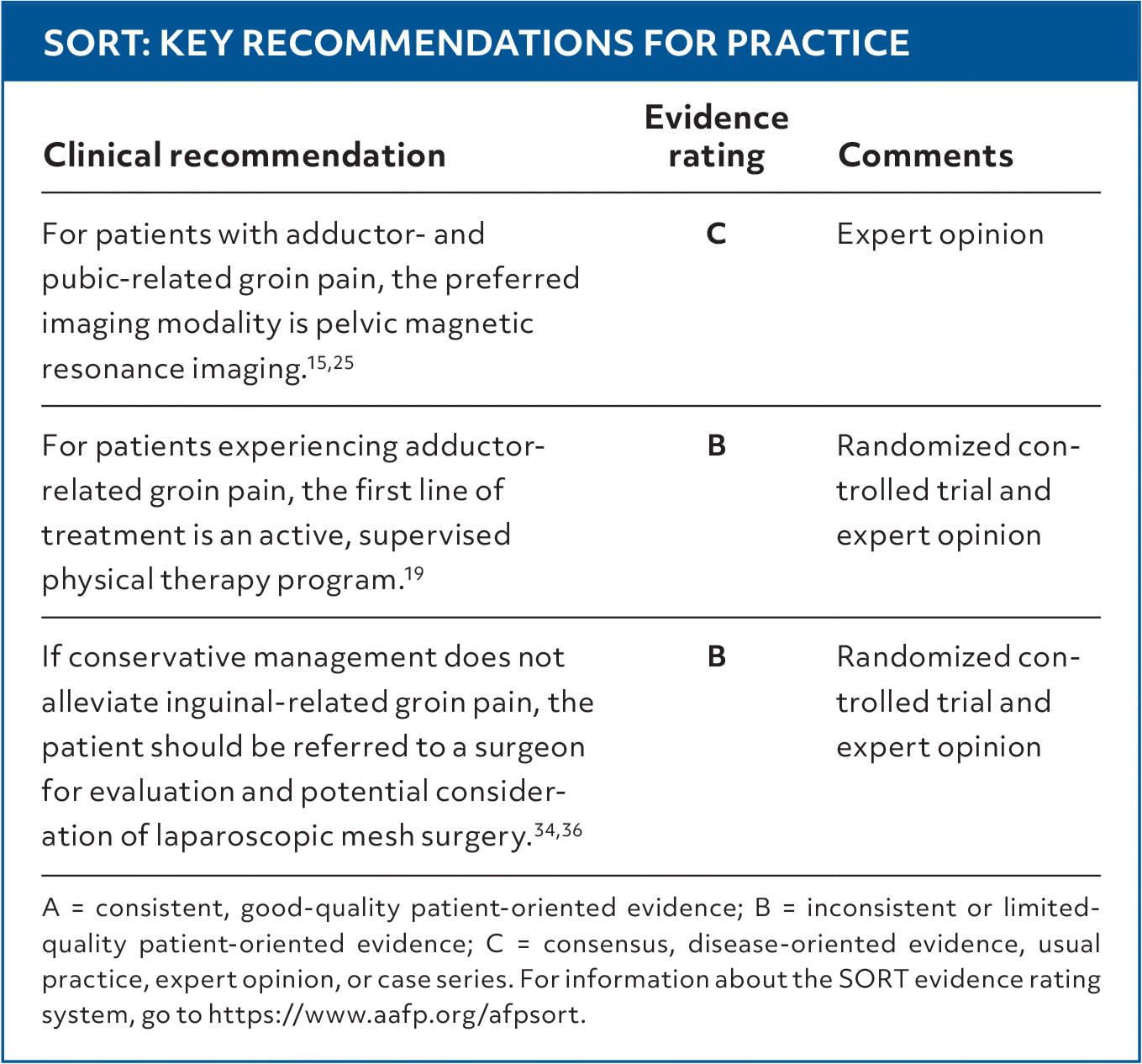
| Clinical recommendation | Evidence rating | Comments |
|---|---|---|
| For patients with adductor- and pubic-related groin pain, the preferred imaging modality is pelvic magnetic resonance imaging.15,25 | C | Expert opinion |
| For patients experiencing adductor-related groin pain, the first line of treatment is an active, supervised physical therapy program.19 | B | Randomized controlled trial and expert opinion |
| If conservative management does not alleviate inguinal-related groin pain, the patient should be referred to a surgeon for evaluation and potential consideration of laparoscopic mesh surgery.34,36 | B | Randomized controlled trial and expert opinion |
A = consistent, good-quality patient-oriented evidence; B = inconsistent or limited-quality patient-oriented evidence; C = consensus, disease-oriented evidence, usual practice, expert opinion, or case series. For information about the SORT evidence rating system, go to https://www.aafp.org/afpsort.
The 2015 Doha agreement is a consensus statement developed by international specialists in various fields of musculoskeletal medicine that introduced a classification system for diagnosing groin pain in athletes.6 This classification system categorized groin pain into three major areas: groin pain in the athlete, hip-related groin pain, other causes of groin pain. In the groin pain in athletes category, four clinical entities are found: adductor-, pubic-, inguinal-, and iliopsoas-related groin pain.6 In athletes, the incidence of groin pain is estimated between 2% and 20%, depending on the sport and the level of participation.7,8 The incidences of groin injury and pain are unknown for the general population.9 Although much of the research, literature, and terminology focuses on groin pain in the athlete, family physicians can generally apply the principles presented for athletes to groin pain in other patients.
Read the full article
Get immediate access, anytime, anywhere.
Choose a single article, issue, or full-access subscription.
Earn up to 14 CME credits per issue.
