Premenstrual Syndrome and Premenstrual Dysphoric Disorder: Common Questions and Answers

Wendy S. Biggs, MD
Jennifer M. Romeu, MD
Taylor Gaudard, MD

American Family Physician. 2025;111(4):345-350.

Author disclosure: No relevant financial relationships.

This clinical content conforms to AAFP criteria for CME.

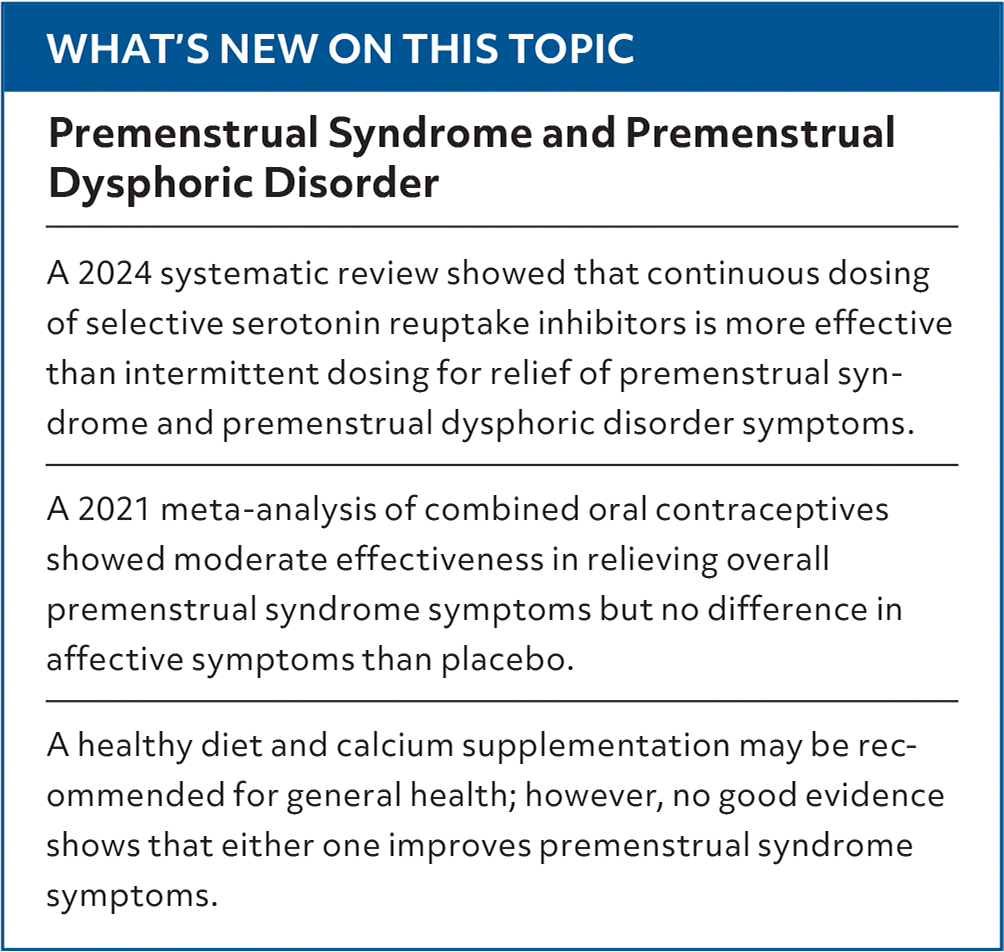
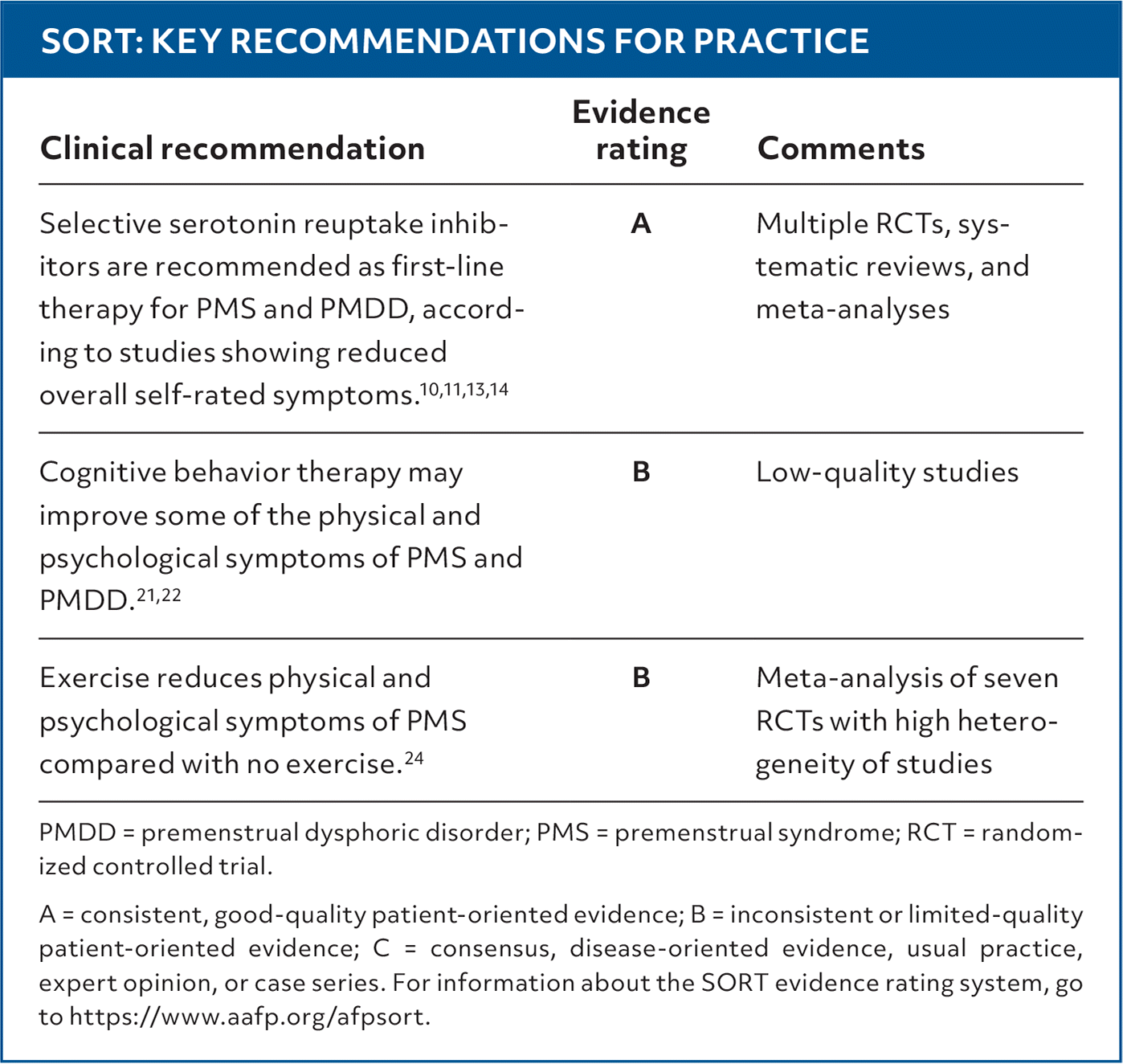
Premenstrual syndrome is primarily diagnosed clinically, with consistent characteristic symptoms occurring in the luteal phase of the menstrual cycle and resolving during menstruation or within the week following it. For a premenstrual dysphoric disorder diagnosis, a patient’s symptoms must substantially interfere with work, school, social activities, or relationships or cause significant distress. Patients should record symptoms for at least two cycles because symptoms can vary from cycle to cycle. A symptom-tracking diary or diagnostic instrument, such as the Daily Record of Severity of Problems (a validated prospective survey tool), can be used to identify the cyclic pattern of symptoms. Selective serotonin reuptake inhibitors are first-line treatment for premenstrual syndrome and premenstrual dysphoric disorder, with rapid onset of improvement; however, adverse effects can limit their use. Cognitive behavior therapy, exercise, acupuncture or acupressure, and the herb Vitex agnus castus may be used to ameliorate premenstrual syndrome and premenstrual dysphoric disorder symptoms. Reassessment for another underlying cause of premenstrual dysphoric disorder symptoms should occur if symptoms are not controlled with medications or other interventions or persist throughout the month.

WENDY S. BIGGS, MD, is a professor of family medicine at the Central Michigan University College of Medicine, Saginaw.

JENNIFER M. ROMEU, MD, is associate director of the Family Medicine Residency Program and an assistant professor of family medicine at the Central Michigan University College of Medicine.

TAYLOR GAUDARD, MD, IBCLC, is an assistant professor of family medicine at the Central Michigan University College of Medicine.

Address correspondence to Wendy S. Biggs, MD, at biggs2ws@cmich.edu.

Author disclosure: No relevant financial relationships.

  1. 1.American College of Obstetricians and Gynecologists. Management of premenstrual disorders: ACOG clinical practice guideline no. 7. Obstet Gynecol. 2023;142(6):1516-1533.
  2. 2.Freeman EW, Halberstadt SM, Rickels K, et al. Core symptoms that discriminate premenstrual syndrome. J Womens Health (Larchmt). 2011;20(1):29-35.
  3. 3.Direkvand-Moghadam A, Sayehmiri K, Delpisheh A, et al. Epidemiology of premenstrual syndrome (PMS)—a systematic review and meta-analysis study. J Clin Diagn Res. 2014;8(2):106-109.
  4. 4.Epperson CN, Steiner M, Hartlage SA, et al. Premenstrual dysphoric disorder: evidence for a new category for DSM-5. Am J Psychiatry. 2012;169(5):465-475.
  5. 5.Hofmeister S, Bodden S. Premenstrual syndrome and premenstrual dysphoric disorder. Am Fam Physician. 2016;94(3):236-240.
  6. 6.Diagnostic and Statistical Manual of Mental Disorders. 5th ed. American Psychiatric Association; 2014.
  7. 7.Ismaili E, Walsh S, O'Brien PMS, et al. Fourth consensus of the International Society for Premenstrual Disorders (ISPMD): auditable standards for diagnosis and management of premenstrual disorder. Arch Womens Ment Health. 2016;19(6):953-958.
  8. 8.Mortola JF, Girton L, Yen SS. Depressive episodes in premenstrual syndrome. Am J Obstet Gynecol. 1989;161(6 pt 1):1682-1687.
  9. 9.Endicott J, Nee J, Harrison W. Daily Record of Severity of Problems (DRSP): reliability and validity. Arch Womens Ment Health. 2006;9(1):41-49.
  10. 10.Jespersen C, Lauritsen MP, Frokjaer VG, et al. Selective serotonin reuptake inhibitors for premenstrual syndrome and premenstrual dysphoric disorder. Cochrane Database Syst Rev. 2024(8):CD001396.
  11. 11.Sepede G, Sarchione F, Matarazzo I, et al. Premenstrual dysphoric disorder without comorbid psychiatric conditions: a systematic review of therapeutic options. Clin Neuropharmacol. 2016;39(5):241-261.
  12. 12.de Wit AE, de Vries YA, de Boer MK, et al. Efficacy of combined oral contraceptives for depressive symptoms and overall symptomatology in premenstrual syndrome: pairwise and network meta-analysis of randomized trials. Am J Obstet Gynecol. 2021;225(6):624-633.
  13. 13.Shah NR, Jones JB, Aperi J, et al. Selective serotonin reuptake inhibitors for premenstrual syndrome and premenstrual dysphoric disorder: a meta-analysis. Obstet Gynecol. 2008;111(5):1175-1182.
  14. 14.Reilly TJ, Wallman P, Clark I, et al. Intermittent selective serotonin reuptake inhibitors for premenstrual syndromes: a systematic review and meta-analysis of randomised trials. J Psychopharmacol. 2023;37(3):261-267.
  15. 15.Yonkers KA, Kornstein SG, Gueorguieva R, et al. Symptom-onset dosing of sertraline for the treatment of premenstrual dysphoric disorder: a randomized clinical trial. JAMA Psychiatry. 2015;72(10):1037-1044.
  16. 16.Ramos MG, Hara C, Rocha FL. Duloxetine treatment for women with premenstrual dysphoric disorder: a single-blind trial. Int J Neuropsychopharmacol. 2009;12(8):1081-1088.
  17. 17.Naheed B, Kuiper JH, Uthman OA, et al. Non-contraceptive oestrogen-containing preparations for controlling symptoms of premenstrual syndrome. Cochrane Database Syst Rev. 2017(3):CD010503.
  18. 18.Ma S, Song SJ. Oral contraceptives containing drospirenone for premenstrual syndrome. Cochrane Database Syst Rev. 2023(6):CD006586.
  19. 19.Carlini SV, Lanza di Scalea T, McNally ST, et al. Management of premenstrual dysphoric disorder: a scoping review. Int J Womens Health. 2022;14:1783-1801.
  20. 20.Wyatt KM, Dimmock PW, Ismail KMK, et al. The effectiveness of GnRHa with and without ‘add-back’ therapy in treating premenstrual syndrome: a meta analysis. BJOG. 2004;111(6):585-593.
  21. 21.Kancheva Landolt N, Ivanov K. Short report: cognitive behavioral therapy—a primary mode for premenstrual syndrome management: systematic literature review. Psychol Health Med. 2021;26(10):1282-1293.
  22. 22.Hunter MS, Ussher JM, Browne SJ, et al. A randomized comparison of psychological (cognitive behavior therapy), medical (fluoxetine) and combined treatment for women with premenstrual dysphoric disorder. J Psychosom Obstet Gynaecol. 2002;23(3):193-199.
  23. 23.Siminiuc R, Ţurcanu D. Impact of nutritional diet therapy on premenstrual syndrome. Front Nutr. 2023;10:1079417.
  24. 24.Pearce E, Jolly K, Jones LL, et al. Exercise for premenstrual syndrome: a systematic review and meta-analysis of randomised controlled trials. BJGP Open. 2020;4(3) ): bjgpopen20X101032.
  25. 25.Verkaik S, Kamperman AM, van Westrhenen R, et al. The treatment of premenstrual syndrome with preparations of Vitex agnus castus: a systematic review and meta-analysis. Am J Obstet Gynecol. 2017;217(2):150-166.
  26. 26.Csupor D, Lantos T, Hegyi P, et al. Vitex agnus-castus in premenstrual syndrome: a meta-analysis of double-blind randomised controlled trials. Complement Ther Med. 2019;47:102190.
  27. 27.Khalesi ZB, Beiranvand SP, Bokaie M. Efficacy of chamomile in the treatment of premenstrual syndrome: a systematic review. J Pharmacopuncture. 2019;22(4):204-209.
  28. 28.Armour M, Ee CC, Hao J, et al. Acupuncture and acupressure for premenstrual syndrome. Cochrane Database Syst Rev. 2018(8):CD005290.
  29. 29.Comasco E, Kopp Kallner H, Bixo M, et al. Ulipristal acetate for treatment of premenstrual dysphoric disorder: a proof-of-concept randomized controlled trial. Am J Psychiatry. 2021;178(3):256-265.
  30. 30.Biggs WS, Demuth RH. Premenstrual syndrome and premenstrual dysphoric disorder. Am Fam Physician. 2011;84(8):918-924.
  31. 31.Dickerson LM, Mazyck PJ, Hunter MH. Premenstrual syndrome. Am Fam Physician. 2003;67(8):1743-1752.
  32. 32.Bhatia SC, Bhatia SK. Diagnosis and treatment of premenstrual dysphoric disorder. Am Fam Physician. 2002;66(7):1239-1249.
  33. 33.Daugherty JE. Treatment strategies for premenstrual syndrome. Am Fam Physician. 1998;58(1):183-192.

Copyright © 2026 by the American Academy of Family Physicians.

This content is owned by the AAFP. A person viewing it online may make one printout of the material and may use that printout only for his or her personal, non-commercial reference. This material may not otherwise be downloaded, copied, printed, stored, transmitted or reproduced in any medium, whether now known or later invented, except as authorized in writing by the AAFP. See permissions for copyright questions and/or permission requests.