Common Occupational Upper Extremity Musculoskeletal Disorders

Scott Hall, MD
Matthew R. Compton, DO

American Family Physician. 2025;111(5):451-458.

Author disclosure: No relevant financial relationships.

This clinical content conforms to AAFP criteria for CME.

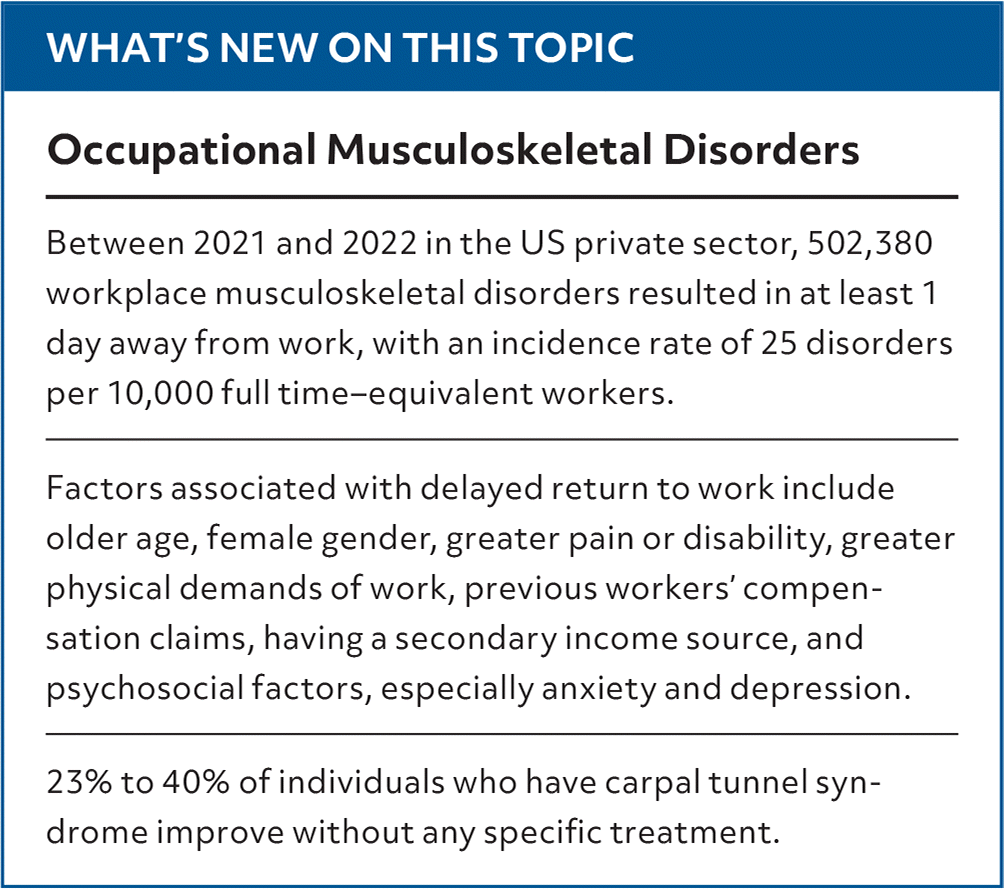
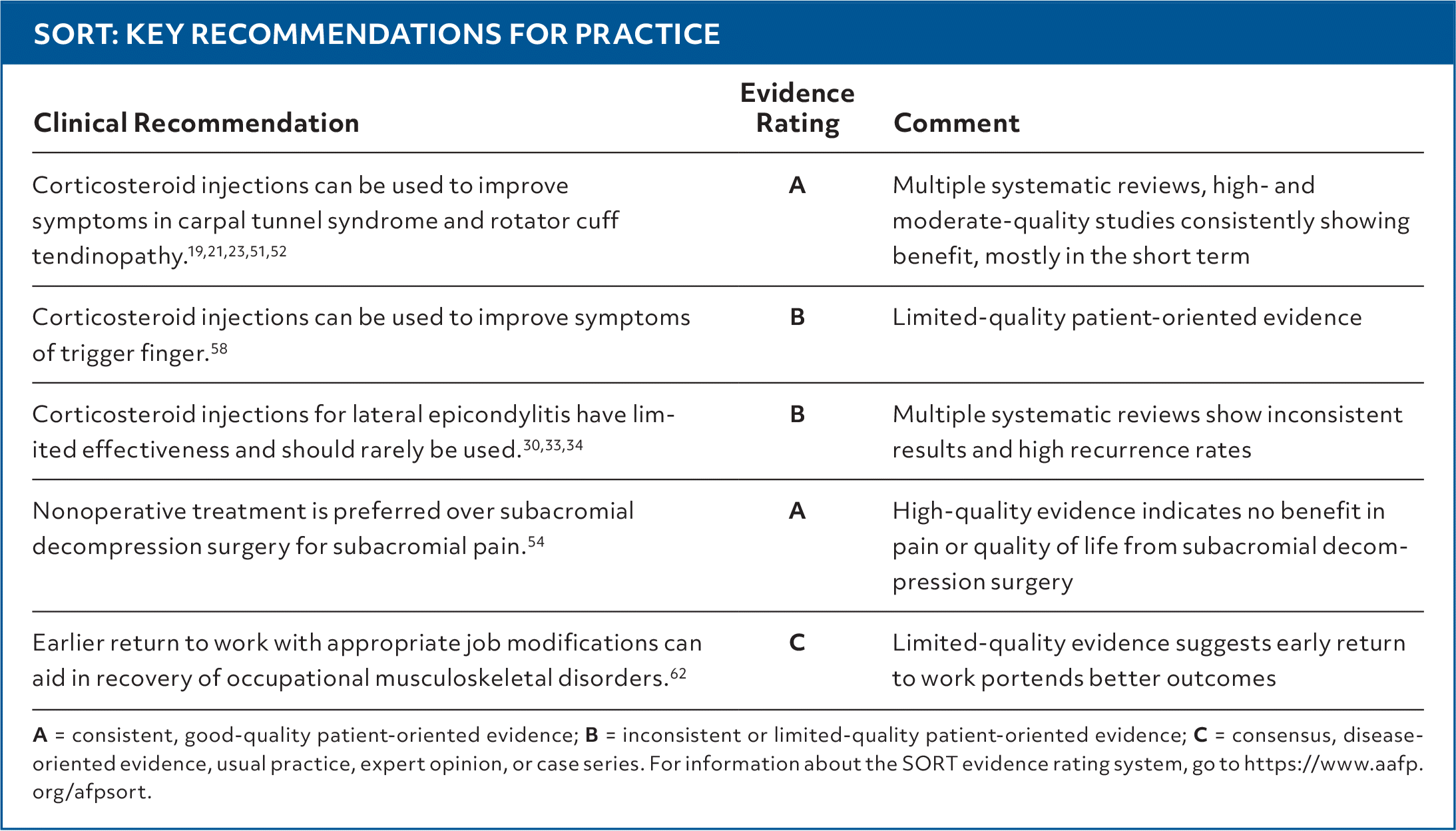
Family physicians play a valuable role in the diagnosis, management, and treatment of musculoskeletal disorders that result from occupational exposures, including overexertion, repetitive motion, and vibration. Carpal tunnel syndrome is a common peripheral nerve entrapment syndrome often identified in workers whose jobs require repetitive hand motion. Treatment of carpal tunnel syndrome includes splinting, rehabilitation exercises, and oral or injected corticosteroids; surgical release is considered in patients for whom conservative treatment has failed or who have severe symptoms. Lateral epicondylitis is an elbow disorder resulting from overuse; it is diagnosed clinically and managed with bracing, nonsteroidal anti-inflammatory drugs, corticosteroid injections, and physical therapy. Rotator cuff tendinopathy is a degenerative disorder of the rotator cuff musculature and tendons and is often identified in people who perform repetitive work overhead. Rotator cuff tendinopathy is diagnosed clinically and generally managed nonoperatively with nonsteroidal anti-inflammatory drugs, physical therapy, and corticosteroid injections; imaging may be considered to confirm the diagnosis after initial conservative treatment. Trigger finger is a stenosing tenosynovitis of the flexor ten-dons of the hand and occurs among people whose jobs require repetitive gripping. Corticosteroid injection is a first-line treatment for trigger finger. A careful history can assist the clinician in determining whether an injury is work related. Providing appropriate work restrictions for injured workers to allow a safe return to work may expedite recovery.

SCOTT HALL, MD, CAQSM, is an associate professor in the Department of Family and Preventive Medicine at the University of Utah, Salt Lake City.

MATTHEW R. COMPTON, DO, MOH, CAQSM, is an occupational medicine resident in the Department of Family and Preventive Medicine at the University of Utah.

Address correspondence to Scott Hall, MD, CAQSM, at u0341520@utah.edu.

Author disclosure: No relevant financial relationships.

  1. 1.US Bureau of Labor Statistics. Injuries, illness, and fatalities: BLS OSH definitions. Updated November 8, 2023. Accessed March 2024. https://www.bls.gov/iif/definitions/occupational-safety-and-health-definitions.htm
  2. 2.US Bureau of Labor Statistics. Employer-reported workplace injuries and illnesses (annual). Updated November 8, 2023. Accessed March 2024. https://www.bls.gov/news.release/osh.toc.htm
  3. 3.US Bureau of Labor Statistics. Injuries, illness, and fatalities: occupational injuries and illnesses resulting in musculoskeletal disorders (MSDs). Updated May 1, 2020. Accessed March 2024. https://www.bls.gov/iif/factsheets/msds.htm
  4. 4.Taiwo OA, Mobo BHP, Cantley L. Recognizing occupational illnesses and injuries. Am Fam Physician. 2010;82(2):169-174.
  5. 5.Hassan A, Beumer A, Kuijer PPFM, et al. Work-relatedness of carpal tunnel syndrome: systematic review including meta-analysis and GRADE. Health Sci Rep. 2022;5(6):e888.
  6. 6.Burt S, Deddens JA, Crombie K, et al. A prospective study of carpal tunnel syndrome: workplace and individual risk factors. Occup Environ Med. 2013;70(8):568-574.
  7. 7.Mansfield M, Thacker M, Sandford F. Psychosocial risk factors and the association with carpal tunnel syndrome: a systematic review. Hand (NY). 2018;13(5):501-508.
  8. 8.Harris-Adamson C, Eisen EA, Kapellusch J, et al. Biomechanical risk factors for carpal tunnel syndrome: a pooled study of 2474 workers. Occup Environ Med. 2015;72(1):33-41.
  9. 9.Lawson IJ. Is carpal tunnel syndrome caused by work with vibrating tools? Occup Med (Lond). 2020;70(1):8-10.
  10. 10.Keith MW, Masear V, Chung K, et al. Diagnosis of carpal tunnel syndrome. J Am Acad Orthop Surg. 2009;17(6):389-396.
  11. 11.Padua L, Coraci D, Erra C, et al. Carpal tunnel syndrome: clinical features, diagnosis, and management. Lancet Neurol. 2016;15(12):1273-1284.
  12. 12.Wipperman J, Penny ML. Carpal tunnel syndrome: rapid evidence review. Am Fam Physician. 2024;110(1):52-57.
  13. 13.D’Arcy CA, McGee S. The rational clinical examination. Does this patient have carpal tunnel syndrome? JAMA. 2000;283(23):3110-3117.
  14. 14.Ozdag Y, Hu Y, Hayes DS, et al. Sensitivity and specificity of examination maneuvers for carpal tunnel syndrome: a meta-analysis. Cureus. 2023;15(7):e42383.
  15. 15.Dabbagh A, MacDermid JC, Yong J, et al. Diagnostic test accuracy of provocative maneuvers for the diagnosis of carpal tunnel syndrome: a systematic review and meta-analysis. Phys Ther. 2023;103(6):pzad029.
  16. 16.Demino C, Fowler JR. The sensitivity and specificity of nerve conduction studies for diagnosis of carpal tunnel syndrome: a systematic review. Hand (N Y). 2021;16(2):174-178.
  17. 17.Lin TY, Chang KV, Wu WT, et al. Ultrasonography for the diagnosis of carpal tunnel syndrome: an umbrella review. J Neurol. 2022;269(9):4663-4675.
  18. 18.Erickson M, Lawrence M, Lucado A. The role of diagnostic ultrasound in the examination of carpal tunnel syndrome: an update and systematic review. J Hand Ther. 2022;35(2):215-225.
  19. 19.Karjalanen T, Raatikainen S, Jaatinen K, et al. Update on efficacy of conservative treatments for carpal tunnel syndrome. J Clin Med. 2022;11(4):950.
  20. 20.Karjalainen TV, Lusa V, Page MJ, et al. Splinting for carpal tunnel syndrome. Cochrane Database Syst Rev. 2023(2):CD010003.
  21. 21.Chan PYW, Santana A, Alter T, et al. Long-term efficacy of corticosteroid injection for carpal tunnel syndrome: a systematic review [published online January 19, 2024]. Hand (N Y). Accessed February 6, 2025. https://doi.org/10.1177/15589447231222320
  22. 22.Chang MH, Chiang HT, Lee SS, et al. Oral drug of choice in carpal tunnel syndrome. Neurology. 1998;51(2):390-393.
  23. 23.Ashworth NL, Bland JDP, Chapman KM, et al. Local corticosteroid injection versus placebo for carpal tunnel syndrome. Cochrane Database Syst Rev. 2023(2):CD015148.
  24. 24.Lusa V, Karjalainen TV, Pääkkönen M, et al. Surgical versus non-surgical treatment for carpal tunnel syndrome. Cochrane Database Syst Rev. 2024(1):CD001552.
  25. 25.American College of Occupational and Environmental Medicine. ACOEM practice guidelines: hand, wrist, and forearm disorders. Accessed April 30, 2024. https://www.mdguidelines.com/acoemmembers/
  26. 26.Shiri R, Viikari-Juntura E, Varonen H, et al. Prevalence and determinants of lateral and medial epicondylitis: a population study. Am J Epidemiol. 2006;164(11):1065-1074.
  27. 27.Kane SF, Lynch JH, Taylor JC. Evaluation of elbow pain in adults. Am Fam Physician. 2014;89(8):649-657.
  28. 28.Chen Q, Shen P, Zhang B, et al. A meta-analysis of the risk factors for lateral epicondylitis. J Hand Ther. 2024;37(1):44-52.
  29. 29.Karanasios S, Korakakis V, Moutzouri M, et al. Diagnostic accuracy of examination tests for lateral elbow tendinopathy (LET)—a systematic review. J Hand Ther. 2022;35(4):541-551.
  30. 30.Kim YJ, Wood SM, Yoon AP, et al. Efficacy of nonoperative treatments for lateral epicondylitis: a systematic review and meta-analysis. Plast Reconstr Surg. 2021;147(1):112-125.
  31. 31.Pattanittum P, Turner T, Green S, et al. Non-steroidal anti-inflammatory drugs (NSAIDs) for treating lateral elbow pain in adults. Cochrane Database Syst Rev. 2013(5):CD003686.
  32. 32.Karjalainen TV, Silagy M, O’Bryan E, et al. Autologous blood and platelet-rich plasma injection therapy for lateral elbow pain. Cochrane Database Syst Rev. 2021(9):CD010951.
  33. 33.Sims SEG, Miller K, Elfar JC, et al. Non-surgical treatment of lateral epicondylitis: a systematic review of randomized controlled trials. Hand (N Y). 2014;9(4):419-446.
  34. 34.Krogh TP, Bartels EM, Ellingsen T, et al. Comparative effectiveness of injection therapies in lateral epicondylitis: a systematic review and network meta-analysis of randomized controlled trials. Am J Sports Med. 2013;41(6):1435-1446.
  35. 35.Buchbinder R, Johnston RV, Barnsley L, et al. Surgery for lateral elbow pain. Cochrane Database Syst Rev. 2011(3):CD003525.
  36. 36.Challoumas D, Clifford C, Kirwan P, et al. How does surgery compare to sham surgery or physiotherapy as a treatment for tendinopathy? A systematic review of randomised trials. BMJ Open Sport Exerc Med. 2019;5(1):e000528.
  37. 37.American College of Occupational and Environmental Medicine. ACOEM practice guidelines: elbow disorders—lateral epicondylalgia. Accessed March 5, 2024. https://www.mdguidelines.com/acoemmembers/
  38. 38.Hashimoto T, Nobuhara K, Hamada T. Pathologic evidence of degeneration as a primary cause of rotator cuff tear. Clin Orthop Relat Res. 2003;415:111-120.
  39. 39.Quillen DM, Wuchner M, Hatch RL. Acute shoulder injuries. Am Fam Physician. 2004;70(10):1947-1954.
  40. 40.Giri A, O’Hanlon D, Jain NB. Risk factors for rotator cuff disease: a systematic review and meta-analysis of diabetes, hypertension, and hyperlipidemia. Ann Phys Rehabil Med. 2023;66(1):101631.
  41. 41.van Rijn RM, Huisstede BM, Koes BW, et al. Associations between work-related factors and specific disorders of the shoulder—a systematic review of the literature. Scand J Work Environ Health. 2010;36(3):189-201.
  42. 42.Hegedus EJ, Goode AP, Cook CE, et al. Which physical examination tests provide clinicians with the most value when examining the shoulder? Update of a systematic review with meta-analysis of individual tests. Br J Sports Med. 2012;46(14):964-978.
  43. 43.Mengi A, Akif Guler M. Nocturnal pain in patients with rotator cuff related shoulder pain: a prospective study. Musculoskelet Sci Pract. 2022;59:102536.
  44. 44.Kempf B, Kongsted A. Association between the side of unilateral shoulder pain and preferred sleeping position: a cross-sectional study of 83 Danish patients. J Manipulative Physiol Ther. 2012;35(5):407-412.
  45. 45.Lange T, Matthijs O, Jain NB, et al. Reliability of specific physical examination tests for the diagnosis of shoulder pathologies: a systematic review and meta-analysis. Br J Sports Med. 2017;51(6):511-518.
  46. 46.Roy JS, Braën C, Leblond J, et al. Diagnostic accuracy of ultrasonography, MRI and MR arthrography in the characterisation of rotator cuff disorders: a systematic review and meta-analysis. Br J Sports Med. 2015;49(20):1316-1328.
  47. 47.Page MJ, Green S, McBain B, et al. Manual therapy and exercise for rotator cuff disease. Cochrane Database Syst Rev. 2016(6):CD012224.
  48. 48.Boudreault J, Desmeules F, Roy JS, et al. The efficacy of oral nonsteroidal anti-inflammatory drugs for rotator cuff tendinopathy: a systematic review and meta-analysis. J Rehabil Med. 2014;46(4):294-306.
  49. 49.Steuri R, Sattelmayer M, Elsig S, et al. Effectiveness of conservative interventions including exercise, manual therapy and medical management in adults with shoulder impingement: a systematic review and meta-analysis of RCTs. Br J Sports Med. 2017;51(18):1340-1347.
  50. 50.Desmeules F, Boudreault J, Dionne CE, et al. Efficacy of exercise therapy in workers with rotator cuff tendinopathy: a systematic review. J Occup Health. 2016;58(5):389-403.
  51. 51.Ziradkar R, Best TM, Quintero D, et al. Nonsteroidal anti-inflammatory and corticosteroid injections for shoulder impingement syndrome: a systematic review and meta-analysis. Sports Health. 2023;15(4):579-591.
  52. 52.American College of Occupational and Environmental Medicine. Shoulder disorders: subacromial glucocorticoid injections. Accessed November 2024. https://www.mdguidelines.com/acoemmembers/
  53. 53.Zadro J, Rischin A, Johnston RV, et al. Image-guided glucocorticoid injection versus injection without image guidance for shoulder pain. Cochrane Database Syst Rev. 2021(8):CD009147.
  54. 54.Karjalainen TV, Jain NB, Page CM, et al. Subacromial decompression surgery for rotator cuff disease. Cochrane Database Syst Rev. 2019(1):CD005619.
  55. 55.American College of Occupational and Environmental Medicine. ACOEM practice guidelines: shoulder disorders: rotator cuff tendinopathy. Accessed April 3, 2024. https://www.mdguidelines.com/acoemmembers/
  56. 56.Kapellusch JM, Garg A, Hegmann KT, et al. The Strain Index and ACGIH TLV for HAL: risk of trigger digit in the WISTAH prospective cohort. Hum Factors. 2014;56(1):98-111.
  57. 57.Huisstede BM, Gladdines S, Randsdorp MS, et al. Effectiveness of conservative, surgical, and postsurgical interventions for trigger finger, Dupuytren disease, and De Quervain disease: a systematic review. Arch Phys Med Rehabil. 2018;99(8):1635-1649.e21.
  58. 58.Leow MQH, Zheng Q, Shi L, et al. Non-steroidal anti-inflammatory drugs (NSAIDs) for trigger finger. Cochrane Database Syst Rev. 2021(4):CD012789.
  59. 59.Fiorini HJ, Tamaoki MJ, Lenza M, et al. Surgery for trigger finger. Cochrane Database Syst Rev. 2018(2):CD009860.
  60. 60.American College of Occupational and Environmental Medicine. Hand and wrist disorders; flexor tendon entrapment: injection therapies. Accessed November 2024. https://www.mdguidelines.com/acoemmembers/
  61. 61.Greaves WW, Das R, McKenzie JG, et al. Work-relatedness. J Occup Environ Med. 2018;60(12):e640-e646.
  62. 62.Núñez-Cortés R, Espin A, Pérez-Alenda S, et al. Association between pain coping and symptoms of anxiety and depression, and work absenteeism in people with upper limb musculoskeletal disorders: a systematic review and meta-analysis. Arch Phys Med Rehabil. 2024;105(4):781-791.

Copyright © 2026 by the American Academy of Family Physicians.

This content is owned by the AAFP. A person viewing it online may make one printout of the material and may use that printout only for his or her personal, non-commercial reference. This material may not otherwise be downloaded, copied, printed, stored, transmitted or reproduced in any medium, whether now known or later invented, except as authorized in writing by the AAFP. See permissions for copyright questions and/or permission requests.