Endometrial Cancer: Rapid Evidence Review

Carl Bryce, MD
Renee Gazda, DO
Hadass Fuerst, DO

American Family Physician. 2025;111(6):526-531.

Author disclosure: No financial relationships.

This clinical content conforms to AAFP criteria for CME.

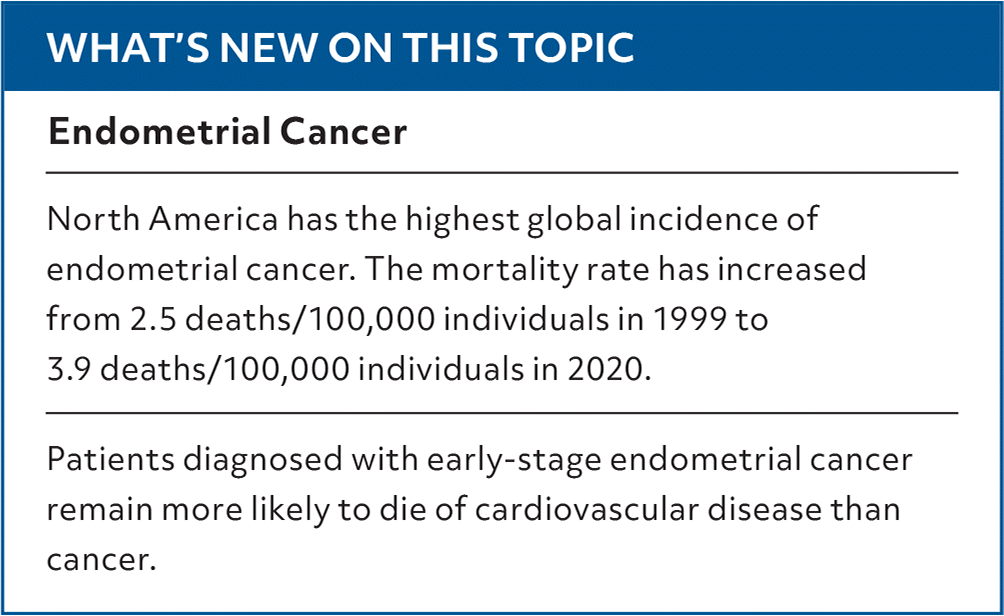
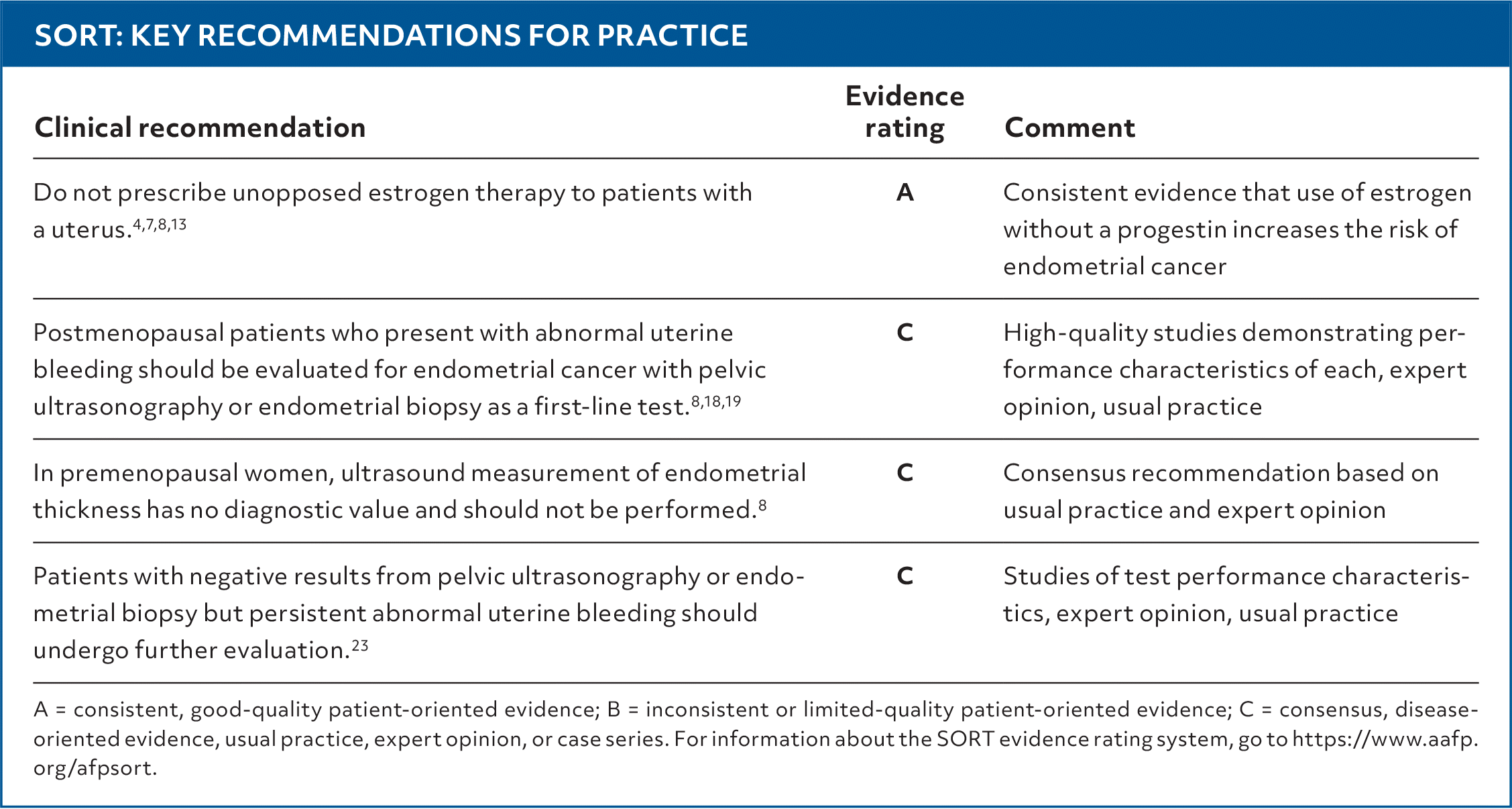
Incidence and mortality rates associated with endometrial cancer are increasing in the United States. Risk factors include obesity, unopposed estrogen states, estrogen-producing tumors, younger age at menarche, nulliparity, late menopause, and tamoxifen use. There are no recommendations for endometrial cancer screening in individuals at average risk. Abnormal uterine bleeding, especially postmenopausal bleeding, is the most common symptom. Patients who present with postmenopausal bleeding should be evaluated with pelvic ultrasonography or endometrial biopsy. The diagnosis of endometrial cancer is made with endometrial biopsy, most often with Pipelle endometrial sampling. Dilation and curettage is recommended if an adequate sample cannot be obtained, the diagnosis is unclear, or a focal lesion such as an endometrial polyp or mass is present. Treatment of early-stage disease is primarily surgical. Radiation therapy decreases recurrence rates but not survival rates in early-stage cancers. Chemotherapy, hormone therapy, and biologic therapy are used to treat advanced endometrial cancer, and clinical trials are ongoing. Complementary medicine therapies can improve quality of life and survival rates in patients undergoing treatment. Patients should be referred to a gynecologic oncologist; early-stage treatment is associated with longer survival rates. Endometrial cancer survivors should undergo periodic surveillance that includes a history and physical examination.

CARL BRYCE, MD, FAAFP, is program director of the Abrazo Family Medicine Residency Program in Phoenix, Arizona, and an assistant clinical professor in the Department of Osteopathic Family and Community Medicine at the Arizona College of Osteopathic Medicine at Midwestern University, Glendale.

RENEE GAZDA, DO, is associate program director of the Abrazo Family Medicine Residency Program, Phoenix, and an assistant clinical professor in the Department of Osteopathic Family and Community Medicine at the Arizona College of Osteopathic Medicine, Glendale.

HADASS FUERST, DO, is a core faculty member at the Abrazo Family Medicine Residency Program, Phoenix, and an assistant clinical professor in the Department of Osteopathic Family and Community Medicine at the Arizona College of Osteopathic Medicine, Glendale.

Address correspondence to Carl Bryce, MD, FAAFP, at carl.bryce@abrazohealth.com.

Author disclosure: No financial relationships.

  1. 1.Somasegar S, Bashi A, Lang SM, et al. Trends in uterine cancer mortality in the United States: a 50-year population-based analysis. Obstet Gynecol. 2023;142(4):978-986.
  2. 2.Sung H, Ferlay J, Siegel RL, et al. Global cancer statistics 2020: GLOBOCAN estimates of incidence and mortality worldwide for 36 cancers in 185 countries. CA Cancer J Clin. 2021;71(3):209-249.
  3. 3.Brooks RA, Fleming GF, Lastra RR, et al. Current recommendations and recent progress in endometrial cancer. CA Cancer J Clin. 2019;69(4):258-279.
  4. 4.Weiderpass E, Adami HO, Baron JA, et al. Risk of endometrial cancer following estrogen replacement with and without progestins. J Natl Cancer Inst. 1999;91(13):1131-1137.
  5. 5.Jenabi E, Poorolajal J. The effect of body mass index on endometrial cancer: a meta-analysis. Public Health. 2015;129(7):872-880.
  6. 6.Collaborative Group on Epidemiological Studies on Endometrial Cancer. Endometrial cancer and oral contraceptives: an individual participant meta-analysis of 27 276 women with endometrial cancer from 36 epidemiological studies. Lancet Oncol. 2015;16(9):1061-1070.
  7. 7.PDQ Adult Treatment Editorial Board. Endometrial Cancer Treatment (PDQ)–health professional version. Updated February 12, 2025. Accessed March 31, 2025. https://www.cancer.gov/types/uterine/hp/endometrial-treatment-pdq
  8. 8.American College of Obstetrics and Gynecologists. Practice bulletin no. 149: endometrial cancer. Obstet Gynecol. 2015;125(4):1006-1026.
  9. 9.American College of Obstetrics and Gynecologists. ACOG practice bulletin no. 147: Lynch syndrome. Obstet Gynecol. 2014;124(5):1042-1054.
  10. 10.Crosbie EJ, Kitson SJ, McAlpine JN, et al. Endometrial cancer. Lancet. 2022;399(10333):1412-1428.
  11. 11.Schmeler KM, Lynch HT, Chen LM, et al. Prophylactic surgery to reduce the risk of gynecologic cancers in the Lynch syndrome. N Engl J Med. 2006;354(3):261-269.
  12. 12.Perkins RB, Guido RS, Castle PE, et al. 2019 ASCCP risk-based management consensus guidelines for abnormal cervical cancer screening tests and cancer precursors. J Low Genit Tract Dis. 2020;24(2):102-131.
  13. 13.Beral V, Bull D, Reeves G; Million Women Study Collaborators. Endometrial cancer and hormone-replacement therapy in the Million Women Study. Lancet. 2005;365(9470):1543-1551.
  14. 14.Derbyshire AE, Allen JL, Gittins M, et al. PROgesterone Therapy for Endometrial Cancer Prevention in Obese Women (PROTEC) trial: a feasibility study. Cancer Prev Res (Phila). 2021;14(2):263-274.
  15. 15.Schmid D, Behrens G, Keimling M, et al. A systematic review and meta-analysis of physical activity and endometrial cancer risk. Eur J Epidemiol. 2015;30(5):397-412.
  16. 16.American College of Obstetrics and Gynecologists. Management of endometrial intraepithelial neoplasia or atypical endometrial hyperplasia: ACOG Clinical Consensus No. 5. Obstet Gynecol. 2023;142(3):735-744.
  17. 17.Pakish JB, Lu KH, Sun CC, et al. Endometrial cancer associated symptoms: a case-control study. J Womens Health (Larchmt). 2016;25(11):1187-1192.
  18. 18.Braun MM, Overbeek-Wager EA, Grumbo RJ. Diagnosis and management of endometrial cancer. Am Fam Physician. 2016;93(6):468-474.
  19. 19.Clarke MA, Long BJ, Del Mar Morillo A, et al. Association of endometrial cancer risk with postmenopausal bleeding in women: a systematic review and meta-analysis. JAMA Intern Med. 2018;178(9):1210-1222.
  20. 20.Terzic MM, Aimagambetova G, Terzic S, et al. Current role of Pipelle endometrial sampling in early diagnosis of endometrial cancer. Transl Cancer Res. 2020;9(12):7716-7724.
  21. 21.Robbins JB, Sadowski EA, Maturen KE, et al.; Expert Panel on GYN and OB Imaging. ACR Appropriateness Criteria Abnormal Uterine Bleeding. J Am Coll Radiol. 2020;17(11S):S336-S345.
  22. 22.Wong AS-W, Lao TT-H, Cheung CW, et al. Reappraisal of endometrial thickness for the detection of endometrial cancer in postmenopausal bleeding: a retrospective cohort study. BJOG. 2016;123(3):439-446.
  23. 23.National Comprehensive Cancer Network. Uterine neoplasms: NCCN guidelines; version 3.2025. Accessed March 31, 2025. https://www.nccn.org/guidelines/guidelines-detail?category=1&id=1473
  24. 24.Benedetti Panici P, Basile S, Maneschi F, et al. Systematic pelvic lymphadenectomy vs. no lymphadenectomy in early-stage endometrial carcinoma: randomized clinical trial. J Natl Cancer Inst. 2008;100(23):1707-1716.
  25. 25.Siegel RL, Miller KD, Jemal A. Cancer statistics, 2020. CA Cancer J Clin. 2020;70(1):7-30.
  26. 26.Berek JS, Matias-Guiu X, Creutzberg C, et al.; Endometrial Cancer Staging Subcommittee, FIGO Women’s Cancer Committee. FIGO staging of endometrial cancer: 2023. Int J Gynaecol Obstet. 2023;162(2):383-394.
  27. 27.American Cancer Society. Survival rates for endometrial cancer. Accessed May 6, 2025. https://www.cancer.org/cancer/types/endometrial-cancer/detection-diagnosis-staging/survival-rates.html
  28. 28.Janda M, Gebski V, Davies LC, et al. Effect of total laparoscopic hysterectomy vs total abdominal hysterectomy on disease-free survival among women with stage I endometrial cancer: a randomized clinical trial. JAMA. 2017;317(12):1224-1233.
  29. 29.Cusimano MC, Vicus D, Pulman K, et al. Assessment of sentinel lymph node biopsy vs lymphadenectomy for intermediate- and high-grade endometrial cancer staging. JAMA Surg. 2021;156(2):157-164.
  30. 30.Powell MA, Bjørge L, Willmott L, et al. Overall survival in patients with endometrial cancer treated with dostarlimab plus carboplatinpaclitaxel in the randomized ENGOT-EN6/GOG-3031/RUBY trial. Ann Oncol. 2024;35(8):728-738.
  31. 31.Kim JH, Han KH, Park EY, et al. Efficacy of immune-checkpoint inhibitors combined with cytotoxic chemotherapy in advanced or recurrent endometrial cancer: a systematic review and meta-analysis. Gynecol Oncol. 2024;187:85-91.
  32. 32.Hsieh K, Bloom JR, Dickstein DR, et al. Risk-tailoring radiotherapy for endometrial cancer: a narrative review. Cancers (Basel). 2024;16(7):1346.
  33. 33.Ben-Arye E, Samuels N, Lavie O. Integrative medicine for female patients with gynecologic cancer. J Altern Complement Med. 2018;24(9–10):881-889.
  34. 34.Segev Y, Lavie O, Stein N, et al. Correlation between an integrative oncology treatment program and survival in patients with advanced gynecological cancer. Support Care Cancer. 2021;29(7):4055-4064.
  35. 35.Williams L, Henry C, Simcock B, et al. Exploring health professionals’ viewpoint of provision of nutrition advice for women with endometrial cancer. N Z Med J. 2023;136(1583):40-54.
  36. 36.Beavis AL, Smith AJB, Fader AN. Lifestyle changes and the risk of developing endometrial and ovarian cancers: opportunities for prevention and management. Int J Womens Health. 2016;8:151-167.
  37. 37.Janda M, Forder P, Gebski V, et al. Weight and weight control behaviors during long-term endometrial cancer survivorship: results of the Laparoscopic Approach to Cancer of the Endometrium long-term follow-up study. Cancer Med. 2021;10(14):4896-4904.
  38. 38.Society of Gynecologic Oncologists. Guidelines for referral to a gynecologic oncologist: rationale and benefits. Gynecol Oncol. 2000;78(3 pt 2):S1-S13.
  39. 39.Deshmukh H, Zhang R, Yu X, et al. The effect of gynecologic oncologists on the survival of endometrial cancer patients. Gynecol Oncol. 2008;111(2):379-380.
  40. 40.National Cancer Institute; Surveillance, Epidemiology, and End Results Program. Cancer stat facts: uterine cancer. Accessed May 14, 2024. https://seer.cancer.gov/statfacts/html/corp.html
  41. 41.Salani R, Khanna N, Frimer M, et al. An update on post-treatment surveillance and diagnosis of recurrence in women with gynecologic malignancies: Society of Gynecologic Oncology (SGO) recommendations. Gynecol Oncol. 2017;146(1):3-10.
  42. 42.National Cancer Institute; Surveillance, Epidemiology, and End Results Program. SEER*Explorer: all cancer sites combined. Updated April 16, 2025. Accessed May 6, 2025. https://seer.cancer.gov/statistics-network/explorer/
  43. 43.Zhao C, Karunamurthy A, Jain S, et al. Vaginal cytology results in follow-up of endometrial carcinoma after hysterectomy. Am J Clin Pathol. 2016;146(2):244-277.
  44. 44.Buchanan EM, Weinstein LC, Hillson C. Endometrial cancer. Am Fam Physician. 2009;80(10):1075-1080.
  45. 45.Canavan TP, Doshi NR. Endometrial cancer. Am Fam Physician. 1999;59(11):3069-3077.

Copyright © 2026 by the American Academy of Family Physicians.

This content is owned by the AAFP. A person viewing it online may make one printout of the material and may use that printout only for his or her personal, non-commercial reference. This material may not otherwise be downloaded, copied, printed, stored, transmitted or reproduced in any medium, whether now known or later invented, except as authorized in writing by the AAFP. See permissions for copyright questions and/or permission requests.