Feven W. Getaneh, MD
Rachael D. Sussman, MD
Cheryl B. Iglesia, MD

American Family Physician. 2025;111(6):515-523B.

Author disclosure: Drs. Getaneh, Sussman, and Iglesia do not have a formal relationship with any commercial company to disclose, but a public database revealed food and beverage listings for several drugs and devices related to the topic of this manuscript. None of these involved cash payments and are not considered a violation of AFP's conflict-of-interest policy.

This clinical content conforms to AAFP criteria for CME.

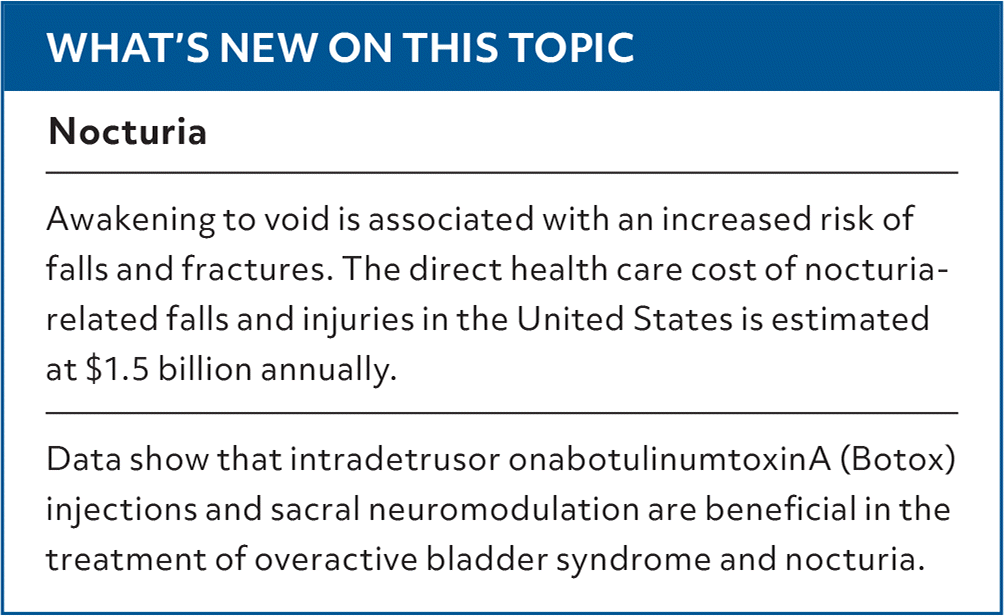
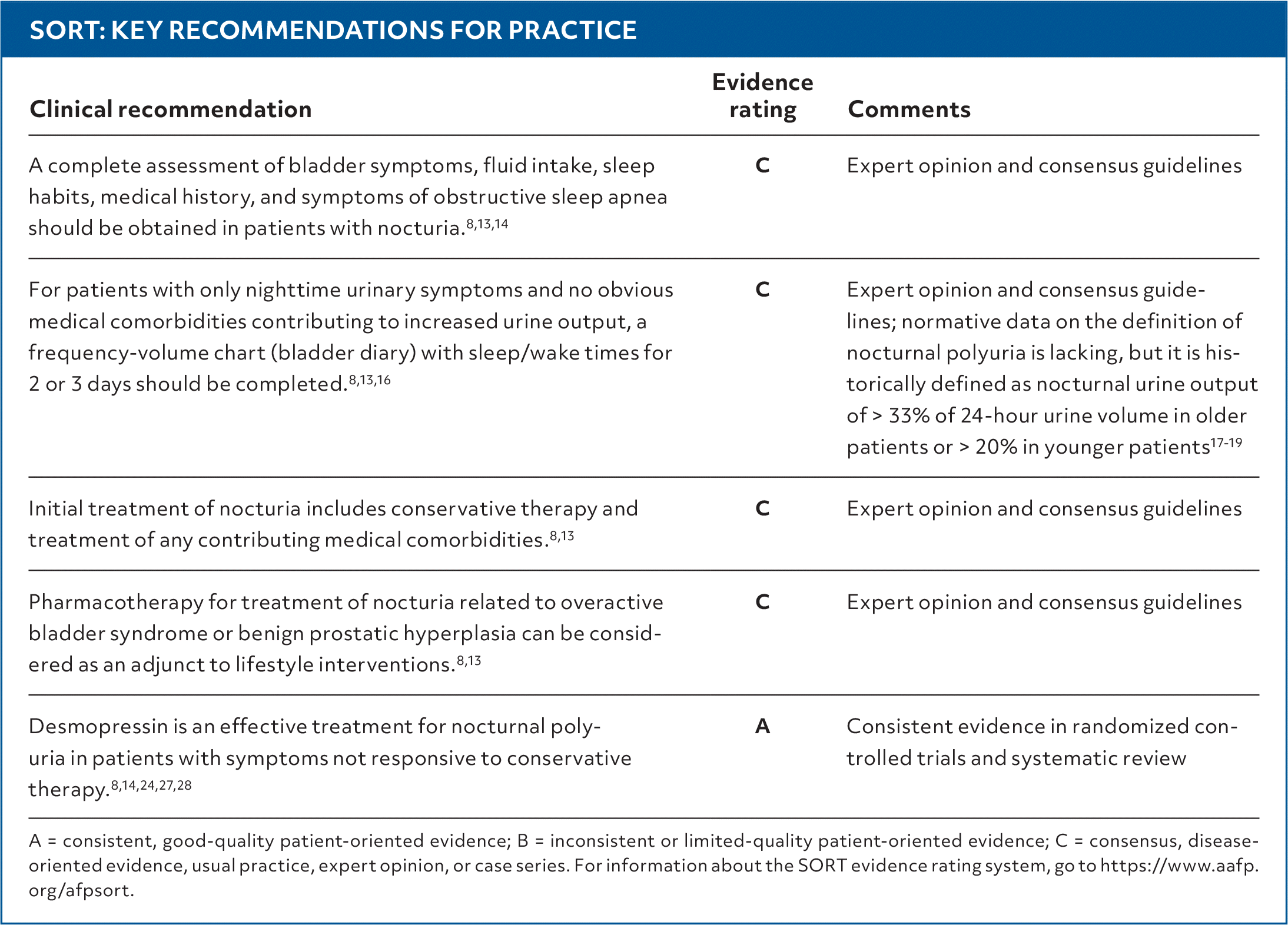
Nocturia (ie, awakening to void one or more times per night) is common in adults, with increasing prevalence in older age. Nocturia is associated with increased risk of falls and fractures, cognitive impairment, and depressed mood. In general, mechanisms for nocturia fall into one of four categories: increased nighttime urine production, decreased storage ability, incomplete bladder emptying, or primary sleep disorder. Although screening for nocturia currently is not recommended, patients reporting bothersome symptoms should be evaluated and treated. Initial workup includes assessing urinary symptoms, fluid intake, and comorbidities. Using validated nocturia questionnaires and frequency-volume charts (bladder diaries) can aid in diagnosis. A urinalysis should be performed for all patients. Lifestyle modifications and treatment of underlying comorbidities are first-line therapies for nocturia. Limitation of fluid intake, especially in the evening; addressing timing of diuretic intake; and sleep hygiene are recommended. Pharmacotherapy should be reserved for those unresponsive to lifestyle modifications and adequate treatment of comorbidities. Pharmacotherapy should target the etiology of nocturia, such as nocturnal polyuria, overactive bladder, benign prostatic hyperplasia, and genitourinary syndrome of menopause. Patients with refractory symptoms should be referred for further treatment (eg, onabotulinumtoxinA injection, sacral neuromodulation, surgical management of benign prostatic hyperplasia).

FEVEN W. GETANEH, MD, is an assistant professor in the Department of Obstetrics, Gynecology, and Reproductive Science at Mount Sinai Hospital, New York City, New York.

RACHAEL D. SUSSMAN, MD, is an associate professor in the Departments of Obstetrics/Gynecology and Urology at Georgetown University School of Medicine, Washington, District of Columbia.

CHERYL B. IGLESIA, MD, is a professor in the Departments of Obstetrics/Gynecology and Urology at Georgetown University School of Medicine.

Address correspondence to Feven W. Getaneh, MD, at feven.getaneh@mssm.edu.

Author disclosure: Drs. Getaneh, Sussman, and Iglesia do not have a formal relationship with any commercial company to disclose, but a public database revealed food and beverage listings for several drugs and devices related to the topic of this manuscript. None of these involved cash payments and are not considered a violation of AFP's conflict-of-interest policy.

  1. 1.Tikkinen KAO, Tammela TLJ, Huhtala H, et al. Is nocturia equally common among men and women? A population based study in Finland. J Urol. 2006;175(2):596-600.
  2. 2.Kupelian V, Wei JT, O’Leary MP, et al. Nocturia and quality of life: results from the Boston area community health survey. Eur Urol. 2012;61(1):78-84.
  3. 3.Shao IH, Wu CC, Hsu HS, et al. The effect of nocturia on sleep quality and daytime function in patients with lower urinary tract symptoms: a cross-sectional study. Clin Interv Aging. 2016;11:879-885.
  4. 4.Pesonen JS, Vernooij RWM, Cartwright R, et al. The impact of nocturia on falls and fractures: a systematic review and meta-analysis. J Urol. 2020;203(4):674-683.
  5. 5.Holm-Larsen T. The economic impact of nocturia. Neurourol Urodyn. 2014;33(Suppl 1):S10-S14.
  6. 6.Madhu C, Coyne K, Hashim H, et al. Nocturia: risk factors and associated comorbidities; findings from the EpiLUTS study. Int J Clin Pract. 2015;69(12):1508-1516.
  7. 7.Johnson TM II. Nocturia in adults: clinical presentation, evaluation, and management. UpToDate. Updated March 25, 2025. Accessed April 11, 2025. https://www.uptodate.com/contents/nocturia-clinical-presentation-evaluation-and-management-in-adults
  8. 8.Everaert K, Hervé F, Bosch R, et al. International Continence Society consensus on the diagnosis and treatment of nocturia. Neurourol Urodyn. 2019;38(2):478-498.
  9. 9.Bower WF, Rose GE, Ervin CF, et al. TANGO - a screening tool to identify comorbidities on the causal pathway of nocturia. BJU Int. 2017;119(6):933-941.
  10. 10.Sandhu JS, Bixler BR, Dahm P, et al. Management of lower urinary tract symptoms attributed to benign prostatic hyperplasia (BPH): AUA guideline amendment 2023. J Urol. 2024;211(1):11-19.
  11. 11.Ito H, Young GJ, Lewis AL, et al. Grading severity and bother using the International Prostate Symptom Score and International Consultation on Incontinence Questionnaire Male Lower Urinary Tract Symptoms Score in men seeking lower urinary tract symptoms therapy. J Urol. 2020;204(5):1003-1011.
  12. 12.Cornu JN, Gacci M, Hashim H, et al. Management of non-neurogenic male LUTS. European Association of Urology. Accessed April 1, 2024. https://uroweb.org/guidelines/management-of-non-neurogenic-male-luts
  13. 13.Oelke M, De Wachter S, Drake MJ, et al. A practical approach to the management of nocturia. Int J Clin Pract. 2017;71(11):e13027.
  14. 14.Nguyen LN, Randhawa H, Nadeau G, et al. Canadian Urological Association best practice report: diagnosis and management of nocturia. Can Urol Assoc J. 2022;16(7):E336-E349.
  15. 15.Portman DJ, Gass MLS. Genitourinary syndrome of menopause: new terminology for vulvovaginal atrophy from the International Society for the Study of Women’s Sexual Health and the North American Menopause Society. Menopause. 2014;21(10):1063-1068.
  16. 16.Cornu JN, Abrams P, Chapple CR, et al. A contemporary assessment of nocturia: definition, epidemiology, pathophysiology, and management—a systematic review and meta-analysis. Eur Urol. 2012;62(5):877-890.
  17. 17.Hashim H, Blanker MH, Drake MJ, et al. International Continence Society (ICS) report on the terminology for nocturia and nocturnal lower urinary tract function. Neurourol Urodyn. 2019;38(2):499-508.
  18. 18.Haylen BT, de Ridder D, Freeman RM, et al. An International Urogynecological Association (IUGA)/International Continence Society (ICS) joint report on the terminology for female pelvic floor dysfunction. Int Urogynecol J. 2010;21(1):5-26.
  19. 19.Baines G, Da Silva AS, Cardozo L, et al. Defining nocturnal polyuria in women. Neurourol Urodyn. 2021;40(1):265-271.
  20. 20.Karanjia R, Tadtayev S. Frequency-volume chart apps for nocturia: keeping urologists up at night. Urologynews. January 5, 2022. Accessed April 1, 2025. https://www.urologynews.uk.com/features/features/post/frequency-volume-chart-apps-for-nocturia-keeping-urologists-up-at-night
  21. 21.Johnson TM, Burgio KL, Redden DT, et al. Effects of behavioral and drug therapy on nocturia in older incontinent women. J Am Geriatr Soc. 2005;53(5):846-850.
  22. 22.Simaioforidis V, Papatsoris AG, Chrisofos M, et al. Tamsulosin versus transurethral resection of the prostate: effect on nocturia as a result of benign prostatic hyperplasia. Int J Urol. 2011;18(3):243-248.
  23. 23.American Academy of Family Physicians. Assess and improve your sleep. Accessed December 16, 2024. https://www.aafp.org/family-physician/practice-and-career/managing-your-career/physician-well-being/practicing-self-care/improve-sleep.html
  24. 24.Weiss JP, Herschorn S, Albei CD, et al. Efficacy and safety of low dose desmopressin orally disintegrating tablet in men with nocturia: results of a multicenter, randomized, double-blind, placebo controlled, parallel group study. J Urol. 2013;190(3):965-972.
  25. 25.Weatherall M. The risk of hyponatremia in older adults using desmopressin for nocturia: a systematic review and meta-analysis. Neurourol Urodyn. 2004;23(4):302-305.
  26. 26.Desmopressin: drug information. UpToDate. Lexidrug. Accessed December 16, 2024. https://www.uptodate.com/contents/desmopressin-drug-information
  27. 27.Sand PK, Dmochowski RR, Reddy J, et al. Efficacy and safety of low dose desmopressin orally disintegrating tablet in women with nocturia: results of a multicenter, randomized, double-blind, placebo controlled, parallel group study. J Urol. 2013;190(3):958-964.
  28. 28.Han J, Jung JH, Bakker CJ, et al. Desmopressin for treating nocturia in men. Cochrane Database Syst Rev. 2017(10):CD012059.
  29. 29.Sakalis VI, Karavitakis M, Bedretdinova D, et al. Medical treatment of nocturia in men with lower urinary tract symptoms: systematic review by the European Association of Urology Guidelines Panel for Male Lower Urinary Tract Symptoms. Eur Urol. 2017;72(5):757-769.
  30. 30.Rembratt A, Riis A, Norgaard JP. Desmopressin treatment in nocturia; an analysis of risk factors for hyponatremia. Neurourol Urodyn. 2006;25(2):105-109.
  31. 31.Yamaguchi O, Nishizawa O, Juul KV, et al. Gender difference in efficacy and dose response in Japanese patients with nocturia treated with four different doses of desmopressin orally disintegrating tablet in a randomized, placebo-controlled trial. BJU Int. 2013;111(3):474-484.
  32. 32.Fitzgerald MP, Lemack G, Wheeler T, et al.; Urinary Incontinence Treatment Network. Nocturia, nocturnal incontinence prevalence, and response to anticholinergic and behavioral therapy. Int Urogynecol J Pelvic Floor Dysfunct. 2008;19(11):1545-1550.
  33. 33.Eisenhardt A, Schneider T, Cruz F, et al. Consistent and significant improvement of nighttime voiding frequency (nocturia) with silodosin in men with LUTS suggestive of BPH: pooled analysis of three randomized, placebo-controlled, double-blind phase III studies. World J Urol. 2014;32(5):1119-1125.
  34. 34.Lightner DJ, Gomelsky A, Souter L, et al. Diagnosis and treatment of overactive bladder (non-neurogenic) in adults: AUA/SUFU guideline amendment 2019. J Urol. 2019;202(3):558-563.
  35. 35.Yeung HEL, Sena SJ, Calopedos RJ, et al. Alfuzosin and its effect on ejaculatory dysfunction: a systematic review. World J Mens Health. 2021;39(2):186-194.
  36. 36.Gray SL, Anderson ML, Dublin S, et al. Cumulative use of strong anticholinergics and incident dementia: a prospective cohort study. JAMA Intern Med. 2015;175(3):401-407.
  37. 37.Risacher SL, McDonald BC, Tallman EF, et al. Association between anticholinergic medication use and cognition, brain metabolism, and brain atrophy in cognitively normal older adults. JAMA Neurol. 2016;73(6):721-732.
  38. 38.AUGS Clinical Consensus Statement: Association of anticholinergic medication use and cognition in women with overactive bladder. Female Pelvic Med Reconstr Surg. 2017;23(3):177-178.
  39. 39.Cameron AP, Chung DE, Dielubanza EJ, et al. The AUA/SUFU Guideline on the diagnosis and treatment of idiopathic overactive bladder. J Urol. 2024;212(1):11-20.
  40. 40.Arnold MJ, Gaillardetz A, Ohiokpehai J. Benign prostatic hyperplasia: rapid evidence review. Am Fam Physician. 2023;107(6):613-622.
  41. 41.Cody JD, Jacobs ML, Richardson K, et al. Oestrogen therapy for urinary incontinence in post-menopausal women. Cochrane Database Syst Rev. 2012(10):CD001405.
  42. 42.Nambiar AK, Arlandis S, Bø K, et al. European Association of Urology guidelines on the diagnosis and management of female non-neurogenic lower urinary tract symptoms. Part 1: diagnostics, overactive bladder, stress urinary incontinence, and mixed urinary incontinence. Eur Urol. 2022;82(1):49-59.
  43. 43.Chang JG, Lewis MN, Wertz MC. Managing menopausal symptoms: common questions and answers. Am Fam Physician. 2023;108(1):28-39.
  44. 44.Miotla P, Cartwright R, Futyma K, et al. Can botox improve night-time overactive bladder symptoms in women? Neurourol Urodyn. 2017;36(3):648-652.
  45. 45.Getaneh FW, Kolm P, Awulachew H, et al. Comparing impact of overactive bladder therapies on nocturia. Urogynecology. 2024;30(3):264-271.
  46. 46.Lukacz ES, Santiago-Lastra Y, Albo ME, et al. Urinary incontinence in women: a review. JAMA. 2017;318(16):1592-1604.
  47. 47.Amundsen CL, Richter HE, Menefee SA, et al. OnabotulinumtoxinA vs sacral neuromodulation on refractory urgency urinary incontinence in women: a randomized clinical trial. JAMA. 2016;316(13):1366-1374.

Copyright © 2026 by the American Academy of Family Physicians.

This content is owned by the AAFP. A person viewing it online may make one printout of the material and may use that printout only for his or her personal, non-commercial reference. This material may not otherwise be downloaded, copied, printed, stored, transmitted or reproduced in any medium, whether now known or later invented, except as authorized in writing by the AAFP. See permissions for copyright questions and/or permission requests.