Long-Term Opioid Therapy for Nonterminal Pain

Kento Sonoda, MD
Mako Wakabayashi, MD

American Family Physician. 2025;111(6):508-514.

Author disclosure: No relevant financial relationships.

This clinical content conforms to AAFP criteria for CME.

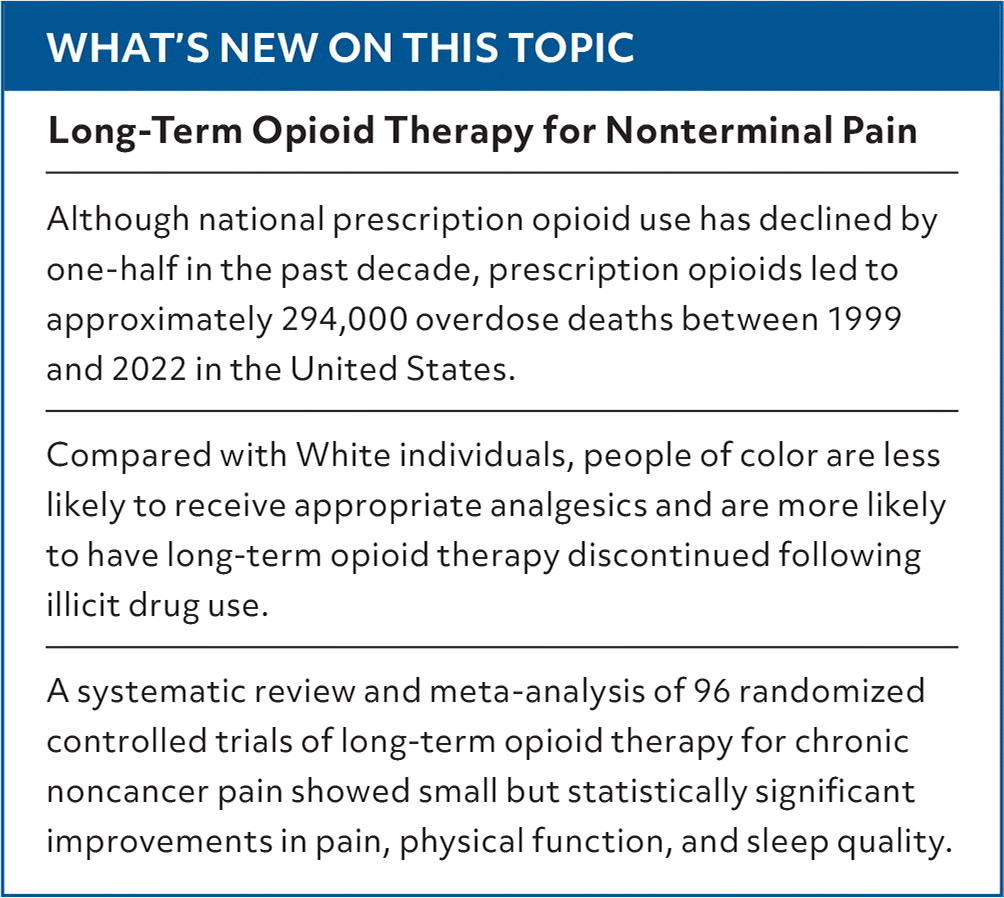
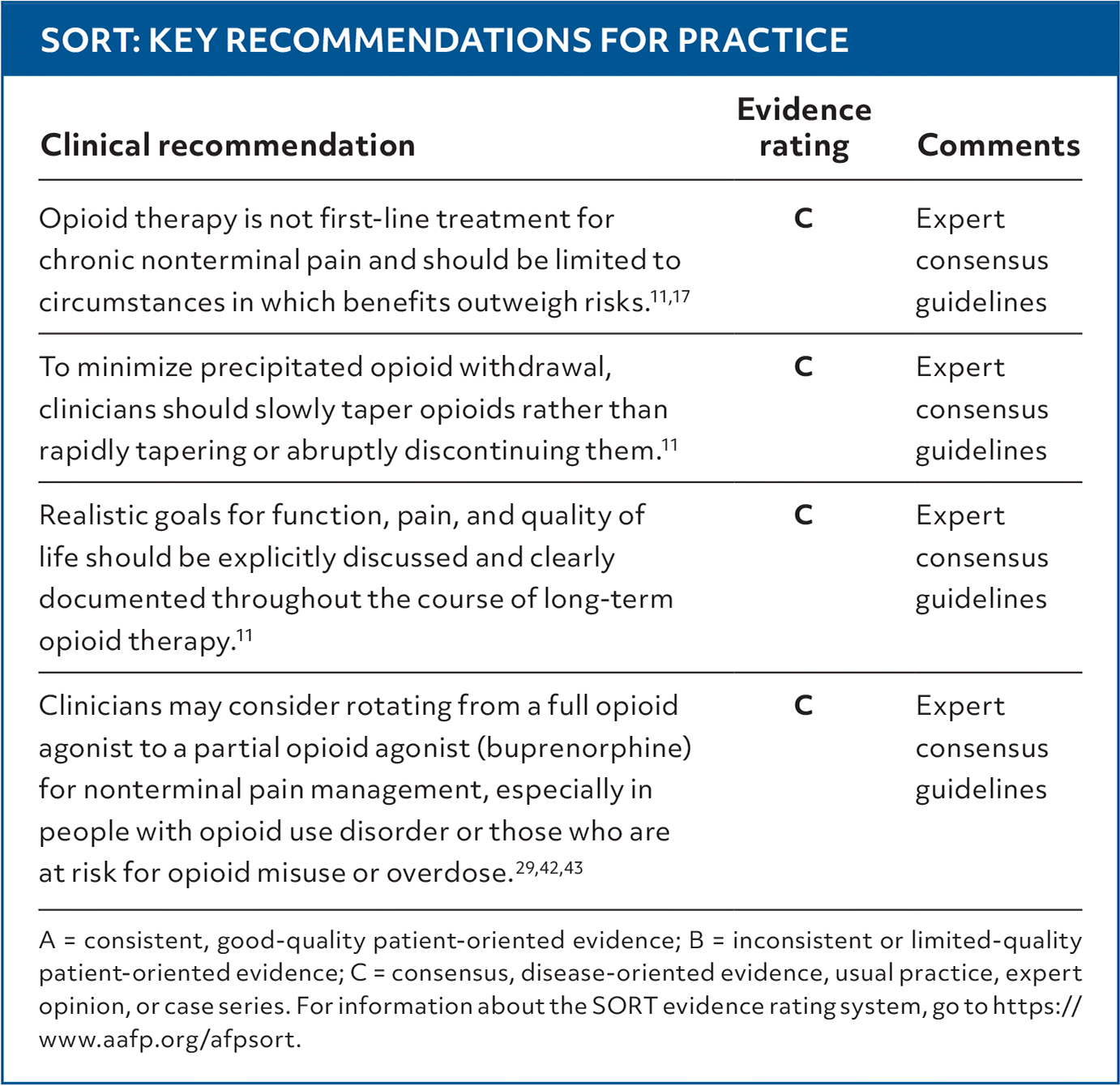
Chronic pain, defined as persistent pain lasting longer than 12 weeks, affects approximately 20% of US adults and often results in mental and social burdens. In general, nonopioid therapies are preferred for chronic nonterminal pain, and opioid therapy should not be considered a first-line treatment modality. Health disparities in pain management affect vulnerable populations, including racially and ethnically marginalized groups and those with cognitive impairment. Clinicians first must acknowledge the existing health inequities and the stigma surrounding chronic pain and then need to provide culturally tailored pain management. Opioid use should be limited to circumstances wherein benefits outweigh risks, such as in cases of nonterminal pain refractory to multiple other interventions. Harms of opioid therapy include constipation, depression, hormonal dysregulation, opioid-induced hyperalgesia, and overdose. Given the high prevalence of behavioral health disorders in individuals with chronic pain, it is crucial to address mental health in conjunction with pain management. Before prescribing opioids, it is essential to review risk factors for opioid use disorder and respiratory depression and to set realistic goals for improving function. Ongoing monitoring should include assessments of functional progress, urine drug testing, and review of data from the state prescription drug monitoring program. Buprenorphine is an effective medication for chronic pain management and may be safer than full opioid agonists, especially in individuals at risk for opioid use disorder, opioid misuse, or overdose.

KENTO SONODA, MD, FAAFP, FASAM, AAHIVS, is an assistant professor in the Department of Family and Community Medicine, Saint Louis University, St. Louis, Missouri.

MAKO WAKABAYASHI, MD, is a resident physician in the Department of Family Medicine, Oregon Health & Science University, Portland.

Address correspondence to Kento Sonoda, MD, FAAFP, FASAM, AAHIVS, at kento.sonoda@health.slu.edu.

Author disclosure: No relevant financial relationships.

  1. 1.Rikard SM, Strahan AE, Schmit KM, et al. Chronic pain among adults–United States, 2019–2021. MMWR Morb Mortal Wkly Rep. 2023;72(15):379-385.
  2. 2.Mullins PM, Yong RJ, Bhattacharyya N. Associations between chronic pain, anxiety, and depression among adults in the United States. Pain Pract. 2023;23(6):589-594.
  3. 3.Gaskin DJ, Richard P. The economic costs of pain in the United States. J Pain. 2012;13(8):715-724.
  4. 4.Dahlhamer JM, Connor EM, Bose J, et al. Prescription Opioid Use Among Adults With Chronic Pain: United States, 2019. National Health Statistics Reports; no 162. National Center for Health Statistics; 2021.
  5. 5.American Medical Association. Overdose epidemic report 2024. Accessed December 27, 2024. https://www.ama-assn.org/system/files/ama-overdose-epidemic-report.pdf
  6. 6.Centers for Disease Control and Prevention. Wide-ranging online data for epidemiologic research (WONDER). March 18, 2015. Accessed April 2, 2025. https://wonder.cdc.gov
  7. 7.Desveaux L, Saragosa M, Kithulegoda N, et al. Family physician perceptions of their role in managing the opioid crisis. Ann Fam Med. 2019;17(4):345-351.
  8. 8.Radosh L. Managing long-term opioid therapy with less stress. Fam Pract Manag. 2022;29(6):14-18.
  9. 9.MDCalc. Morphine milligram equivalents (MME) calculator. Accessed April 2, 2025. https://www.mdcalc.com/calc/10170/morphine-milligram-equivalents-mme-calculator
  10. 10.Lembke A, Humphreys K, Newmark J. Weighing the risks and benefits of chronic opioid therapy. Am Fam Physician. 2016;93(12):982-990.
  11. 11.Dowell D, Ragan KR, Jones CM, et al. CDC clinical practice guideline for prescribing opioids for pain - United States, 2022. MMWR Recomm Rep. 2022;71(3):1-95.
  12. 12.Gaither JR, Gordon K, Crystal S, et al. Racial disparities in discontinuation of long-term opioid therapy following illicit drug use among black and white patients. Drug Alcohol Depend. 2018;192:371-376.
  13. 13.Licciardone JC, Ganta S, Goehring L, et al. Analysis of the patient-physician relationship, race, and pain control and physical function among adults with chronic low back pain. JAMA Netw Open. 2022;5(6):e2216270.
  14. 14.Craig KD, Holmes C, Hudspith M, et al. Pain in persons who are marginalized by social conditions. Pain. 2020;161(2):261-265.
  15. 15.Ferreira-Valente A, Sharma S, Chan J, et al. Pain-related beliefs, coping, and function: an observational study on the moderating influence of country of origin. J Pain. 2023;24(9):1645-1663.
  16. 16.Lewis GN, Shaikh N, Wang G, et al. Chinese and Indian interpretations of pain: a qualitative evidence synthesis to facilitate chronic pain management. Pain Pract. 2023;23(6):647-663.
  17. 17.Sandbrink F, Murphy JL, Johansson M, et al.; VA/DoD Guideline Development Group. The use of opioids in the management of chronic pain: synopsis of the 2022 updated U.S. Department of Veterans Affairs and U.S. Department of Defense clinical practice guideline. Ann Intern Med. 2023;176(3):388-397.
  18. 18.Busse JW, Wang L, Kamaleldin M, et al. Opioids for chronic noncancer pain: a systematic review and meta-analysis. JAMA. 2018;320(23):2448-2460.
  19. 19.Krebs EE, Gravely A, Nugent S, et al. Effect of opioid vs nonopioid medications on pain-related function in patients with chronic back pain or hip or knee osteoarthritis pain: the SPACE randomized clinical trial. JAMA. 2018;319(9):872-882.
  20. 20.Nevedal AL, Timko C, Lor MC, et al. Patient and provider perspectives on benefits and harms of continuing, tapering, and discontinuing long-term opioid therapy. J Gen Intern Med. 2023;38(8):1802-1811.
  21. 21.Els C, Jackson TD, Kunyk D, et al. Adverse events associated with medium-and long-term use of opioids for chronic non-cancer pain: an overview of Cochrane reviews. Cochrane Database Syst Rev. 2017(10):CD012509.
  22. 22.Crockett SD, Greer KB, Heidelbaugh JJ, et al.; American Gastroenterological Association Institute Clinical Guidelines Committee. American Gastroenterological Association Institute guideline on the medical management of opioid-induced constipation. Gastroenterology. 2019;156(1):218-226.
  23. 23.Farmer AD, Holt CB, Downes TJ, et al. Pathophysiology, diagnosis, and management of opioid-induced constipation. Lancet Gastroenterol Hepatol. 2018;3(3):203-212.
  24. 24.Scherrer JF, Salas J, Copeland LA, et al. Prescription opioid duration, dose, and increased risk of depression in 3 large patient populations. Ann Fam Med. 2016;14(1):54-62.
  25. 25.Vogt S, Pfau G, Vielhaber S, et al. Long-term opioid therapy and mental health comorbidity in patients with chronic pain. Pain Med. 2023;24(7):837-845.
  26. 26.de Vries F, Bruin M, Lobatto DJ, et al. Opioids and their endocrine effects: a systematic review and meta-analysis. J Clin Endocrinol Metab. 2020;105(3):1020-1029.
  27. 27.Yi P, Pryzbylkowski P. Opioid induced hyperalgesia. Pain Med. 2015;16(suppl 1):S32-S36.
  28. 28.US Department of Veterans Affairs. Pain Management Opioid Taper Decision Tool. A VA clinician's guide. October 2016. Accessed April 2025. https://www.pbm.va.gov/AcademicDetailingService/Documents/Pain_Opioid_Taper_Tool_IB_10_939_P96820.pdf
  29. 29.The ASAM national practice guideline for the treatment of opioid use disorder: 2020 focused update. J Addict Med. 2020;14(2S suppl 1):1-91.
  30. 30.De La Rosa JS, Brady BR, Ibrahim MM, et al. Co-occurrence of chronic pain and anxiety/depression symptoms in U.S. adults: prevalence, functional impacts, and opportunities. Pain. 2024;165(3):666-673.
  31. 31.Berland D, Rodgers P. Rational use of opioids for management of chronic nonterminal pain. Am Fam Physician. 2012;86(3):252-258.
  32. 32.Krebs EE, Lorenz KA, Bair MJ, et al. Development and initial validation of the PEG, a three-item scale assessing pain intensity and interference. J Gen Intern Med. 2009;24(6):733-738.
  33. 33.Manhapra A, Sullivan MD, Ballantyne JC, et al. Complex persistent opioid dependence with long-term opioids: a gray area that needs definition, better understanding, treatment guidance, and policy changes. J Gen Intern Med. 2020;35(suppl 3):964-971.
  34. 34.Manhapra A, Arias AJ, Ballantyne JC. The conundrum of opioid tapering in long-term opioid therapy for chronic pain: a commentary. Subst Abus. 2018;39(2):152-161.
  35. 35.Klimas J, Gorfinkel L, Fairbairn N, et al. Strategies to identify patient risks of prescription opioid addiction when initiating opioids for pain: a systematic review. JAMA Netw Open. 2019;2(5):e193365.
  36. 36.American Academy of Family Physicians. AAFP Chronic Pain Management Toolkit. Accessed December 27, 2024. https://www.aafp.org/family-physician/patient-care/care-resources/pain-management/aafp-chronic-pain-management-toolkit.html
  37. 37.Centers for Disease Control and Prevention. Prescription drug monitoring programs (PDMPs): what clinicians need to know. May 2024. Accessed April 2025. https://www.cdc.gov/overdose-prevention/hcp/clinical-guidance/prescription-drug-monitoring-programs.html
  38. 38.Coffa D, Snyder H. Opioid use disorder: medical treatment options. Am Fam Physician. 2019;100(7):416-425.
  39. 39.Zoorob R, Kowalchuk A, Mejia de Grubb M. Buprenorphine therapy for opioid use disorder. Am Fam Physician. 2018;97(5):313-320.
  40. 40.Tiemstra JD. Common questions about buprenorphine treatment for opioid use disorder. Am Fam Physician. 2025;111(4):330-336.
  41. 41.Weimer MB, Herring AA, Kawasaki SS, et al. ASAM clinical considerations: buprenorphine treatment of opioid use disorder for individuals using high-potency synthetic opioids. J Addict Med. 2023;17(6):632-639.
  42. 42.Spinella S, McCarthy R. Buprenorphine for pain: a narrative review and practical applications. Am J Med. 2024;137(5):406-413.
  43. 43.Webster L, Gudin J, Raffa RB, et al. Understanding buprenorphine for use in chronic pain: expert opinion. Pain Med. 2020;21(4):714-723.
  44. 44.Lim SCB, Schug S, Krishnarajah J. The pharmacokinetics and local tolerability of a novel sublingual formulation of buprenorphine. Pain Med. 2019;20(1):143-152.
  45. 45.Quinn PD, Chang Z, Bair MJ, et al. Associations of opioid prescription dose and discontinuation with risk of substance-related morbidity in long-term opioid therapy. Pain. 2022;163(4):e588-e595.
  46. 46.Binswanger IA, Glanz JM, Faul M, et al. The association between opioid discontinuation and heroin use: a nested case-control study. Drug Alcohol Depend. 2020;217:108248.
  47. 47.US Department of Health and Human Services. HHS guide for clinicians on the appropriate dosage reduction or discontinuation of long-term opioid analgesics. October 2019. Accessed December 27, 2024. https://www.hhs.gov/system/files/Dosage_Reduction_Discontinuation.pdf
  48. 48.Avery N, McNeilage AG, Stanaway F, et al. Efficacy of interventions to reduce long term opioid treatment for chronic non-cancer pain: systematic review and meta-analysis. BMJ. 2022;377:e066375.
  49. 49.Manhapra A. Complex persistent opioid dependence: an opioid-induced chronic pain syndrome. Curr Treat Options Oncol. 2022;23(7):921-935.
  50. 50.Ballantyne JC, Sullivan MD, Kolodny A. Opioid dependence vs addiction: a distinction without a difference? Arch Intern Med. 2012;172(17):1342-1343.

Copyright © 2026 by the American Academy of Family Physicians.

This content is owned by the AAFP. A person viewing it online may make one printout of the material and may use that printout only for his or her personal, non-commercial reference. This material may not otherwise be downloaded, copied, printed, stored, transmitted or reproduced in any medium, whether now known or later invented, except as authorized in writing by the AAFP. See permissions for copyright questions and/or permission requests.