Approach to Developmental Screening and Surveillance in Young Children

John J. Koopman, MD, MBA
David C. Fiore, MD
Karen Thiele, MD

American Family Physician. 2025;112(1):55-61.

Author disclosure: No relevant financial relationships.

This clinical content conforms to AAFP criteria for CME.

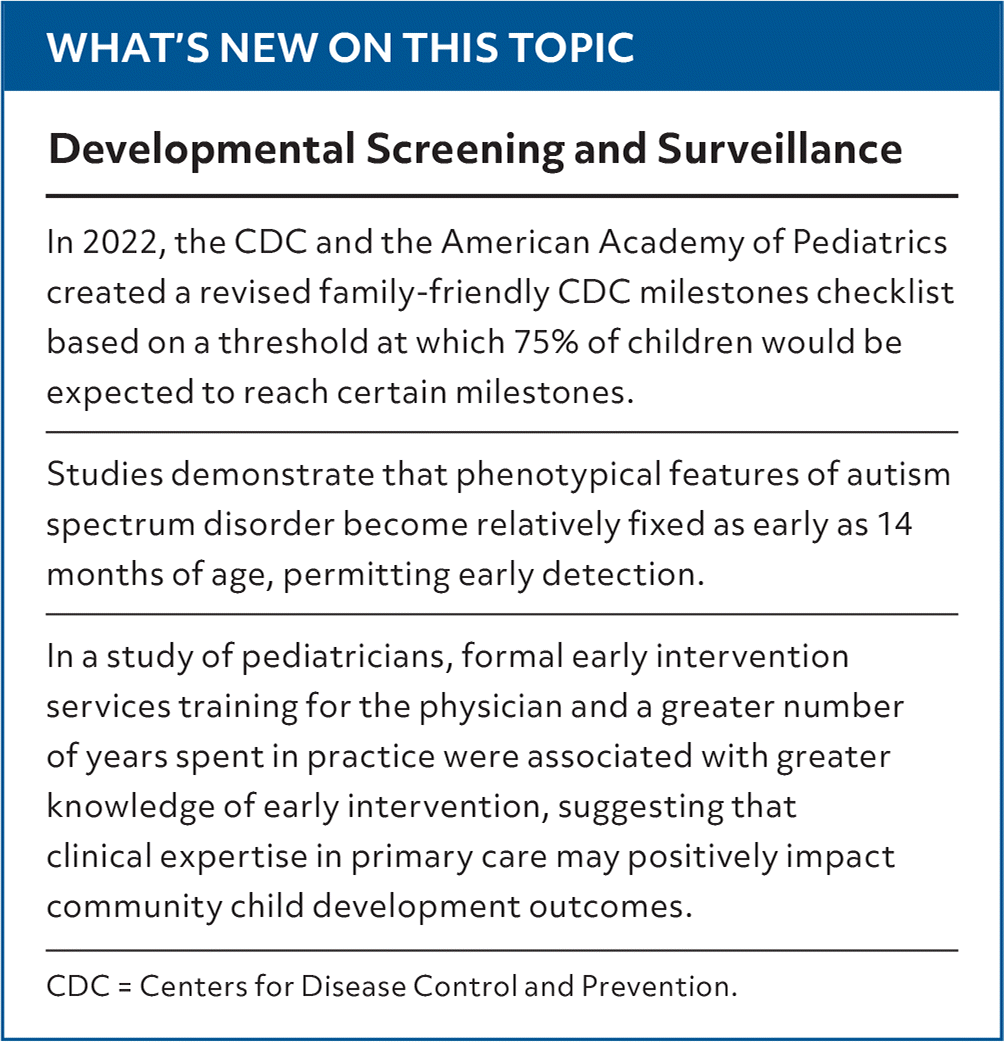
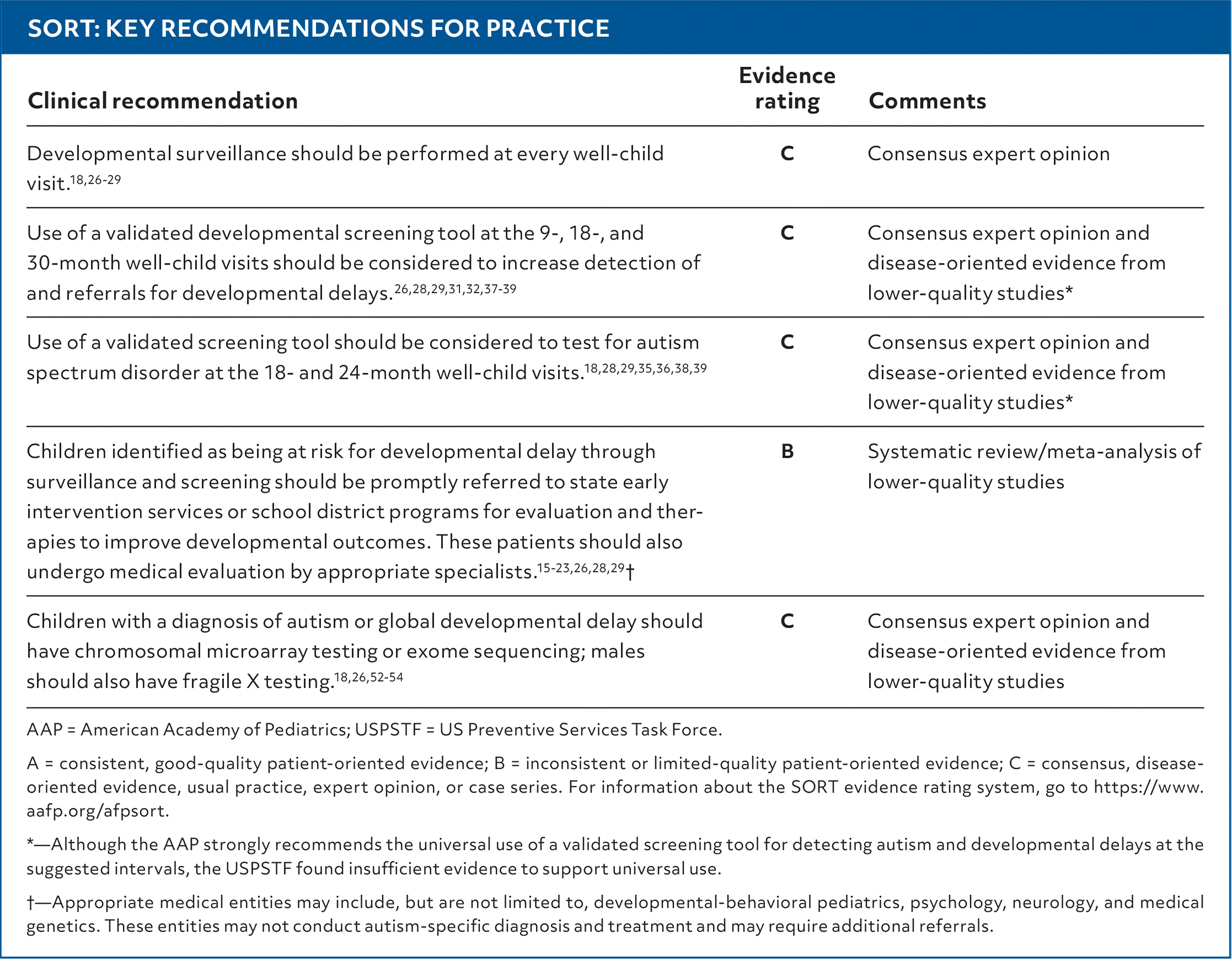
Early childhood development focuses on physical well-being, the development of motor skills and social interaction patterns, and the attainment of specific cognitive and communication skills. Developmental delay occurs when children are slow to achieve expected age-related norms for specific skills and may suggest underlying disease states. Developmental disabilities tend to be chronic conditions that affect social, physical, or cognitive development; these are reported in about 9% of children. Early intervention improves developmental outcomes with the potential for immediate and lasting effects. The American Academy of Pediatrics recommends developmental surveillance at every well-child visit, using a validated developmental screening tool during the 9-, 18-, 24-, and 30-month well-child visits. The US Preventive Services Task Force found insufficient evidence to support universal developmental screening for autism spectrum disorder or speech and language disorders at these ages. Family physicians should use their best judgment when deciding whether to implement universal developmental screening. Numerous screening tools are available with comparable sensitivity and specificity profiles at varying costs. For any child with developmental concerns, referral for diagnostic evaluation is warranted with access supported by federal law. Children younger than 3 years should be referred to early intervention services. Children 3 years and older are typically referred to school-based programs, although they may not be available to children in private schools without access to these resources. Chromosomal microarray testing or exome sequencing is recommended for children who have developmental disabilities without an explainable cause. Continued surveillance and/or screening is warranted at future appointments.

JOHN J. KOOPMAN, MD, MBA, is an instructor of clinical community and family medicine, University of Nevada, Reno School of Medicine.

DAVID C. FIORE, MD, FAAFP, FAWM, is a professor in the Department of Family and Community Medicine, University of Nevada, Reno School of Medicine.

KAREN THIELE, MD, FAAFP, is an associate professor in the Department of Family and Community Medicine, University of Nevada, Reno School of Medicine.

Address correspondence to David C. Fiore, MD, FAAFP, FAWM, at dfiore@med.unr.edu.

Author disclosure: No relevant financial relationships.

  1. 1.Zablotsky B, Ng AE, Black LI, et al. Diagnosed developmental disabilities in children aged 3–17 years: United States, 2019–2021. NCHS Data Brief. 2023;(473):1-8.
  2. 2.Black LI, Vahratian A, Hoffman HJ. Communication disorders and use of intervention services among children aged 3–17 years: United States, 2012. NCHS Data Brief. 2015;(205):1-8.
  3. 3.Zablotsky B, Black LI, Blumberg SJ. Estimated prevalence of children with diagnosed developmental disabilities in the United States, 2014–2016. NCHS Data Brief. 2017;(291):1-8.
  4. 4.Maenner MJ, Warren Z, Williams AR, et al. Prevalence and characteristics of autism spectrum disorder among children aged 8 years—Autism and Developmental Disabilities Monitoring Network, 11 sites, United States, 2020. MMWR Surveill Summ. 2023;72(2):1-14.
  5. 5.Byrne S, Sledge H, Hurley S, et al.; CORAL Study group. Developmental and behavioural outcomes at 2 years in babies born during the COVID-19 pandemic: communication concerns in a pandemic birth cohort. Arch Dis Child. 2023;108(10):846-851.
  6. 6.Hessami K, Norooznezhad AH, Monteiro S, et al. COVID-19 pandemic and infant neurodevelopmental impairment: a systematic review and meta-analysis. JAMA Netw Open. 2022;5(10):e2238941.
  7. 7.Spittle A, Orton J, Anderson PJ, et al. Early developmental intervention programmes provided post hospital discharge to prevent motor and cognitive impairment in preterm infants. Cochrane Database Syst Rev. 2015;(11):CD005495.
  8. 8.Putnick DL, Bell EM, Tyris J, et al. Place-based child opportunity at birth and child development from infancy to age 4. J Pediatr. 2024;267:113909.
  9. 9.Takahashi I, Obara T, Ishikuro M, et al. Screen time at age 1 year and communication and problem-solving developmental delay at 2 and 4 years. JAMA Pediatr. 2023;177(10):1039-1046.
  10. 10.Rogers AM, Youssef GJ, Teague S, et al. Association of maternal and paternal perinatal depression and anxiety with infant development: a longitudinal study. J Affect Disord. 2023;338:278-288.
  11. 11.Conde-Agudelo A, Rosas-Bermudez A, Norton MH. Birth spacing and risk of autism and other neurodevelopmental disabilities: a systematic review. Pediatrics. 2016;137(5):e20153482.
  12. 12.van Urk FC, Brown TW, Waller R, et al. Centre-based day care for children younger than five years of age in high-income countries. Cochrane Database Syst Rev. 2014;(9):CD010544.
  13. 13.Gomajee AR, Barry KM, Chazelas E, et al. Early childcare and developmental delay risk at 3.5 years: insights from the French ELFE cohort. Eur J Pediatr. 2024;183(11):4763-4772.
  14. 14.Miller S, Maguire LK, Macdonald G. Home-based child development interventions for preschool children from socially disadvantaged families. Cochrane Database Syst Rev. 2011;(12):CD008131.
  15. 15.Weitlauf AS, McPheeters ML, Peters B, et al.; Agency for Healthcare Research and Quality. Therapies for children with autism spectrum disorder: behavioral interventions update [Internet]. AHRQ Comparative Effectiveness Reviews. Report no.: 14-EHC036-EF. 2014. Accessed October 3, 2024. https://effectivehealthcare.ahrq.gov/sites/default/files/pdf/autism-update_research.pdf
  16. 16.Noyes-Grosser DM, Elbaum B, Wu Y, et al. Early intervention outcomes for toddlers with autism spectrum disorder and their families. Infants Young Child. 2018;31(3):177-199.
  17. 17.Oono IP, Honey EJ, McConachie H. Parent-mediated early intervention for young children with autism spectrum disorders (ASD). Cochrane Database Syst Rev. 2013;(4):CD009774.
  18. 18.Hyman SL, Levy SE, Myers SM; Council on Children With Disabilities, Section on Developmental and Behavioral Pediatrics. Identification, evaluation, and management of children with autism spectrum disorder. Pediatrics. 2020;145(1):e20193447.
  19. 19.Law J, Garrett Z, Nye C. Speech and language therapy interventions for children with primary speech and language delay or disorder. Cochrane Database Syst Rev. 2003;(3):CD004110.
  20. 20.Blank R, Smits-Engelsman B, Polatajko H, et al.; European Academy for Childhood Disability. European Academy for Childhood Disability (EACD): recommendations on the definition, diagnosis and intervention of developmental coordination disorder (long version). Dev Med Child Neurol. 2012;54(1):54-93.
  21. 21.Lucas BR, Elliott EJ, Coggan S, et al. Interventions to improve gross motor performance in children with neurodevelopmental disorders: a meta-analysis. BMC Pediatr. 2016;16(1):193.
  22. 22.Furlong M, McGilloway S, Bywater T, et al. Behavioural and cognitive-behavioural group-based parenting programmes for early-onset conduct problems in children aged 3 to 12 years. Cochrane Database Syst Rev. 2012;(2):CD008225.
  23. 23.Barlow J, Bergman H, Kornør H, et al. Group-based parent training programmes for improving emotional and behavioural adjustment in young children. Cochrane Database Syst Rev. 2016;(8):CD003680.
  24. 24.Hirota T, King BH. Autism spectrum disorder: a review. JAMA. 2023;329(2):157-168.
  25. 25.Guthrie W, Wetherby AM, Woods J, et al. The earlier the better: an RCT of treatment timing effects for toddlers on the autism spectrum. Autism. 2023;27(8):13623613231159153.
  26. 26.Lipkin PH, Macias MM; Council on Children With Disabilities, Section on Developmental and Behavioral Pediatrics. Promoting optimal development: identifying infants and young children with developmental disorders through developmental surveillance and screening. Pediatrics. 2020;145(1):e20193449.
  27. 27.Zubler JM, Wiggins LD, Macias MM, et al. Evidence-informed milestones for developmental surveillance tools. Pediatrics. 2022;149(3):e2021052138.
  28. 28.Vitrikas K, Savard D, Bucaj M. Developmental delay: when and how to screen. Am Fam Physician. 2017;96(1):36-43.
  29. 29.Mackrides PS, Ryherd SJ. Screening for developmental delay. Am Fam Physician. 2011;84(5):544-549.
  30. 30.Centers for Disease Control and Prevention. Learn the signs. Act early. Accessed October 14, 2024. https://www.cdc.gov/ncbddd/actearly
  31. 31.Hix-Small H, Marks K, Squires J, et al. Impact of implementing developmental screening at 12 and 24 months in a pediatric practice. Pediatrics. 2007;120(2):381-389.
  32. 32.Jee SH, Conn AM, Szilagyi PG, et al. Identification of social-emotional problems among young children in foster care. J Child Psychol Psychiatry. 2010;51(12):1351-1358.
  33. 33.Carroll AE, Bauer NS, Dugan TM, et al. Use of a computerized decision aid for developmental surveillance and screening: a randomized clinical trial. JAMA Pediatr. 2014;168(9):815-821.
  34. 34.Gellasch P. Developmental screening in the primary care setting: a qualitative integrative review for nurses. J Pediatr Nurs. 2016;31(2):159-171.
  35. 35.Pierce K, Gazestani VH, Bacon E, et al. Evaluation of the diagnostic stability of the early autism spectrum disorder phenotype in the general population starting at 12 months. JAMA Pediatr. 2019;173(6):578-587.
  36. 36.US Preventive Services Task Force. Recommendation: autism spectrum disorder in young children: screening. February 2016. Accessed October 2024. https://www.uspreventiveservicestaskforce.org/uspstf/recommendation/autism-spectrum-disorder-in-young-children-screening
  37. 37.US Preventive Services Task Force. Recommendation: speech and language delay and disorders in children: screening. January 24, 2024. Accessed October 2024. https://www.uspreventiveservicestaskforce.org/uspstf/recommendation/speech-and-language-delay-and-disorders-in-children-age-5-and-younger-screening
  38. 38.Sheldrick RC, Garfinkel D. Is a positive developmental-behavioral screening score sufficient to justify referral? A review of evidence and theory. Acad Pediatr. 2017;17(5):464-470.
  39. 39.Warren R, Kenny M, Bennett T, et al. Screening for developmental delay among children aged 1–4 years: a systematic review. CMAJ Open. 2016;4(1):E20-E27.
  40. 40.Baranek GT, Watson LR, Turner-Brown L, et al. Preliminary efficacy of adapted responsive teaching for infants at risk of autism spectrum disorder in a community sample. Autism Res Treat. 2015;2015:386951.
  41. 41.Guevara JP, Gerdes M, Localio R, et al. Effectiveness of developmental screening in an urban setting. Pediatrics. 2013;131(1):30-37.
  42. 42.Faugno E, Galbraith AA, Walsh K, et al. Experiences with diagnostic delay among underserved racial and ethnic patients: a systematic review of the qualitative literature. BMJ Qual Saf. 2025;34(3):190-200.
  43. 43.Bentley SE, Garg P, Gudes O, et al. Access to child developmental assessment services in culturally and linguistically diverse metropolitan Sydney: a retrospective cohort analysis. BMC Health Serv Res. 2024;24(1):342.
  44. 44.Wieckowski AT, Williams LN, Rando J, et al. Sensitivity and specificity of the modified checklist for autism in toddlers (original and revised): a systematic review and meta-analysis. JAMA Pediatr. 2023;177(4):373-383.
  45. 45.Rah SS, Jung M, Lee K, et al. Systematic review and meta-analysis: real-world accuracy of children's developmental screening tests. J Am Acad Child Adolesc Psychiatry. 2023;62(10):1095-1109.
  46. 46.Sheldrick RC, Marakovitz S, Garfinkel D, et al. Comparative accuracy of developmental screening questionnaires. JAMA Pediatr. 2020;174(4):366-374.
  47. 47.American Academy of Pediatrics. Bright Futures toolkit: links to commonly used screening instruments and tools. February 2024. Accessed October 5, 2024. https://publications.aap.org/toolkits/resources/15625/Bright-Futures-Toolkit-Links-to-Commonly-Used
  48. 48.Sudry T, Amit G, Zimmerman DR, et al. Sex-specific developmental scales for surveillance. Pediatrics. 2024;153(4):e2023062483.
  49. 49.US Department of Education. Individuals With Disabilities Education Act, 20 USC §1400 (2004). Accessed October 12, 2024. https://sites.ed.gov/idea/statute-chapter-33/subchapter-i/1400
  50. 50.Del Rosario C, Slevin M, Molloy EJ, et al. How to use the Bayley Scales of Infant and Toddler Development. Arch Dis Child Educ Pract Ed. 2021;106(2):108-112.
  51. 51.Kaufman NK. Rethinking “gold standards” and “best practices” in the assessment of autism. Appl Neuropsychol Child. 2022;11(3):529-540.
  52. 52.Miller DT, Adam MP, Aradhya S, et al. Consensus statement: chromosomal microarray is a first-tier clinical diagnostic test for individuals with developmental disabilities or congenital anomalies. Am J Hum Genet. 2010;86(5):749-764.
  53. 53.Jang W, Kim Y, Han E, et al. Chromosomal microarray analysis as a first-tier clinical diagnostic test in patients with developmental delay/intellectual disability, autism spectrum disorders, and multiple congenital anomalies: a prospective multicenter study in Korea. Ann Lab Med. 2019;39(3):299-310.
  54. 54.Srivastava S, Love-Nichols JA, Dies KA, et al.; NDD Exome Scoping Review Work Group. Meta-analysis and multidisciplinary consensus statement: exome sequencing is a first-tier clinical diagnostic test for individuals with neurodevelopmental disorders. Genet Med. 2019;21(11):2413-2421.
  55. 55.Gallegos A, Casillas A, Chung PJ, et al. Pediatrician knowledge of early intervention process as contributor to disparities in management of development delay. Matern Child Health J. 2024;28(11):1911-1919.
  56. 56.Karp EA, Dudovitz R, Nelson BB, et al. Family characteristics and children's receipt of autism services in low-resourced families. Pediatrics. 2018;141(suppl 4):S280-S286.
  57. 57.Nelson BB, Dudovitz RN, Thompson LR, et al. Early childhood care coordination through 211: a randomized clinical trial. Pediatrics. 2024;154(2):e2023065232.

Copyright © 2026 by the American Academy of Family Physicians.

This content is owned by the AAFP. A person viewing it online may make one printout of the material and may use that printout only for his or her personal, non-commercial reference. This material may not otherwise be downloaded, copied, printed, stored, transmitted or reproduced in any medium, whether now known or later invented, except as authorized in writing by the AAFP. See permissions for copyright questions and/or permission requests.