

Chronic pain (ie, present for at least 3 months) is highly prevalent, affecting 1 in 5 US adults, and can be debilitating. Treatment includes a comprehensive, patient-centered biopsychosocial approach that identifies pain type, focuses on improving function and quality of life, sets reasonable expectations around pain control, promotes self-management strategies, addresses mental health comorbidities, and includes pharmacotherapy and nonpharmacotherapy options. For osteoarthritis, topical and oral nonsteroidal anti-inflammatory drugs (NSAIDs) provide significant pain relief; limited evidence suggests benefit from serotonin-norepinephrine reuptake inhibitors (SNRIs) and gabapentinoids. For chronic low back pain, no pharmacotherapy offers significant pain or functional benefit; evidence is limited to short-term outcomes. Oral and topical NSAIDs and SNRIs appear to improve pain slightly in the short term. For neuropathic pain, duloxetine, gabapentin, pregabalin, and high-concentration (8%) topical capsaicin provide moderate pain benefit. For fibromyalgia, pregabalin has the best evidence for moderate pain benefit, followed by the SNRIs duloxetine and milnacipran. Opioids should be considered only after other strategies have been tried and after risk-benefit assessment.
Chronic pain is a highly prevalent condition that is experienced by 1 in 5 US adults.1 In addition to being the leading cause of disability, chronic pain is associated with reduced life expectancy.2,3 Unlike acute pain, which signals tissue injury that is transient, chronic pain is a complex phenomenon that persists for 3 months or longer, after injured tissue has healed, and is influenced by biologic, psychological, and social factors.4,5
SORT: KEY RECOMMENDATIONS FOR PRACTICE
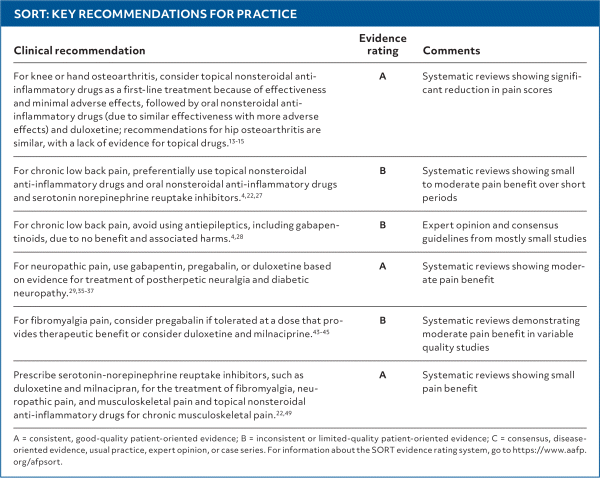
| Clinical recommendation | Evidence rating | Comments |
|---|---|---|
| For knee or hand osteoarthritis, consider topical nonsteroidal anti-inflammatory drugs as a first-line treatment because of effectiveness and minimal adverse effects, followed by oral nonsteroidal anti-inflammatory drugs (due to similar effectiveness with more adverse effects) and duloxetine; recommendations for hip osteoarthritis are similar, with a lack of evidence for topical drugs.13–15 | A | Systematic reviews showing significant reduction in pain scores |
| For chronic low back pain, preferentially use topical nonsteroidal anti-inflammatory drugs and oral nonsteroidal anti-inflammatory drugs and serotonin norepinephrine reuptake inhibitors.4,22,27 | B | Systematic reviews showing small to moderate pain benefit over short periods |
| For chronic low back pain, avoid using antiepileptics, including gabapentinoids, due to no benefit and associated harms.4,28 | B | Expert opinion and consensus guidelines from mostly small studies |
| For neuropathic pain, use gabapentin, pregabalin, or duloxetine based on evidence for treatment of postherpetic neuralgia and diabetic neuropathy.29,35–37 | A | Systematic reviews showing moderate pain benefit |
| For fibromyalgia pain, consider pregabalin if tolerated at a dose that provides therapeutic benefit or consider duloxetine and milnaciprine.43–45 | B | Systematic reviews demonstrating moderate pain benefit in variable quality studies |
| Prescribe serotonin-norepinephrine reuptake inhibitors, such as duloxetine and milnacipran, for the treatment of fibromyalgia, neuropathic pain, and musculoskeletal pain and topical nonsteroidal anti-inflammatory drugs for chronic musculoskeletal pain.22,49 | A | Systematic reviews showing small pain benefit |
A = consistent, good-quality patient-oriented evidence; B = inconsistent or limited-quality patient-oriented evidence; C = consensus, disease-oriented evidence, usual practice, expert opinion, or case series. For information about the SORT evidence rating system, go to https://www.aafp.org/afpsort.
Read the full article
Get immediate access, anytime, anywhere.
Choose a single article, issue, or full-access subscription.
Earn up to 14 CME credits per issue.
