Provision of Quality Contraceptive Services: Updates From National Guidelines

David A. Klein, MD, MPH
Chloe E. Forlini, MD
Patsy Kremsreiter, MD

American Family Physician. 2025;112(2):176-186.

Author disclosure: Dr. Klein has no financial disclosures but served as a subject matter expert for the Centers for Disease Control and Prevention in the development of the 2024 US Medical Eligibility Criteria for Contraceptive Use and US Selected Practice Recommendations for Contraceptive Use. Drs. Forlini and Kremsreiter have no relevant financial relationships.

This clinical content conforms to AAFP criteria for CME.

Published online July 15, 2025.

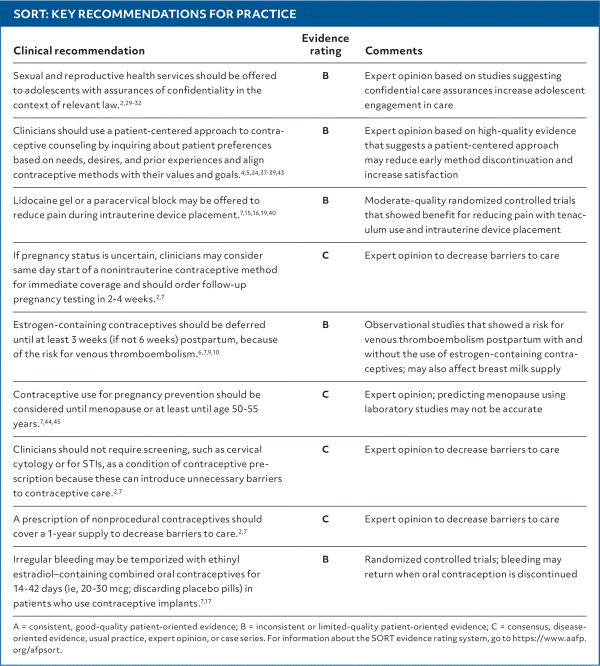
In 2024, the Centers for Disease Control and Prevention and the US Department of Health and Human Services Office of Population Affairs updated national guidelines on provision of quality contraceptive services and sexual and reproductive health care. New recommendations systematically promote care that is person-centered and accessible for all people. Contraceptive services may be addressed through a stepwise approach in which the clinician asks about an individual’s contraceptive preferences based on their needs, desires, and prior experiences and then collaboratively works with the patient to align methods with their values and preferences. The clinician should discuss all methods that can be used safely based on medical eligibility criteria regardless of method availability and defer the decision to the patient. Physical assessment includes in-office or self-reported blood pressure measurement before starting an estrogen-containing contraceptive or pelvic examination when inserting an intrauterine device. If it is reasonably certain that the patient is not pregnant, any contraceptive may be started immediately; otherwise, a nonintrauterine bridge method may be initiated with follow-up pregnancy testing. To reduce barriers, a 1-year supply of short-acting or injectable contraceptives may be prescribed, and telehealth may be incorporated. The Centers for Disease Control and Prevention supports advance provision of emergency contraceptives. New recommendations include pain control during intrauterine device insertion, management of bleeding irregularities related to contraception, updated eligibility criteria (eg, venous thromboembolism, kidney disease), and new methods (eg, progestin-only formulations). Expanded sexual and reproductive health care services, such as screening for cervical cancer or sexually transmitted infections, should be offered, but patient acceptance of these services is not required during contraception management.

DAVID A. KLEIN, MD, MPH, is a professor in the Department of Family Medicine and Department of Pediatrics at the Uniformed Services University of the Health Sciences, Bethesda, Maryland, and program director of the Family Medicine Residency at David Grant Medical Center, Travis Air Force Base, California.

CHLOE E. FORLINI, MD, is an assistant professor in the Department of Family Medicine at the Uniformed Services University of the Health Sciences, and a faculty physician in the Family Medicine Residency at David Grant Medical Center.

PATSY KREMSREITER, MD, is a PGY3 in the Family Medicine Residency at David Grant Medical Center.

Published online July 15, 2025.

Address correspondence to David A. Klein, MD, MPH, at david.a.klein26.mil@health.mil.

Author disclosure: Dr. Klein has no financial disclosures but served as a subject matter expert for the Centers for Disease Control and Prevention in the development of the 2024 US Medical Eligibility Criteria for Contraceptive Use and US Selected Practice Recommendations for Contraceptive Use. Drs. Forlini and Kremsreiter have no relevant financial relationships.

  1. 1.United Nations. Joint UN statement calling for sexual and reproductive health and rights for all. July 11, 2024. Accessed January 19, 2025. https://cdn.who.int/media/docs/default-source/reproductive-health/joint-un-statement-calling-for-srhr-for-all.pdf?sfvrsn=3442c0d1_10
  2. 2.Romer SE, Blum J, Borrero S, et al. Providing quality family planning services in the United States: recommendations of the U.S. Office of Population Affairs (revised 2024). Am J Prev Med. 2024;67(6S):S41-S86.
  3. 3.U.S. Department of Health and Human Services. Healthy People 2030. Family Planning. Accessed January 19, 2025. https://odphp.health.gov/healthypeople/objectives-and-data/browse-objectives/family-planning
  4. 4.Blum J, Magee MM, Banikya M, et al. Equity in providing quality family planning services in the United States: recommendations of the U.S. Office of Population Affairs (revised 2024). Am J Prev Med. 2024;67(6S):S3-S9.
  5. 5.Nelson HD, Cantor A, Jungbauer RM, et al. Effectiveness and harms of contraceptive counseling and provision interventions for women: a systematic review and meta-anlysis. Ann Intern Med. 2022;175(7):980-993.
  6. 6.Nguyen AT, Curtis KM, Tepper NK, et al.; Contributors. U.S. medical eligibility criteria for contraceptive use, 2024. MMWR Recomm Rep. 2024;73(4):1-126.
  7. 7.Curtis KM, Nguyen AT, Tepper NK, et al.; Contributors. U.S. selected practice recommendations for contraceptive use, 2024. MMWR Recomm Rep. 2024;73(3):1-77.
  8. 8.Cockrum RH, Soo J, Ham SA, et al. Association of progestogens and venous thromboembolism among women of reproductive age. Obstet Gynecol. 2022;140(3):477-487.
  9. 9.Petersen JF, Bergholt T, Nielsen AK, et al. Combined hormonal contraception and risk of venous thromboembolism within the first year following pregnancy. Danish nationwide historical cohort 1995–2009. Thromb Haemost. 2014;112(1):73-78.
  10. 10.Kamel H, Navi BB, Sriram N, et al. Risk of a thrombotic event after the 6-week postpartum period. N Engl J Med. 2014;370(14):1307-1315.
  11. 11.Yonis HGH, Mørch LS, Løkkegaard E, et al. Contemporary hormonal contraception and risk of venous thromboembolism. JAMA. 2025;333(15):1358-1361.
  12. 12.Tepper NK, Nguyen AT, Curtis KM, et al. Thrombosis risk with the use of hormonal contraception among women with thrombophilia: an updated systematic review [published online May 9]. Contraception. 2025; Accessed May 27, 2025. https://www.contraceptionjournal.org/article/S0010-7824(25)00134-9/abstract
  13. 13.Taub RL, Ellis SA, Neal-Perry G, et al. The effect of testosterone on ovulatory function in transmasculine individuals. Am J Obstet Gynecol. 2020;223(2):229.e1-229.e8.
  14. 14.Bahamondes MV, Espejo-Arce X, Bahamondes L. Effect of vaginal administration of misoprostol before intrauterine contraceptive insertion following previous insertion failure: a double blind RCT. Hum Reprod. 2015;30(8):1861-1866.
  15. 15.Rapkin RB, Achilles SL, Schwarz EB, et al. Self-administered lidocaine gel for intrauterine device insertion in nulliparous women: a randomized controlled trial. Obstet Gynecol. 2016;128(3):621-628.
  16. 16.Akers AY, Steinway C, Sonalkar S, et al. Reducing pain during intrauterine device insertion: a randomized controlled trial in adolescents and young women. Obstet Gynecol. 2017;130(4):795-802.
  17. 17.Guiahi M, McBride M, Sheeder J, et al. Short-term treatment of bothersome bleeding for etonogestrel implant users using a 14-day oral contraceptive pill regimen: a randomized controlled trial. Obstet Gynecol. 2015;126(3):508-513.
  18. 18.Kennedy CE, Yeh PT, Gaffield ML, et al. Self-administration of injectable contraception: a systematic review and meta-analysis. BMJ Glob Health. 2019;4(2):e001350.
  19. 19.Bayer LL, Ahuja S, Allen RH, et al. Best practices for reducing pain associated with intrauterine device placement. Am J Obstet Gynecol. 2025;232(5):409-421.
  20. 20.Vohra D, Manzer JL, Neelan T, et al. Screening for the need and desire for sexual and reproductive health services: a systematic review. Am J Prev Med. 2024;67(6S):S10-S21.
  21. 21.Wingo E, Dehlendorf C. Lack of pregnancy intention or interest in pregnancy prevention now? How best to screen for desire for contraceptive care. Contraception. 2024;135:110303.
  22. 22.Klein DA, Arnold JJ, Reese ES. Provision of contraception: key recommendations from the CDC. Am Fam Physician. 2015;91(9):625-633.
  23. 23.Klein DA, Williamson RL, Yocom EA. Patient-centered contraceptive counseling: a reproductive justice–informed shift to shared decision-making. Am Fam Physician. 2024;110(4):428-431.
  24. 24.Manzer JL, Carrillo-Perez A, Tingey L, et al. Client perspectives on contraceptive care: a systematic review. Am J Prev Med. 2024;67(6S):S22-S31.
  25. 25.English W, Gott M, Robinson J. The meaning of rapport for patients, families, and healthcare professionals: a scoping review. Patient Educ Couns. 2022;105(1):2-14.
  26. 26.Starrs AM, Ezeh AC, Barker G, et al. Accelerate progress-sexual and reproductive health and rights for all: report of the Guttmacher-Lancet Commission. Lancet. 2018;391(10140):2642-2692.
  27. 27.Altarum Institute. Inclusive sexual health services: practical guidelines for providers & clinics. Washington, DC; 2023. Accessed January 19, 2025. https://www.nationalcoalitionforsexualhealth.org/tools/for-healthcare-providers/inclusive-care-guide/
  28. 28.Cason P, Pritzker J. Person-centered reproductive health conversations. In: Cason P, Cwiak C, Edelman A, et al., eds. Contraceptive Technology. 22nd ed. Jones & Bartlett Learning; 2023: 94–113.
  29. 29.American College of Obstetricians and Gynecologists’ Committee on Health Care for Underserved Women; Contraceptive Equity Expert Work Group. Committee on Ethics. Patient-centered contraceptive counseling: ACOG Committee statement number 1. Obstet Gynecol. 2022;139(2):350-353.
  30. 30.Chung RJ, Lee JB, Hackell JM, et al.; Committee on Adolescence. Committee on Practice & Ambulatory Medicine. Confidentiality in the care of adolescents: policy statement. Pediatrics. 2024;153(5):e2024066326.
  31. 31.Sharko M, Jameson R, Ancker JS, et al. State-by-state variability in adolescent privacy laws. Pediatrics. 2022;149(6):e2021053458.
  32. 32.Brittain AW, Williams JR, Zapata LB, et al. Confidentiality in family planning services for young people: a systematic review. Am J Prev Med. 2015;49(2 suppl 1):S85-S92.
  33. 33.Gomez AM, Bennett AH, Arcara J, et al. Estimates of use of preferred contraceptive method in the United States: a population-based study. Lancet Reg Health Am. 2024;30:100662.
  34. 34.Wang S, Minguez-Alarcon L, Capotosto MP, et al. Pregnancy intention, changes in pregnancy intention, and pregnancy incidence among female nurses in North America. JAMA Netw Open. 2023;6(5):e2311301.
  35. 35.Yeh PT, Kautsar H, Kennedy CE, et al. Values and preferences for contra ception: a global systematic review. Contraception. 2022;111:3-21.
  36. 36.Karlin J, Newmark RL, Oberman N, et al. A scoping review of patient-centered perinatal contraceptive counseling. Matern Child Health J. 2024;28(9):1454-1484.
  37. 37.Manzer JL, Ouellette L, Tingey L, et al. Provider perspectives on contraceptive care: a systematic review. Am J Prev Med. 2024;67(6S):S32-S40.
  38. 38.American College of Obstetricians and Gynecologists. Committee opinion no. 710: counseling adolescents about contraception. Obstet Gynecol. 2017;130(2):e74-e80.
  39. 39.Dehlendorf C, Grumbach K, Schmittdiel JA, et al. Shared decision making in contraceptive counseling. Contraception. 2017;95(5):452-455.
  40. 40.Pain management for in-office uterine and cervical procedures [published online May 15, 2025]. Obstet Gynecol. Accessed May 27, 2025. https://journals.lww.com/greenjournal/fulltext/9900/pain_management_for_in_office_uterine_and_cervical.1270.aspx
  41. 41.Zwayne N, Lyman E, Ebersole A, et al. Elise Boos and Antoinette Nguyen on behalf of the Clinical Affairs Committee; Monica Skoko Rodríguez. Society of Family Planning Committee Statement: Contraception and body weight. Contraception. 2025;141:110725.
  42. 42.Torres E, Carter G, Gero A, et al. Frequency of same-day contraceptive initiation, recent unprotected intercourse, and pregnancy risk: a prospective cohort study of multiple contraceptive methods. Am J Obstet Gynecol. 2024;230(6):661.e1-661.e7.
  43. 43.Dehlendorf C, Henderson JT, Vittinghoff E, et al. Association of the quality of interpersonal care during family planning counseling with contraceptive use. Am J Obstet Gynecol. 2016;215(1):78.e1-78.e9.
  44. 44.Davis SR, Pinkerton J, Santoro N, et al. Menopause-biology, consequences, supportive care, and therapeutic options. Cell. 2023;186(19):4038-4058.
  45. 45.Voedisch AJ, Ariel D. Perimenopausal contraception. Curr Opin Obstet Gynecol. 2020;32(6):399-407.
  46. 46.Cheung-Jones N. Contraceptive pearl: considerations in contraception during perimenopause. March 19, 2024. Accessed May 27, 2025. https://www.reproductiveaccess.org/resource/contraceptive-pearl-considerations-in-contraception-during-perimenopause/
  47. 47.World Health Organization. WHO consolidated guideline on self-care interventions for health: sexual and reproductive health and rights. World Health Organization; 2019. Accessed January 19, 2025. https://www.ncbi.nlm.nih.gov/books/NBK544164/
  48. 48.Brown C, Neerland CE, Weinfurter EV, et al. The provision of abortion care via telehealth in the United States: a rapid review. J Midwifery Womens Health. 2023;68(6):744-758.
  49. 49.Snyder EM, Curtis KM, Nguyen AT, et al. Hormonal contraception after use of ulipristal acetate as emergency contraception: a systematic review [published online April 3, 2025]. Contraception. Accessed May 27, 2025. https://www.contraceptionjournal.org/article/S0010-7824(25)00089-7/abstract
  50. 50.Paradise SL, Landis CA, Klein DA. Evidence-based contraception: common questions and answers. Am Fam Physician. 2022;106(3):251-259.
  51. 51.Hidalgo M, Bahamondes L, Perrotti M, et al. Bleeding patterns and clinical performance of the levonorgestrel-releasing intrauterine system (Mirena) up to two years. Contraception. 2002;65(2):129-132.
  52. 52.Oderkerk TJ, van der Heijden P, Tibosch RMG, et al. Treatment of irregular bleeding with oestradiol during long-term levonorgestrel-releasing intrauterine system (LNG-IUS) use. Front Womens Health. 2019;4:1-3.
  53. 53.Mansour D, Korver T, Marintcheva-Petrova M, et al. The effects of Implanon on menstrual bleeding patterns. Eur J Contracept Reprod Health Care. 2008;13(suppl 1):13-28.
  54. 54.Arias RD, Jain JK, Brucker C, et al. Changes in bleeding patterns with depot medroxyprogesterone acetate subcutaneous injection 104 mg. Contraception. 2006;74(3):234-238.
  55. 55.American College of Obstetricians and Gynecologists’ Committee on Clinical Consensus–Gynecology. General approaches to medical management of menstrual suppression: ACOG clinical consensus no. 3. Obstet Gynecol. 2022;140(3):528-541.
  56. 56.Schrager S, Fox K, Lee R. Abnormal uterine bleeding associated with hormonal contraception. Am Fam Physician. 2024;109(2):161-166.
  57. 57.Workowski KA, Bachmann LH, Chan PA, et al. Sexually transmitted infections treatment guidelines, 2021. MMWR Recomm Rep. 2021;70(4):1-187.

Copyright © 2026 by the American Academy of Family Physicians.

This content is owned by the AAFP. A person viewing it online may make one printout of the material and may use that printout only for his or her personal, non-commercial reference. This material may not otherwise be downloaded, copied, printed, stored, transmitted or reproduced in any medium, whether now known or later invented, except as authorized in writing by the AAFP. See permissions for copyright questions and/or permission requests.