Seborrheic Dermatitis: Diagnosis and Treatment

Nicholas M. LeFevre, MD, MSAM
Kara Braudis, MD
Lawrence S. Feigenbaum, MD

American Family Physician. 2025;112(2):166-173.

Author disclosure: No relevant financial relationships.

This clinical content conforms to AAFP criteria for CME.

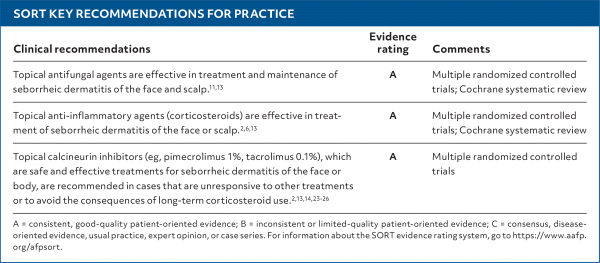
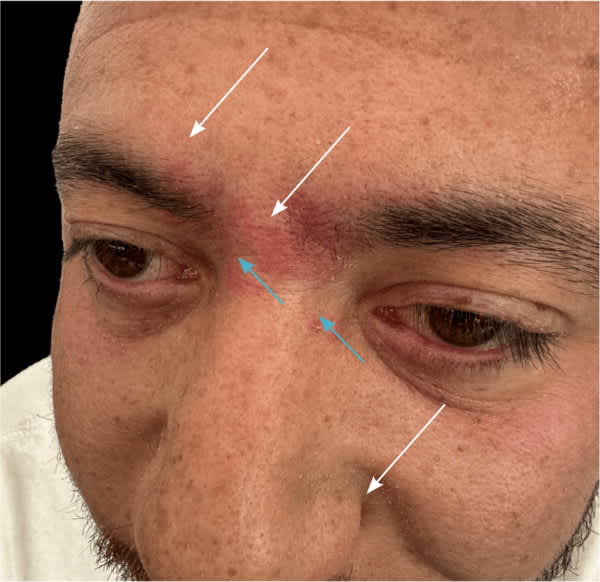
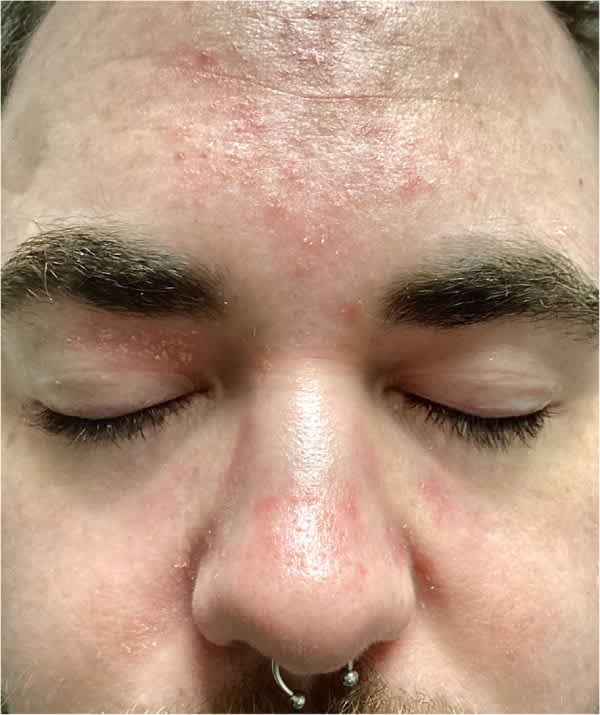
Seborrheic dermatitis is a common, chronic relapsing skin condition that predominantly affects areas of the body that are rich in sebaceous glands. Clinically, seborrheic dermatitis presents as symmetric, poorly defined erythematous patches with yellow, oily scales and fine, superficial desquamation (flaking). In people who have darker skin, erythema may be less apparent, and postinflammatory pigmentary changes might be a presenting sign with hypopigmented, slightly scaly areas. Seborrheic dermatitis of the scalp can be effectively treated with topical over-the-counter antifungal shampoos and prescription-strength antifungal or corticosteroid solutions, foams, or oils. Thick, scaly areas can be treated with keratolytic shampoos and lotions. Seborrheic dermatitis of the face and body can be treated with over-the-counter and prescription-strength antifungal creams, over-the-counter and prescription-strength corticosteroid creams and ointments, and calcineurin inhibitor cream or ointment. Neonatal seborrheic dermatitis is common and typically self-resolves by 6 months of age. Mild cases of the scalp (cradle cap) may be treated conservatively with mineral oil to loosen scale and gentle combing. More severe cases may overlap with atopic dermatitis and can be treated with topical antifungals or topical corticosteroids.

NICHOLAS M. LEFEVRE, MD, MSAM, FAAFP, is an associate professor in the Department of Family Medicine at the University of Missouri Columbia School of Medicine, Columbia.

KARA BRAUDIS, MD, FAAD, is an associate professor in the Department of Dermatology at the University of Missouri Columbia School of Medicine, Columbia.

LAWRENCE S. FEIGENBAUM, MD, FAAD is a dermatologist at Mid-County Dermatology in St. Louis, Missouri, and the president of the Missouri Dermatological Society.

Address correspondence to Nicholas M. LeFevre, MD, MSAM, FAAFP, at Nlefevre@health.missouri.edu.

Author disclosure: No relevant financial relationships.

  1. 1.Naldi L, Rebora A. Clinical practice. Seborrheic dermatitis. N Engl J Med. 2009;360(4):387-396.
  2. 2.Kastarinen H, Oksanen T, Okokon EO, et al. Topical anti-inflammatory agents for seborrhoeic dermatitis of the face or scalp. Cochrane Database Syst Rev. 2014(5):CD009446.
  3. 3.Niemann N, Billnitzer A, Jankovic J. Parkinson’s disease and skin. Parkinsonism Relat Disord. 2021;82:61-76.
  4. 4.Wikramanayake TC, Borda LJ, Miteva M, et al. Seborrheic dermatitis— looking beyond Malassezia. Exp Dermatol. 2019;28(9):991-1001.
  5. 5.Lim HW, Collins SAB, Resneck JS, et al. The burden of skin disease in the United States. J Am Acad Dermatol. 2017;76(5):958-972.e2.
  6. 6.Victoire A, Magin P, Coughlan J, et al. Interventions for infantile seborrhoeic dermatitis (including cradle cap). Cochrane Database Syst Rev. 2019(3):CD011380.
  7. 7.Barac A, Pekmezovic M, Milobratovic D, et al. Presence, species distribution, and density of Malassezia yeast in patients with seborrhoeic dermatitis—a community-based case-control study and review of literature. Mycoses. 2015;58(2):69-75.
  8. 8.Schwartz JR, Messenger AG, Tosti A, et al. A comprehensive pathophysiology of dandruff and seborrheic dermatitis—towards a more precise definition of scalp health. Acta Derm Venereol. 2013;93(2):131-137.
  9. 9.Jackson JM, Alexis A, Zirwas M, et al. Unmet needs for patients with seborrheic dermatitis. J Am Acad Dermatol. 2024;90(3):597-604.
  10. 10.Bolognia JL, Schaffer JV, Cerroni L. Other eczematous eruptions. In: Callen JP, Cowen EW, Duncan MO, et al., eds. Dermatology. Volume 1. 5th edition. Elsevier; 2024: 232–245.
  11. 11.Okokon EO, Verbeek JH, Ruotsalainen JH, et al. Topical antifungals for seborrhoeic dermatitis. Cochrane Database Syst Rev. 2015(5):CD008138.
  12. 12.Borda LJ, Perper M, Keri JE. Treatment of seborrheic dermatitis: a comprehensive review. J Dermatolog Treat. 2019;30(2):158-169.
  13. 13.Gupta AK, Versteeg SG. Topical treatment of facial seborrheic dermatitis: a systematic review. Am J Clin Dermatol. 2017;18(2):193-213.
  14. 14.Azizzadeh M, Pahlevan D, Bagheri B. The efficacy and safety of pimecrolimus 1% cream vs. sertaconazole 2% cream in the treatment of patients with facial seborrhoeic dermatitis: a randomized blinded trial. Clin Exp Dermatol. 2022;47(5):926-931.
  15. 15.Blauvelt A, Draelos ZD, Stein Gold L, et al. Roflumilast foam 0.3% for adolescent and adult patients with seborrheic dermatitis: a randomized, double-blinded, vehicle-controlled, phase 3 trial. J Am Acad Dermatol. 2024;90(5):986-993.
  16. 16.Stacey SK, McEleney M. Topical corticosteroids: choice and application. Am Fam Physician. 2021;103(6):337-343.
  17. 17.Kyle AA, Dahl MV. Topical therapy for fungal infections. Am J Clin Dermatol. 2004;5(6):443-451.
  18. 18.Vennewald I, Klemm E. Otomycosis: diagnosis and treatment. Clin Dermatol. 2010;28(2):202-211.
  19. 19.Massiot P, Reygagne P, Chagnoleau C, et al. Maintenance effect of a once-weekly regimen of a selenium disulfide–based shampoo in moderate-to-severe scalp seborrheic dermatitis after initial treatment with topical corticosteroid/salicylic acid. Eur J Dermatol. 2023;33(s1):13-18.
  20. 20.Barnes L, Kaya G, Rollason V. Topical corticosteroid-induced skin atrophy: a comprehensive review. Drug Saf. 2015;38(5):493-509.
  21. 21.Falusi OO. Seborrhea [editorial]. Pediatr Rev. 2019;40(2):93-95.
  22. 22.Gupta AK, Richardson M, Paquet M. Systematic review of oral treatments for seborrheic dermatitis. J Eur Acad Dermatol Venereol. 2014;28(1):16-26.
  23. 23.Cook BA, Warshaw EM. Role of topical calcineurin inhibitors in the treatment of seborrheic dermatitis: a review of pathophysiology, safety, and efficacy. Am J Clin Dermatol. 2009;10(2):103-118.
  24. 24.Koc E, Arca E, Kose O, et al. An open, randomized, prospective, comparative study of topical pimecrolimus 1% cream and topical ketoconazole 2% cream in the treatment of seborrheic dermatitis. J Dermatolog Treat. 2009;20(1):4-9.
  25. 25.Kim TW, Mun JH, Jwa SW, et al. Proactive treatment of adult facial seborrhoeic dermatitis with 0.1% tacrolimus ointment: randomized, double-blind, vehicle-controlled, multi-centre trial. Acta Derm Venereol. 2013;93(5):557-561.
  26. 26.Joly P, Tejedor I, Tetart F, et al. Tacrolimus 0.1% versus ciclopiroxolamine 1% for maintenance therapy in patients with severe facial seborrheic dermatitis: a multicenter, double-blind, randomized controlled study. J Am Acad Dermatol. 2021;84(5):1278-1284.
  27. 27.Bikowski J. Facial seborrheic dermatitis: a report on current status and therapeutic horizons. J Drugs Dermatol. 2009;8(2):125-133.
  28. 28.de Souza Leão Kamamoto C, Sanudo A, Hassun KM, et al. Low-dose oral isotretinoin for moderate to severe seborrhea and seborrheic dermatitis: a randomized comparative trial. Int J Dermatol. 2017;56(1):80-85.
  29. 29.. 13th edition. Elsevier; 2020: 125–138.
  30. 30.Kaushik V, Malik T, Saeed SR. Interventions for acute otitis externa. Cochrane Database Syst Rev. 2010(1):CD004740.
  31. 31.Rau A, Silva GS, Margolis DJ, et al. Adult and infantile seborrheic dermatitis: update on current state of evidence and potential research frontiers. Int J Dermatol. 2024;63(11):1495-1502.
  32. 32.Wananukul S, Chatproedprai S, Charutragulchai W. Randomized, double-blind, split-side comparison study of moisturizer containing licochalcone vs. 1% hydrocortisone in the treatment of infantile seborrhoeic dermatitis. J Eur Acad Dermatol Venereol. 2012;26(7):894-897.
  33. 33.Elgash M, Dlova N, Ogunleye T, et al. Seborrheic dermatitis in skin of color: clinical considerations. J Drugs Dermatol. 2019;18(1):24-27.
  34. 34.Wu TF, Frommeyer TC, Rohan CA, et al. Uncommon petaloid form of seborrheic dermatitis seen in Fitzpatrick skin types V–VI. J Clin Investig Dermatol. 2023;11(1) ): 10.13188.
  35. 35.Chang CH, Stein SL. Malassezia-associated skin diseases in the pediatric population. Pediatr Dermatol. 2024;41(5):769-779.
  36. 36.Gary G. Optimizing treatment approaches in seborrheic dermatitis. J Clin Aesthet Dermatol. 2013;6(2):44-49.
  37. 37.High WA, Pandya AG. Pilot trial of 1% pimecrolimus cream in the treatment of seborrheic dermatitis in African American adults with associated hypopigmentation. J Am Acad Dermatol. 2006;54(6):1083-1088.
  38. 38.Clark GW, Pope SM, Jaboori KA. Diagnosis and treatment of seborrheic dermatitis. Am Fam Physician. 2015;91(3):185-190.
  39. 39.Schwartz RA, Janusz CA, Janniger CK. Seborrheic dermatitis: an overview. Am Fam Physician. 2006;74(1):125-130.
  40. 40.Johnson BA, Nunley JR. Treatment of seborrheic dermatitis. Am Fam Physician. 2000;61(9):2703-2710.

Copyright © 2026 by the American Academy of Family Physicians.

This content is owned by the AAFP. A person viewing it online may make one printout of the material and may use that printout only for his or her personal, non-commercial reference. This material may not otherwise be downloaded, copied, printed, stored, transmitted or reproduced in any medium, whether now known or later invented, except as authorized in writing by the AAFP. See permissions for copyright questions and/or permission requests.