Michael Bybel, DO
Catherine A. Delaney, MD
Katie Coble, MD

American Family Physician. 2025;112(2):153-161.

Author disclosure: No relevant financial relationships.

This clinical content conforms to AAFP criteria for CME.

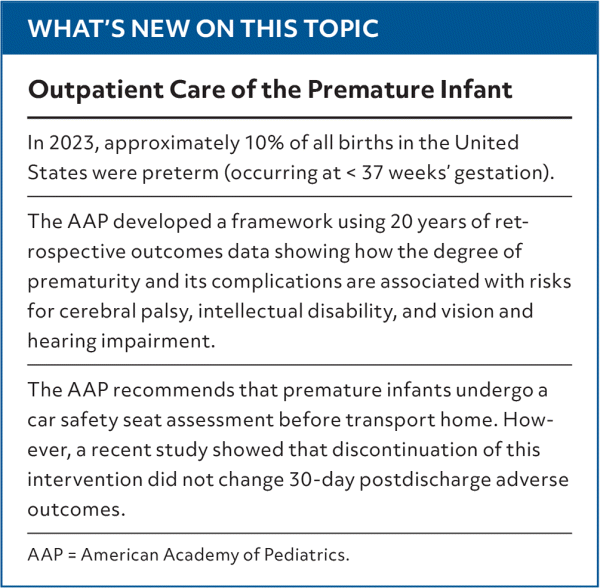
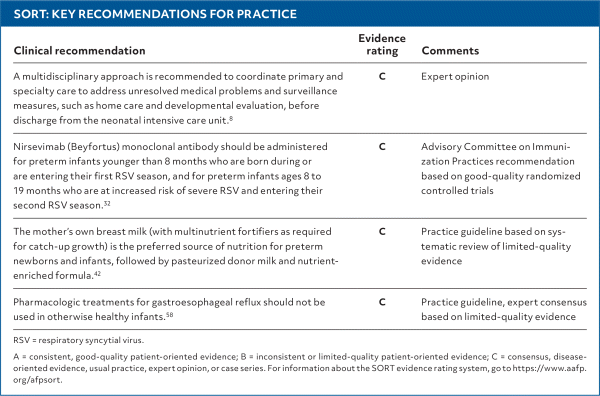
Family physicians oversee the complex care of premature infants after discharge from the neonatal intensive care unit, taking into consideration the degree of prematurity and unique complications that can occur. Early family engagement is critical for these infants. Before hospital discharge, at least two caregivers should demonstrate the ability to appropriately feed and provide necessary care for the infant. Premature infants are at risk of hypoxic-ischemic encephalopathy, periventricular leukomalacia, retinopathy of prematurity, bronchopulmonary dysplasia, necrotizing enterocolitis, and intraventricular hemorrhage. Routine vaccination is recommended. This includes newer prevention options for respiratory syncytial virus (eg, nirsevimab [Beyfortus]) and the prenatal vaccine Abrysvo. Growth of premature infants is monitored using corrected age and may improve with use of breast milk fortifiers or enriched formulas. Premature infants are also at risk for neurodevelopmental disabilities, including cerebral palsy, intellectual disability, and vision and hearing impairment. Developmental screening using corrected age is recommended at ages 9, 18, and 30 months, with screening for autism spectrum disorder at 18 and 24 months.

MICHAEL BYBEL, DO, FAAFP, is director of the Family Medicine Obstetrics Fellowship at Carl R. Darnall Army Medical Center, Fort Hood, Texas, and an assistant professor in the Department of Family Medicine at the Uniformed Services University of the Health Sciences School of Medicine, Bethesda, Maryland.

CATHERINE A. DELANEY, MD, FAAFP, is an associate program director and a faculty member at the Martin Army Community Hospital Family Medicine Residency, Fort Benning, Georgia.

KATIE COBLE, MD, is core faculty at the Eglin Family Medicine Residency, Eglin Air Force Base, Florida.

Address correspondence to Michael Bybel, DO, FAAFP, at mike.bybel@gmail.com.

Author disclosure: No relevant financial relationships.

  1. 1.Hamilton BE, Martin JA, Osterman MJ; National Vital Statistics System. Births: provisional data for 2023. Report no. 35. Vital Statistics Rapid Release. April 2024. Accessed May 4, 2024. https://www.cdc.gov/nchs/data/vsrr/vsrr035.pdf
  2. 2.World Health Organization. Preterm birth. May 10, 2023. Accessed July 16, 2025. https://www.who.int/news-room/fact-sheets/detail/preterm-birth
  3. 3.Gauer RL, Burket J, Horowitz E. Common questions about outpatient care of premature infants. Am Fam Physician. 2014;90(4):244-251.
  4. 4.Davis BE, Leppert MO, German K, et al.; Council on Children With Disabilities, Committee on Fetus and Newborn. Primary care framework to monitor preterm infants for neurodevelopmental outcomes in early childhood. Pediatrics. 2023;152(1):e2023062511.
  5. 5.Manuck TA, Rice MM, Bailit JL, et al.; Eunice Kennedy Shriver National Institute of Child Health and Human Development Maternal-Fetal Medicine Units Network. Preterm neonatal morbidity and mortality by gestational age: a contemporary cohort. Am J Obstet Gynecol. 2016;215(1):103.e1-103.e14.
  6. 6.Synnes A, Hicks M. Neurodevelopmental outcomes of preterm children at school age and beyond. Clin Perinatol. 2018;45(3):393-408.
  7. 7.Hollanders JJ, Schaëfer N, van der Pal SM, et al.; Dutch POPS-19 Collaborative Study Group. Long-term neurodevelopmental and functional outcomes of infants born very preterm and/or with a very low birth weight. Neonatology. 2019;115(4):310-319.
  8. 8.American Academy of Pediatrics Committee on Fetus and Newborn. Hospital discharge of the high-risk neonate. Pediatrics. 2008;122(5):1119-1126.
  9. 9.Vollrath K, Rosenberg A, Gabrielski L, et al. NICU discharge feeding bundle improves accuracy of postdischarge feeding preparation and potentially prevents readmission. Adv Neonatal Care. 2019;19(2):90-96.
  10. 10.Bull MJ, Engle WA; Committee on Injury, Violence, and Poison Prevention; Committee on Fetus and Newborn; American Academy of Pediatrics. Safe transportation of preterm and low birth weight infants at hospital discharge. Pediatrics. 2009;123(5):1424-1429.
  11. 11.Braun D, Kaempf JW, Ho NJ, et al. Discontinuation of car seat tolerance screening and postdischarge adverse outcomes in infants born preterm. J Pediatr. 2023;261:113577.
  12. 12.Nemerofsky SL, Nitka SA. Care of the late preterm and early term infant. In: Campbell DE, ed. Neonatology for Primary Care. 2nd ed. American Academy of Pediatrics; 2020.
  13. 13.Miller AN, Shepherd EG, El-Ferzli G. Multidisciplinary broncho-pulmonary dysplasia care. Expert Rev Respir Med. 2023;17(11):989-1002.
  14. 14.Collaco JM, McGrath-Morrow SA. Long-term outcomes of infants with severe BPD. Semin Perinatol. 2024;48(2):151891.
  15. 15.Harris C, Greenough A. The prevention and management strategies for neonatal chronic lung disease. Expert Rev Respir Med. 2023;17(2):143-154.
  16. 16.World Health Organization. WHO recommendations for care of the preterm or low-birth-weight infant. 2022. Accessed April 15, 2025. https://iris.who.int/bitstream/handle/10665/363697/9789240058262-eng.pdf
  17. 17.Morton SU, Smith VC. Treatment options for apnoea of prematurity. Arch Dis Child Fetal Neonatal Ed. 2016;101(4):F352-F356.
  18. 18.Lodha A, Seshia M, McMillan DD, et al.; Canadian Neonatal Network. Association of early caffeine administration and neonatal outcomes in very preterm neonates. JAMA Pediatr. 2015;169(1):33-38.
  19. 19.Committee on Fetus and Newborn, American Academy of Pediatrics. Apnea, sudden infant death syndrome, and home monitoring. Pediatrics. 2003;111(4 pt 1):914-917.
  20. 20.Guillot M, Chau V, Lemyre B. Routine imaging of the preterm neonatal brain. Paediatr Child Health. 2020;25(4):249-262.
  21. 21.Pascal A, de Bruyn N, Naulaers G, et al. The impact of intraventricular hemorrhage and periventricular leukomalacia on mortality and neurodevelopmental outcome in very preterm and very low birthweight infants: a prospective population-based cohort study. J Pediatr. 2023;262:113600.
  22. 22.Kolon TF, Herndon CDA, Baker LA, et al.; American Urological Association. Evaluation and treatment of cryptorchidism: AUA guideline. J Urol. 2014;192(2):337-345.
  23. 23.Jewell VC, Northrop-Clewes CA, Tubman R, et al. Nutritional factors and visual function in premature infants. Proc Nutr Soc. 2001;60(2):171-178.
  24. 24.Fierson WM, et al.; American Academy of Pediatrics Section on Ophthalmology; American Academy of Ophthalmology; American Association for Pediatric Opthalmology and Strabismus. Screening examination of premature infants for retinopathy of prematurity. Pediatrics. 2018;142(6):e20183061.
  25. 25.Yee WH, Soraisham AS, Shah VS, et al.; Canadian Neonatal Network. Incidence and timing of presentation of necrotizing enterocolitis in preterm infants. Pediatrics. 2012;129(2):e298-e304.
  26. 26.Bell MJ, Ternberg JL, Feigin RD, et al. Neonatal necrotizing enterocolitis. Therapeutic decisions based upon clinical staging. Ann Surg. 1978;187(1):1-7.
  27. 27.Jones IH, Hall NJ. Contemporary outcomes for infants with necrotizing enterocolitis–a systematic review. J Pediatr. 2020;220:86-92.e3.
  28. 28.Khan FA, Jancelewicz T, Kieran K, et al.; Committee on Fetus and Newborn, Section on Surgery, Section on Urology. Assessment and management of inguinal hernias in children. Pediatrics. 2023;152(1):e2023062510.
  29. 29.Wilkins D, Wählby H, amrén U, Chang Y, et al. RSV neutralizing antibodies following nirsevimab and palivizumab dosing. Pediatrics. 2024;154(5):e2024067174.
  30. 30.Cortese MM, Parashar UD; Centers for Disease Control and Prevention. Prevention of rotavirus gastroenteritis among infants and children: recommendations of the Advisory Committee on Immunization Practices (ACIP). MMWR Recomm Rep. 2009;58(RR-02):1-25.
  31. 31.Schillie S, Vellozzi C, Reingold A, et al. Prevention of hepatitis B virus infection in the United States: recommendations of the Advisory Committee on Immunization Practices. MMWR Recomm Rep. 2018;67(1):1-31.
  32. 32.Jones JM, Fleming-Dutra KE, Prill MM, et al. Use of nirsevimab for the prevention of respiratory syncytial virus disease among infants and young children: recommendations of the Advisory Committee on Immunization Practices–United States, 2023. MMWR Morb Mortal Wkly Rep. 2023;72(34):920-925.
  33. 33.Fleming-Dutra KE, Jones JM, Roper LE, et al. Use of the Pfizer respiratory syncytial virus vaccine during pregnancy for the prevention of respiratory syncytial virus-associated lower respiratory tract disease in infants: recommendations of the Advisory Committee on Immunization Practices–United States, 2023. MMWR Morb Mortal Wkly Rep. 2023;72(41):1115-1122.
  34. 34.Brandt I, Sticker EJ, Lentze MJ. Catch-up growth of head circumference of very low birth weight, small for gestational age preterm infants and mental development to adulthood. J Pediatr. 2003;142(5):463-468.
  35. 35.Leppänen M, Lapinleimu H, Lind A, et al.; PIPARI Study Group. Antenatal and postnatal growth and 5-year cognitive outcome in very preterm infants. Pediatrics. 2014;133(1):63-70.
  36. 36.Young L, Embleton ND, McGuire W. Nutrient-enriched formula versus standard formula for preterm infants following hospital discharge. Cochrane Database Syst Rev. 2016(12):CD004696.
  37. 37.Fenton TR, Kim JH. A systematic review and meta-analysis to revise the Fenton growth chart for preterm infants. BMC Pediatr. 2013;13:59.
  38. 38.Carlson S. Feeding after discharge: growth, development and long term effects. In: Tsiang RC, Uauy R, Koletzko B, et al., eds. Nutrition of the Preterm Infant: Scientific Basis and Practical Guidelines. 2nd ed. Digital Education Publishing; 2005.
  39. 39.Griffin IJ, Cooke RJ. Nutrition of preterm infants after hospital discharge. J Pediatr Gastroenterol Nutr. 2007;45(suppl3):S195-S203.
  40. 40.Bhatia J. Post-discharge nutrition of preterm infants. J Perinatol. 2005;25(suppl 2):S15-S16 , discussion S17–S18.
  41. 41.Hulzebos CV, Sauer PJJ. Energy requirements. Semin Fetal Neonatal Med. 2007;12(1):2-10.
  42. 42.Parker MG, Stellwagen LM, Noble L, et al.; Section on Breastfeeding, Committee on Nutrition, Committee on Fetus and Newborn. Promoting human milk and breastfeeding for the very low birth weight infant. Pediatrics. 2021;148(5):e2021054272.
  43. 43.Radmacher PG, Adamkin DH. Fortification of human milk for preterm infants. Semin Fetal Neonatal Med. 2017;22(1):30-35.
  44. 44.Brown JVE, Lin L, Embleton ND, et al. Multi-nutrient fortification of human milk for preterm infants. Cochrane Database Syst Rev. 2020(6):CD000343.
  45. 45.Brown JVE, Walsh V, McGuire W. Formula versus maternal breast milk for feeding preterm or low birth weight infants. Cochrane Database Syst Rev. 2019(8):CD002972.
  46. 46.de Waard M, Mank E, van Dijk K, et al. Holder-pasteurized human donor milk: how long can it be preserved? J Pediatr Gastroenterol Nutr. 2018;66(3):479-483.
  47. 47.Euser AM, de Wit CC, Finken MJJ, et al. Growth of preterm born children. Horm Res. 2008;70(6):319-328.
  48. 48.Haiden N, Luque V, Domellöf M, et al. Assessment of growth status and nutritional management of prematurely born infants after hospital discharge: a position paper of ESPGHAN Nutrition Committee [published online May 8, 2025]. J Pediatr Gastroenterol Nutr. Accessed May 22, 2025. https://onlinelibrary.wiley.com/doi/10.1002/jpn3.70054
  49. 49.Quigley M, Embleton ND, McGuire W. Formula versus donor breast milk for feeding preterm or low birth weight infants. Cochrane Database Syst Rev. 2019(7):CD002971.
  50. 50.Toftlund LH, Agertoft L, Halken S, et al. Improved lung function at age 6 in children born very preterm and fed extra protein post-discharge. Pediatr Allergy Immunol. 2019;30(1):47-54.
  51. 51.Ottolini KM, Andescavage N, Keller S, et al. Nutrition and the developing brain: the road to optimizing early neurodevelopment: a systematic review. Pediatr Res. 2020;87(2):194-201.
  52. 52.Amissah EA, Brown J, Harding JE. Carbohydrate supplementation of human milk to promote growth in preterm infants. Cochrane Database Syst Rev. 2020(9):CD000280.
  53. 53.Kumar M, Shaikh S, Sinha B, et al. Enteral vitamin D supplementation in preterm or low birth weight infants: a systematic review and meta-analysis. Pediatrics. 2022;150(suppl1):e2022057092K.
  54. 54.Mills RJ, Davies MW. Enteral iron supplementation in preterm and low birth weight infants. Cochrane Database Syst Rev. 2012(3):CD005095.
  55. 55.Schneider N, Garcia-Rodenas CL. Early nutritional interventions for brain and cognitive development in preterm infants: a review of the literature. Nutrients. 2017;9(3):187.
  56. 56.Baker RD, Greer FR; Committee on Nutrition American Academy of Pediatrics. Diagnosis and prevention of iron deficiency and iron-deficiency anemia in infants and young children (0–3 years of age). Pediatrics. 2010;126(5):1040-1050.
  57. 57.Wengrovitz AM, Brown MJ. Recommendations for blood lead screening of Medicaid-eligible children aged 1–5 years: an updated approach to targeting a group at high risk. MMWR Recomm Rep. 2009;58(RR-9):1-11.
  58. 58.Rosen R, Vandenplas Y, Singendonk M, et al. Pediatric gastroesophageal reflux clinical practice guidelines: joint recommendations of the North American Society for Pediatric Gastroenterology, Hepatology, and Nutrition and the European Society for Pediatric Gastroenterology, Hepatology, and Nutrition. J Pediatr Gastroenterol Nutr. 2018;66(3):516-554.
  59. 59.Moon RY, Carlin RF, Hand I; The Task Force on Sudden Infant Death Syndrome, Committee on Fetus and Newborn. Sleep-related infant deaths: updated 2022 recommendations for reducing infant deaths in the sleep environment. Pediatrics. 2022;150(1):e2022057990.
  60. 60.Salvatore S, Savino F, Singendonk M, et al. Thickened infant formula: what to know. Nutrition. 2018;49:51-56.
  61. 61.Dutta S, Singh B, Chessell L, et al. Guidelines for feeding very low birth weight infants. Nutrients. 2015;7(1):423-442.
  62. 62.Hill DJ, Murch SH, Rafferty K, et al. The efficacy of amino acid-based formulas in relieving the symptoms of cow’s milk allergy: a systematic review. Clin Exp Allergy. 2007;37(6):808-822.
  63. 63.Lipkin PH, Macias MM; Council on Children With Disabilities, Section on Developmental and Behavioral Pediatrics. Promoting optimal development: identifying infants and young children with developmental disorders through developmental surveillance and screening. Pediatrics. 2020;145(1):e20193449.
  64. 64.Hirvonen M, Ojala R, Korhonen P, et al. Cerebral palsy among children born moderately and late preterm. Pediatrics. 2014;134(6):e1584-e1593.
  65. 65.Novak I, Morgan C, Adde L, et al. Early, accurate diagnosis and early intervention in cerebral palsy: advances in diagnosis and treatment. JAMA Pediatr. 2017;171(9):897-907.
  66. 66.Li Q, Li Y, Zheng J, et al. Prevalence and trends of developmental disabilities among US children and adolescents aged 3 to 17 years, 2018–2021. Sci Rep. 2023;13(1):17254.
  67. 67.Van Naarden K, Decouflé P. Relative and attributable risks for moderate to profound bilateral sensorineural hearing impairment associated with lower birth weight in children 3 to 10 years old. Pediatrics. 1999;104(4 pt 1):905-910.
  68. 68.Joint Committee on Infant Hearing. Year 2019 position statement: principles and guidelines for early hearing detection and intervention programs. J Early Hear Detect Interv. 2019;4(2):1-44.
  69. 69.LaHood A, Bryant CA. Outpatient care of the premature infant. Am Fam Physician. 2007;76(8):1159-1164.
  70. 70.Trachtenbarg DE, Golemon TB. Care of the premature infant: part I. Monitoring growth and development. Am Fam Physician. 1998;57(9):2123-2130.

Copyright © 2026 by the American Academy of Family Physicians.

This content is owned by the AAFP. A person viewing it online may make one printout of the material and may use that printout only for his or her personal, non-commercial reference. This material may not otherwise be downloaded, copied, printed, stored, transmitted or reproduced in any medium, whether now known or later invented, except as authorized in writing by the AAFP. See permissions for copyright questions and/or permission requests.