

Coverage of Diabetes in AFP Since 1950

Dean A. Seehusen, MD, MPH
Barry D. Weiss, MD
Aaron Saguil, MD, MPH

American Family Physician. 2025;112(5):480-482.

Author disclosure: No relevant financial relationships.

Watch the video: AFP's 75th Anniversary Series: Interviewing Family Medicine Experts: Caroline Richardson, MD

Read More About AFP’s Past, Present, and Future: This article is part of a yearlong series written by the editors of AFP to commemorate the journal’s 75th anniversary.

Since insulin was discovered in 1923, there have been remarkable innovations in diabetes care. For 75 years, American Family Physician (AFP, and originally published under the name of GP) has provided readers with updates about these innovations. Table 1 highlights key events in the history of diabetes care.110

TABLE 1. Key Advances in Diabetes Care Since 1950
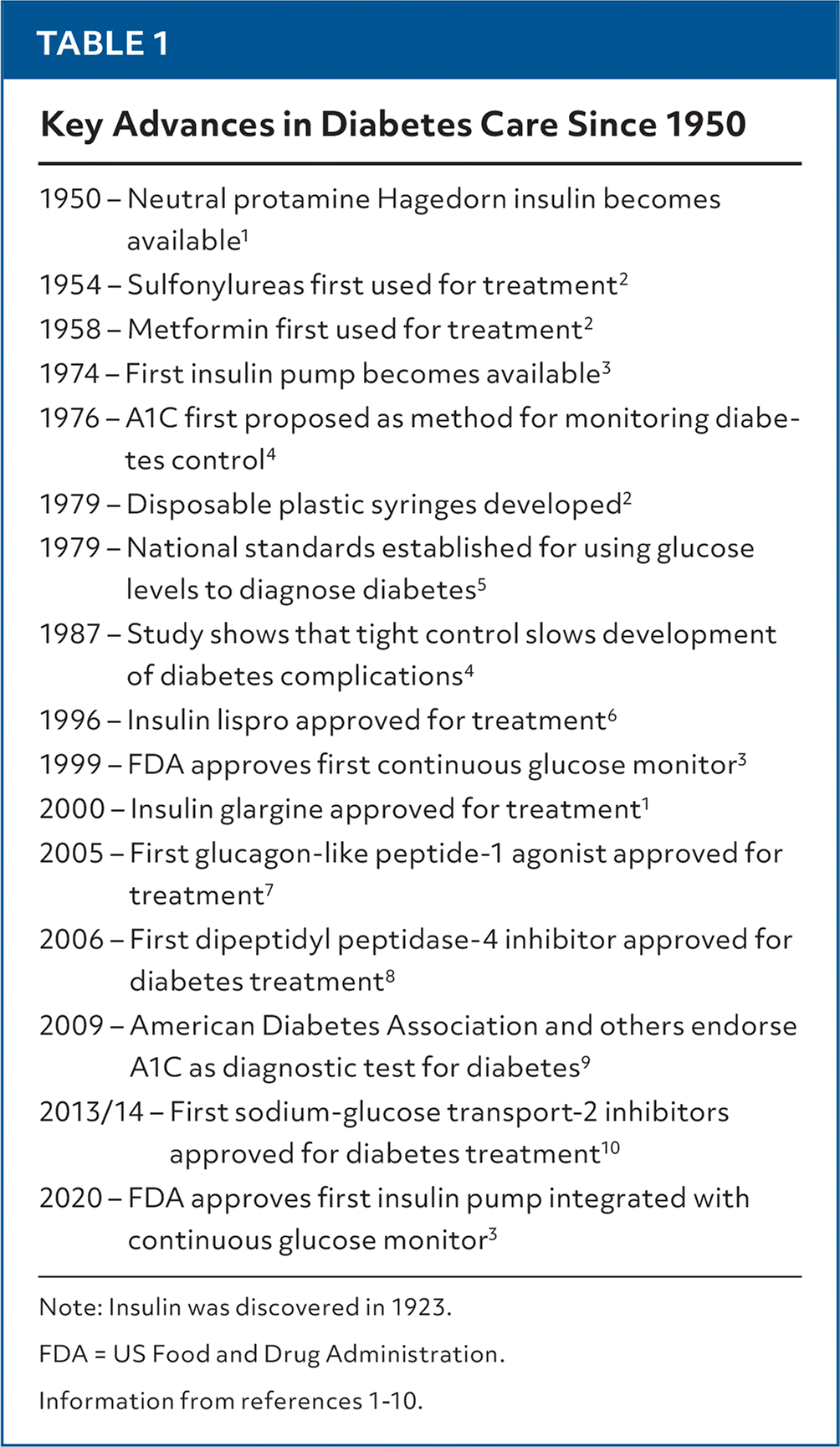
1950 – Neutral protamine Hagedorn insulin becomes available1
1954 – Sulfonylureas first used for treatment2
1958 – Metformin first used for treatment2
1974 – First insulin pump becomes available3
1976 – A1C first proposed as method for monitoring diabetes control4
1979 – Disposable plastic syringes developed2
1979 – National standards established for using glucose levels to diagnose diabetes5
1987 – Study shows that tight control slows development of diabetes complications4
1996 – Insulin lispro approved for treatment6
1999 – FDA approves first continuous glucose monitor3
2000 – Insulin glargine approved for treatment1
2005 – First glucagon-like peptide-1 agonist approved for treatment7
2006 – First dipeptidyl peptidase-4 inhibitor approved for diabetes treatment8
2009 – American Diabetes Association and others endorse A1C as diagnostic test for diabetes9
2013/14 – First sodium-glucose transport-2 inhibitors approved for diabetes treatment10
2020 – FDA approves first insulin pump integrated with continuous glucose monitor3

Note: Insulin was discovered in 1923.

FDA = US Food and Drug Administration.

Information from references 110.

In the early 1950s, before any oral diabetes drugs were available, a GP article pointed out to readers that having overweight patients lose weight was an important part of diabetes management.11 When the first long-acting insulin became available, GP updated readers on this new modality.12

Articles in the 1960s discussed new drugs, like phenformin, an early relative of metformin (the latter remains in common use),13 and offered reviews of early sulfonylureas like chlorpropamide, tolbutamide, and acetohexamide.14,15

In 1970, AFP articles began offering “post-graduate study credit” (now known as continuing medical education). This included an eight-part course on the overall management of diabetes. Interestingly, all the articles mentioned to this point were written by internal medicine physicians, because there had not yet been graduates of residency programs from the new specialty of family medicine.16

The February 1980 edition of AFP featured a comprehensive review on “Management of Noninsulin-dependent Diabetes Mellitus” as a part of its “Practical Therapeutics” series. It covered the diagnostic criteria at the time (fasting plasma glucose greater than 140 mg/dL [7.77 mmol/L] on more than one occasion, or at least 200 mg/dL [11.1 mmol/L] on an oral glucose tolerance test). It also defined diabetes as either insulin-dependent or non–insulin-dependent, rather than our current terminology of type 1 and type 2. Management advice included recommendations regarding a nutritious and calorically balanced diet, exercise (although noting little supporting evidence at that time), and the use of insulin (regular, long-acting, lente, protamine zinc, and ultralente) as well as sulfonylureas.17

In 1999, AFP featured another article, this time on the management of type 2 diabetes, the term superseding non– insulin-dependent diabetes. It updated readers on new diagnostic criteria (fasting glucose more than 125 mg/dL [6.94 mmol/L] on more than one occasion, although random values more than 200 mg/dL were still considered diagnostic). While continuing to stress dietary modification and exercise as first-line treatments, the article updated readers on medications that had been approved by the US Food and Drug Administration since 1980. These included metformin, the alpha-glucosidase inhibitors acarbose and miglitol, the thiazolidinedione troglitazone, and the meglitinide repaglinide. In addition to sulfonylureas, readers were encouraged to consider a combination of two oral agents before initiating insulin for glycemic control.18

Since 2000, AFP has been documenting the rising prevalence of diabetes and the newly coined prediabetes in the US population.19,20 Especially alarming has been the rapid increase of type 2 diabetes in children.21,22 The diagnosis of prediabetes, while not yet accepted by all clinicians, has been noted as a new standard.20 The increasing prevalence has led to expanded screening guidelines for diabetes, including in pregnant women and children.2326 Prediabetes as a diagnosis continues to generate controversy because there is no evidence that treating prediabetes with medications decreases patient-oriented outcomes like mortality or macro- or microvascular complications.27

AFP also has documented a dramatic expansion in the therapeutic options for treating diabetes over the past 25 years.28 These included the proliferation of synthetic insulins,29 new oral medication classes,30 and, more recently, highly effective noninsulin injectable diabetes medications.31 Some of the newer classes, such as glucagon-like peptide-1 agonists and sodium-glucose transport-2 inhibitors, offer significant cardiovascular benefits and renal protection.32,33 These medications are now becoming mainstays of treatment even in patients without diabetes and, as pointed out in a recent review, they are acceptable as first-line therapy for type 2 diabetes in patients who have complications like kidney dysfunction.3436 As treatment options continued to increase, AFP emphasized a focus on patient-oriented outcomes when treating diabetes.37,38

AFP has also provided readers with information about how technology has become important in diabetes care. This has included continuous glucose monitoring, which has become widespread and is associated with small improvements in glucose control,39 along with telemedicine that expands access to physician and nurse check-ins, decreases travel requirements, and incorporates a patient-centered approach to diabetes care.40 A collection of recent diabetes content can be found on the AFP website.

WHAT AFP MEANS TO ME

AFP provides portable, easy access to resources for solid medical information. The website search function is easy to navigate so that I can quickly find answers to clinical questions that I may experience in the trenches of my busy urgent care practice. It is also a good way to both earn and track CME hours. Keep up the good work!

Dr. Steve Dudley

The authors thank Eli Hoelscher, one of AFP’s associate editors, for searching the archives and retrieving copies of AFP articles that were published before PubMed became available in 1996.

Editor’s Note: The authors are editors of AFP.

Author disclosure: No relevant financial relationships.

  1. 1.Kriby M. Sixty years of diabetes management in primary care. Br J Diabetes Vasc Dis. 2012;12(6):315-320.
  2. 2.Sims EK, Carr ALJ, Oran RA, et al. 100 years of insulin: celebrating the past, present and future of diabetes therapy. Nat Med. 2021;27(7):1154-1164.
  3. 3.Koenig RJ, Peterson CM, Jones RL, et al. Correlation of glucose regulation and hemoglobin AIc in diabetes mellitus. N Engl J Med. 1976;295(8):417-420.
  4. 4.National Diabetes Data Group. Classification and diagnosis of diabetes mellitus and other categories of glucose intolerance. Diabetes. 1979;28(12):1039-1057.
  5. 5.US Food and Drug Administration. “Humalog approval” (PDF). Accessed October 12, 2025. https://www.accessdata.fda.gov/drugsatfda_docs/nda/99/21017_Humalog_approv.pdf
  6. 6.Sheahan KH, Wahlberg EA, Gilbert MP. An overview of GLP-1 agonists and recent cardiovascular outcomes trials. Postgrad Med J. 2020;96(1133):156-161.
  7. 7.Pathak R, Bridgeman MB. Dipeptidyl peptidase-4 (dpp-4) inhibitors in the management of diabetes. P T. 2010;35(9):509-513.
  8. 8.International Expert Committee. International Expert Committee report on the role of the A1C assay in the diagnosis of diabetes. Diabetes Care. 2009;32(7):1327-1334.
  9. 9.National Institute of Diabetes and Digestive and Kidney Diseases. Story of discovery: SGLT2 inhibitors: harnessing the kidneys to help treat diabetes. Accessed October 12, 2025. https://www.niddk.nih.gov/news/archive/2016/story-discovery-sglt2-inhibitors-harnessing-kidneys-help-treat-diabetes
  10. 10.Jasleen NB, Vishal GK, Sameera M, et al. Sodium-glucose cotransporter 2 (SGLT2) inhibitors: benefits versus risk. Cereus. 2023;15(1):e33939.
  11. 11.Steine L. Simple office treatment of diabetes. GP. 1953;8(1):45-47.
  12. 12.Bondy PK. The office management of diabetics. GP. 1954;9(4):63-69.
  13. 13.Root HF. Treatment and control of diabetes mellitus. GP. 1961;23(1):107-109.
  14. 14.Joslin EP. How to treat the diabetic patient. GP. 1962;25(5):82-88.
  15. 15.Wood FC, Williams RH. Oral drug therapy of diabetes mellitus. GP. 1966;33(4):129-134.
  16. 16.Levine R, Mhler R, Moss J. The management of diabetes. 8. Initiating insulin therapy; modifying the insulin regimen; factors influencing the need for insulin. Am Fam Physician. 1970;2(6):109-125.
  17. 17.Khachadurian A, Noronha JL, Amorosa LF. Management of noninsulin-dependent diabetes mellitus. Am Fam Physician. 1980;21(2):154-160.
  18. 18.Florence JA, Yeager BF. Treatment of type 2 diabetes mellitus. Am Fam Physician. 1999;59(10):2835-2844.
  19. 19.Vaughan EM, Santiago-Delgado ZM. Management of type 2 diabetes mellitus with noninsulin pharmacotherapy. Am Fam Physician. 2024;109(4):333-342.
  20. 20.Moin T. Should adults with prediabetes be prescribed metformin to prevent diabetes mellitus? Yes: high-quality evidence supports metformin use in persons at high risk. Am Fam Physician. 2019;100(3):134-135.
  21. 21.Peterson K, Silverstein J, Kaufman F, et al. Management of type 2 diabetes in youth: an update. Am Fam Physician. 2007;76(5):658-664.
  22. 22.Xu H, Verre MC. Type 2 diabetes mellitus in children. Am Fam Physician. 2018;98(9):590-594.
  23. 23.U.S. Preventive Services Task Force (USPSTF). Screening for gestational diabetes mellitus: recommendation and rationale. Am Fam Physician. 2003;68(2):331-335.
  24. 24.Fink K, Clark B. Screening for type 2 diabetes mellitus in adults. Am Fam Physician. 2004;69(3):605-606.
  25. 25.Lin KW, Chang C. Screening for type 2 diabetes mellitus in adults. Am Fam Physician. 2009;80(10):1141.
  26. 26.Tracer H, Mohnot S. Screening for prediabetes and type 2 diabetes mellitus [Putting Prevention Into Practice]. Am Fam Physician. 2022;105(1):73-74.
  27. 27.Lazris A, Roth AR, Haskell H, et al. Prediabetes diagnosis: helpful or harmful? Am Fam Physician. 2021;104(6):649-651.
  28. 28.Steinberg J, Carlson L. Type 2 diabetes therapies: a STEPS approach. Am Fam Physician. 2019;99(4):237-243.
  29. 29.Howard-Thompson A, Khan M, Jones M, et al. Type 2 diabetes mellitus: outpatient insulin management. Am Fam Physician. 2018;97(1):29-37.
  30. 30.Scott T. Does pioglitazone benefit patients with type 2 diabetes? Am Fam Physician. 2007;76(7):969-970.
  31. 31.Pace E, Tingen J. Dulaglutide (Trulicity) for type 2 diabetes mellitus. Am Fam Physician. 2017;96(8):540-542.
  32. 32.Ebell MH. Semaglutide reduces CV events in high-risk patients with type 2 diabetes mellitus. Am Fam Physician. 2017;95(6):396.
  33. 33.Shaughnessy AF. Guidelines for when to consider mortality-reducing treatments for patients with type 2 diabetes mellitus. Am Fam Physician. 2022;105(1):93.
  34. 34.Barry HC, Shaughnessy AF. Should metformin continue as first-line pharmacotherapy for patients with type 2 diabetes? No: other drugs have stronger evidence of benefit. Am Fam Physician. 2024;109(3):202-203.
  35. 35.Sarkar A, Jarrett B, Rode R. ACE Inhibitor or ARB therapy can prevent diabetic kidney disease progression. Am Fam Physician. 2025;111(1):24.
  36. 36.Johns T. Sodium-glucose cotransporter-2 inhibitors for people with chronic kidney disease and diabetes. Am Fam Physician. 2025;111(5):404-405.
  37. 37.Shaughnessy AF. Older treatments for type 2 diabetes mellitus do not affect patient-oriented outcomes. Am Fam Physician. 2023;108(5) ): Online.
  38. 38.Ebell MH. Intensive lifestyle intervention fails to improve patient-oriented outcomes in persons with obesity and diabetes. 2013. Accessed Month Day, Year. https://www.aafp.org/pubs/afp/issues/2013/1215/od1.html
  39. 39.Mullur RS, Hsiao JS, Mueller K. Telemedicine in diabetes care. Am Fam Physician. 2022;105(3):281-288.
  40. 40.Aathira R, Jain V. Advances in management of type 1 diabetes mellitus. World J Diabetes. 2014;5(5):689-696.

Copyright © 2026 by the American Academy of Family Physicians.

This content is owned by the AAFP. A person viewing it online may make one printout of the material and may use that printout only for his or her personal, non-commercial reference. This material may not otherwise be downloaded, copied, printed, stored, transmitted or reproduced in any medium, whether now known or later invented, except as authorized in writing by the AAFP. See permissions for copyright questions and/or permission requests.