

Iron deficiency anemia is common worldwide. In adult patients without inflammation, a ferritin level of less than 45 ng/mL or ferritin level of 46 to 99 ng/mL plus a transferrin saturation of less than 20% is diagnostic of iron deficiency. In patients with inflammation, a ferritin level of less than 100 ng/mL is diagnostic. Risk factors for iron deficiency anemia include low socioeconomic status, female sex, age younger than 5 years, and chronic inflammation. Underlying causes should be investigated. Recurrent blood loss is responsible for 94% of cases. In younger patients with a plausible cause of iron deficiency anemia (eg, heavy menstrual bleeding), a reasonable approach is to treat the bleeding and provide iron supplementation. In men and postmenopausal women, bidirectional endoscopy should be performed. Noninvasive testing for Helicobacter pylori infection and celiac disease is recommended because both are common causes of iron deficiency anemia. Oral iron replacement is the first-line treatment for most patients. However, intravenous iron is recommended in patients with heart failure to increase exercise capacity. Every-other-day dosing of oral iron improves absorption. Approximately 50% of patients have decreased adherence due to adverse effects. Patients taking oral iron therapy should be evaluated for response in 2 to 4 weeks. Patients who cannot tolerate oral iron or do not have adequate response should receive intravenous iron. Hypersensitivity to newer formulations of intravenous iron is rare (less than 1%).
Iron is the most common micronutrient deficiency worldwide, affecting one-third of the population.1,2 Severe iron deficiency leads to decreased red blood cell production and microcytic anemia. In the United States, 5% of children younger than 5 years, 25% of pregnant women in the third trimester, and 15% of adults have iron deficiency anemia (IDA).3,4 In pregnancy, IDA is associated with increased risk of preterm delivery and perinatal mortality.5 In infants and children, IDA is associated with delayed cognitive development and increased susceptibility to infectious diseases.6 In adults, IDA is associated with decreased quality of life and productivity.7 In older adults, anemia typically is associated with worsening chronic diseases, cognitive decline, and mortality.8
WHAT'S NEW ON THIS TOPIC
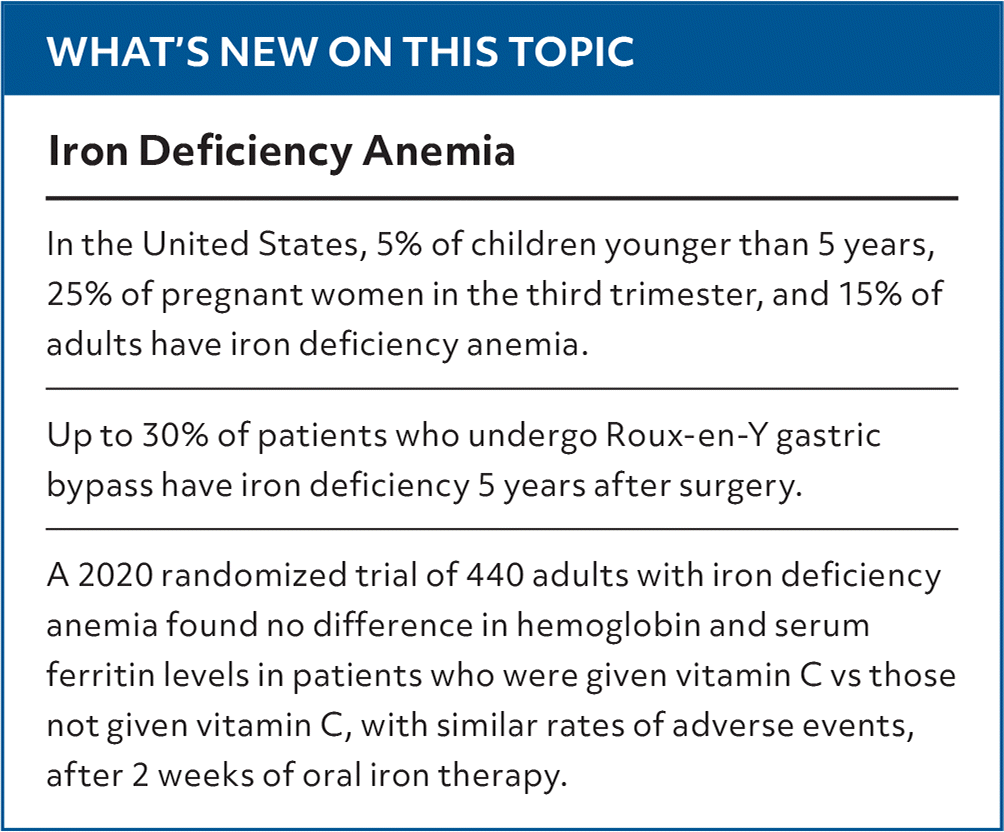
| In the United States, 5% of children younger than 5 years, 25% of pregnant women in the third trimester, and 15% of adults have iron deficiency anemia. |
| Up to 30% of patients who undergo Roux-en-Y gastric bypass have iron deficiency 5 years after surgery. |
| A 2020 randomized trial of 440 adults with iron deficiency anemia found no difference in hemoglobin and serum ferritin levels in patients who were given vitamin C vs those not given vitamin C, with similar rates of adverse events, after 2 weeks of oral iron therapy. |
SORT: KEY RECOMMENDATIONS FOR PRACTICE
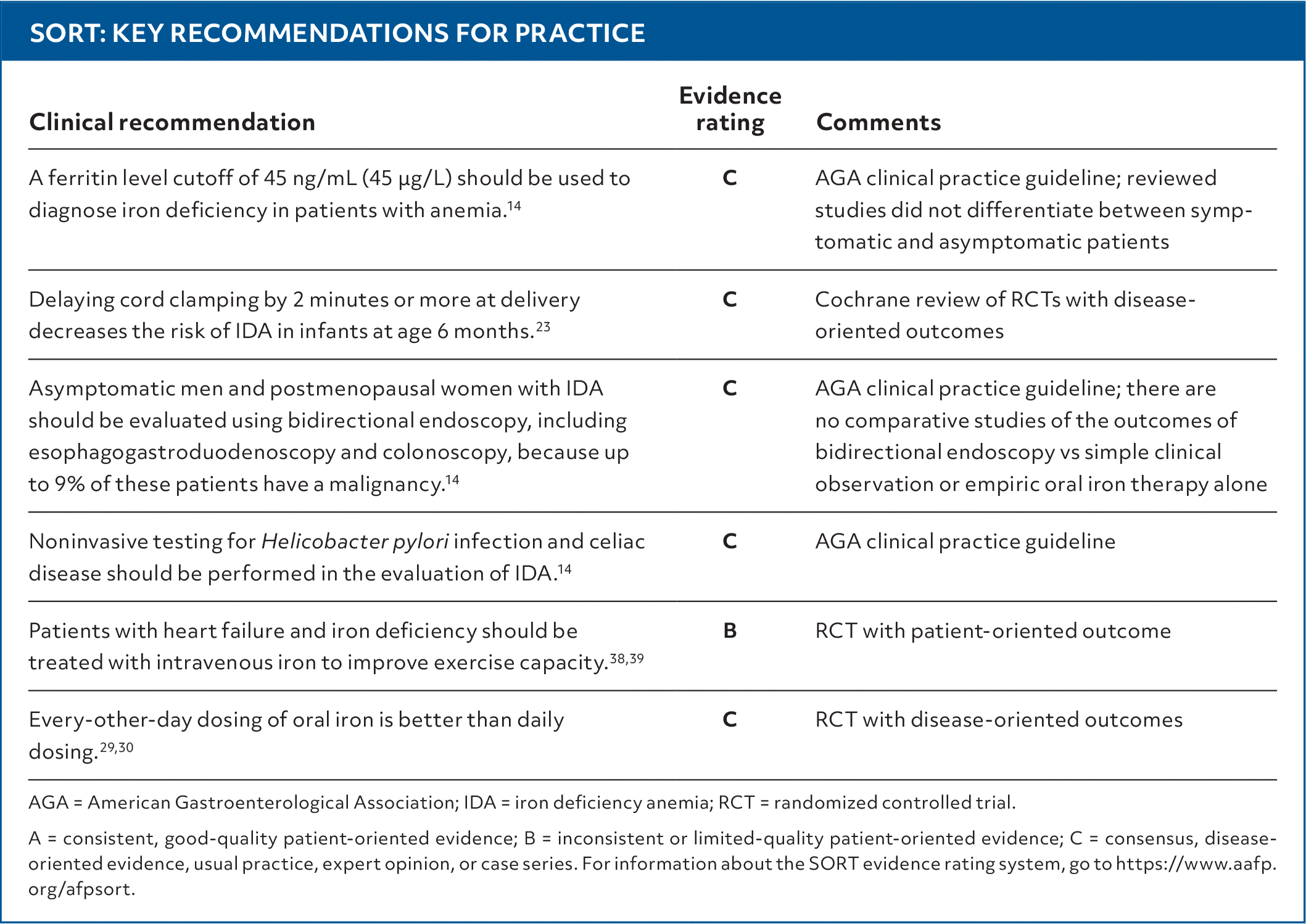
| Clinical recommendation | Evidence rating | Comments |
|---|---|---|
| A ferritin level cutoff of 45 ng/mL (45 μg/L) should be used to diagnose iron deficiency in patients with anemia.14 | C | AGA clinical practice guideline; reviewed studies did not differentiate between symptomatic and asymptomatic patients |
| Delaying cord clamping by 2 minutes or more at delivery decreases the risk of IDA in infants at age 6 months.23 | C | Cochrane review of RCTs with disease-oriented outcomes |
| Asymptomatic men and postmenopausal women with IDA should be evaluated using bidirectional endoscopy, including esophagogastroduodenoscopy and colonoscopy, because up to 9% of these patients have a malignancy.14 | C | AGA clinical practice guideline; there are no comparative studies of the outcomes of bidirectional endoscopy vs simple clinical observation or empiric oral iron therapy alone |
| Noninvasive testing for Helicobacter pylori infection and celiac disease should be performed in the evaluation of IDA.14 | C | AGA clinical practice guideline |
| Patients with heart failure and iron deficiency should be treated with intravenous iron to improve exercise capacity.38,39 | B | RCT with patient-oriented outcome |
| Every-other-day dosing of oral iron is better than daily dosing.29,30 | C | RCT with disease-oriented outcomes |
AGA = American Gastroenterological Association; IDA = iron deficiency anemia; RCT = randomized controlled trial.
A = consistent, good-quality patient-oriented evidence; B = inconsistent or limited-quality patient-oriented evidence; C = consensus, disease-oriented evidence, usual practice, expert opinion, or case series. For information about the SORT evidence rating system, go to https://www.aafp.org/afpsort.
Read the full article
Get immediate access, anytime, anywhere.
Choose a single article, issue, or full-access subscription.
Earn up to 14 CME credits per issue.
