HIV-Associated Complications: A Systems-Based Approach

Ecler Ercole Jaqua, MD, MBA, DipABOM
Mai-Linh N. Tran, MD, DipABLM, DipABOM
Prashanth Bhat, MD, MPH

American Family Physician. 2026;113(1):71-79.

Author disclosure: No relevant financial relationships.

This clinical content conforms to AAFP criteria for CME.

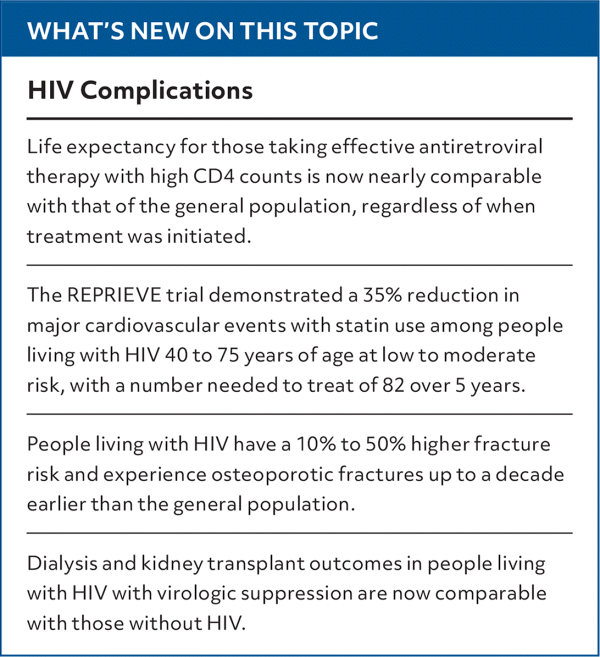
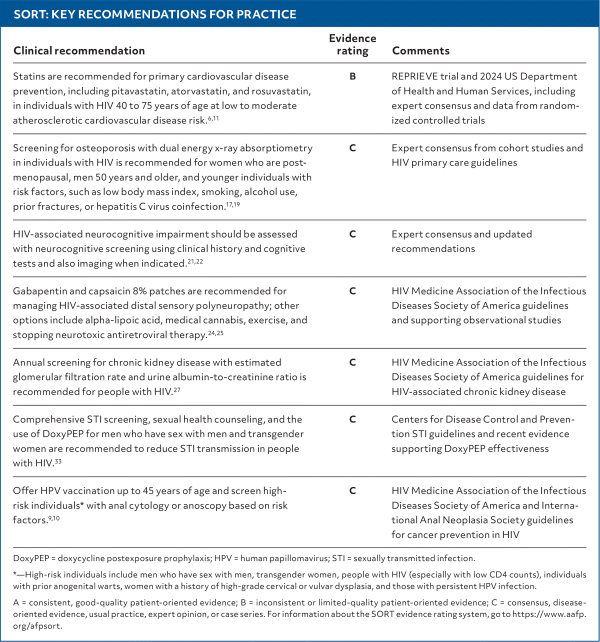
Antiretroviral therapy has transformed HIV into a chronic condition, enabling many people living with HIV to achieve near-normal life expectancy. However, HIV-associated complications remain common, driven by persistent immune activation, inflammation, sedentary lifestyle, and poor diet with cardiometabolic issues such as dyslipidemia, insulin resistance, body composition changes, and osteoporosis among the most prevalent. Newer antiretroviral therapy regimens, particularly integrase strand transfer inhibitor–based therapies, are better tolerated and typically associated with fewer systemic complications compared with previous therapy options. Neurocognitive impairment persists despite viral suppression and requires ongoing assessment and support. Distal sensory polyneuropathy affects up to 60% of people living with HIV, with evidence supporting treatment using gabapentin and capsaicin and possibly alpha-lipoic acid and medical cannabis in select cases. Chronic kidney disease is commonly driven by hypertension or diabetes. Rising sexually transmitted infection rates highlight the necessity of sexual health counseling and interventions such as doxycycline postexposure prophylaxis. Noninfectious pulmonary conditions such as chronic obstructive pulmonary disease and pulmonary hypertension remain underrecognized. Gastrointestinal complications are common and often worsen as CD4 counts decline. Dermatologic and hematologic complications, including cytopenias and clonal hematopoiesis, are associated with increased cancer risk. Primary care clinicians play a critical role of caring for a patient with HIV through routine screening, lifestyle counseling, and coordinated care.

ECLER ERCOLE JAQUA, MD, MBA, FAAFP, AGSF, FACLM, DipABOM, AAHIVS, is an associate professor in the Department of Family Medicine, San Antonio Regional Hospital, Upland, California.

MAI-LINH N. TRAN, MD, FAAFP, DipABLM, DipABOM, AAHIVS, is an assistant professor in the Department of Family Medicine, Loma Linda University School of Medicine, Loma Linda, California.

PRASHANTH BHAT, MD, MPH, AAHIVS, is an associate program director at the Baptist Memorial Hospital Family Medicine Residency Program, Memphis, Tennessee.

Address correspondence to Ecler Ercole Jaqua, MD, MBA, FAAFP, AGSF, FACLM, DipABOM, AAHIVS at eclerjaqua@gmail.com.

Author disclosure: No relevant financial relationships.

  1. 1.Trickey A, Sabin CA, Burkholder G, et al. Life expectancy after 2015 of adults with HIV on long-term antiretroviral therapy in Europe and North America: a collaborative analysis of cohort studies. Lancet HIV. 2023;10(5):e295-e307.
  2. 2.Chu C, Pollock LC, Selwyn PA. HIV-associated complications: a systems-based approach. Am Fam Physician. 2017;96(3):161-169.
  3. 3.Currier JS. Management of long-term complications of HIV disease: focus on cardiovascular disease. Top Antivir Med. 2018;25(4):133-137.
  4. 4.Batta Y, King C, Cooper F, et al. Direct and indirect cardiovascular and cardiometabolic sequelae of the combined anti-retroviral therapy on people living with HIV. Front Physiol. 2023;14:1118653.
  5. 5.Perkins MV, Joseph SB, Dittmer DP, et al. Cardiovascular disease and thrombosis in HIV infection. Arterioscler Thromb Vasc Biol. 2023;43(2):175-191.
  6. 6.Grinspoon SK, Fitch KV, Zanni MV, et al.; REPRIEVE Investigators. Pitavastatin to prevent cardiovascular disease in HIV infection. N Engl J Med. 2023;389(8):687-699.
  7. 7.Strategies for Management of Anti-Retroviral Therapy/INSIGHT; DAD Study Groups. Use of nucleoside reverse transcriptase inhibitors and risk of myocardial infarction in HIV-infected patients. AIDS. 2008;22(14):F17-F24.
  8. 8.Grundy SM, Stone NJ, Bailey AL, et al. 2018 AHA/ACC/AACVPR/AAPA/ABC/ACPM/ADA/AGS/APhA/ASPC/NLA/PCNA guideline on the management of blood cholesterol. Circulation. 2019;139(25):e1082-e1143.
  9. 9.Horberg M, Thompson M, Agwu A, et al. Primary care guidance for providers of care for persons with human immunodeficiency virus: 2024 update by the HIV Medicine Association of the Infectious Diseases Society of America. Clin Infect Dis. 2024;ciae479.
  10. 10.Stier EA, Clarke MA, Deshmukh AA, et al. International Anal Neoplasia Society's consensus guidelines for anal cancer screening. Int J Cancer. 2024;154(10):1694-1702.
  11. 11.HHS Panel on Antiretroviral Guidelines for Adults and Adolescents. Guidelines for the use of antiretroviral agents in adults and adolescents with HIV. Updated September 25, 2025. Accessed October 28, 2025. https://clinicalinfo.hiv.gov/sites/default/files/guidelines/documents/adult-adolescent-arv/guidelines-adult-adolescent-arv.pdf
  12. 12.Zhang J, Chen Y, Wang M, et al. Amino acid metabolism dysregulation associated with inflammation and insulin resistance in HIV-infected individuals with metabolic disorders. Amino Acids. 2023;55(11):1545-1555.
  13. 13.American Diabetes Association Professional Practice Committee. 2. Diagnosis and classification of diabetes: standards of care in diabetes—2024. Diabetes Care. 2024;47(suppl 1):S20-S42.
  14. 14.Hill A, Tovar Sanchez T, Delaporte E, et al. Low CD4 counts predict excessive weight gains during first-line treatment for HIV. J Antimicrob Chemother. 2024;79(9):2369-2378.
  15. 15.Chandiwana NC, Siedner MJ, Marconi VC, et al. Weight gain after HIV therapy initiation. J Clin Endocrinol Metab. 2024;109(2):e478-e487.
  16. 16.Advancing Clinical Therapeutics Globally (ACTG). A5391: Doravirine for obese persons on integrase inhibitors and tenofovir alafenamide. Accessed May 31, 2025. https://actgnetwork.org/clinical-trial/a5391-doravirine-for-persons-with-excessive-weight-gain-on-integrase-inhibitors-and-tenofovir-alafenamide-the-do-it-study/
  17. 17.Biver E. Osteoporosis and HIV infection. Calcif Tissue Int. 2022;110(5):624-640.
  18. 18.Han WM, Wattanachanya L, Apornpong T, et al.; TNT003.1 study team. Bone mineral density changes among people living with HIV who have started with TDF-containing regimen: a five-year prospective study. PLoS One. 2020;15(3):e0230368.
  19. 19.Premaor MO, Compston JE. People living with HIV and fracture risk. Osteoporos Int. 2020;31(9):1633-1644.
  20. 20.Ellis RJ, Marquine MJ, Kaul M, et al. Mechanisms underlying HIV-associated cognitive impairment and emerging therapies for its management. Nat Rev Neurol. 2023;19(11):668-687.
  21. 21.Elendu C, Aguocha CM, Okeke CV, et al. HIV-related neurocognitive disorders: diagnosis, treatment, and mental health implications: a review. Medicine (Baltimore). 2023;102(43):e35652.
  22. 22.Nightingale S, Ances B, Cinque P, et al. Cognitive impairment in people living with HIV: consensus recommendations for a new approach. Nat Rev Neurol. 2023;19(7):424-433.
  23. 23.Egan KE, Caldwell GM, Eckmann MS. HIV neuropathy—a review of mechanisms, diagnosis, and treatment of pain. Curr Pain Headache Rep. 2021;25(8):55.
  24. 24.Julian T, Rekatsina M, Shafique F, et al. Human immunodeficiency virus-related peripheral neuropathy: a systematic review and meta-analysis. Eur J Neurol. 2021;28(4):1420-1431.
  25. 25.Bruce RD, Merlin J, Lum PJ, et al. 2017 HIVMA of IDSA clinical practice guideline for the management of chronic pain in patients living with HIV. Clin Infect Dis. 2017;65(10):e1-e37.
  26. 26.Schuldt AL, Bern H, Hart M, et al.; PIVOT Study Team. Peripheral neuropathy in virologically suppressed people living with HIV: evidence from the PIVOT Trial. Viruses. 2023;16(1):2.
  27. 27.Lucas GM, Ross MJ, Stock PG, et al. Clinical practice guideline for the management of chronic kidney disease in patients infected with HIV: 2014 update by the HIV Medicine Association of the Infectious Diseases Society of America. Clin Infect Dis. 2014;59(9):e96-e138.
  28. 28.Naicker S. HIV/AIDS and chronic kidney disease. Clin Nephrol. 2020;93(1):87-93.
  29. 29.Swanepoel CR, Atta MG, D'Agati VD, et al.; conference participants. Kidney disease in the setting of HIV infection: conclusions from a Kidney Disease: Improving Global Outcomes (KDIGO) controversies conference. Kidney Int. 2018;93(3):545-559.
  30. 30.Rodger AJ, Cambiano V, Bruun T, et al.; PARTNER Study Group. Risk of HIV transmission through condomless sex in serodifferent gay couples with the HIV-positive partner taking suppressive antiretroviral therapy (PARTNER): final results of a multicentre, prospective, observational study. Lancet. 2019;393(10189):2428-2438.
  31. 31.Centers for Disease Control and Protection. Undetectable = untransmittable. August 19, 2024. Accessed July 3, 2025. https://www.cdc.gov/global-hiv-tb/php/our-approach/undetectable-untransmittable.html
  32. 32.De Vincentis S, Tartaro G, Rochira V, et al. HIV and sexual dysfunction in men. J Clin Med. 2021;10(5):1088.
  33. 33.Workowski KA, Bachmann LH, Chan PA, et al. Sexually transmitted infections treatment guidelines, 2021. MMWR Recomm Rep. 2021;70(4):1-187.
  34. 34.Campos-Outcalt D. Practice alert: CDC guidelines on doxycycline for STI postexposure prophylaxis [editorial]. Am Fam Physician. 2024;110(4):338-339.
  35. 35.Bachmann LH, Barbee LA, Chan P. CDC clinical guidelines on the use of doxycycline postexposure prophylaxis for bacterial sexually transmitted infection prevention, United States, 2024. MMWR Recomm Rep. 2024;73(2):1-8.
  36. 36.Drummond MB, Kirk GD. HIV-associated obstructive lung diseases: insights and implications for the clinician. Lancet Respir Med. 2014;2(7):583-592.
  37. 37.Fitzpatrick ME, Kunisaki KM, Morris A. Pulmonary disease in HIV-infected adults in the era of antiretroviral therapy. AIDS. 2018;32(3):277-292.
  38. 38.Renn A, Kazmi F, Khan N, et al. The HIV manifestations within the gastrointestinal tract: a pictorial review. SA J Radiol. 2017;21(2):1233.
  39. 39.Moretti S, Schietroma I, Sberna G, et al. HIV-1-host interaction in gut-associated lymphoid tissue (GALT): effects on local environment and comorbidities. Int J Mol Sci. 2023;24(15):12193.
  40. 40.Hall VP. Common gastrointestinal complications associated with human immunodeficiency virus/AIDS: an overview. Crit Care Nurs Clin North Am. 2018;30(1):101-107.
  41. 41.Sherman KE, Thomas DL. HIV and liver disease: a comprehensive update. Top Antivir Med. 2022;30(4):547-558.
  42. 42.Lake JE, Kitch DW, Kantor A, et al. The effect of open-label semaglutide on metabolic dysfunction-associated steatotic liver disease in people with HIV. Ann Intern Med. 2024;177(6):835-838.
  43. 43.Li M, Chan WW, Zucker SD. Association between atazanavir-induced hyperbilirubinemia and cardiovascular disease in patients infected with HIV. J Am Heart Assoc. 2020;9(19):e016310.
  44. 44.Saigal R, Chakraborty A, Yadav RN, et al. Rheumatological manifestations in HIV-positive patients: a single-center study. Adv Ther. 2020;37(10):4336-4345.
  45. 45.Walker UA, Tyndall A, Daikeler T. Rheumatic conditions in human immunodeficiency virus infection. Rheumatology (Oxford). 2008;47(7):952-959.
  46. 46.Nguyen BY, Reveille JD. Rheumatic manifestations associated with HIV in the highly active antiretroviral therapy era. Curr Opin Rheumatol. 2009;21(4):404-410.
  47. 47.Reveille JD, Williams FM. Infection and musculoskeletal conditions: rheumatologic complications of HIV infection. Best Pract Res Clin Rheumatol. 2006;20(6):1159-1179.
  48. 48.Mohseni Afshar Z, Goodarzi A, Emadi SN, et al. A comprehensive review on HIV-associated dermatologic manifestations: from epidemiology to clinical management. Int J Microbiol. 2023;1:6203193.
  49. 49.Mirnezami M, Zarinfar N, Sofian M, et al. Mucocutaneous manifestations in HIV-infected patients and their relationship to CD4 lymphocyte counts. Scientifica (Cairo). 2020:7503756.
  50. 50.Fernandes MS, Bhat RM. Spectrum of mucocutaneous manifestations in human immunodeficiency virus–infected patients and its correlation with CD4 lymphocyte count. Int J STD AIDS. 2015;26(6):414-419.
  51. 51.Chandler DJ, Walker SL. HIV and skin infections. Clin Dermatol. 2024;42(2):155-168.
  52. 52.Gormley RH, Kovarik CL. Dermatologic manifestations of HPV in HIV-infected individuals. Curr HIV/AIDS Rep. 2009;6(3):130-138.
  53. 53.Luther J, Glesby MJ. Dermatologic adverse effects of antiretroviral therapy: recognition and management. Am J Clin Dermatol. 2007;8(4):221-233.
  54. 54.Akdag D, Knudsen AD, Thudium RF, et al. Increased risk of anemia, neutropenia, and thrombocytopenia in people with human immunodeficiency virus and well-controlled viral replication. J Infect Dis. 2019;220(11):1834-1842.
  55. 55.Vorri SC, Christodoulou I, Karanika S, et al. Human immunodeficiency virus and clonal hematopoiesis. Cells. 2023;12(5):686.
  56. 56.Carbone A, Vaccher E, Gloghini A. Hematologic cancers in individuals infected by HIV. Blood. 2022;139(7):995-1012.
  57. 57.Chu C, Selwyn PA. Complications of HIV infection: a systems-based approach. Am Fam Physician. 2011;83(4):395-406.

Copyright © 2026 by the American Academy of Family Physicians.

This content is owned by the AAFP. A person viewing it online may make one printout of the material and may use that printout only for his or her personal, non-commercial reference. This material may not otherwise be downloaded, copied, printed, stored, transmitted or reproduced in any medium, whether now known or later invented, except as authorized in writing by the AAFP. See permissions for copyright questions and/or permission requests.