Recurrent Ischemic Stroke: Prevention Strategies

Brian Ford, MD
Michael M. Dore, MD
Tyler R. Koehn, MD

American Family Physician. 2026;113(1):57-69.

Author disclosure: No relevant financial relationships.

This clinical content conforms to AAFP criteria for CME.

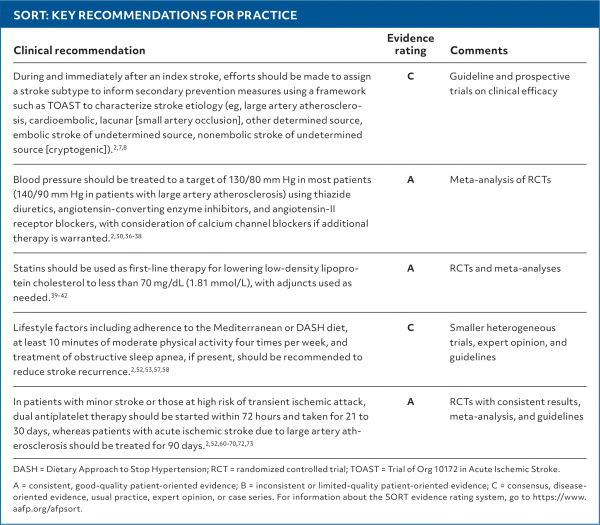
Ischemic strokes account for 87% of acute strokes, and 12% of patients with acute ischemic stroke have recurrence within 5 years. After an acute ischemic stroke is identified, several tools can be used to help detect the likely cause. Controlling cardiovascular risk factors with antihypertensive therapy (with a goal of 130/80 mm Hg), statin therapy, blood glucose control, healthy diet, regular exercise, avoidance of substance use, treatment of obstructive sleep apnea, if present, and care based on the cause of stroke reduces the risk of recurrence. Antithrombotic therapy with anticoagulants is recommended for embolic stroke due to atrial fibrillation; antiplatelet therapy is more commonly used for the treatment of nonembolic stroke. Procedural management for those with carotid stenosis or closure of patent foramen ovale may be indicated. Additional evaluation, such as long-term cardiac monitoring to identify initially undetected atrial fibrillation, may be required if the cause of stroke is unclear.

BRIAN FORD, MD, FAAFP, is an associate professor in the Department of Family Medicine at Uniformed Services University of the Health Sciences, Bethesda, Maryland.

MICHAEL M. DORE, MD, FACP, is an associate professor in the Department of Medicine at Duke University Medical Center, Durham, North Carolina.

TYLER R. KOEHN, MD, is a vascular neurologist in the Department of Neurology at Brooke Army Medical Center, Joint Base San Antonio-Fort Sam Houston, Texas.

Address correspondence to Brian Ford, MD, FAAFP, at bford1@gmail.com.

Author disclosure: No relevant financial relationships.

  1. 1.Martin SS, Aday AW, Allen NB, et al.; American Heart Association Council on Epidemiology and Prevention Statistics Committee and Stroke Statistics Committee. 2025 heart disease and stroke statistics: a report of US and global data from the American Heart Association. Circulation. 2025;151(8):e41-e660.
  2. 2.Kleindorfer DO, Towfighi A, Chaturvedi S, et al. 2021 guideline for the prevention of stroke in patients with stroke and transient ischemic attack: a guideline from the American Heart Association/American Stroke Association. Stroke. 2021;52(7):e364-e467.
  3. 3.Engel-Nitz NM, Sander SD, Harley C, et al. Costs and outcomes of noncardioembolic ischemic stroke in a managed care population. Vasc Health Risk Manag. 2010;6:905-913.
  4. 4.Ferrone SR, Boltyenkov AT, Lodato Z, et al. Clinical outcomes and costs of recurrent ischemic stroke: a systematic review. J Stroke Cerebrovasc Dis. 2022;31(6):106438.
  5. 5.Flach C, Muruet W, Wolfe CDA, et al. Risk and secondary prevention of stroke recurrence: a population-base cohort study. Stroke. 2020;51(8):2435-2444.
  6. 6.Turan TN, Zaidat OO, Gronseth GS, et al. Stroke prevention in symptomatic large artery intracranial atherosclerosis practice advisory: report of the AAN Guideline Subcommittee. Neurology. 2022;98(12):486-498.
  7. 7.Adams HP, Bendixen BH, Kappelle LJ, et al. Classification of subtype of acute ischemic stroke. Definitions for use in a multicenter clinical trial. TOAST. Trial of Org 10172 in Acute Stroke Treatment. Stroke. 1993;24(1):35-41.
  8. 8.Ay H, Benner T, Arsava EM, et al. A computerized algorithm for etiologic classification of ischemic stroke: the Causative Classification of Stroke system. Stroke. 2007;38(11):2979-2984.
  9. 9.Arsava EM, Ballabio E, Benner T, et al.; International Stroke Genetics Consortium. The Causative Classification of Stroke system: an international reliability and optimization study. Neurology. 2010;75(14):1277-1284.
  10. 10.Amarenco P, Bogousslavsky J, Caplan LR, et al. The ASCOD phenotyping of ischemic stroke (updated ASCO phenotyping). Cerebrovasc Dis. 2013;36(1):1-5.
  11. 11.Johnston KC, Connors AF, Wagner DP, et al. Predicting outcome in ischemic stroke: external validation of predictive risk models. Stroke. 2003;34(1):200-202.
  12. 12.Sanders LM, Srikanth VK, Blacker DJ, et al. Performance of the ABCD2 score for stroke risk post TIA: meta-analysis and probability modeling. Neurology. 2012;79(10):971-980.
  13. 13.van Swieten JC, Koudstaal PJ, Visser MC, et al. Interobserver agreement for the assessment of handicap in stroke patients. Stroke. 1988;19(5):604-607.
  14. 14.Kent DM, Ruthazer R, Weimar C, et al. An index to identify stroke-related vs incidental patent foramen ovale in cryptogenic stroke. Neurology. 2013;81(7):619-625.
  15. 15.Yeo SH, Toh MPHS, Lee SH, et al. Impact of medication nonadherence on stroke recurrence and mortality in patients after first-ever ischemic stroke: insights from registry data in Singapore. Pharmacoepidemiol Drug Saf. 2020;29(5):538-549.
  16. 16.Smith EE, Saposnik G, Biessels GJ, et al.; American Heart Association Stroke Council; Council on Cardiovascular Radiology and Intervention; Council on Functional Genomics and Translational Biology; and Council on Hypertension. Prevention of stroke in patients with silent cerebrovascular disease: a scientific statement for healthcare professionals from the American Heart Association/American Stroke Association. Stroke. 2017;48(2):e44-e71.
  17. 17.Turc G, Lee JY, Brochet E, et al.; CLOSE and DEFENSE-PFO Trial Investigators. Atrial septal aneurysm, shunt size, and recurrent stroke risk in patients with patent foramen ovale. J Am Coll Cardiol. 2020;75(18):2312-2320.
  18. 18.Yaghi S, de Havenon A, Rostanski S, et al. Carotid stenosis and recurrent ischemic stroke: a post-hoc analysis of the POINT trial. Stroke. 2021;52(7):2414-2417.
  19. 19.Penado S, Cano M, Acha O, et al. Atrial fibrillation as a risk factor for stroke recurrence. Am J Med. 2003;114(3):206-210.
  20. 20.Katsanos AH, Parissis J, Frogoudaki A, et al. Heart failure and the risk of ischemic stroke recurrence: a systematic review and meta-analysis. J Neurol Sci. 2016;362:182-187.
  21. 21.Wang IK, Lien LM, Lee JT, et al.; Taiwan Stroke Registry Investigators. Renal dysfunction increases the risk of recurrent stroke in patients with acute ischemic stroke. Atherosclerosis. 2018;277:15-20.
  22. 22.Zheng S, Yao B. Impact of risk factors for recurrence after the first ischemic stroke in adults: a systematic review and meta-analysis. J Clin Neurosci. 2019;60:24-30.
  23. 23.Epstein KA, Viscoli CM, Spence JD, et al. Smoking cessation and outcome after ischemic stroke or TIA. Neurology. 2017;89(16):1723-1729.
  24. 24.Zhang L, Li X, Wolfe CDA, et al. Diabetes as an independent risk factor for stroke recurrence in ischemic stroke patients: an updated meta-analysis. Neuroepidemiology. 2021;55(6):427-435.
  25. 25.Zhang F, Liu L, Zhang C, et al. Association of metabolic syndrome and its components with risk of stroke recurrence and mortality: a meta-analysis. Neurology. 2021;97(7):e695-e705.
  26. 26.Pennlert J, Asplund K, Glader EL, et al. Socioeconomic status and the risk of stroke recurrence: persisting gaps observed in a nationwide Swedish study 2001 to 2012. Stroke. 2017;48(6):1518-1523.
  27. 27.Brown DL, Shafie-Khorassani F, Kim S, et al. Sleep-disordered breathing is associated with recurrent ischemic stroke. Stroke. 2019;50(3):571-576.
  28. 28.Kolmos M, Christopherson L, Kruuse C. Recurrent ischemic stroke—a systematic review and meta-analysis. J Stroke Cerebrovasc Dis. 2021;30(8):105935.
  29. 29.Kitano T, Hirano T, Okazaki S, et al. Heterogeneity of stroke in patients with systemic lupus erythematosus. Intern Med. 2022;61(20):3045-3052.
  30. 30.Zonneveld TP, Richard E, Vergouwen MDI, et al. Blood pressure-lowering treatment for preventing recurrent stroke, major vascular events, and dementia in patients with a history of stroke or transient ischaemic attack. Cochrane Database Syst Rev. 2018(7):CD007858.
  31. 31.Willey JZ, Moon YP, Kahn E, et al. Population attributable risks of hypertension and diabetes for cardiovascular disease and stroke in the northern Manhattan study. J Am Heart Assoc. 2014;3(5):e001106.
  32. 32.Kauw F, Takx RAP, de Jong HWAM, et al. Clinical and imaging predictors of recurrent ischemic stroke: a systematic review and meta-analysis. Cerebrovasc Dis. 2018;45(5–6):279-287.
  33. 33.Hackam DG, Spence JD. Combining multiple approaches for the secondary prevention of vascular events after stroke: a quantitative modeling study. Stroke. 2007;38(6):1881-1885.
  34. 34.Wu S, Wu Z, Yu D, et al. Life's Essential 8 and risk of stroke: a prospective community-based study. Stroke. 2023;54(9):2369-2379.
  35. 35.Lloyd-Jones DM, Allen NB, Anderson CAM, et al. Life's Essential 8: updating and enhancing the American Heart Association's construct of cardiovascular health: a presidential advisory from the American Heart Association. Circulation. 2022;146(5):e18-e43.
  36. 36.Katsanos Ah, Filippatou A, Manios E, et al. Blood pressure reduction and secondary stroke prevention: a systematic review and metaregression analysis of randomized clinical trials. Hypertension. 2017;69(1):171-179.
  37. 37.Hsu CY, Saver JL, Ovbiagele B, et al. Association between magnitude of differential blood pressure reduction and secondary stroke prevention: a meta-analysis and meta-regression. JAMA Neurol. 2023;80(5):506-515.
  38. 38.De Lima LG, Saconato H, Atallah AN, et al. Beta-blockers for preventing stroke recurrence. Cochrane Database Syst Rev. 2014(10):CD007890.
  39. 39.Amarenco P, Bogousslavsky J, Callahan A, et al.; Stroke Prevention by Aggressive Reduction in Cholesterol Levels (SPARCL) Investigators. High-dose atorvastatin after stroke or transient ischemic attack. N Engl J Med. 2006;355(6):549-559.
  40. 40.Yin Y, Zhang L, Marshall I, et al. Statin therapy for preventing recurrent stroke in patients with ischemic stroke: a systematic review and meta-analysis of randomized controlled trials and observational cohort studies. Neuroepidemiology. 2022;56(4):240-249.
  41. 41.Amarenco P, Kim JS, Labreuche J, et al.; Treat Stroke to Target Investigators. A comparison of two LDL cholesterol targets after ischemic stroke. N Engl J Med. 2020;382(1):9-19.
  42. 42.Lee M, Cheng CY, Wu YL, et al. Association between intensity of low-density lipoprotein cholesterol reduction with statin-based therapies and secondary stroke prevention: a meta-analysis of randomized clinical trials. JAMA Neurol. 2022;79(4):349-358.
  43. 43.Filion KB, Douros A, Azoulay L, et al. Sulfonylureas as initial treatment for type 2 diabetes and the risk of adverse cardiovascular events: a population-based cohort study. Br J Clin Pharmacol. 2019;85(10):2378-2389.
  44. 44.Nissen SE, Wolski K. Effect of rosiglitazone on the risk of myocardial infarction and death from cardiovascular causes. N Engl J Med. 2007;356(24):2457-2471.
  45. 45.Castilla-Guerra L, Fernandez-Moreno MDC, Leon-Jimenez D, et al. Antidiabetic drugs and stroke risk. Current evidence. Eur J Intern Med. 2018;48:1-5.
  46. 46.Kaul S. Mitigating cardiovascular risk in type 2 diabetes with antidiabetes drugs: a review of principal cardiovascular outcome results of EMPA-REG OUTCOME, LEADER, and SUSTAIN-6 trials. Diabetes Care. 2017;40(7):821-831.
  47. 47.Zhang XL, Zhu QQ, Chen YH, et al. Cardiovascular safety, long-term noncardiovascular safety, and efficacy of sodium-glucose cotransporter 2 inhibitors in patients with type 2 diabetes mellitus: a systemic review and meta-analysis with trial sequential analysis. J Am Heart Assoc. 2018;7(2):e007165.
  48. 48.Guo M, Ding J, Li J, et al. SGLT2 inhibitors and risk of stroke in patients with type 2 diabetes: a systematic review and meta-analysis. Diabetes Obes Metab. 2018;20(8):1977-1982.
  49. 49.American Diabetes Association Professional Practice Committee. 9. Pharmacologic approaches to glycemic treatment: standards of care in diabetes—2025. Diabetes Care. 2025;48(1 suppl 1):S181-S206.
  50. 50.Larsson SC. Dietary approaches for stroke prevention. Stroke. 2017;48(10):2905-2911.
  51. 51.Dearborn JL, Urrutia VC, Kernan WN. The case for diet: a safe and efficacious strategy for secondary stroke prevention. Front Neurol. 2015;6:1.
  52. 52.Chimowitz MI, Lynn MJ, Derdeyn CP, et al.; SAMMPRIS Trial Investigators. Stenting versus aggressive medical therapy for intracranial arterial stenosis. N Engl J Med. 2011;365(11):993-1003.
  53. 53.Eapen BC, Tran J, Ballard-Hernandez J, et al. Stroke rehabilitation: synopsis of the 2024 U.S. Department of Veterans Affairs and U.S. Department of Defense clinical practice guidelines. Ann Intern Med. 2025;178(2):249-268.
  54. 54.Parikh NS, Zhang C, Salehi Omran S, et al. Smoking-cessation pharmacotherapy after stroke and transient ischemic attack: a get with the guidelines-stroke analysis. Stroke. 2023;54(3):e63-e65.
  55. 55.Noubiap JJ, Fitzgerald JL, Gallagher C, et al. Rates, predictors, and impact of smoking cessation after stroke or transient ischemic attack: a systematic review and meta-analysis. J Stroke Cerebrovasc Dis. 2021;30(10):106012.
  56. 56.Smyth A, O'Donnell M, Rangarajan S, et al.; INTERSTROKE Investigators. Alcohol intake as a risk factor for acute stroke: the INTERSTROKE study. Neurology. 2023;100(2):e142-e153.
  57. 57.Dharmakulaseelan L, Boulos MI. Sleep apnea and stroke: a narrative review. Chest. 2024;166(4):857-866.
  58. 58.Haba-Rubio J, Vujica J, Franc Y, et al. Effect of CPAP treatment of sleep apnea on clinical prognosis after ischemic stroke: an observational study. J Clin Sleep Med. 2019;15(6):839-847.
  59. 59.Kimura S, Toyoda K, Yoshimura S, et al.; SAMURAI, RELAXED, RAF, RAF-NOAC, CROMIS-2, NOACISP LONGTERM, Erlangen Registry and Verona Registry Investigators. Practical “1-2-3-4-Day” rule for starting direct oral anticoagulants after ischemic stroke with atrial fibrillation: combined hospital-based cohort study. Stroke. 2022;53(5):1540-1549.
  60. 60.Wang Y, Wang Y, Zhao X, et al.; CHANCE Investigators. Clopidogrel with aspirin in acute minor stroke or transient ischemic attack. N Engl J Med. 2013;369(1):11-19.
  61. 61.Johnston SC, Easton JD, Farrant M, et al.; Clinical Research Collaboration, Neurological Emergencies Treatment Trials Network, and the POINT Investigators. Clopidogrel and aspirin in acute ischemic stroke and hgh-risk TIA. N Engl J Med. 2018;379(3):215-225.
  62. 62.Gao Y, Chen W, Pan Y, et al.; INSPIRES Investigators. Dual antiplatelet treatment up to 72 hours after ischemic stroke. N Engl J Med. 2023;389(26):2413-2424.
  63. 63.Joglar JA, Chung MK, Armbruster AL, et al.; Peer Review Committee Members. 2023 ACC/AHA/ACCP/HRS guideline for the diagnosis and management of atrial fibrillation: a report of the American College of Cardiology/American Heart Association Joint Committee on Clinical Practice Guidelines. Circulation. 2024;149(1):e1-e156.
  64. 64.Chi NF, Wen CP, Liu CH, et al.; Taiwan Stroke Registry Investigators. Comparison between aspirin and clopidogrel in secondary stroke prevention based on real-world data. J Am Heart Assoc. 2018;7(19):e009856.
  65. 65.Paciaroni M, Ince B, Hu B, et al. Benefits and risks of clopidogrel vs. aspirin monotherapy after recent ischemic stroke: a systematic review and meta-analysis. Cardiovasc Ther. 2019:1607181.
  66. 66.Wang C, Jia W, Jing J, et al.; CHANCE-2 Investigators. Ticagrelor versus clopidogrel in minor stroke or transient ischemic attack with intracranial artery stenosis: a post hoc analysis of CHANCE-2. J Am Heart Assoc. 2023;12(21):e031611.
  67. 67.Bhatia K, Ladd LM, Carr KH, et al. Contemporary antiplatelet and anticoagulant therapies for secondary stroke prevention: a narrative review of current literature and guidelines. Curr Neurol Neurosci Rep. 2023;23(5):235-262.
  68. 68.de Havenon A, Sheth KN, Madsen TE, et al. Cilostazol for secondary stroke prevention: history, evidence, limitations, and possibilities. Stroke. 2021;52(10):e635-e645.
  69. 69.Sacco RL, Diener HC, Yusuf S, et al.; PRoFESS Study Group. Aspirin and extended-release dipyridamole versus clopidogrel for recurrent stroke. N Engl J Med. 2008;359(12):1238-1251.
  70. 70.Eikelboom JW, Connolly SJ, Bosch J, et al.; COMPASS Investigators. Rivaroxaban with or without aspirin in stable cardiovascular disease. N Engl J Med. 2017;377(14):1319-1330.
  71. 71.Wabnitz AM, Turan TN. Optimal medical management of atherosclerotic intracranial stenosis. Stroke. 2024;55(2):335-343.
  72. 72.Wong KSL, Chen C, Fu J, et al.; CLAIR Study Investigators. Clopidogrel plus aspirin versus aspirin alone for reducing embolisation in patients with acute symptomatic cerebral or carotid artery stenosis (CLAIR study): a randomised, open-label, blinded-endpoint trial. Lancet Neurol. 2010;9(5):489-497.
  73. 73.Markus HS, Droste DW, Kaps M, et al. Dual antiplatelet therapy with clopidogrel and aspirin in symptomatic carotid stenosis evaluated using Doppler embolic signal detection: the Clopidogrel and Aspirin for Reduction of Emboli in Symptomatic Carotid Stenosis (CARESS) trial. Circulation. 2005;111(17):2233-2240.
  74. 74.Zaidat OO, Fitzsimmons BF, Woodward BK, et al.; VISSIT Trial Investigators. Effect of a balloon-expandable intracranial stent vs medical therapy on risk of stroke in patients with symptomatic intracranial stenosis: the VISSIT randomized clinical trial. JAMA. 2015;313(12):1240-1248.
  75. 75.Gao P, Wang T, Wang D, et al.; CASSISS Trial Investigators. Effect of stenting plus medical therapy vs medical therapy alone on risk of stroke and death in patients with symptomatic intracranial stenosis: the CASSISS randomized clinical trial. JAMA. 2022;328(6):534-542.
  76. 76.EC/IC Bypass Study Group. Failure of extracranial–intracranial arterial bypass to reduce the risk of ischemic stroke. N Engl J Med. 1985;313(19):1191-1200.
  77. 77.Sun X, Deng Y, Zhang Y, et al.; BASIS Investigators. Balloon angioplasty vs medical management for intracranial artery stenosis: the BASIS randomized clinical trial. JAMA. 2024;332(13):1059-1069.
  78. 78.Chimowitz MI, Lynn MJ, Howlett-Smith H, et al.; Warfarin-Aspirin Symptomatic Intracranial Disease Trial Investigators. Comparison of warfarin and aspirin for symptomatic intracranial arterial stenosis. N Engl J Med. 2005;352(13):1305-1316.
  79. 79.Müller MD, Lyrer PA, Brown MM, et al. Carotid artery stenting versus endarterectomy for treatment of carotid artery stenosis. Stroke. 2021;52(1):e3-e5.
  80. 80.Connolly SJ, Eikelboom J, Joyner C, et al.; AVERROES Steering Committee and Investigators. Apixaban in patients with atrial fibrillation. N Engl J Med. 2011;364(9):806-817.
  81. 81.Fischer U, Koga M, Strbian D, et al.; ELAN Investigators. Early versus later anticoagulation for stroke with atrial fibrillation. N Engl J Med. 2023;388(26):2411-2421.
  82. 82.Camen S, Haeusler KG, Schnabel RB. Cardiac imaging after ischemic stroke or transient ischemic attack. Curr Neurol Neurosci Rep. 2020;20(8):36.
  83. 83.Schwartz BG, Alexander CT, Grayburn PA, et al. Utility of routine transesophageal echocardiography in patients with stroke or transient ischemic attack. Proc Bayl Univ Med Cent. 2018;31(4):401-403.
  84. 84.Benavente OR, Coffey CS, Conwit R, et al.; SPS3 Study Group. Blood-pressure targets in patients with recent lacunar stroke: the SPS3 randomised trial. Lancet. 2013;382(9891):507-515.
  85. 85.Xie X, Jing J, Meng X, et al.; CHANCE-2 Investigators. Dual antiplatelet therapies and causes in minor stroke or transient ischemic attack: a prespecified analysis in the CHANCE-2 trial. Stroke. 2023;54(9):2241-2250.
  86. 86.Hart RG, Catanese L, Perera KS, et al. Embolic stroke of undetermined source: a systematic review and clinical update. Stroke. 2017;48(4):867-872.
  87. 87.Bahit MC, Sacco RL, Easton JD, et al.; RE-SPECT ESUS Steering Committee and Investigators. Predictors of atrial fibrillation development in patients with embolic stroke of undetermined source: an analysis of the RE-SPECT ESUS trial. Circulation. 2021;144(22):1738-1746.
  88. 88.Xing LY, Diederichsen SZ, Højberg S, et al. Effects of atrial fibrillation screening according to N-terminal pro-B-type natriuretic peptide: a secondary analysis of the randomized LOOP study. Circulation. 2023;147(24):1788-1797.
  89. 89.Buck BH, Hill MD, Quinn FR, et al. Effect of implantable vs prolonged external electrocardiographic monitoring on atrial fibrillation detection in patients with ischemic stroke: the PER DIEM randomized clinical trial. JAMA. 2021;325(21):2160-2168.
  90. 90.Sposato LA, Chaturvedi S, Hsieh CY, et al. Atrial fibrillation detected after stroke and transient ischemic attack: a novel clinical concept challenging current views. Stroke. 2022;53(3):e94-e103.
  91. 91.Svendsen JH, Diederichsen SZ, Højberg S, et al. Implantable loop recorder detection of atrial fibrillation to prevent stroke (the LOOP study): a randomised controlled trial. Lancet. 2021;398(10310):1507-1516.
  92. 92.Ghannam M, Al-Qudah AM, Alshaer QN, et al. Anticoagulation vs antiplatelets across subgroups of embolic stroke of undetermined source: a meta-analysis of randomized controlled trials. Neurology. 2024;103(9):e209949.
  93. 93.Messé SR, Gronseth GS, Kent DM, et al. Practice advisory update summary: patent foramen ovale and secondary stroke prevention: report of the guideline subcommittee of the American Academy of Neurology. Neurology. 2020;94(20):876-885.
  94. 94.Brown KN, ElBebawy B, Shah AH, et al. Catheter management of patent foramen ovale. StatPearls. March 6, 2023. Accessed February 11, 2025. https://www.ncbi.nlm.nih.gov/books/NBK537314/
  95. 95.Vernooij MW, Ikram MA, Tanghe HL, et al. Incidental findings on brain MRI in the general population. N Engl J Med. 2007;357(18):1821-1828.
  96. 96.Oza R, Rundell K, Garcellano M. Recurrent ischemic stroke: strategies for prevention. Am Fam Physician. 2017;96(7):436-440.
  97. 97.Dickerson LM, Carek PJ, Quattlebaum RG. Prevention of recurrent ischemic stroke. Am Fam Physician. 2007;76(3):382-388.

Copyright © 2026 by the American Academy of Family Physicians.

This content is owned by the AAFP. A person viewing it online may make one printout of the material and may use that printout only for his or her personal, non-commercial reference. This material may not otherwise be downloaded, copied, printed, stored, transmitted or reproduced in any medium, whether now known or later invented, except as authorized in writing by the AAFP. See permissions for copyright questions and/or permission requests.