Hepatitis B: Part I. Updates on Screening and Prevention

Richard Moore, II, MD, AAHIVS
Claire L. Porter, MD
Jama M. Darling, MD

American Family Physician. 2026;113(3):229-234.

Author disclosure: No relevant financial relationships.

This clinical content conforms to AAFP criteria for CME.

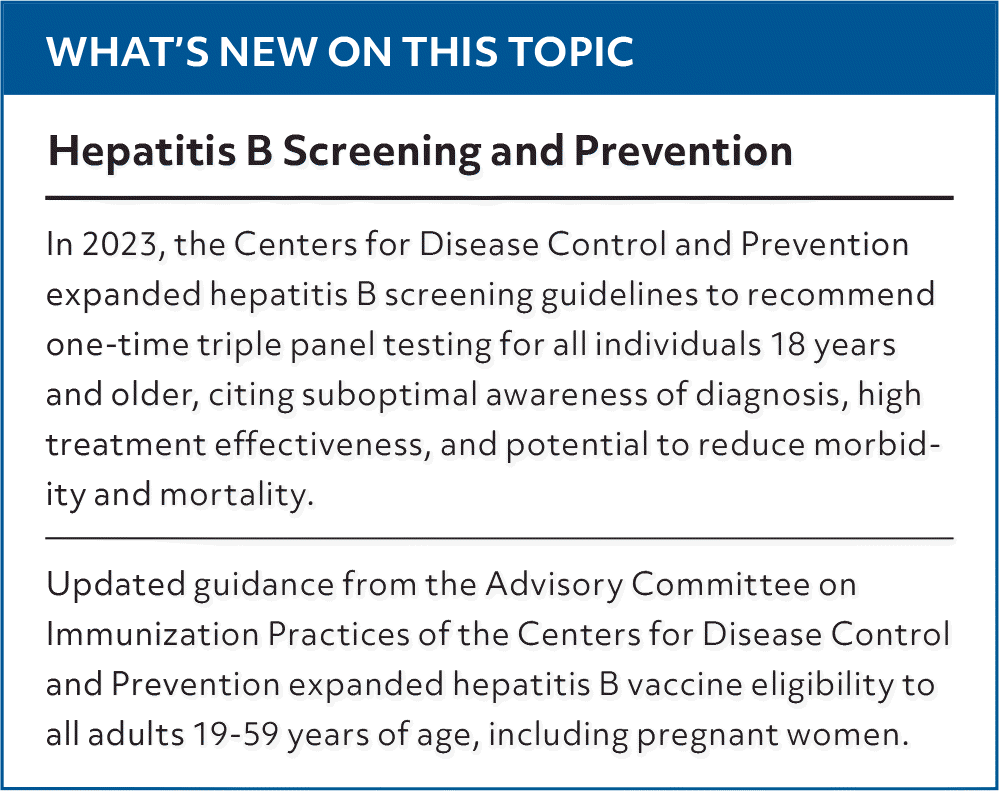
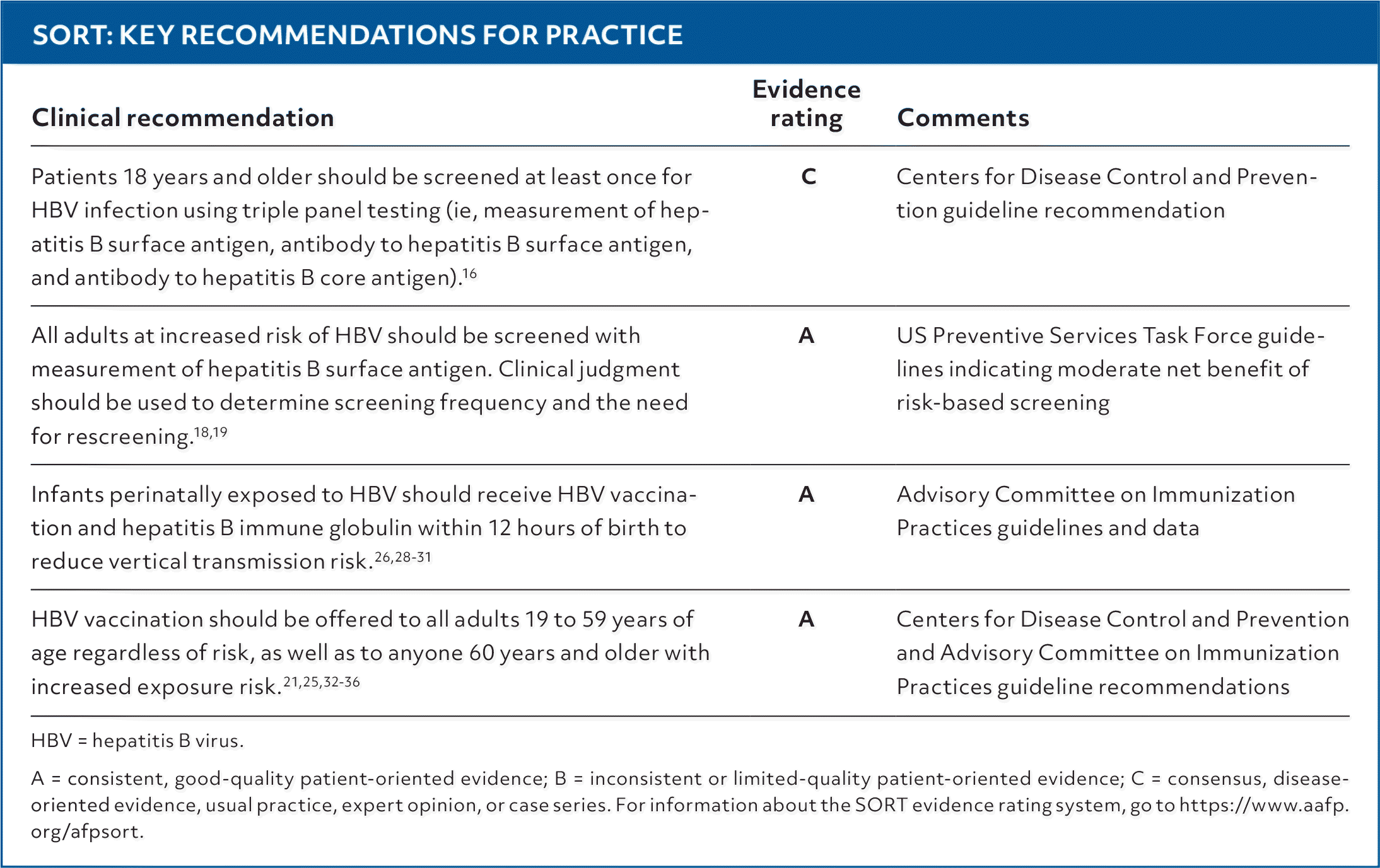
Up to 2.4 million people in the United States and 254 million people worldwide have acute or chronic hepatitis B virus infection. The virus is transmitted by blood and body fluid, and approximately two-thirds of people with a chronic infection in the United States are unaware of their diagnosis. The Centers for Disease Control and Prevention recommends screening all adults at least once with triple panel testing (measurement of hepatitis B surface antigen, antibodies to hepatitis B surface antigen, and antibodies to hepatitis B core antigen) because antiviral therapy can reduce associated morbidity and mortality. Screening is also recommended during each pregnancy to reduce the risk of vertical transmission. Nonimmune patients with higher risk of exposure should be screened periodically and, if eligible, vaccinated. Only 30% of adults in the United States are vaccinated for hepatitis B. Recommendations for routine vaccination have expanded to include all children, beginning with a birth-dose vaccine; all adults 19 to 59 years of age; and adults 60 years and older at higher risk of exposure. High rates of adult and childhood vaccination, improved diagnoses of chronic hepatitis B, and broader access to care are essential to eliminate hepatitis B in the United States.

RICHARD MOORE II, MD, AAHIVS, is an assistant professor in the Department of Family Medicine at the University of North Carolina, Chapel Hill, and the hepatitis medical director at the North Carolina Department of Health and Human Services, Raleigh.

CLAIRE L. PORTER, MD, is a resident in the Department of Family Medicine at the University of North Carolina, Chapel Hill.

JAMA M. DARLING, MD, is an assistant professor in the Department of Gastroenterology and Hepatology at the University of North Carolina, Chapel Hill.

Address correspondence to Richard Moore II, MD, at rick_moore@med.unc.edu.

Author disclosure: No relevant financial relationships.

  1. 1.World Health Organization. Global hepatitis report 2024: action for access in low-and middle-income countries. April 9, 2024. Accessed January 15, 2025. https://www.who.int/publications/i/item/9789240091672
  2. 2.World Health Organization. Global health sector strategies on, respectively, HIV, viral hepatitis and sexually transmitted infections for the period 2022–2030. July 18, 2022. Accessed January 15, 2025. https://www.who.int/publications/i/item/9789240053779
  3. 3.Centers for Disease Control and Prevention. 2022 viral hepatitis surveillance report. September 30, 2024. Accessed January 15, 2025. https://www.cdc.gov/hepatitis-surveillance-2022/about/index.html
  4. 4.Zhou K, Terrault NA. Gaps in viral hepatitis awareness in the United States in a population-based study. Clin Gastroenterol Hepatol. 2020;18(1):188-195.e4.
  5. 5.Tu T, Budzinska MA, Shackel NA, et al. HBV DNA integration: molecular mechanisms and clinical implications. Viruses. 2017;9(4):75.
  6. 6.Liang TJ. Hepatitis B: the virus and disease. Hepatology. 2009;49(5 suppl):S13-S21.
  7. 7.Chu CJ, Keeffe EB, Han SH, et al. Hepatitis B virus genotypes in the United States: results of a nationwide study. Gastroenterology. 2003;125(2):444-451.
  8. 8.Trépo C, Chan HLY, Lok A. Hepatitis B virus infection. Lancet. 2014;384(9959):2053-2063.
  9. 9.Papatheodoridis GV, Hadziyannis SJ. Diagnosis and management of pre-core mutant chronic hepatitis B. J Viral Hepat. 2001;8(5):311-321.
  10. 10.Suslov A, Meier MA, Ketterer S, et al. Transition to HBeAg-negative chronic hepatitis B virus infection is associated with reduced cccDNA transcriptional activity. J Hepatol. 2021;74(4):794-800.
  11. 11.Wilkins T, Sams R, Carpenter M. Hepatitis B: screening, prevention, diagnosis, and treatment. Am Fam Physician. 2019;99(5):314-323.
  12. 12.Fattovich G, Olivari N, Pasino M, et al. Long-term outcome of chronic hepatitis B in Caucasian patients: mortality after 25 years. Gut. 2008;57(1):84-90.
  13. 13.Zhou K, Contag C, Whitaker E, et al. Spontaneous loss of surface antigen among adults living with chronic hepatitis B virus infection: a systematic review and pooled meta-analyses. Lancet Gastroenterol Hepatol. 2019;4(3):227-238.
  14. 14.Yeo YH, Ho HJ, Yang HI, et al. Factors associated with rates of HBsAg seroclearance in adults with chronic HBV infection: a systematic review and meta-analysis. Gastroenterology. 2019;156(3):635-646.e9.
  15. 15.Calderon-Martinez E, Landazuri-Navas S, Vilchez E, et al. Prognostic scores and survival rates by etiology of hepatocellular carcinoma: a review. J Clin Med Res. 2023;15(4):200-207.
  16. 16.Conners EE, Panagiotakopoulos L, Hofmeister MG, et al. Screening and testing for hepatitis B virus infection: CDC recommendations - United States, 2023. MMWR Recomm Rep. 2023;72(1):1-25.
  17. 17.Toy M, Hutton D, Harris AM, et al. Cost-effectiveness of 1-time universal screening for chronic hepatitis B infection in adults in the United States. Clin Infect Dis. 2022;74(2):210-217.
  18. 18.Krist AH, Davidson KW, Mangione CM, et al. Screening for hepatitis B virus infection in adolescents and adults: US Preventive Services Task Force recommendation statement. JAMA. 2020;324(23):2415-2422.
  19. 19.Owens DK, Davidson KW, Krist AH, et al. Screening for hepatitis B virus infection in pregnant women: US Preventive Services Task Force reaffirmation recommendation statement. JAMA. 2019;322(4):349-354.
  20. 20.Tang LSY, Covert E, Wilson E, et al. Chronic hepatitis B infection: a review. JAMA. 2018;319(17):1802-1813.
  21. 21.Weng MK, Doshani M, Khan MA, et al. Universal hepatitis B vaccination in adults aged 19–59 years: updated recommendations of the Advisory Committee on Immunization Practices - United States, 2022. MMWR Morb Mortal Wkly Rep. 2022;71(13):477-483.
  22. 22.Raimondo G, Locarnini S, Pollicino T, et al. Update of the statements on biology and clinical impact of occult hepatitis B virus infection. J Hepatol. 2019;71(2):397-408.
  23. 23.Rehermann B. Toward a better understanding of chronic hepatitis B virus infection. J Clin Invest. 2024;134(19):e185568.
  24. 24.Spradling PR, Xing J, Harris AM, et al. Estimated prevalence and number of persons with isolated antibody to hepatitis B core antigen and associated occult hepatitis B, United States, 2001–2018. J Infect Dis. 2022;225(3):465-469.
  25. 25.Sandul AL, Rapposelli K, Nyendak M, et al. Updated recommendation for universal hepatitis B vaccination in adults aged 19–59 years - United States, 2024. MMWR Morb Mortal Wkly Rep. 2024;73(48):1106.
  26. 26.Schillie S, Vellozzi C, Reingold A, et al. Prevention of hepatitis B virus infection in the United States: recommendations of the Advisory Committee on Immunization Practices. MMWR Recomm Rep. 2018;67(1):1-31.
  27. 27.American Academy of Family Physicians. Birth through age 18 immunization schedule. 2025. Accessed February 14, 2026. https://www.aafp.org/family-physician/patient-care/prevention-wellness/immunizations-vaccines/immunization-schedules/birth-through-age-18-immunization-schedule.html
  28. 28.Terrault NA, Lok ASF, McMahon BJ, et al. Update on prevention, diagnosis, and treatment of chronic hepatitis B: AASLD 2018 hepatitis B guidance. Hepatology. 2018;67(4):1560-1599.
  29. 29.Stevens CE, Beasley RP, Tsui J, et al. Vertical transmission of hepatitis B antigen in Taiwan. N Engl J Med. 1975;292(15):771-774.
  30. 30.Schillie S, Walker T, Veselsky S, et al. Outcomes of infants born to women infected with hepatitis B. Pediatrics. 2015;135(5):e1141-e1147.
  31. 31.Veronese P, Dodi I, Esposito S, et al. Prevention of vertical transmission of hepatitis B virus infection. World J Gastroenterol. 2021;27(26):4182-4193.
  32. 32.Surofchy DD, Shieh N, Tam I. Evolving considerations for choice of hepatitis B vaccine. Am J Manag Care. 2023;29(1 suppl):S3-S14.
  33. 33.Walsh C, McDaniel K, Lindsey L, et al. Seroconversion following Heplisav-B, hepatitis B vaccine (recombinant), adjuvanted, in patients with end-stage renal disease at an urban safety net hospital. Am J Health Syst Pharm. 2023;80(suppl 4):S130-S134.
  34. 34.Amjad W, Alukal J, Zhang T, et al. Two-dose hepatitis B vaccine (Heplisav-B) results in better seroconversion than three-dose vaccine (Engerix-B) in chronic liver disease. Dig Dis Sci. 2021;66(6):2101-2106.
  35. 35.Roberts H, Ly KN, Yin S, et al. Prevalence of HBV infection, vaccine-induced immunity, and susceptibility among at-risk populations: US households, 2013–2018. Hepatology. 2021;74(5):2353-2365.
  36. 36.Hall EW, Weng MK, Harris AM, et al. Assessing the cost-utility of universal hepatitis B vaccination among adults. J Infect Dis. 2022;226(6):1041-1051.
  37. 37.Marks KM, Kang M, Umbleja T, et al. HepB-CpG vs HepB-Alum vaccine in people with HIV and prior vaccine nonresponse. The Bee-HIVe randomized clinical trial. JAMA. 2025;333(4):295-306.
  38. 38.Dusheiko G. A shift in thinking to reduce mother-to-infant transmission of hepatitis B. N Engl J Med. 2018;378(10):952-953.
  39. 39.Samadi KG, Castillo E, Osman M, et al. Clinical course of 161 untreated and tenofovir-treated chronic hepatitis B pregnant patients in a low hepatitis B virus endemic region. J Viral Hepat. 2016;23(1):15-22.
  40. 40.Lin KW, Kirchner JT. Hepatitis B. Am Fam Physician. 2004;69(1):75-82.

Copyright © 2026 by the American Academy of Family Physicians.

This content is owned by the AAFP. A person viewing it online may make one printout of the material and may use that printout only for his or her personal, non-commercial reference. This material may not otherwise be downloaded, copied, printed, stored, transmitted or reproduced in any medium, whether now known or later invented, except as authorized in writing by the AAFP. See permissions for copyright questions and/or permission requests.