Hepatitis B: Part II. Updates on Diagnosis and Therapy

Richard Moore, II, MD, AAHIVS
Claire L. Porter, MD
Jama M. Darling, MD

American Family Physician. 2026;113(3):235-244.

Author disclosure: No relevant financial relationships.

This clinical content conforms to AAFP criteria for CME.

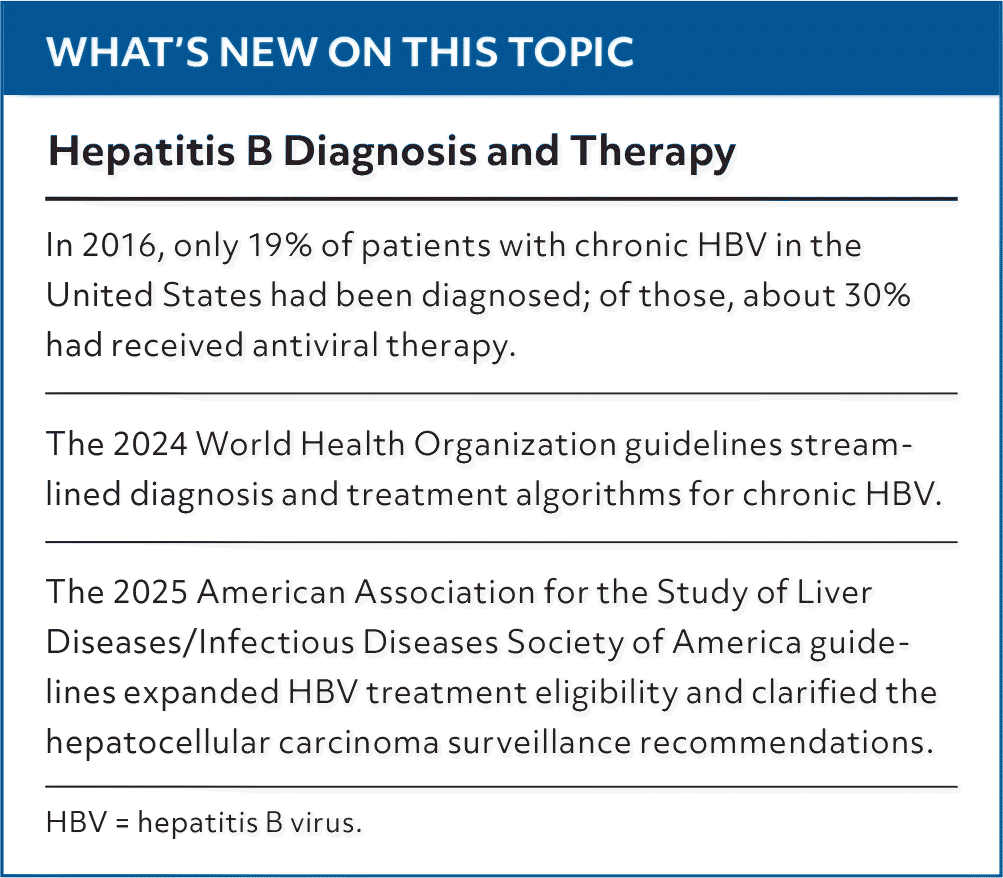
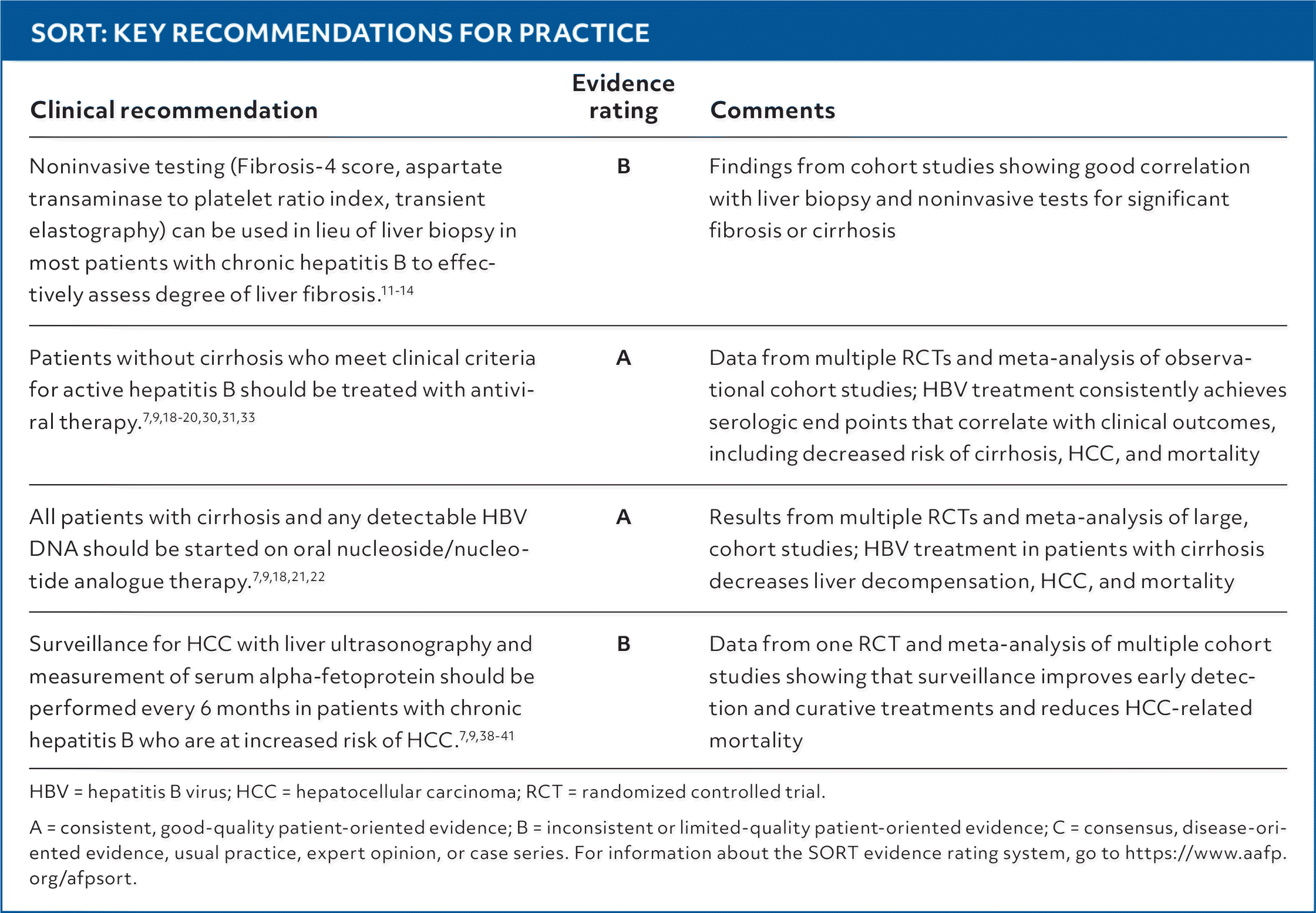
Acute hepatitis B infection often features gastrointestinal symptoms and jaundice, as well as elevated transaminase levels and the presence of hepatitis B surface antigen and immunoglobulin M antibodies to hepatitis B core antigen. More than 95% of adults clear an acute infection spontaneously. Chronic hepatitis B infection is diagnosed when hepatitis B surface antigen is present for at least 6 months. Evaluation of chronic cases includes a family history of hepatocellular carcinoma, assessment of liver function and fibrosis risk, and serologies for viral coinfections and immunity. The goal of therapy is to reduce the risk of cirrhosis, hepatocellular carcinoma, and liver-related mortality. Oral nucleoside/nucleotide analogues are well tolerated and have a high barrier to resistance, which enables long-term use. With current therapies, functional cure (loss of hepatitis B surface antigen) is uncommon. Nucleoside/nucleotide analogue therapy is warranted when a patient has an elevated alanine transaminase level and a hepatitis B DNA measurement more than 2,000 IU/mL, or cirrhosis with detectable virus. Prophylactic viral suppression with oral nucleoside/nucleotide analogues is recommended during immunosuppression. Patients with cirrhosis or increased risk of cirrhosis should receive surveillance for hepatocellular carcinoma with right upper quadrant ultrasonography and serum alpha-fetoprotein testing every 6 months.

RICHARD MOORE II, MD, AAHIVS, is an assistant professor in the Department of Family Medicine at the University of North Carolina, Chapel Hill, and the hepatitis medical director at the North Carolina Department of Health and Human Services, Raleigh.

CLAIRE L. PORTER, MD, is a resident in the Department of Family Medicine at the University of North Carolina, Chapel Hill.

JAMA M. DARLING, MD, is an assistant professor in the Department of Gastroenterology and Hepatology at the University of North Carolina, Chapel Hill.

Address correspondence to Richard Moore II, MD, at rick_moore@med.unc.edu.

Author disclosure: No relevant financial relationships.

  1. 1.Hutin Y, et al. Access to treatment for hepatitis B virus infection - worldwide, 2016. MMWR Morb Mortal Wkly Rep. 2018;67(28):773-777.
  2. 2.Ogawa E, et al. Diagnosis rates of chronic hepatitis B in privately insured patients in the United States. JAMA Netw Open. 2020;3(4):e201844.
  3. 3.Liang TJ. Hepatitis B: the virus and disease. Hepatology. 2009;49(5 suppl):S13-S21.
  4. 4.Rehermann B, et al. Immunology of hepatitis B virus and hepatitis C virus infection. Nat Rev Immunol. 2005;5(3):215-229.
  5. 5.Weinbaum CM, et al.; CDC. Recommendations for identification and public health management of persons with chronic hepatitis B virus infection. MMWR Recomm Rep. 2008;57(RR-8):4.
  6. 6.Xiong QF, et al. Early predictors of acute hepatitis B progression to liver failure. PLoS One. 2018;13(7):e0201049.
  7. 7.Ghany MG, et al. AASLD/IDSA Practice Guideline on treatment of chronic hepatitis B. Hepatology. Hepatology. 2025.
  8. 8.EASL Clinical Practice Guidelines on the management of hepatitis B virus infection. J Hepatol. 2025;83(2):502-583.
  9. 9.Dieterich D, et al. It is time for a simplified approach to hepatitis B elimination. Gastro Hep Adv. 2022;2(2):209-218.
  10. 10.Desai S, et al. Thrombocytopenia in chronic liver disease: challenges and treatment strategies. Cureus. 2021;13(7):e16342.
  11. 11.Branchi F, et al. Non-invasive assessment of liver fibrosis in chronic hepatitis B. World J Gastroenterol. 2014;20(40):14568-14580.
  12. 12.Marcellin P, et al. Non-invasive assessment of liver fibrosis by stiffness measurement in patients with chronic hepatitis B. Liver Int. 2009;29(2):242-247.
  13. 13.de Lédinghen V, et al. Non-invasive tests for fibrosis and liver stiffness predict 5-year survival of patients chronically infected with hepatitis B virus. Aliment Pharmacol Ther. 2013;37(10):979-988.
  14. 14.Sterling RK, et al. AASLD Practice Guideline on blood-based noninvasive liver disease assessment of hepatic fibrosis and steatosis. Hepatology. 2025;81(1):321-357.
  15. 15.The French METAVIR Cooperative Study Group. Intraobserver and interobserver variations in liver biopsy interpretation in patients with chronic hepatitis C. Hepatology. 1994;20(1):15-20.
  16. 16.Tamaki N, et al. Enhanced liver fibrosis score for diagnosing liver fibrosis in chronic hepatitis. Diagnostics (Basel). 2024;14(13):1317.
  17. 17.Feld JJ, et al. New perspectives on development of curative strategies for chronic hepatitis B. Clin Gastroenterol Hepatol. 2023;21(8):2040-2050.
  18. 18.Lok ASF, et al. Antiviral therapy for chronic hepatitis B viral infection in adults: a systematic review and meta-analysis. Hepatology. 2016;63(1):284-306.
  19. 19.Hosaka T, et al. Long-term entecavir treatment reduces hepatocellular carcinoma incidence in patients with hepatitis B virus infection. Hepatology. 2013;58(1):98-107.
  20. 20.Lim YS, et al. Mortality, liver transplantation, and hepatocellular carcinoma among patients with chronic hepatitis B treated with entecavir vs lamivudine. Gastroenterology. 2014;147(1):152-161.
  21. 21.Liaw YF, et al. Lamivudine for patients with chronic hepatitis B and advanced liver disease. N Engl J Med. 2004;351(15):1521-1531.
  22. 22.Wong GLH, et al. Entecavir treatment reduces hepatic events and deaths in chronic hepatitis B patients with liver cirrhosis. Hepatology. 2013;58(5):1537-1547.
  23. 23.Yeo YH, et al. Factors associated with rates of HBsAg seroclearance in adults with chronic HBV infection: a systematic review and meta-analysis. Gastroenterology. 2019;156(3):635-646.e9.
  24. 24.Menéndez-Arias L, et al. Nucleoside/nucleotide analog inhibitors of hepatitis B virus polymerase: mechanism of action and resistance. Curr Opin Virol. 2014;8:1-9.
  25. 25.Terrault NA, et al. Update on prevention, diagnosis, and treatment of chronic hepatitis B: AASLD 2018 hepatitis B guidance. Hepatology. 2018;67(4):1560-1599.
  26. 26.Buster EHCJ, et al. Sustained HBeAg and HBsAg loss after long-term follow-up of HBeAg-positive patients treated with peginterferon alpha-2b. Gastroenterology. 2008;135(2):459-467.
  27. 27.Sarin SK, et al. Asian-Pacific clinical practice guidelines on the management of hepatitis B: a 2015 update. Hepatol Int. 2016;10(1):1-98.
  28. 28.Huang DQ, et al. Natural history and hepatocellular carcinoma risk in untreated chronic hepatitis B patients with indeterminate phase. Clin Gastroenterol Hepatol. 2022;20(8):1803-1812.e5.
  29. 29.Wong GLH, et al. The 2024 updated WHO guidelines for the prevention and management of chronic hepatitis B: main changes and potential implications for the next major liver society clinical practice guidelines. J Hepatol. 2025;82(5):918-925.
  30. 30.Singal AG, et al. AASLD Practice Guidance on prevention, diagnosis, and treatment of hepatocellular carcinoma. Hepatology. 2023;78(6):1922-1965.
  31. 31.Iloeje UH, et al. Predicting cirrhosis risk based on the level of circulating hepatitis B viral load. Gastroenterology. 2006;130(3):678-686.
  32. 32.World Health Organization. Guidelines for the prevention, diagnosis, care and treatment for people with chronic hepatitis B infection. March 29, 2024. Accessed January 15, 2025. https://www.who.int/publications/i/item/9789240090903
  33. 33.Chen CJ, et al. Risk of hepatocellular carcinoma across a biological gradient of serum hepatitis B virus DNA level. JAMA. 2006;295(1):65-73.
  34. 34.Conners EE, et al. Screening and testing for hepatitis B virus infection: CDC recommendations - United States, 2023. MMWR Recomm Rep. 2023;72(1):1-25.
  35. 35.Loomba R, et al. Hepatitis B reactivation associated with immune suppressive and biological modifier therapies: current concepts, management strategies, and future directions. Gastroenterology. 2017;152(6):1297-1309.
  36. 36.Papatheodoridis GV, et al. Hepatitis B virus reactivation associated with new classes of immunosuppressants and immunomodulators: a systematic review, meta-analysis, and expert opinion. J Hepatol. 2022;77(6):1670-1689.
  37. 37.Hui VWK, et al. Increasing antiviral treatment uptake improves survival in patients with HBV-related HCC. JHEP Rep. 2020;2(6):100152.
  38. 38.Ghany MG, et al. Serum alanine aminotransferase flares in chronic hepatitis B infection: the good and the bad. Lancet Gastroenterol Hepatol. 2020;5(4):406-417.
  39. 39.Su F, et al. Screening is associated with a lower risk of hepatocellular carcinoma-related mortality in patients with chronic hepatitis B. J Hepatol. 2021;74(4):850-859.
  40. 40.Zhang BH, et al. Randomized controlled trial of screening for hepatocellular carcinoma. J Cancer Res Clin Oncol. 2004;130(7):417-422.
  41. 41.Singal AG, et al. HCC surveillance improves early detection, curative treatment receipt, and survival in patients with cirrhosis: a meta-analysis. J Hepatol. 2022;77(1):128-139.
  42. 42.Papatheodoridis G, et al. PAGE-B predicts the risk of developing hepatocellular carcinoma in Caucasians with chronic hepatitis B on 5-year antiviral therapy. J Hepatol. 2016;64(4):800-806.
  43. 43.Hirode G, et al. Off-therapy response after nucleos(t)ide analogue withdrawal in patients with chronic hepatitis B: an international, multicenter, multiethnic cohort (RETRACT-B Study). Gastroenterology. 2022;162(3):757-771.e4.
  44. 44.Wilkins T, et al. Hepatitis B: screening, prevention, diagnosis, and treatment. Am Fam Physician. 2019;99(5):314-323.
  45. 45.Wilkins T, et al. Hepatitis B: diagnosis and treatment. Am Fam Physician. 2010;81(8):965-972.
  46. 46.Lin KW, et al. Hepatitis B. Am Fam Physician. 2004;69(1):75-82.

Copyright © 2026 by the American Academy of Family Physicians.

This content is owned by the AAFP. A person viewing it online may make one printout of the material and may use that printout only for his or her personal, non-commercial reference. This material may not otherwise be downloaded, copied, printed, stored, transmitted or reproduced in any medium, whether now known or later invented, except as authorized in writing by the AAFP. See permissions for copyright questions and/or permission requests.