

Thrombocytosis is defined by guidelines as a platelet count of 450 × 103/μL or greater. It most often results from secondary causes and should resolve with treatment of the underlying condition. Primary thrombocytosis in adults is most commonly due to myeloproliferative neoplasms, including essential thrombocythemia. Thrombocytosis may be identified incidentally in asymptomatic patients or when performing blood tests to investigate symptoms or signs that could indicate microvascular conditions (eg, headaches, paresthesia, erythromelalgia), splenomegaly, thrombosis, and hemorrhage, which are presenting features of essential thrombocythemia. A repeat complete blood cell count with differential and peripheral blood smear should be performed to confirm persistent thrombocytosis and assess other blood cell lines for findings suggestive of myeloproliferative neoplasms. Additional testing, including C-reactive protein levels and iron studies with ferritin levels, should be performed based on history and examination findings. If essential thrombocythemia is suspected in patients with persistent thrombocytosis without an identified cause, testing for Janus kinase 2 gene sequence variations should be performed and, if negative, testing for calreticulin and myeloproliferative leukemia gene sequence variations; a bone marrow biopsy should also be performed. The revised International Prognostic Score of Thrombosis for Essential Thrombocythemia should be calculated to stratify thrombosis risk and guide management, including when to use low-dose aspirin and cytoreductive therapy. Cardiovascular risk factors should also be addressed. Hydroxyurea is the first-line agent in cytoreductive therapy. No treatments have been shown to increase survival or prevent progression to myelofibrosis or leukemia in patients with essential thrombocythemia.
Thrombocytosis is defined by guidelines as a platelet count of 450 × 103/μL (450 × 109/L) or greater.1,2 Elevated platelet counts result from a primary condition or secondary cause. Most episodes of thrombocytosis are secondary (reactive), resulting from external factors that elevate platelet count.3–5 Primary thrombocytosis in adults is most commonly due to myeloproliferative neoplasms, including essential thrombocythemia.3 This article summarizes current evidence to guide the diagnostic approach to a patient with undifferentiated thrombocytosis and the diagnosis and treatment of essential thrombocythemia.
SORT: KEY RECOMMENDATIONS FOR PRACTICE
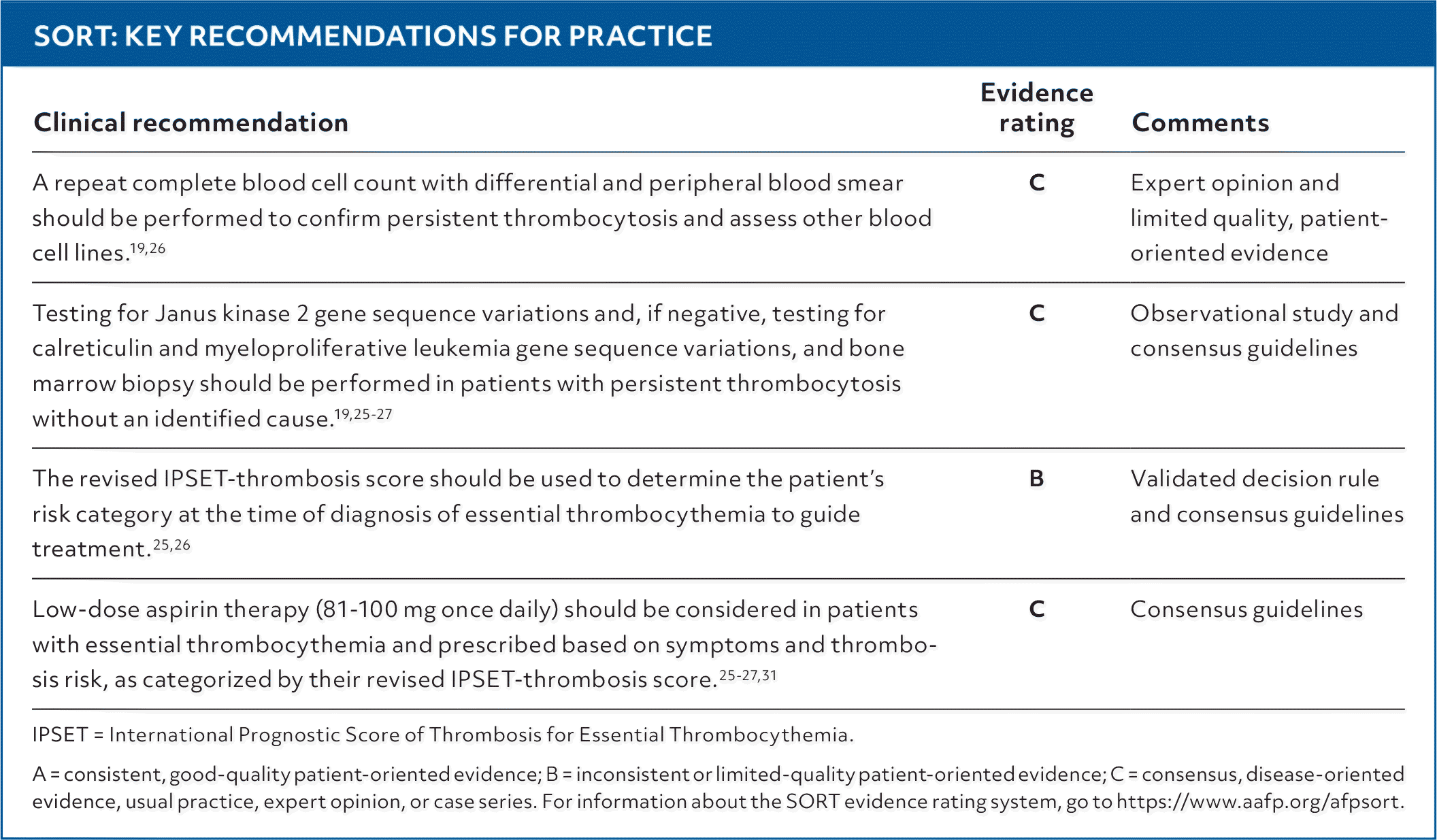
| Clinical recommendation | Evidence rating | Comments |
|---|---|---|
| A repeat complete blood cell count with differential and peripheral blood smear should be performed to confirm persistent thrombocytosis and assess other blood cell lines.19,26 | C | Expert opinion and limited quality, patient-oriented evidence |
| Testing for Janus kinase 2 gene sequence variations and, if negative, testing for calreticulin and myeloproliferative leukemia gene sequence variations, and bone marrow biopsy should be performed in patients with persistent thrombocytosis without an identified cause.19,25–27 | C | Observational study and consensus guidelines |
| The revised IPSET-thrombosis score should be used to determine the patient's risk category at the time of diagnosis of essential thrombocythemia to guide treatment.25,26 | B | Validated decision rule and consensus guidelines |
| Low-dose aspirin therapy (81–100 mg once daily) should be considered in patients with essential thrombocythemia and prescribed based on symptoms and thrombosis risk, as categorized by their revised IPSET-thrombosis score.25–27,31 | C | Consensus guidelines |
IPSET = International Prognostic Score of Thrombosis for Essential Thrombocythemia.
A = consistent, good-quality patient-oriented evidence; B = inconsistent or limited-quality patient-oriented evidence; C = consensus, disease-oriented evidence, usual practice, expert opinion, or case series. For information about the SORT evidence rating system, go to https://www.aafp.org/afpsort.
Read the full article
Get immediate access, anytime, anywhere.
Choose a single article, issue, or full-access subscription.
Earn up to 14 CME credits per issue.
