DETAILS FOR THIS REVIEW
Study Population: 8,473 children, mostly between 5 and 16 years of age, with nocturnal enuresis (no known organic cause) from 95 randomized or quasi-randomized studies; 5,434 children received desmopressin
Efficacy End Points: Average number of dry nights per week achieved during therapy; 14 consecutive dry nights achieved during therapy
Harm End Points: Adverse events (eg, headache, stomach cramps, dry mouth)
THE NUMBERS
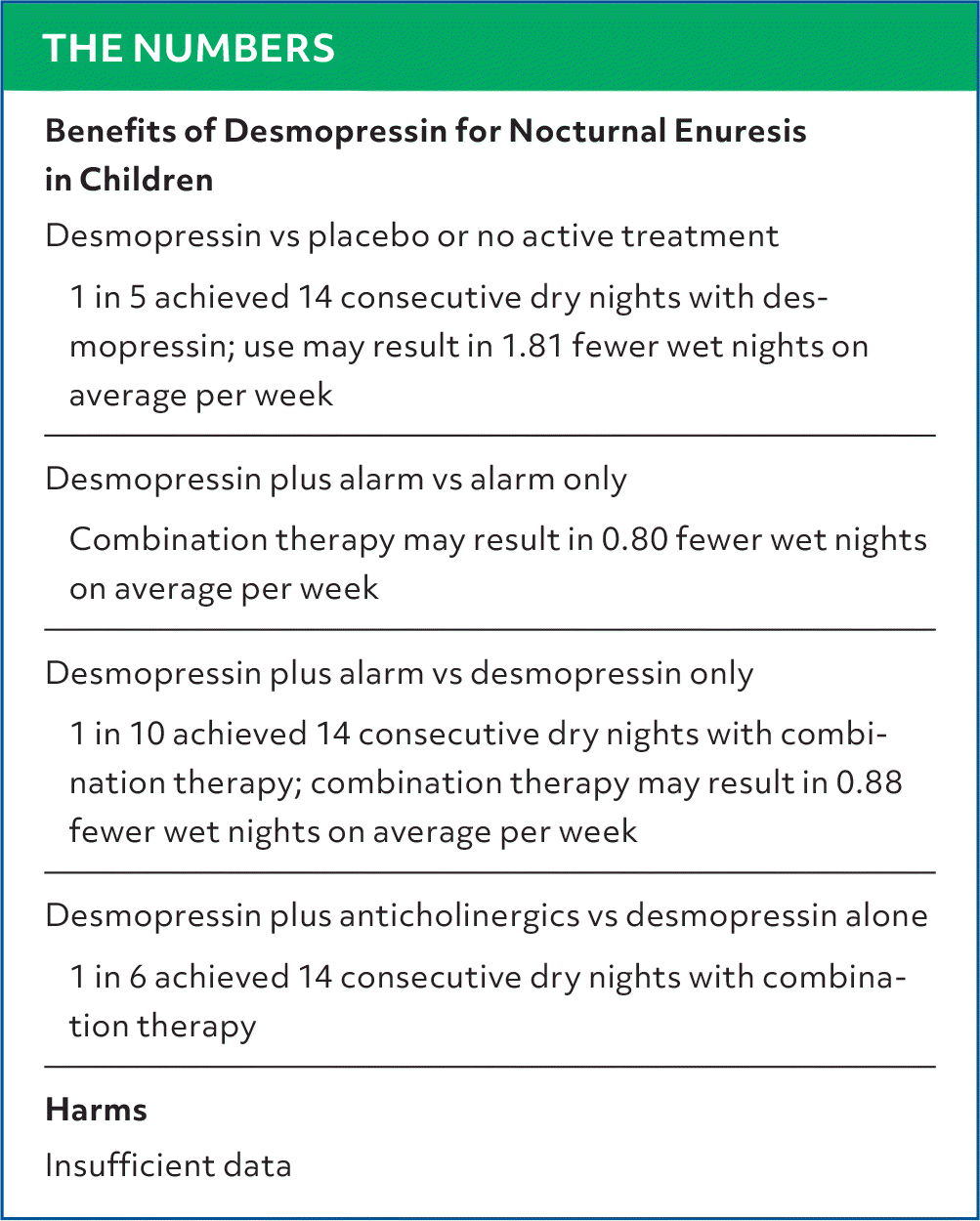
| Benefits of Desmopressin for Nocturnal Enuresis in Children |
| Desmopressin vs placebo or no active treatment |
| 1 in 5 achieved 14 consecutive dry nights with desmopressin; use may result in 1.81 fewer wet nights on average per week |
| Desmopressin plus alarm vs alarm only |
| Combination therapy may result in 0.80 fewer wet nights on average per week |
| Desmopressin plus alarm vs desmopressin only |
| 1 in 10 achieved 14 consecutive dry nights with combination therapy; combination therapy may result in 0.88 fewer wet nights on average per week |
| Desmopressin plus anticholinergics vs desmopressin alone |
| 1 in 6 achieved 14 consecutive dry nights with combination therapy |
| Harms |
| Insufficient data |
Narrative: By 5 years of age, most children are physiologically capable of sleeping through the night without involuntary loss of urine.1 However, up to 20% of children who are 5 years of age experience nocturnal urinary incontinence (ie, nocturnal enuresis or enuresis).2 Although enuresis prevalence in children decreases by 15% per year as a child ages through adolescence, persistent symptoms can feel stigmatizing and diminish patient and caregiver quality of life.1
Desmopressin is a vasopressin analogue that promotes free water resorption in the kidneys, reducing urine accumulation in the bladder to a level that can be accommodated overnight.1 Historically, desmopressin was administered intra-nasally, but oral formulations are now recommended for their superior reliability, tolerability, and safety.3
The 2025 Cochrane review described here included 95 randomized and quasi-randomized studies across 29 countries in primarily outpatient settings that compared desmopressin with various treatments, including placebo, enuresis alarm therapy, anticholinergics (eg, oxybutynin), and combination therapies. The Cochrane review included a total of 8,473 participants, of whom 5,434 received desmopressin.4
At varied nightly doses (200, 400, and 600 mcg), desmopressin therapy appeared to produce 1.81 fewer wet nights on average per week compared with placebo (16 randomized controlled trials [RCTs]; n = 1,267; low-certainty evidence). Moderate-certainty evidence showed that desmopressin also probably increases the number of children achieving 14 consecutive dry nights compared with placebo (risk ratio [RR] = 3.18; 95% CI, 1.75–5.80; absolute risk difference [ARD] = 2.2%; number needed to treat [NNT] = 5; 11 RCTs; n = 922). There was no apparent difference in adverse events between the two groups.
Very low-certainty evidence showed that desmopressin plus alarm therapy may produce 0.80 fewer wet nights on average per week compared with alarm therapy alone (six RCTs; n = 528), although there was no apparent difference in adverse events or achieving 14 consecutive dry nights.
Desmopressin plus alarm therapy produced 0.88 fewer wet nights on average per week compared with desmopressin alone (two RCTs; n = 156; moderate-certainty evidence) and probably increases the number of children achieving 14 consecutive dry nights vs desmopressin alone (RR = 1.26; 95% CI, 1.06–1.51; ARD = 11%; NNT = 10; five RCTs; n = 370; low-certainty evidence). No adverse events were reported for this comparison.
Read the full article
Get immediate access, anytime, anywhere.
Choose a single article, issue, or full-access subscription.
Earn up to 14 CME credits per issue.